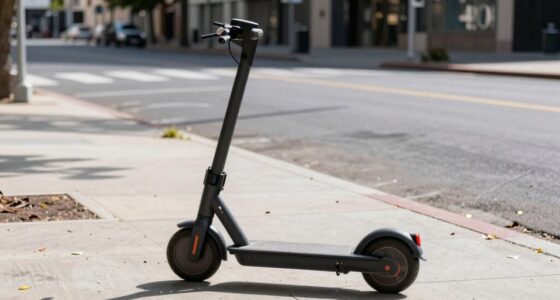
Small scooter wheels punish bad pavement more because they have less ground contact and limited shock absorption, making bumps feel harsher. Unlike bikes with larger tires that distribute impact more evenly, scooter wheels can’t absorb shocks well, leading to a rougher, less comfortable ride. Their fragility also means they’re more prone to damage from rough terrain. If you want to understand how wheel size affects ride quality and durability, keep exploring this topic further.
Open a free Amazon Business account
Business pricing, bulk buying and tax-exempt orders.
As an affiliate, we earn on qualifying purchases.
Key Takeaways
- Small scooter wheels have less ground contact, offering minimal shock absorption on rough pavement.
- Limited suspension capacity in small wheels transmits more impact directly to the rider’s body.
- Smaller wheels are more prone to damage from uneven surfaces, increasing maintenance needs.
- Reduced stability and control on rough terrain cause harsher rides and rider fatigue.
- Larger wheels distribute impacts better, providing smoother rides and less wear over rough pavement.

When riding over rough pavement, small scooter wheels feel the bumps more sharply than bike tires do. That’s because the size of the wheels directly impacts how well you can handle uneven surfaces. Smaller wheels have less contact with the ground, which means they can’t absorb shocks as effectively. This limited shock absorption results in a more jarring ride, forcing you to endure a bumpier experience. Over time, this constant pounding can wear down the wheel’s durability. If your scooter wheels aren’t built with tough materials or reinforced for durability, they’ll be more prone to cracks, dents, or punctures from rough terrain. This fragility means you’ll need to replace or repair wheels more often, increasing maintenance costs and downtime. Larger bike tires, on the other hand, distribute impact more evenly and are usually made from more durable rubber compounds, allowing them to withstand rough conditions better and last longer.
Another key factor that influences ride quality on bad pavement is suspension effectiveness. Scooters typically lack sophisticated suspension systems, relying mostly on the flexibility of their wheels and frame. Small wheels, with their limited surface area, don’t provide much suspension at all. As a result, every bump transmits directly to your hands, arms, and body, making rides uncomfortable and tiring. Without good suspension, the impact from uneven pavement isn’t absorbed, which can lead to fatigue and reduced control. Bikes, especially those with front and rear suspension systems, absorb shocks more efficiently. Their larger wheels work in tandem with suspension components to smooth out rough patches, providing a more comfortable ride and better handling. Additionally, the material quality of the wheels plays a significant role in their resilience on bumpy surfaces. A properly designed suspension system can significantly mitigate the harshness of riding on uneven terrain, but many scooters lack this feature altogether. Furthermore, the overall design of the scooter greatly influences how well it copes with bad pavement, with many models not optimized for rough conditions.
A wheel size that is too small can also affect the overall stability of your ride, making it harder to maintain control on uneven terrain.
The combination of wheel durability and suspension effectiveness explains why small scooter wheels seem to punish you more on bad pavement. They’re simply less capable of coping with rough surfaces, leading to increased wear and tear and a harsher riding experience. If you’re frequently riding on uneven terrain, this can quickly become frustrating, costing you time and money. Upgrading to larger wheels or choosing scooters with better suspension can notably improve your ride quality. But, in general, the inherent limitations of small wheels mean they’re less suited for rough conditions, and you’re likely to feel every bump more keenly. This is why, when pavement gets bumpy, your scooter’s small wheels aren’t just uncomfortable—they’re also more vulnerable to damage, making durability and suspension the essential factors in ride comfort and longevity.
large scooter wheels for rough terrain
As an affiliate, we earn on qualifying purchases.
As an affiliate, we earn on qualifying purchases.
Frequently Asked Questions
How Do Tire Pressures Affect Ride Comfort on Rough Pavement?
Tire inflation considerably impacts your ride comfort on rough pavement. When you keep your tires properly inflated, they absorb shocks better, providing smoother rides over uneven road texture. If your tires are underinflated, you’ll feel more bumps and vibrations, making the ride uncomfortable. Conversely, overinflated tires reduce cushioning, leading to a harsher experience. Adjusting tire pressure based on road texture ensures a more comfortable, controlled ride on rough surfaces.
Are There Specific Pavement Conditions That Worsen Small Wheel Performance?
Ever wondered which pavement conditions challenge small wheels the most? You’ll find potholes and uneven surfaces considerably reduce their performance, especially in terms of pothole resilience and surface grip. Small wheels struggle to absorb shocks, making bumps feel harsher and increasing the risk of slips. Rough pavement with loose gravel or cracks further diminishes stability, making rides less smooth and safe. So, yes, certain conditions can drastically worsen small wheel performance.
What Maintenance Tips Can Improve Small Wheel Durability?
To improve your small scooter wheel durability, regularly check the tire tread for signs of wear and replace worn-out tires promptly. Keep your wheel alignment in check to prevent uneven stress that can cause damage. Avoid rough, uneven pavement when possible, and clean debris from your wheels to prevent punctures. Proper maintenance like this guarantees smoother rides, extends wheel lifespan, and keeps your scooter performing at its best on various surfaces.
How Does Rider Weight Influence Ride Quality With Small Wheels?
Your rider weight acts like a heavy hammer on small wheels, amplifying pavement impact and dulling ride quality. When you’re heavier, small wheels struggle to absorb shocks, bouncing you over cracks and rough patches. Conversely, lighter riders experience smoother rides because less weight means less pressure on the wheels. To improve ride quality, consider reducing weight or upgrading to larger wheels, which better absorb shocks and provide a more comfortable journey.
Can Wheel Material Impact Shock Absorption on Uneven Surfaces?
Yes, wheel material impacts shock absorption on uneven surfaces. Softer materials like rubber or polyurethane offer better shock damping, reducing vibrations and making your ride smoother. Conversely, rigid materials like hard plastic or metal provide less shock absorption, leading to a bumpier experience. So, choosing a wheel with the right material can substantially improve ride comfort by balancing wheel rigidity and shock damping, especially on rough terrains.
As an affiliate, we earn on qualifying purchases.
Conclusion
Imagine yourself as Icarus, soaring too close to the sun, only to be met with the harsh reality of uneven terrain. Small scooter wheels, like fragile wings, lack the resilience to glide smoothly over rough pavement. They amplify every bump and crack, punishing you more than a sturdy bike. So next time you choose your ride, remember: like Icarus, you’re better off with wings built to withstand the turbulence of the road.
durable scooter wheels for uneven pavement
As an affiliate, we earn on qualifying purchases.
As an affiliate, we earn on qualifying purchases.
suspension wheels for electric scooters
As an affiliate, we earn on qualifying purchases.
As an affiliate, we earn on qualifying purchases.
Fall yard work Picks
leaf blowers
As an affiliate, we earn on qualifying purchases.