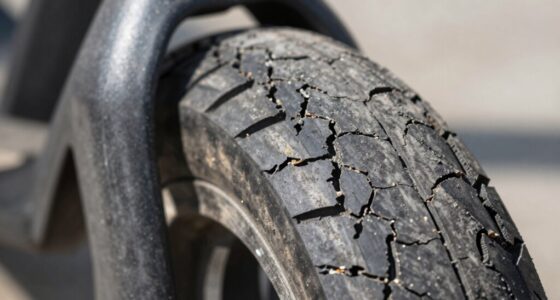
To prevent leaks with tubeless scooter tires, regularly check your tire pressure with a reliable gauge and keep it at the recommended PSI for your model. Inspect tires frequently for cracks, cuts, bulges, or embedded debris, and clean them to spot hidden damage. Avoid riding over sharp objects and store your scooter in a cool, dry place. Staying vigilant with these tips can help you ride safely—continue exploring to learn more useful leak prevention techniques.
Key Takeaways
- Regularly check and maintain proper tire pressure to prevent leaks and ensure optimal sealing.
- Inspect tires for cracks, cuts, bulges, or embedded debris that could cause leaks or damage.
- Keep tires clean and free of dirt to help identify potential issues early.
- Avoid riding over sharp debris and store the scooter in a cool, dry place to prevent rubber deterioration.
- Use appropriate tubeless tire repair kits promptly to seal small punctures and prevent leaks.
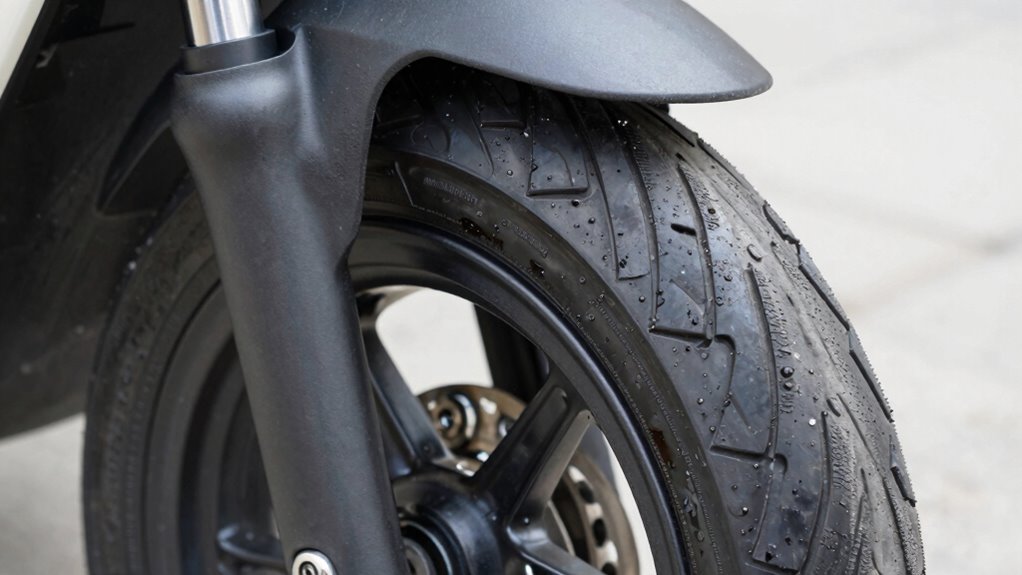
Have you considered upgrading to tubeless tires for your scooter? If you’re looking to improve your ride’s reliability and reduce the risk of flats, tubeless tires are a smart choice. Unlike traditional tires with tubes, tubeless setups eliminate the inner tube, making puncture repair simpler and preventing sudden blowouts. To keep your tubeless tires in top shape, proper tire maintenance is essential. Regularly check your tire pressure, as underinflated tires can lead to uneven wear and increase the chance of damage. Use a reliable pressure gauge to confirm you’re riding with the recommended PSI, which varies depending on your scooter model. Maintaining correct pressure not only enhances safety but also extends the lifespan of your tires. Additionally, inspect the tread for signs of excessive wear or embedded debris, which can compromise the integrity of the tire and make punctures more likely.
When it comes to puncture repair, tubeless tires offer a notable advantage. Small punctures from nails or glass are often repairable without removing the entire tire. Many kits are available that allow you to plug the hole quickly, restoring the seal and avoiding the need for immediate professional help. However, it’s vital to act promptly; a delayed repair can lead to slow leaks or further damage. When repairing punctures, make sure to clean the affected area thoroughly to remove any debris or residue that might prevent a proper seal. Follow the instructions carefully on your repair kit to ensure a secure fix. If the puncture is large or located in the sidewall, it’s best to seek professional assistance, as these damages often require more extensive repairs or tire replacement. Regularly inspect your tires and perform maintenance to prevent issues before they arise.
Preventing leaks isn’t just about patching holes — proactive tire maintenance plays a big role. Check for any cracks, cuts, or bulges in the tire sidewalls, as these can indicate internal damage or weaken the tire’s structure. Keep your tires clean and free of dirt, which can cause wear and hide potential problems. Also, be mindful of sharp objects on the road and avoid riding over debris whenever possible. Proper storage is another key factor; keep your scooter in a cool, dry place to prevent the rubber from deteriorating prematurely. By following these simple steps, you can greatly reduce the likelihood of punctures and leaks, ensuring your scooter remains safe and reliable. Upgrading to tubeless tires is a practical move, but consistent tire maintenance and knowing how to handle puncture repairs will keep you confidently riding for miles to come.
Frequently Asked Questions
How Often Should I Check My Tubeless Scooter Tire Pressure?
You should check your tubeless scooter tire pressure at least once a week. Regular tire pressure maintenance helps prevent leaks and ensures a smooth ride. Use leak detection techniques like listening for hissing sounds or inspecting for punctures. Maintaining proper tire pressure not only prolongs tire life but also improves safety and fuel efficiency. Don’t forget to check your tire pressure more often if you ride frequently or notice any unusual vibrations.
Can Tubeless Tires Be Repaired After a Puncture?
Think of your tubeless tire as a fortress. Yes, it can be repaired after a puncture, but it requires the right tools and techniques. Tubeless repair involves puncture sealing, which can often be done with a plug or sealant, restoring your tire’s integrity. Just make certain the damage isn’t too severe, and always check for hidden cracks. With proper tubeless repair, you keep your ride smooth and leak-free.
Are Tubeless Tires Suitable for All Scooter Models?
You might wonder if tubeless tires suit your scooter, and it depends on scooter compatibility. Not all models support tubeless tires, so check your scooter’s specifications first. During tire installation, guarantee the rim is compatible and properly sealed to prevent leaks. If your scooter supports tubeless tires, you can enjoy benefits like easier maintenance and fewer punctures. Always verify compatibility and follow proper installation procedures for safe riding.
What Are the Signs of a Slow Leak in Tubeless Tires?
You might notice your scooter’s ride becoming slightly less smooth, hinting at a gentle lull in pressure. Keep an eye on subtle changes like decreased tire firmness or uneven tread wear, which can suggest valve leaks or slow air loss. You may also hear a faint hissing sound or see tiny air bubbles during inspection. Addressing these signs early keeps your tires healthy and your ride safe.
How Does Temperature Affect Tubeless Scooter Tire Performance?
Temperature fluctuations directly impact your tubeless scooter tire performance by causing tire pressure to change. When it gets colder, your tire pressure drops, making your ride less stable and increasing the risk of leaks. Conversely, warmer temperatures boost pressure, which can cause overinflation. To maintain ideal performance, regularly check your tire pressure and adjust it according to the current temperature, ensuring a safe and smooth ride.
Conclusion
Now that you’ve got the leak prevention checklist in your hands, you’re armed to keep your tubeless scooter tires rolling smoothly. Think of it as your trusty shield against flats, turning potential pitfalls into mere bumps on your journey. Regular checks and maintenance are your best allies in avoiding unexpected stops. Stay vigilant, and your scooter will glide like a river, seamless and stress-free, making every ride a breeze instead of a leak waiting to happen.