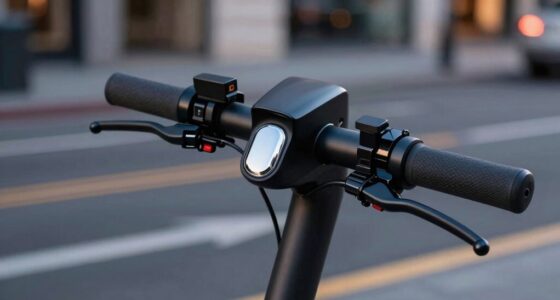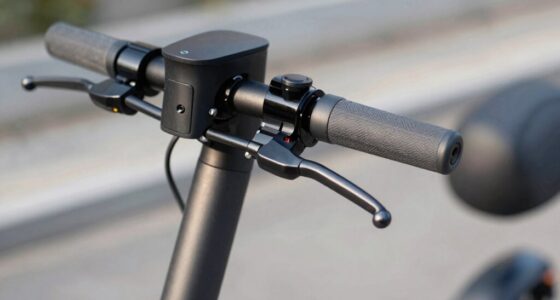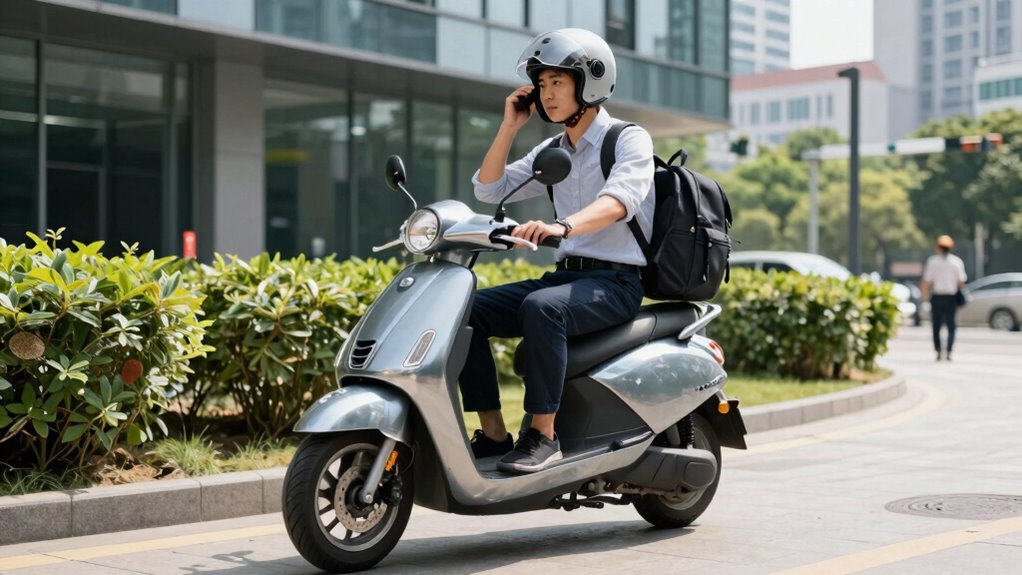

To use a scooter for short office commutes and lunch runs, wear safety gear like a helmet and pads, and make sure it fits well. Follow local rules, ride on bike lanes or paths, and keep your speed moderate for control. Regularly inspect your scooter’s brakes, tires, and battery. Stay alert to pedestrians and obstacles, especially weather conditions. Keep learning more tips to ride safely, efficiently, and confidently everywhere you go.

Get bike and ride gear delivered free with Prime
- Fast, free delivery on millions of items
- Prime Video, Amazon Music and more included
- Member-only deals all year
Key Takeaways
- Wear proper safety gear and ensure a snug fit before each ride for maximum protection.
- Familiarize yourself with local traffic laws and use bike lanes or designated paths.
- Maintain moderate speed, keep both hands on handlebars, and stay alert to pedestrians and obstacles.
- Regularly inspect and maintain your scooter, including tires, brakes, and battery, to ensure reliable performance.
- Monitor weather conditions and keep the scooter clean to prevent slips, breakdowns, and safety hazards.
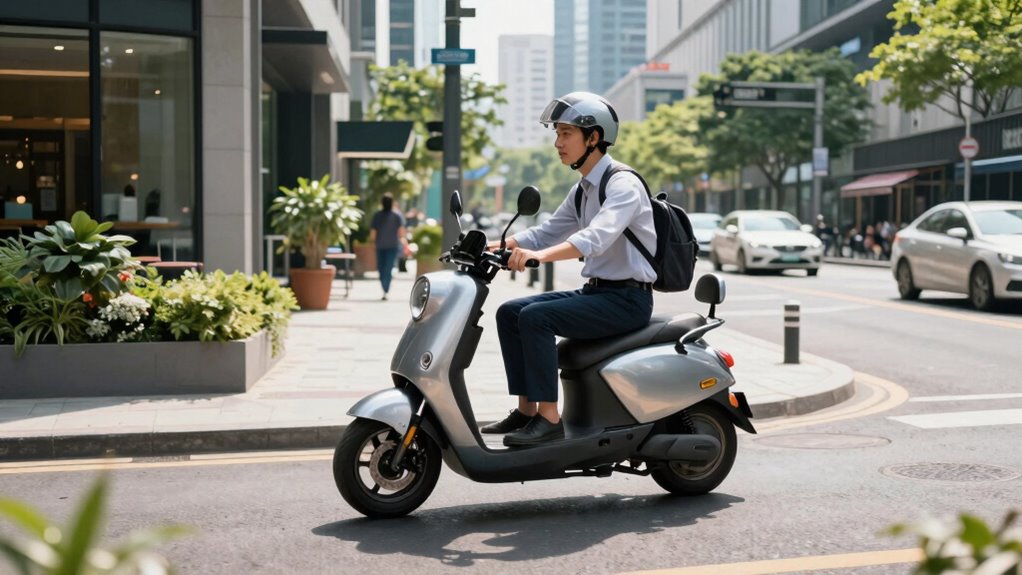
Using a scooter is a simple and fun way to get around, whether you’re commuting or just exploring your neighborhood. If you’re considering using a scooter for short office runs or lunch breaks, it’s important to prioritize safety and keep your ride in top shape. Wearing safety gear, like a helmet, knee pads, and elbow pads, isn’t just a good idea — it’s essential. These items protect you from potential falls or accidents, which can happen unexpectedly. Before heading out, double-check that your helmet fits snugly and that all safety gear is in good condition. This way, you’ll feel more confident and secure on your ride.
Wearing proper safety gear is essential for a confident, secure scooter ride.
When it comes to starting your scooter commute, make sure to familiarize yourself with the local rules of the road. Many cities have specific regulations for e-scooters, including where you can ride and parking rules. Always stay alert, keep both hands on the handlebars, and look out for pedestrians, vehicles, and obstacles. Using your scooter on bike lanes or designated paths is safer and often legally required. Going at a moderate speed helps you stay in control and react quickly to any sudden hazards. Regular maintenance, such as checking tire pressure and inspecting brakes, is vital for safe riding. Additionally, understanding the local regulations for e-scooter use can help you avoid fines or citations and ensure you’re riding responsibly.
Maintaining your scooter is key to a smooth and safe ride. Regular maintenance tips include checking the tire pressure, inspecting brakes, and ensuring the battery charges properly. A well-inflated tire provides better grip and stability, especially on uneven surfaces or wet pavement. Test your brakes before each ride to make sure they respond quickly; if they feel sluggish or squeaky, have them serviced. Keep an eye on the battery charged, and avoid letting it drain completely — this extends its lifespan and ensures your scooter is ready whenever you need it. Proper maintenance not only keeps your scooter in optimal condition but also helps prevent unexpected breakdowns. Cleaning your scooter regularly, especially the deck and wheels, prevents buildup of dirt and debris that could affect performance. Checking the electrical components and ensuring all wiring is intact and secure is also part of good scooter upkeep. Being aware of potential hazards, like weather conditions, can help you adapt your riding and stay safe.
Popular right now

Dreame X60 Max Ultra Complete Robot Vacuum and Mop

Ninja Foodi DZ550 10-Qt DualZone Smart XL Air Fryer, 6-in-1, Black

Ninja DZ801 DualZone 6-in-1 Air Fryer, 8 Qt, Grey
As an affiliate, we earn on qualifying purchases.
Frequently Asked Questions
Are Scooters Legal for Office Commutes in City Centers?
Yes, scooters are generally legal for office commutes in city centers, but you’ll need to check local regulations. Make certain you have proper scooter insurance to cover any accidents, and familiarize yourself with parking regulations to avoid fines. Some cities require helmets or specific licensing, so always verify these rules beforehand. Staying compliant ensures your short trips are safe, convenient, and hassle-free.
What Safety Gear Should I Wear for Short Scooter Trips?
Think of safety gear as your trusty shield on every ride. For short scooter trips, you should wear a helmet, protective gloves, and knee and elbow pads to guard against falls. Add safety accessories like reflective tape and lights for visibility. These essentials keep you safe, confident, and ready to face city streets. Remember, a small investment in gear turns every trip into a safer adventure.
How Do I Charge an Electric Scooter at Work?
To charge your electric scooter at work, find nearby charging stations or ask your workplace if they have dedicated outlets. Always practice good battery maintenance by using the recommended charger and avoiding overcharging. Plug the scooter into a power source during the day, ensuring the connection is secure. Regularly check the charging process and disconnect once fully charged to prolong battery life and keep your scooter ready for your next short trip.
Can I Use a Scooter on Wet or Rainy Days?
Sure, you can ride your scooter in the rain—if you enjoy slipping and sliding like a cartoon character. Real rain precautions involve avoiding wet weather to prevent accidents and damage. Remember, wet conditions demand extra scooter maintenance, like checking brakes and waterproofing. Otherwise, you might end up soaked, frustrated, and needing a new scooter, so consider rain days as rest days for your trusty ride.
What Should I Do if My Scooter Breaks Down During a Trip?
If your scooter breaks down during a trip, stay calm and move to a safe spot if possible. Use your knowledge of mechanical troubleshooting to identify minor issues, like checking the fuel or battery. If you’re unable to fix the problem, call roadside assistance for help. Keep your emergency kit handy, including tools and contact info, so you’re prepared to handle breakdowns efficiently and safely.
Conclusion
So, next time your office commute feels like a trek through the Sahara, just hop on your trusty scooter. Who needs traffic jams or sweaty elevators when you can zip around with style and a touch of rebellion? Plus, you’ll impress your colleagues with your eco-friendly, budget-savvy ride. Just remember, with great scooter power comes great responsibility—like not forgetting where you parked it or turning every lunch run into an epic adventure. Happy scooting!