To make your scooter suspension feel good instead of mushy, you need to focus on proper tuning. Adjust the preload, damping, and springs to match your weight and riding style. A well-balanced setup absorbs bumps efficiently without feeling soft or sluggish. Keep everything maintained and replace worn components when needed. When your suspension is tuned right, you’ll enjoy a smooth, responsive ride that feels stable and comfortable—stay tuned for tips on dialing it in perfectly.

Get bike and ride gear delivered free with Prime
- Fast, free delivery on millions of items
- Prime Video, Amazon Music and more included
- Member-only deals all year
Key Takeaways
- Properly tuned suspension balances firmness and softness to absorb shocks without feeling loose or overly stiff.
- Correct preload adjustment matches rider weight, ensuring responsive and stable handling.
- Regular maintenance and replacing worn components prevent mushy or inconsistent suspension feel.
- Adjusting damping settings optimizes shock absorption for smoother, more controlled rides.
- Achieving the right balance between firmness and compliance enhances comfort and responsiveness.
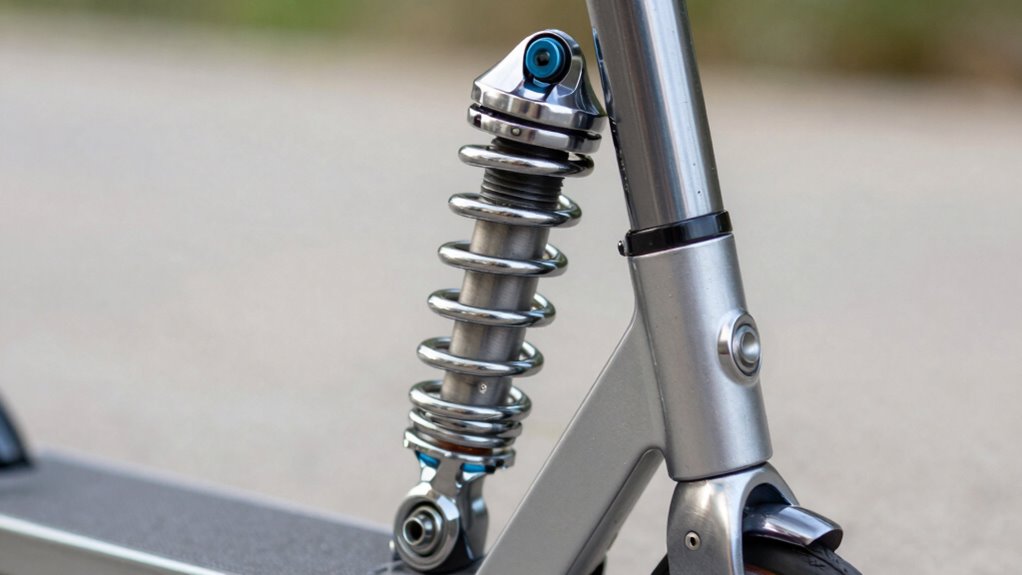
If you’ve ever felt every bump and jolt while riding your scooter, you know how crucial suspension is for a smooth experience. Good suspension isn’t just about avoiding discomfort; it’s about enhancing rider comfort and giving you control. When your suspension feels just right—not mushy or overly stiff—you enjoy a ride that’s responsive, stable, and less tiring. Achieving this balance comes down to proper suspension tuning, which guarantees your scooter reacts well to different road conditions without sacrificing comfort.
A suspension that feels good doesn’t soak up every bump like a sponge. Instead, it absorbs shocks efficiently while maintaining enough firmness to keep the scooter stable. If your suspension is too soft, it may feel mushy, causing you to feel every crack and bump excessively. This can make the ride uncomfortable and even unsafe, as the scooter responds sluggishly to steering inputs. Conversely, if it’s too stiff, you lose rider comfort, and the ride becomes harsh, especially over uneven terrain. The key is finding that sweet spot where the suspension provides enough give to smooth out bumps without feeling soft or loose. Proper suspension tuning is essential to achieve this balance and ensure your ride remains comfortable and controlled.
Suspension tuning plays a critical role in this process. It involves adjusting components like springs, damping, and preload to match your weight, riding style, and typical road conditions. When tuned properly, your suspension offers a nice balance—absorbing shocks effectively without feeling sluggish or overly stiff. Proper tuning ensures that your scooter responds promptly to your inputs, making the ride feel more connected and controlled. For example, if you’re mostly commuting on city streets, a slightly softer suspension might work best to handle potholes and uneven pavement. If you enjoy spirited riding on rougher roads, a firmer setup could give you better stability and feedback. Understanding suspension principles can help you make informed adjustments and improve your riding experience. Additionally, familiarizing yourself with suspension components can help you better identify and address issues early, ensuring optimal performance.
You can also optimize rider comfort through regular maintenance and adjustments. Check your suspension components periodically; replace worn-out springs or dampers that no longer perform well. Small tweaks, like adjusting preload or damping settings, can make a significant difference. Remember, suspension tuning isn’t a one-size-fits-all process—it’s about customizing your setup to fit your specific needs. When done correctly, it transforms your ride from feeling mushy and unpredictable to smooth, controlled, and enjoyable. Additionally, understanding how to test your suspension can help you identify issues early and make necessary adjustments. Taking the time to learn these fundamentals can prevent costly repairs and ensure your suspension remains responsive over time.
In the end, a suspension that feels good isn’t just about the mechanics—it’s about how well those mechanics work together to support your comfort and safety. When you take the time to tune your suspension properly, every ride becomes a pleasure rather than a challenge, turning your scooter into a smoother, more responsive machine that keeps you comfortable mile after mile.
As an affiliate, we earn on qualifying purchases.
Frequently Asked Questions
How Does Rider Weight Affect Suspension Feel?
Rider weight considerably affects suspension feel by influencing suspension sag. If you’re heavier, your weight compresses the suspension more, making it feel firmer and responsive. Conversely, lighter riders cause less sag, resulting in a softer, more plush ride. To optimize suspension, adjust the preload accordingly, ensuring the suspension sag is just right for your rider weight. Proper sag setting helps maintain control, comfort, and prevents mushy or overly stiff feelings while riding.
What Role Does Tire Pressure Play in Suspension Performance?
Tire pressure plays a vital role in suspension performance because it directly affects contact with the road and overall ride quality. When you adjust tire pressure, you’re effectively tuning your suspension’s response, making it feel firmer or softer. Proper tire pressure guarantees ideal suspension tuning, reducing mushiness and enhancing stability. Regularly check and adjust your tire pressure to maintain smooth, responsive suspension and a comfortable riding experience.
Can Suspension Tuning Improve Comfort on Rough Roads?
Did you know proper suspension tuning can boost comfort by up to 30% on rough roads? Adjusting suspension geometry and upgrading shock absorber design helps absorb bumps more effectively, reducing vibrations and jolts. You can customize how your scooter reacts to uneven terrain, making rides smoother and more comfortable. Tuning your suspension optimizes shock absorption, ensuring you enjoy a balanced, less mushy feel—even on the roughest roads.
How Often Should Suspension Components Be Serviced?
You should service your scooter’s suspension components every 6,000 to 12,000 miles or as recommended by the manufacturer. Regular maintenance enhances suspension durability and maintains ride stability, preventing mushy feelings. Check for leaks, worn bushings, or damaged springs during each service. Proper upkeep guarantees your suspension performs well, absorbs shocks effectively, and keeps your ride smooth and comfortable over time.
Are Aftermarket Suspension Upgrades Worth the Cost?
Yes, aftermarket suspension upgrades are worth the cost if you want better suspension aesthetics and improved rider posture. These upgrades often provide a smoother ride, more control, and enhanced comfort, making your scooter feel more responsive and enjoyable. While they might be pricier initially, the long-term benefits—less fatigue and better handling—make them a smart investment, especially if you ride frequently or on rougher terrains.
adjustable scooter shock absorbers
As an affiliate, we earn on qualifying purchases.
As an affiliate, we earn on qualifying purchases.
Conclusion
To keep your scooter suspension feeling just right, focus on proper maintenance and choosing the right setup for your riding style. For example, a rider who frequently hits rough terrain might benefit from adjustable shocks that can be tuned for firmness. By paying attention to suspension adjustments and regularly inspecting components, you’ll enjoy smoother rides and better control, turning bumpy journeys into comfortable experiences. Remember, a well-maintained suspension makes all the difference.
scooter suspension springs replacement
As an affiliate, we earn on qualifying purchases.
As an affiliate, we earn on qualifying purchases.
scooter damping adjustment tools
As an affiliate, we earn on qualifying purchases.
As an affiliate, we earn on qualifying purchases.
Fall Picks
fall essentials
As an affiliate, we earn on qualifying purchases.