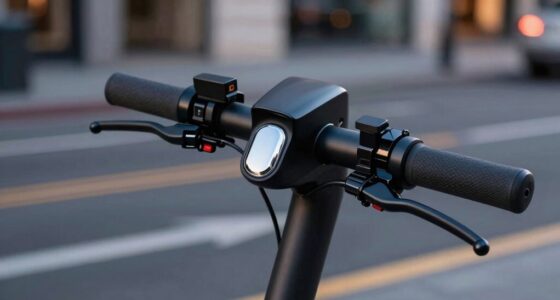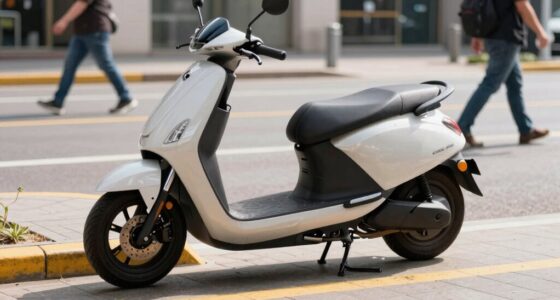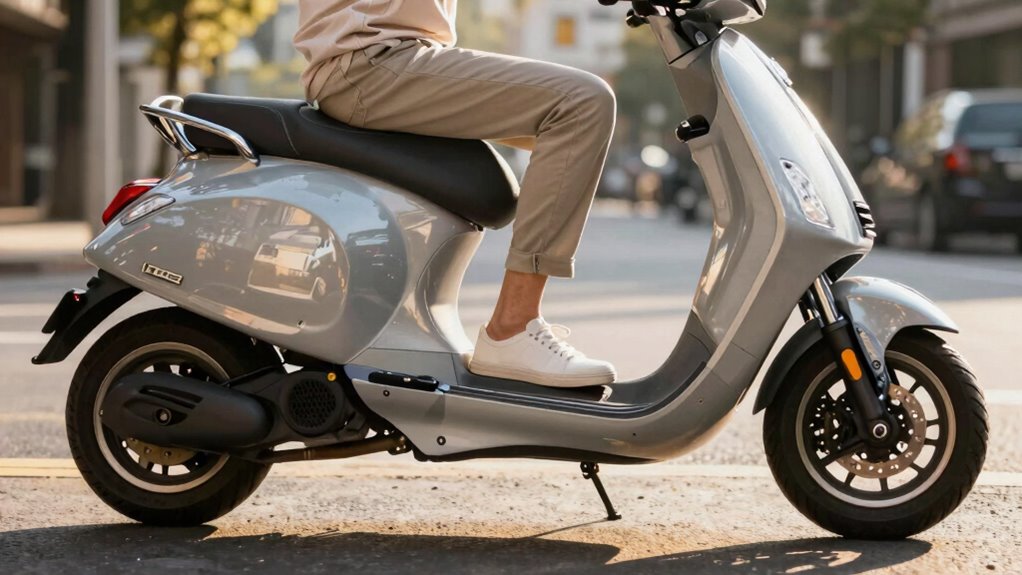

Scooter weight impacts how efficiently your ride performs, how long it lasts, and how easy it is to handle and transport. Heavier scooters drain batteries faster, reducing your range, and often use sturdier materials that last longer but add to the weight. Lighter models are easier to carry and stash but may not be as durable. Understanding how weight affects your scooter can help you choose the best option for your needs—so, you’ll want to learn more about these important details.

Get bike and ride gear delivered free with Prime
- Fast, free delivery on millions of items
- Prime Video, Amazon Music and more included
- Member-only deals all year
Key Takeaways
- Heavier scooters drain batteries faster, reducing overall range and efficiency during daily commutes.
- Increased weight enhances durability but can make handling and transport more challenging.
- Lighter scooters improve portability and maneuverability, especially in crowded areas or for storage.
- The scooter’s weight influences its stability, safety, and longevity depending on material choice and design.
- Balancing weight with performance factors optimizes battery life, durability, and user convenience.
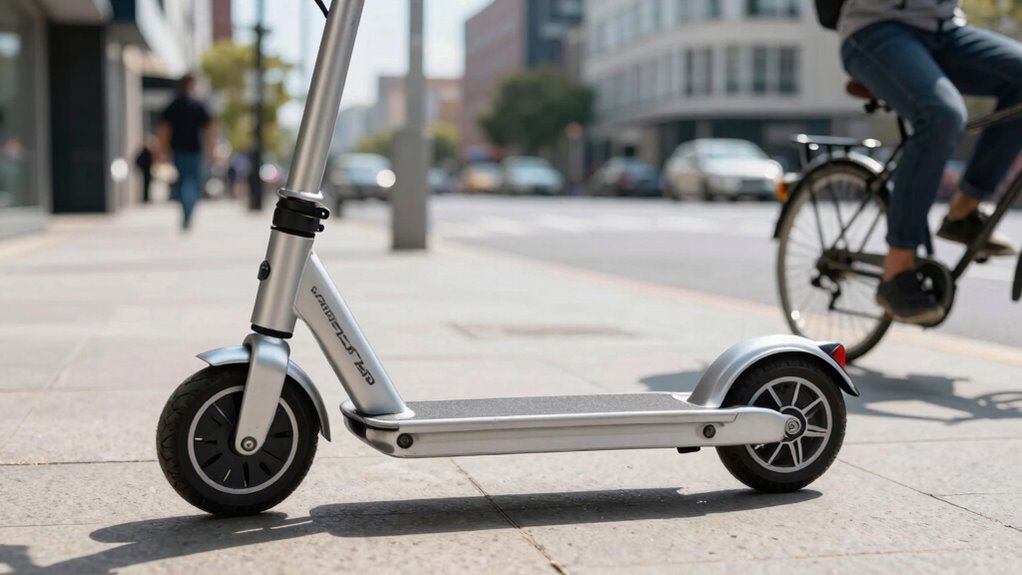
Have you ever wondered how a scooter’s weight impacts your riding experience? It’s more than just how heavy the scooter feels when you lift it or carry it around. The weight of your scooter directly influences its overall performance, especially when it comes to battery efficiency and material durability. Heavier scooters tend to drain their batteries faster because they require more power to accelerate and maintain speed. This means you’ll find yourself recharging more often, which can be frustrating if you’re trying to maximize your range. Lighter scooters, on the other hand, conserve energy better, allowing you to go farther on a single charge. So, if you’re someone who uses your scooter daily or for commuting, paying attention to weight can make a noticeable difference in your overall experience. Additionally, material durability is another vital factor affected by scooter weight. Heavier models often use more robust materials, which can enhance longevity and withstand rougher conditions. These durable materials tend to be thicker or reinforced, adding to the weight but also giving you confidence that your scooter can handle bumps, vibrations, and frequent use without breaking down. Conversely, lighter scooters might use less dense materials to keep weight down, which could compromise longevity over time. If you’re frequently riding on uneven terrain or carrying your scooter up stairs, choosing a model with a balanced weight and sturdy build ensures it remains reliable and safe for longer periods. Moreover, understanding how material selection impacts weight can guide you toward a more durable and reliable model that suits your specific needs.
A scooter’s weight impacts battery life, durability, and ease of handling for a better riding experience.
Furthermore, handling and maneuverability are crucial aspects to consider, as they significantly influence your riding comfort and safety. Heavier scooters can feel more stable at higher speeds, but they might be harder to lift, carry, or store. If you’re steering through crowded areas or need to lift your scooter into a vehicle, a lighter model can make your life easier. Additionally, considering transport and storage options can help you select a scooter that fits seamlessly into your daily routine. Lighter scooters might sacrifice some degree of material durability, making them more susceptible to damage from impacts or long-term wear. It’s important to weigh these factors against your typical riding conditions and storage options. It’s a trade-off you need to contemplate based on your riding environment and how often you’ll be handling the scooter physically. Ultimately, understanding how scooter weight affects battery efficiency and material durability helps you make smarter choices. If you value longer rides and a durable build, a heavier scooter with reinforced materials might be worth it. But if portability and ease of handling are your priorities, opting for a lighter model can improve your daily experience. Recognizing the importance of weight isn’t just about comfort; it’s about enhancing performance, safety, and longevity in your riding adventures.
Popular right now

Vitamix Touch & Go Advance 32-Ounce Bar Blender, White

eufy E25 Robot Vacuum and Mop with HydroJet Roller Mop, 20,000 Pa Suction

KitchenAid Artisan Series 5-Quart Tilt-Head Stand Mixer, Dried Rose
As an affiliate, we earn on qualifying purchases.
Frequently Asked Questions
How Does Scooter Weight Affect Battery Life?
Scooter weight directly impacts battery life because heavier scooters require more energy to move. When you keep weight optimized, the battery efficiency improves, allowing for longer rides. Extra weight strains the motor and drains the battery faster, reducing overall range. So, by choosing a lighter scooter or minimizing added weight, you help conserve battery power, making your rides more efficient and extending the lifespan of your scooter’s battery.
Can a Heavier Scooter Impact Overall Safety?
A heavier scooter can impact your overall safety because it influences load capacity and material strength. If the scooter is too heavy for its design limits, it may strain the frame, suspension, and brakes, increasing the risk of failure. Always check the load capacity and confirm the materials used are strong enough to support the weight safely. Staying within these limits helps you ride securely and avoid accidents.
Does Scooter Weight Influence Top Speed?
Imagine the gentle hum of a scooter as you accelerate—scooter weight directly influences top speed. Heavier models often boast better motor stability and shock absorption, helping maintain consistent power delivery. This stability allows you to reach higher speeds safely, especially on uneven terrain. So, while lighter scooters might seem quicker, the added weight can actually enhance your ride’s top speed by improving overall control and reducing vibrations.
How Does Weight Distribution Affect Handling?
Weight distribution directly impacts your scooter’s handling by affecting its balance optimization and center of gravity. When weight is evenly spread, you gain better stability and easier maneuverability. If the center of gravity shifts forward or backward, it can cause wobbling or reduced control, especially at higher speeds. To improve handling, make sure your rider weight and cargo are balanced, keeping the center of gravity low and centered.
Are Lightweight Scooters Less Durable?
You might think lightweight scooters are fragile, but that’s not always true. Material durability plays a key role—advanced materials can keep weight down without sacrificing strength. With smart weight optimization, manufacturers design scooters that are both light and durable, surprising many riders. So, don’t assume a lighter scooter can’t handle tough use; it’s carefully engineered to withstand the ride, blending strength with portability in ways you might not expect.
Conclusion
Remember, scooter weight impacts safety, performance, and battery life. It influences how you accelerate, how long you ride, and how easily you handle the scooter. It affects your comfort, your control, and your confidence. So, when choosing a scooter, weigh the options carefully. Consider what matters most to you. Because understanding the weight isn’t just about numbers—it’s about your ride, your safety, your experience. Make informed choices, and enjoy every ride with confidence.