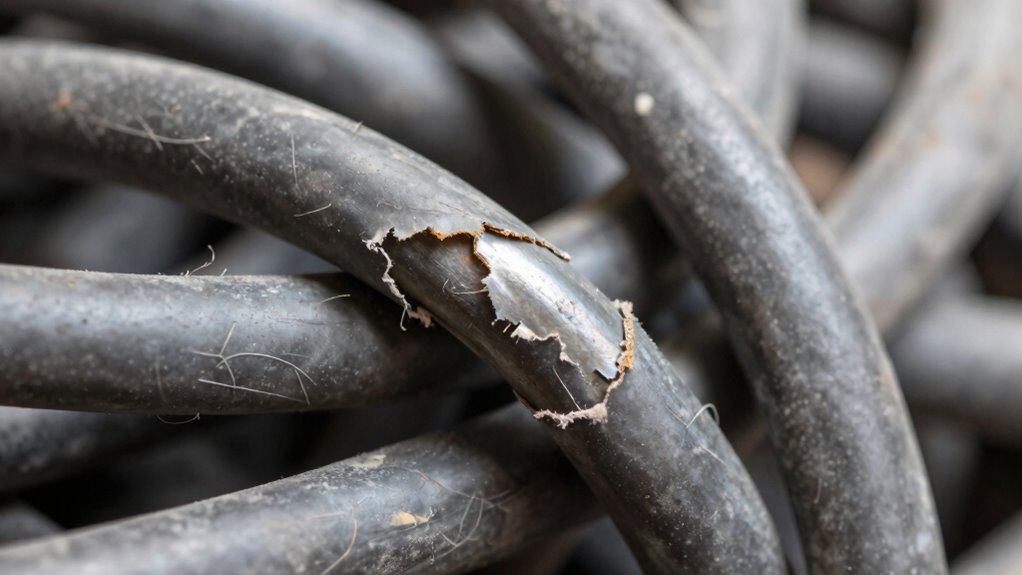

Folding your device in the wrong order can lead to scratches and cable wear by putting unnecessary stress on fragile surfaces and internal wires. Avoid sharp bends, twisting cables, or forcing folds against natural lines, as these mistakes damage the screen and internal components over time. Properly aligning edges first and bending gradually helps spread force evenly. If you want to understand how to prevent these issues and keep your device safe, there’s more valuable information to discover below.
Key Takeaways
- Folding screens at sharp angles or over edges not designed for pressure causes scratches and permanent deformation.
- Incorrect fold sequences can create stress points that weaken internal cables and lead to wear or breakage.
- Ignoring natural fold lines results in uneven force distribution, increasing the risk of scratches and internal damage.
- Repeated improper bending or twisting of cables accelerates fraying and reduces device longevity.
- Rushing or applying excessive pressure during folding increases surface scratches and compromises cable integrity.

When folding paper, even small mistakes in the sequence can lead to frustrating results or distorted shapes. The same rule applies when handling delicate screens or cables—improper fold sequences can cause damage that’s tricky to repair. If you’re working with electronic devices, understanding how to preserve screen durability and prevent creases is essential. A careless fold can lead to creases that weaken the screen’s surface, making it more vulnerable to scratches or cracks over time. The key is to plan your folding sequence carefully, ensuring each step minimizes stress on the device’s surface and internal wiring.
To prevent unnecessary damage, always pay close attention to the order in which you fold or handle your device. For instance, if you’re folding a protective case or a screen cover, start by aligning edges properly before applying pressure. This helps distribute force evenly and reduces the chances of creating creases that compromise the screen’s integrity. Crease prevention isn’t just about avoiding visible lines; it’s about maintaining the screen’s structural strength. When you fold improperly, you risk creating weak points that can crack or scratch more easily, especially if the device is dropped or bumped.
Screen durability depends largely on how well you manage the folding process. Avoid folding the screen at sharp angles or over edges that aren’t designed to withstand pressure. Instead, use gentle, gradual bends following the device’s natural fold lines. This approach prevents excessive strain on the glass or plastic surface, which, if overstressed, can lead to scratches or permanent deformation. Remember that even minor missteps in your folding sequence can cause cumulative damage, making it harder to repair or replace the screen later. Properly understanding and respecting folding guidelines can significantly extend the life of your device’s screen. Additionally, practicing proper handling techniques can help you develop better habits for device care. Recognizing the importance of device component design can also inform how you handle and fold these objects safely.
Cable wear is another common issue linked to improper fold sequences. When cables are bent sharply or repeatedly folded in the wrong order, internal wires can fray or break. To prevent this, always follow manufacturer-recommended folding patterns and avoid twisting or bending cables beyond their limits. Proper sequence and technique help maintain cable integrity, extending their lifespan. By being mindful of your folding process, you reduce the risk of internal damage that’s often invisible until it causes a failure. Additionally, awareness of strain points can help you identify areas most vulnerable to damage and handle them with extra care. Understanding how device components respond to folding can help you develop better handling habits.
![IMBZBK [Auto-Dust Removal] 3 Pack Screen Protector for Samsung Galaxy Z Fold 7, 3 Inside Flexible Film + 3 Front Tempered Glass + 3 Camera Lens Protector Accessories, Easy Installation](https://m.media-amazon.com/images/I/51gA6QUcvRL._SL500_.jpg)
IMBZBK [Auto-Dust Removal] 3 Pack Screen Protector for Samsung Galaxy Z Fold 7, 3 Inside Flexible Film + 3 Front Tempered Glass + 3 Camera Lens Protector Accessories, Easy Installation
[Auto- Dusting Removal Installation] Includes everything you need with innovative automatic positioning, dust removal, and absorption technology, making…
As an affiliate, we earn on qualifying purchases.
As an affiliate, we earn on qualifying purchases.
Frequently Asked Questions
How Can I Detect if My Cable Has Already Been Damaged?
You can detect if your cable is damaged by checking its flexibility; if it feels stiff or brittle, it’s a sign of damage. Inspect for visible frays, cuts, or exposed wires. Also, test different folding techniques to see if the cable still functions smoothly without interruptions or unusual resistance. If you notice any of these issues, it’s likely damaged and should be replaced to prevent further problems.
Are There Specific Tools to Help Correct Fold Sequence Mistakes?
Think of your cable as a delicate scroll needing careful unwrapping. While specific tools for correcting fold sequence mistakes are rare, you can use gentle cable guides or bend restrictors to maintain proper folding techniques. Tool recommendations include flexible cable organizers or spiral wraps, which help realign folds without causing damage. These tools act as guardians, guiding your cable to prevent future scratches and wear, ensuring longevity with mindful handling.
What Are the Long-Term Effects of Repeated Fold Sequence Errors?
Repeated fold sequence errors can lead to material degradation over time, weakening the cable’s structure. You might notice increased stress points, which cause fibers to fray or break. This ongoing damage reduces cable lifespan and can result in connectivity issues. To prevent this, always follow proper folding techniques, and regularly inspect your cables for signs of wear. Correcting your fold sequence now saves you from costly replacements later.
Can Software or Apps Prevent Fold Sequence Mistakes?
Think of software and apps like digital safeguards, acting as your first line of defense against fold sequence mistakes. They can alert you when you’re about to make a wrong move, guiding you through proper procedures. User training complements these tools by teaching you the correct folding techniques. Together, they form a robust system that minimizes errors, protecting your cables from scratches and wear, and keeping your equipment in top shape.
How Often Should I Inspect My Cables for Damage?
You should inspect your cables for damage at least once a month to maintain ideal cable durability. Regular inspection frequency helps you catch signs of wear early, preventing potential failures or scratches that could harm your devices. Look for frayed wires, cracks, or exposed conductors. Addressing issues promptly ensures your cables stay in good condition, extending their lifespan and keeping your devices safe during everyday use.

Alex Tech 10ft – 1/2 inch Cord Protector Wire Loom Tubing Cable Sleeve Split Sleeving For USB Cable Power Cord Audio Video Cable – Protect Cat From Chewing – Black
Size: Diameter: 1/2"| Length: 10 Feet | Color: Black. Our wire loom is split and easy to load…
As an affiliate, we earn on qualifying purchases.
As an affiliate, we earn on qualifying purchases.
Conclusion
By now, you see how easy it is to make fold sequence mistakes that lead to scratches and cable wear. Paying close attention to your folding process can save you time, money, and frustration. Are you ready to implement these tips and protect your equipment? Remember, a careful fold today prevents costly repairs tomorrow. Don’t let simple mistakes cause unnecessary damage—your gear deserves the best care. Stay vigilant and keep those cables in top shape!

Screen Opening Tool 2 PCS Opening Pliers Cellphone Suction Cup Screen Repair Kit for Mobile Phone Tablet Laptop
Powerful Function: This 2 in 1 opening repair tool kit is professtional tool that compatible with repairing moble…
As an affiliate, we earn on qualifying purchases.
As an affiliate, we earn on qualifying purchases.

MagicFiber Microfiber Cleaning Cloth, 6 Pack – Premium Cloth for Glasses, Lens, Screens & More
Glasses cleaner – Sourced from the highest quality microfiber that absorbs and removes dust, oil, smudges, fingerprints, dirt,…
As an affiliate, we earn on qualifying purchases.
As an affiliate, we earn on qualifying purchases.