The “One-Minute Fold” routine helps you fold clothes quickly by using a simple, consistent motion that saves time and reduces clutter. Instead of meticulous folding, you grab a handful of laundry and use a swift, single motion to fold each piece. With regular practice, you’ll develop muscle memory that makes folding easier and faster. Keep going, and you’ll discover how this efficient habit transforms your laundry routine into a quick task you can master.
Key Takeaways
- The routine emphasizes quick, single-motion folds to significantly reduce folding time.
- Developing muscle memory allows for consistent, automatic folding in under a minute.
- Prioritizing speed over meticulousness results in neat, uniform stacks effortlessly.
- Practicing regularly turns laundry into a quick, stress-free task rather than a chore.
- Proper technique and habits maximize efficiency, making folding faster than traditional methods.
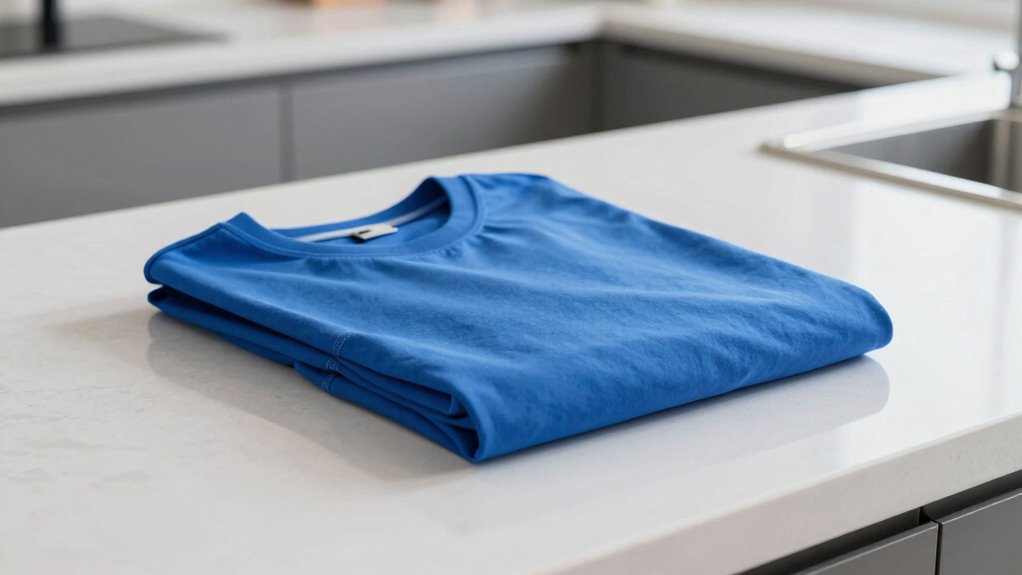
Have you ever needed to quickly tidy up or organize your belongings? If so, you’re not alone. Clutter can pile up fast, especially when you’re busy or tired. But what if there was a way to streamline your clothing organization and make laundry efficiency a breeze? That’s where the one-minute fold routine comes in. It’s a simple method that can drastically cut down the time you spend folding clothes, making your daily routine smoother and less stressful.
The secret lies in a straightforward technique that emphasizes speed and consistency. Instead of painstakingly folding each piece of clothing piece by piece, you focus on a quick, efficient folding motion. This method involves grabbing a handful of clothes, aligning them quickly, and folding in a single swift motion. The key is to develop muscle memory so that each fold becomes automatic. Once you get the hang of it, you’ll find yourself folding entire loads of laundry in just a few minutes. This not only saves time but also helps keep your drawers and closet organized, so you know exactly where everything is without digging through piles.
Clothing organization benefits immensely from this routine because it encourages you to fold clothes uniformly. When clothes are folded quickly and uniformly, they stack neatly and are easier to store. This results in fewer wrinkles, less clutter, and a visually tidy space. Plus, when your clothes are folded efficiently, maintaining laundry efficiency becomes easier. You spend less time sorting and refolding, and you’re more likely to put away clean clothes promptly. This creates a positive cycle—less clutter leads to less stress and more time for other activities.
Imagine the satisfaction of seeing your closet or drawer look neat and tidy in a matter of minutes. The one-minute fold routine isn’t about rushing through laundry and sacrificing quality—it’s about optimizing your movements and habits. With consistent practice, you’ll notice your clothing organization improving naturally, and laundry efficiency becoming second nature. Soon enough, you’ll be able to tackle laundry loads faster than you ever thought possible, freeing up time for yourself or other chores. Plus, you’ll feel more in control of your space, which can boost your mood and reduce daily stress.
In essence, adopting this quick folding routine transforms a mundane chore into a manageable task. It’s a simple shift in how you approach laundry and clothing organization that yields big results. Once you’ve mastered the technique, you’ll wonder how you ever managed without it. Speed, efficiency, and tidiness—these become your new standards, all achievable in just a minute. Proper folding techniques can also help ensure your clothes last longer and stay in better condition over time.
Frequently Asked Questions
Can This Folding Routine Be Used for All Types of Clothing?
Yes, you can use this folding routine for most clothing styles and fabric types. It works well with t-shirts, jeans, and casual wear, but be cautious with delicate fabrics like silk or lace, which may require gentler handling. For different clothing styles, adapt the fold slightly to maintain shape. Overall, it’s a quick, versatile method that streamlines your folding process across various garments.
Does the Routine Work Better With Certain Fabric Materials?
You’ll find the routine works best with fabrics that have a gentle stretch and good material durability, making your folding smoother and neater. Stretchy fabrics like knits adapt easily, while delicate or thin materials might need a gentler touch. Avoid stiff or overly thick fabrics, as they can make the routine cumbersome. By choosing the right fabric, you’ll enjoy faster, more precise folds every time.
How Often Should I Practice This Routine to See Improvement?
You should practice the routine daily or at least several times a week to see steady improvement. Consistency is key for building muscle memory and mastering the skill. By maintaining regular practice, you’ll notice faster, cleaner folds over time. Don’t rush—focused, frequent sessions help you develop the technique more effectively, leading to skill mastery. Stick with it, and you’ll become proficient sooner than you think.
Is This Method Suitable for Large Laundry Loads?
Yes, this method works for large loads, but you’ll need to adapt your technique to match your laundry capacity. Break down big loads into smaller sections to keep the folding quick and manageable. Focus on maintaining a steady rhythm and using efficient movements. With practice, you’ll find that even large laundry loads can be folded faster, saving you time and effort while keeping your laundry organized.
Can This Technique Help Reduce Wrinkles and Fabric Damage?
Like a well-oiled machine, this technique helps reduce wrinkles and preserve fabric. You’ll notice smoother clothes and fewer creases, making ironing easier. By folding quickly and carefully, you minimize fabric stress and damage. This method promotes wrinkle reduction and fabric preservation, ensuring your clothes stay in top shape longer. So, if you want your wardrobe to look sharp and last, give this routine a try—it’s a game-changer.
Conclusion
Just imagine the moment you finish that final fold, realizing how a simple one-minute routine transformed your approach. As you glance at the perfectly folded item, a sense of achievement washes over you—faster than you thought possible. The secret lies in that tiny, precise motion, waiting to unlock your efficiency. Now, every time you pick up that cloth or paper, wonder just how much more you can do in a minute. The power’s in your hands.