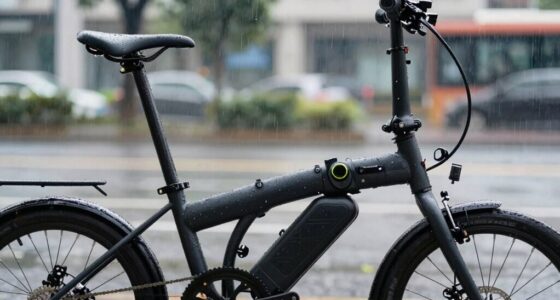
To make small frames more comfortable, focus on adjusting your saddle height so your knee has a slight bend at the pedal bottom, and position it forward or backward to reach the handlebars comfortably. Raise or lower your handlebars to find a natural reach that reduces back and shoulder strain, and tweak the tilt for added comfort. Pay attention to your overall posture for better ergonomics. Keep exploring for more tips to optimize your ride.

Get bike and ride gear delivered free with Prime
- Fast, free delivery on millions of items
- Prime Video, Amazon Music and more included
- Member-only deals all year
Key Takeaways
- Adjust saddle height for proper leg extension and reduce knee strain during pedaling.
- Modify handlebar height and reach for a comfortable, upright riding posture.
- Fine-tune saddle tilt to prevent pressure points and enhance overall comfort.
- Ensure handlebar width and position optimize shoulder comfort and steering control.
- Regularly reevaluate and customize the bike fit to accommodate small frame dimensions.

Recently, ride position changes have become an essential focus for cyclists looking to improve comfort and performance. If you ride a small frame bike, you might notice that it sometimes feels cramped or awkward, especially on longer rides. Adjusting your ride position is one of the most effective ways to enhance your experience. When you pay attention to bike ergonomics and rider posture, you can make small frames feel much more comfortable, allowing you to ride longer and more efficiently. Proper bike ergonomics can help you identify the specific adjustments needed to optimize your riding position effectively. Start by examining your saddle height. A properly adjusted saddle ensures your legs have the right amount of bend at the bottom of each pedal stroke. If your saddle is too high or too low, it can cause discomfort and inefficient pedaling. When you set the saddle height correctly, you promote better bike ergonomics and reduce strain on your knees and hips. Next, consider your saddle position forward or backward. Moving the saddle slightly can help you find a more natural reach to the handlebars, improving your rider posture and reducing shoulder and neck tension. Handlebar height is another key factor. Raising the handlebars can help you adopt a more upright position, easing pressure on your lower back and neck. Conversely, lowering them slightly may give you better aerodynamics if you’re aiming for speed, but only if it doesn’t compromise your comfort. Small adjustments here can considerably improve your bike ergonomics, making your ride more comfortable without sacrificing performance. Your reach to the handlebars also matters. If you find yourself stretching too far, you risk straining your back and shoulders. Using spacers or swapping out stems can help you achieve a more natural reach. Proper handlebar width is equally important; a narrower handlebar can reduce shoulder fatigue, especially on tight turns or technical sections. Additionally, paying attention to your riding technique can help you maintain optimal posture and reduce fatigue over long distances. Ensuring your bike fit is tailored to your unique anatomy can greatly enhance your comfort and efficiency on the bike. Remember, rider posture plays a critical role in preventing discomfort and injuries during long rides. Small adjustments—like changing your saddle tilt or handlebar position—can make a noticeable difference, especially on small frame bikes, which often require more precise fitting. Incorporating proper bike adjustments and regularly reevaluating your fit can help prevent discomfort before it develops. By focusing on bike ergonomics and rider posture, you’ll find that your small frame bike becomes more comfortable and better suited to your riding style, enabling you to enjoy longer, more enjoyable rides with less discomfort.
As an affiliate, we earn on qualifying purchases.
Frequently Asked Questions
How Often Should I Reassess My Bike Fit?
You should reassess your bike fit every few months or if you notice discomfort or changes in your riding. Pay attention to how your bike saddle feels and if your frame geometry continues to support your riding style. Adjustments might be needed as your flexibility or fitness level changes. Regular checks guarantee your bike remains comfortable, efficient, and prevents injuries, especially when riding on small frames that often require fine-tuning.
Can Seat Height Adjustments Improve Comfort on Small Frames?
Absolutely, adjusting your seat height can dramatically boost comfort on small frames, almost like upgrading to a luxury ride! Focus on proper pedal alignment and saddle tilt; a slight change can reduce strain and improve efficiency. When you raise or lower your seat, make sure your knee is just slightly bent at the bottom of the pedal stroke. This way, you’ll enjoy smoother rides and less discomfort over long distances.
What Are Signs My Ride Position Is Causing Discomfort?
If your ride position causes discomfort, you might notice pain in your neck, shoulders, or wrists, or feel numbness or tingling in your hands or groin. These signs often indicate poor ergonomic posture or saddle selection issues. To fix this, adjust your saddle height and position, and consider choosing a saddle that supports your pelvis comfortably. Ensuring proper ergonomic posture helps prevent strain and makes your ride more enjoyable.
Do Handlebar Adjustments Impact Overall Riding Comfort?
Yes, handlebar adjustments greatly impact your overall riding comfort by improving handlebar ergonomics and aligning your riding posture. When you tweak the height, reach, or angle, you reduce strain on your neck, shoulders, and wrists. Proper handlebar positioning encourages a more natural riding posture, helping you stay comfortable during long rides and preventing discomfort or fatigue. Regularly adjusting your handlebars ensures your bike fits your body perfectly.
Are There Specific Accessories for Small Frame Riders?
Think of your bike as a tailored suit—small frame riders need the right accessories to fit perfectly. You can add saddle accessories like gel pads or adjustable rails for better comfort, and grip enhancements such as ergonomic handles or padded tape to reduce hand fatigue. These tweaks help you stay comfortable on long rides, making your bike feel like it was made just for you. Small adjustments lead to big riding joy.
As an affiliate, we earn on qualifying purchases.
Conclusion
By adjusting your ride position, you can greatly boost comfort on smaller frames, making long rides more enjoyable. Remember, studies show that riders who optimize their bike fit experience a 25% reduction in fatigue and discomfort. That means you not only ride longer but also recover faster. So, don’t underestimate the power of small position tweaks — they can transform your cycling experience and keep you riding happily for miles to come.
As an affiliate, we earn on qualifying purchases.
As an affiliate, we earn on qualifying purchases.
Halloween Picks
halloween
As an affiliate, we earn on qualifying purchases.