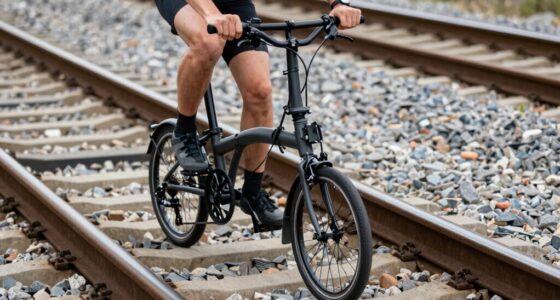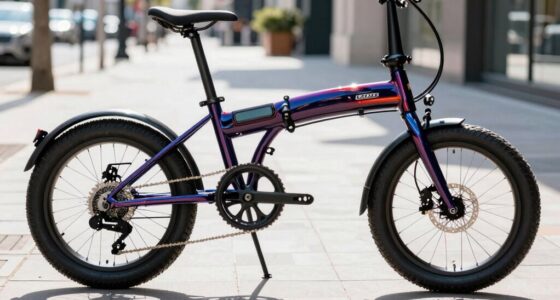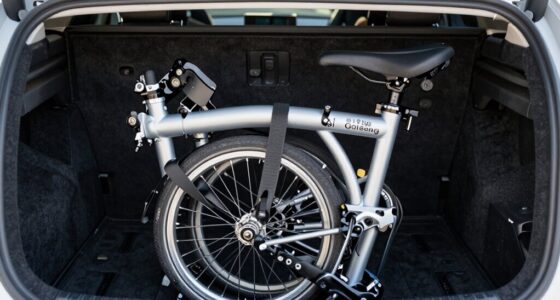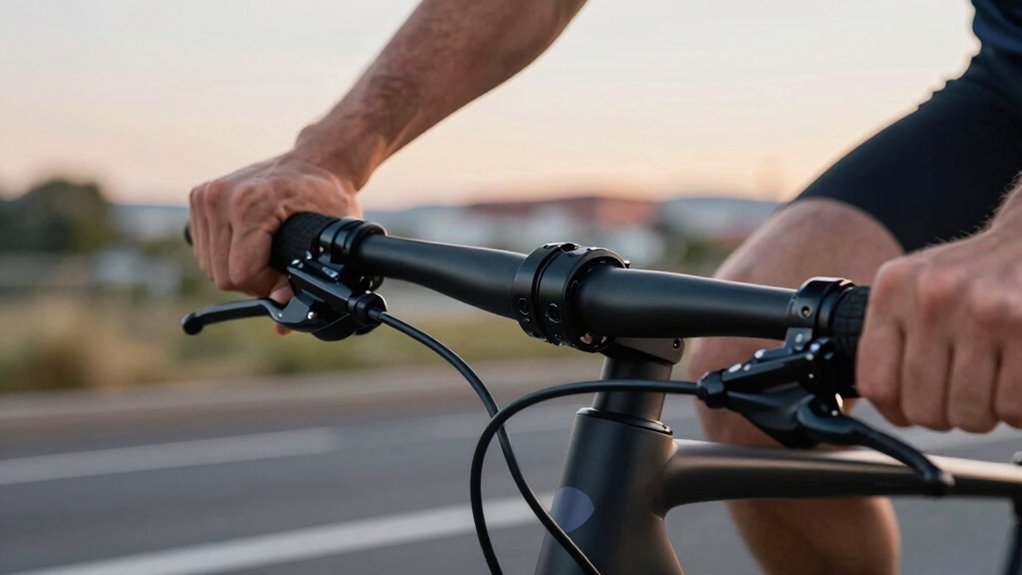

Torque sensors on small e-bikes provide a natural, intuitive feel by detecting how hard you pedal, not just that you’re pedaling. They communicate this effort to the motor, offering smooth and proportional assistance, unlike cadence sensors. This creates a riding experience that’s more connected and enjoyable, reducing jerky power and boosting your confidence. If you want to understand how these sensors elevate your ride even further, you’ll find plenty of insights ahead.

Get bike and ride gear delivered free with Prime
- Fast, free delivery on millions of items
- Prime Video, Amazon Music and more included
- Member-only deals all year
Key Takeaways
- Torque sensors provide smooth, proportional assistance that closely mimics natural pedaling, enhancing rider comfort and confidence.
- They enable precise motor response, reducing jerky movements and delivering a more intuitive riding experience.
- By accurately detecting pedal effort, torque sensors optimize battery use, extending riding range and efficiency.
- Customized assistance based on sensor data allows riders to personalize power delivery for different riding styles.
- Advances in sensor technology make them more affordable and responsive, surprising many riders with their seamless feel.
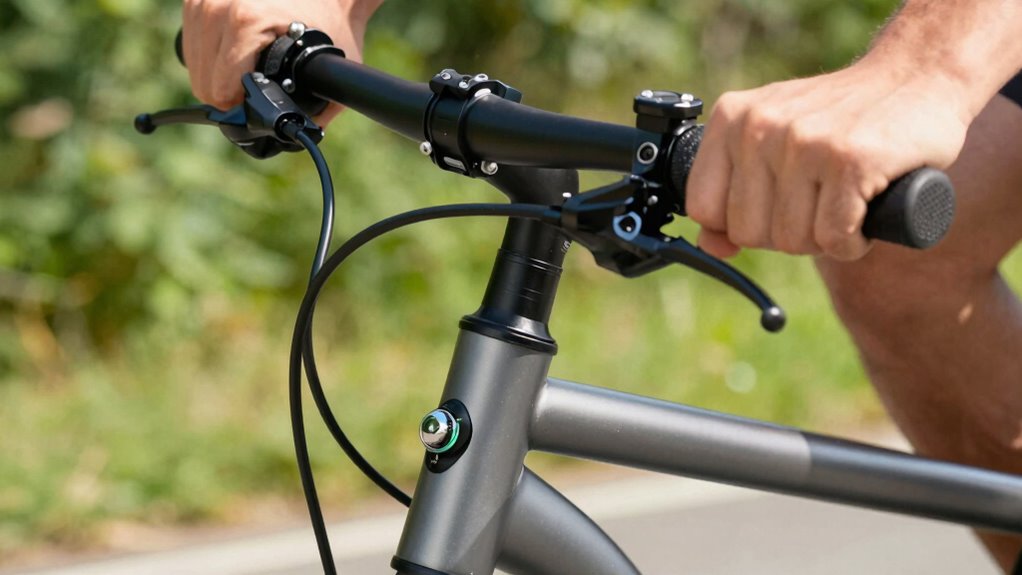
Have you ever wondered how small e-bikes sense when you’re pedaling and how they adjust their power accordingly? It’s a fascinating process that makes riding feel more natural and responsive. At the heart of this system are torque sensors, which detect how hard you’re pedaling and communicate that to the motor. Unlike basic cadence sensors that only recognize pedal movement, torque sensors gauge the actual force you apply, allowing for a smoother, more intuitive riding experience. This means when you push harder on the pedals, the motor responds with a proportional amount of assistance, giving you the right amount of boost without feeling jerky or unpredictable.
One of the biggest surprises for many riders is how seamlessly torque sensors improve the overall riding feel. You might expect that such sensitive detection would be overly complex or cause abrupt power changes, but in reality, it creates a ride that feels natural—almost like you’re riding a traditional bike but with a helpful boost. This enhanced feeling of control often exceeds expectations, especially on small e-bikes, where the integration of the sensor’s data into the motor’s response is finely tuned. As a result, you get a more connected riding experience that mimics your pedaling effort, making your ride more enjoyable and less fatiguing. The sensor responsiveness plays a key role in achieving this seamless interaction.
Seamless torque sensors create a natural, intuitive ride that feels connected and less tiring.
Another key aspect that contributes to the superior feel of torque sensors is their impact on battery efficiency. Because the motor assistance is precisely matched to your input, you’re not wasting energy with unnecessary power. Instead, the system supplies assistance only when needed, which conserves battery life and extends your riding range. This efficiency is especially important on small e-bikes, where compact batteries mean you want to maximize every mile. The combination of accurate pedal force detection and optimized motor assistance means you get more out of each charge, allowing longer rides without sacrificing performance. Additionally, ongoing sensor innovations continue to improve their responsiveness and affordability, making these systems more accessible to riders.
Motor customization also plays a crucial role in how good torque sensors feel. Manufacturers tailor motor responses based on sensor data, fine-tuning the assistance to match different riding styles and preferences. This customization ensures that the power delivery feels natural and responsive, rather than robotic or abrupt. Whether you prefer a gentle assist or a more robust push, motor settings can often be adjusted to suit your needs, enhancing comfort and confidence on the road. When you combine torque sensors with motor customization, you get a riding experience that’s not only efficient but also highly personalized.
Additionally, advancements in sensor technology have made these systems more affordable and easier to implement on small e-bikes, broadening their appeal. In the end, it’s the subtle interplay of these technologies that makes torque sensors on small e-bikes feel better than most riders expect. They provide a ride that’s smooth, efficient, and aligned with your efforts—much more than a simple assist. Once you experience how well this system works, you’ll likely find yourself appreciating the thoughtful engineering that makes small e-bikes so enjoyable and natural to ride.
As an affiliate, we earn on qualifying purchases.
Frequently Asked Questions
How Do Torque Sensors Differ From Cadence Sensors on Small E-Bikes?
Torque sensors differ from cadence sensors mainly in sensor placement and calibration complexity. Torque sensors are usually embedded in the crank or bottom bracket, measuring the actual force you apply, providing a more natural riding feel. Cadence sensors, often placed on the wheel or crank, detect pedal rotation speed. Torque sensors require more precise calibration, but they offer smoother assistance, making your ride more responsive and intuitive.
Are Torque Sensors More Reliable Than Other Types of Sensors?
Torque sensors are generally more reliable than other sensors because they offer better sensor accuracy, providing smooth and consistent assistance. You’ll find that they respond more naturally to your pedaling effort. However, keep in mind that they tend to be pricier, so consider your budget when choosing. Overall, if you want a more responsive ride and are willing to invest, torque sensors deliver dependable performance that enhances your e-bike experience.
Do Torque Sensors Require More Maintenance or Calibration?
Think of torque sensors like a reliable friend—generally low-maintenance. They do require occasional calibration, roughly once a year, but their sensor durability means they usually last longer without issues. I’ve seen riders forget about calibration for months, and their bikes still perform smoothly. While they may need a bit more attention initially, once calibrated, torque sensors keep delivering consistent, responsive power with minimal upkeep.
Can Torque Sensors Improve Battery Life on Small E-Bikes?
Yes, torque sensors can improve battery life on small e-bikes by enabling better battery optimization. They precisely adjust power output based on your pedaling effort, reducing unnecessary energy use. Additionally, their sensor durability guarantees consistent performance over time, preventing energy waste caused by malfunctioning components. This efficient power management helps extend your e-bike’s battery life, making your rides longer and more enjoyable without frequent recharging.
Are Torque Sensors Suitable for All Riding Styles and Terrains?
Torque sensors suit most riding styles and terrains, but their placement and rider feedback matter. For rugged trails or aggressive riding, precise sensor placement guarantees responsiveness and control, making the ride smoother. On smoother surfaces or casual rides, they provide seamless power assistance. So, whether you’re tackling steep hills or cruising city streets, torque sensors adapt well, enhancing your experience by responding naturally to your input across varied terrains.
electric bike pedal assist sensor
As an affiliate, we earn on qualifying purchases.
As an affiliate, we earn on qualifying purchases.
Conclusion
As you glide effortlessly on your small e-bike, feeling the smooth surge beneath your feet, you realize that torque sensors aren’t just technical gadgets—they’re the quiet heartbeat of your ride. They respond in harmony with your every pedal stroke, turning each journey into a dance of power and precision. With each twist and turn, you’re not just riding—you’re embraced by a whispering engine that makes every moment feel alive, intimate, and truly yours.
As an affiliate, we earn on qualifying purchases.
As an affiliate, we earn on qualifying purchases.
Fall Picks
fall essentials
As an affiliate, we earn on qualifying purchases.