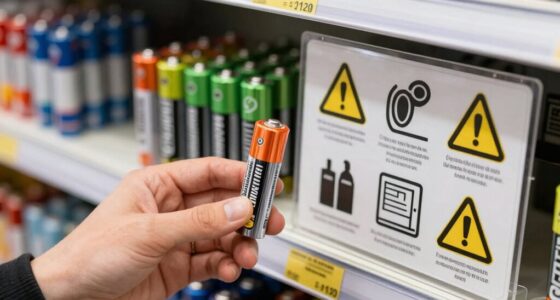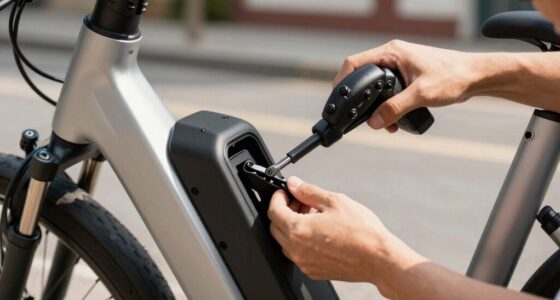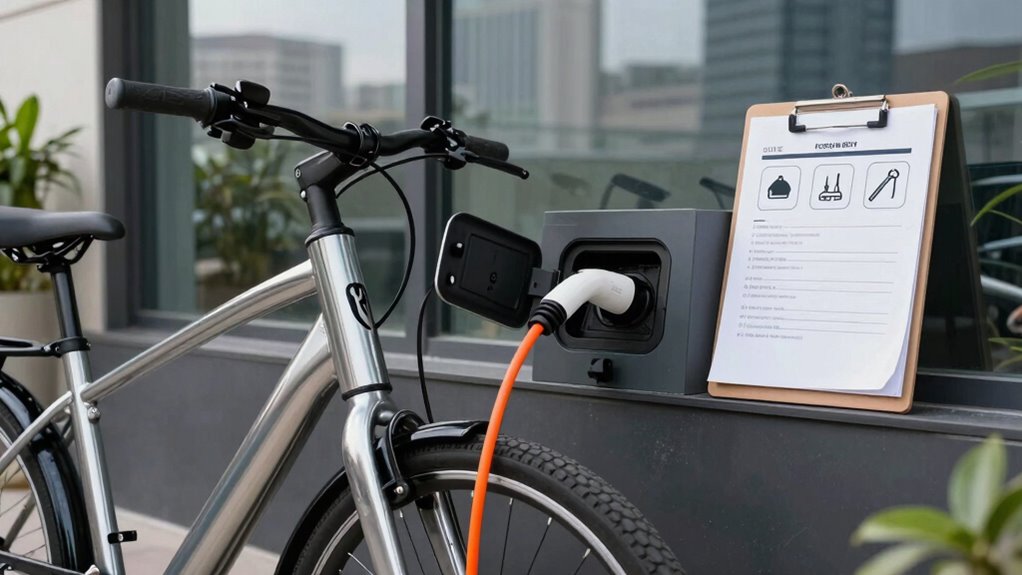

Before you start charging your e-bike at work, ask whether it’s allowed during office hours and where the designated charging spots are. Check if your employer requires any permissions or safety protocols to follow. Make sure you use compatible, undamaged batteries and chargers, and avoid charging near flammable materials or in confined spaces. Also, find out about monitoring the charging duration and safety measures to prevent hazards. Keep these questions in mind to stay safe and compliant.

Get bike and ride gear delivered free — and shop member deals
- Fast, free delivery on millions of items
- Access to Prime Big Deal Days deals on October 6–7
- Prime Video, Amazon Music and more included
Key Takeaways
- Is e-bike charging permitted during work hours and in designated areas?
- Are there approved charging stations or specific outlets to use?
- What safety protocols and restrictions apply to charging at the workplace?
- Can I use my personal charger, and is overnight charging allowed?
- Who should I notify or get approval from before charging my e-bike?
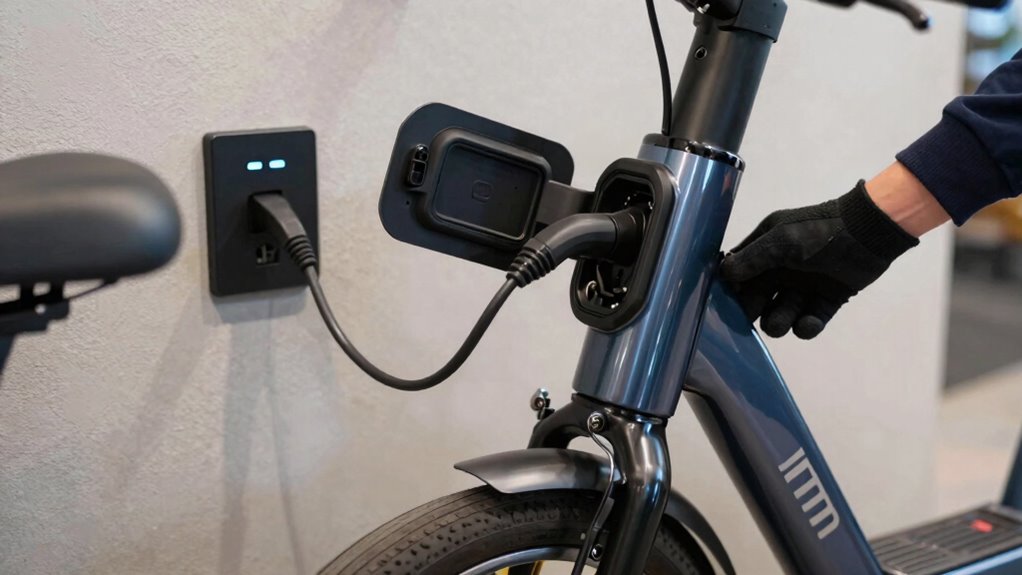
Charging your e-bike at work might seem straightforward, but before plugging in, it’s important to ask a few key questions. First, you need to regard the charging policies your workplace has in place. Many companies have specific rules about using shared electrical outlets or charging stations, mainly to prevent overloads or electrical hazards. Check whether charging your e-bike is permitted during work hours or if there are designated areas for this purpose. Understanding these policies helps you avoid potential conflicts or violations that could lead to safety issues or disciplinary action.
Check workplace policies on e-bike charging to ensure safety and compliance before plugging in.
Another critical aspect is battery safety. E-bike batteries are sensitive components that require proper handling during charging. Before connecting your bike, inspect the battery and charger for any damage, such as cracks, swelling, or exposed wires. Using damaged batteries or incompatible chargers increases the risk of overheating, fire, or battery failure. Make sure the charger matches your e-bike’s specifications and is approved by the manufacturer. Using the wrong charger not only risks damaging the battery but also poses safety hazards that could affect you and your coworkers.
You should also think about the location where you plan to charge your e-bike. Is it a well-ventilated area? Adequate ventilation helps disperse any heat generated during charging, reducing the risk of overheating. Avoid charging in confined spaces or near flammable materials, like paper or chemicals. If your workplace has designated charging stations, use those instead of personal outlets to ensure adherence to safety standards and avoid overloading electrical circuits. Considering electrical safety considerations can further help prevent potential hazards during charging. Additionally, ensuring proper ventilation during charging can significantly reduce the risk of heat buildup. It’s also beneficial to be aware of the electrical capacity of the outlets you plan to use, to prevent circuit overloads. Being familiar with the manufacturer’s safety guidelines can also help you adhere to best practices and reduce risks.
It’s also wise to contemplate the duration of charging time. Charging your e-bike overnight may seem convenient, but check if your workplace’s policies permit extended charging sessions. Leaving a battery unattended for long periods can increase safety risks, especially if the battery or charger isn’t in perfect condition. If overnight charging is allowed, use timers or alarms to monitor the process and disconnect once the battery is fully charged. Additionally, understanding battery maintenance best practices can help ensure your e-bike remains safe and reliable over time. Being aware of the recommended charging duration can help you avoid overcharging and prolong the lifespan of your battery.
Lastly, communicate with your employer or facilities management before charging your e-bike at work. They can provide guidance on best practices, safety protocols, and any necessary approvals. By asking these questions upfront, you ensure your e-bike charges safely and responsibly, protecting both your investment and everyone’s safety at your workplace. Prioritizing battery safety and respecting charging policies shows responsibility, prevents accidents, and helps keep the work environment secure for all.
E-bike charger safety certification
As an affiliate, we earn on qualifying purchases.
As an affiliate, we earn on qualifying purchases.
Frequently Asked Questions
Are There Insurance Implications for Charging an E-Bike at Work?
Charging your e-bike at work could impact your insurance coverage and raise liability concerns. You should check with your employer and insurance provider to see if any additional coverage is needed, especially if there’s potential for damage or accidents. Understand who’s liable if something goes wrong, and confirm if your policy covers any damages or injuries related to charging or storing your e-bike on company premises.
Can I Charge My E-Bike in Shared Office Spaces?
Think of shared office spaces as a bustling hive, where charging your e-bike is like finding a rare nectar spot. You can usually charge there if you practice good charging etiquette and guarantee the power outlet is accessible without disrupting others. Ask around first and be mindful of shared resources. Respect the space, keep cords tidy, and don’t hog the outlet—think of it as sharing a precious spark with your buzzing colleagues.
What Safety Precautions Should I Take When Charging at Work?
To guarantee safety when charging your e-bike at work, prioritize battery safety by inspecting your charger and cord for damage before plugging in. Follow proper charging protocols, such as avoiding overcharging and never leaving the bike unattended during charging. Keep the charging area dry and well-ventilated, and never charge near flammable materials. These precautions help prevent accidents and prolong your e-bike’s battery life.
Is It Permissible to Leave My E-Bike Charging Overnight?
Leaving your e-bike charging overnight isn’t always permissible, as it can affect battery maintenance and charging etiquette. While it might seem convenient, overcharging can reduce your battery’s lifespan, leading to costly replacements. Check your workplace policies first—some places have strict rules. If allowed, make certain your charger is in good condition and the area is safe. Proper charging habits protect your bike and respect shared spaces, avoiding potential hazards or disputes.
Who Is Responsible if My E-Bike Causes Damage or a Fire?
If your e-bike causes damage or a fire, responsibility typically falls on you, especially if battery safety protocols weren’t followed. To prevent issues, guarantee proper fire prevention measures are in place and that your battery is in good condition. Always follow charging guidelines, avoid overcharging, and use approved chargers. Taking these precautions minimizes risk and helps you stay responsible for any potential damage or fire caused by your e-bike.
workplace e-bike charging station
As an affiliate, we earn on qualifying purchases.
As an affiliate, we earn on qualifying purchases.
Conclusion
So, next time you park your e-bike at work, don’t forget to ask if it’s okay to charge it—after all, no one wants a surprise electric shock or a blocked outlet. Ironically, the real power struggle isn’t about the bike but getting permission. Just imagine plugging in, blissfully unaware that the only thing charged might be your patience. Remember, a quick question now can save you from a shocking situation later.
compatible e-bike batteries and chargers
As an affiliate, we earn on qualifying purchases.
As an affiliate, we earn on qualifying purchases.
ventilated charging station for e-bikes
As an affiliate, we earn on qualifying purchases.
As an affiliate, we earn on qualifying purchases.
Fall Picks
fall essentials
As an affiliate, we earn on qualifying purchases.