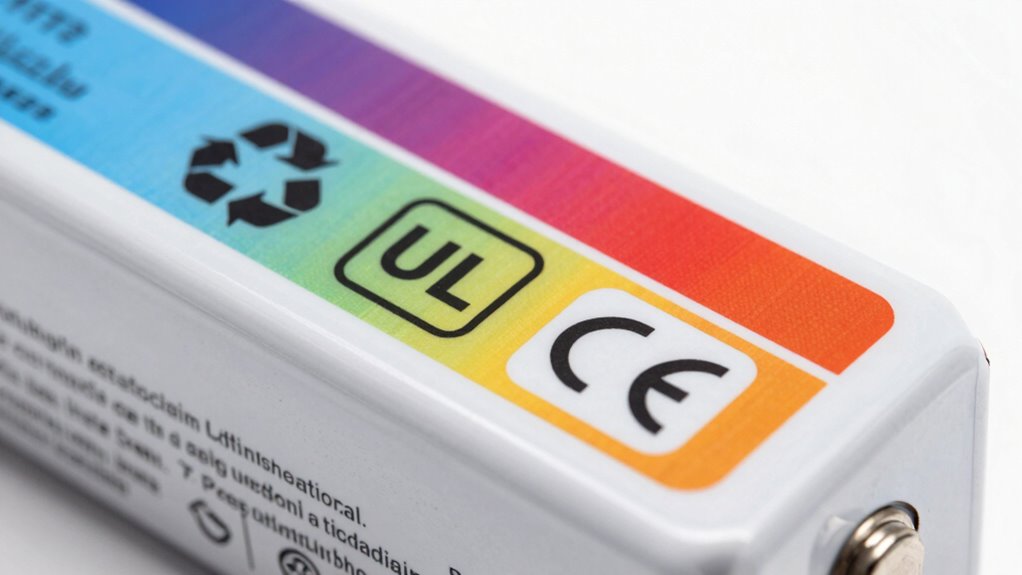

Battery certification labels tell you a lot about the product’s safety, environmental impact, and quality. They indicate if a battery meets safety standards, can be recycled, and complies with regulations like the EU’s Battery Directive. These labels guide you on proper disposal and recycling, helping prevent environmental harm. They also hint at the manufacturer’s reputation and the battery’s performance. Keep going to discover how these labels can help you make smarter, more responsible choices.
Key Takeaways
- Certification labels indicate battery safety, quality, and compliance with international standards.
- They show if batteries are recyclable and provide proper disposal instructions.
- Labels highlight environmental impact and adherence to regulations like the EU Battery Directive.
- They reveal safety certifications to prevent hazards and ensure reliable performance.
- Certification marks help consumers identify trusted brands committed to quality and environmental responsibility.
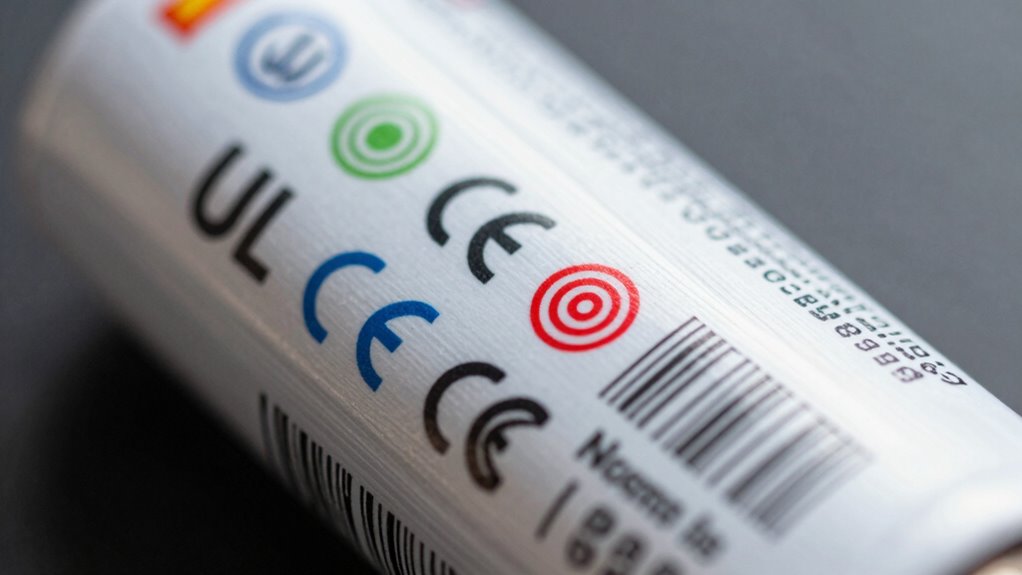
Have you ever noticed the certification labels on batteries and wondered what they mean? These labels aren’t just there for show; they carry important information about the battery’s quality, safety, and environmental footprint. When you see symbols like the recycling icon or safety marks, they tell you about how the battery should be handled at the end of its life. Battery recycling is a critical step in reducing environmental impact because improperly disposing of batteries can release harmful chemicals into the soil and water. Certification labels often indicate whether a battery is recyclable and if it meets standards that promote responsible disposal. By paying attention to these labels, you can help guarantee that batteries are recycled properly, reducing pollution and conserving valuable materials like lithium, cobalt, and nickel.
Many certification labels are designed to guide consumers toward environmentally responsible choices. For example, the recycling symbol on a battery shows that it is recyclable and should not be thrown in regular trash. This encourages you to take the battery to designated recycling centers, where special processes recover precious metals and safely dispose of hazardous components. Some labels also indicate compliance with environmental regulations, such as the EU’s Battery Directive or other international standards. These markings demonstrate that the manufacturer has followed strict guidelines to minimize environmental impact during production and disposal. Recognizing these labels can also help you understand the importance of battery certification labels in promoting safer and more sustainable usage. When you see these labels, you can trust that the battery has been manufactured with environmental considerations in mind, and that proper recycling procedures are recommended. Additionally, understanding safety certification marks can help prevent safety hazards associated with faulty batteries.
Furthermore, these labels can sometimes provide information about the battery’s performance and lifespan, helping consumers choose more durable options that reduce the need for frequent replacements. Knowing about performance standards can also assist in selecting batteries that are more efficient and reliable over time. Some labels also include information about manufacturer reputation, guiding consumers toward trusted brands that prioritize quality and safety. Recognizing these labels helps you make smarter choices, especially when selecting batteries for sensitive devices or for long-term use. Ultimately, understanding what these certification labels tell you empowers you to make environmentally responsible decisions, contributing to a healthier planet.
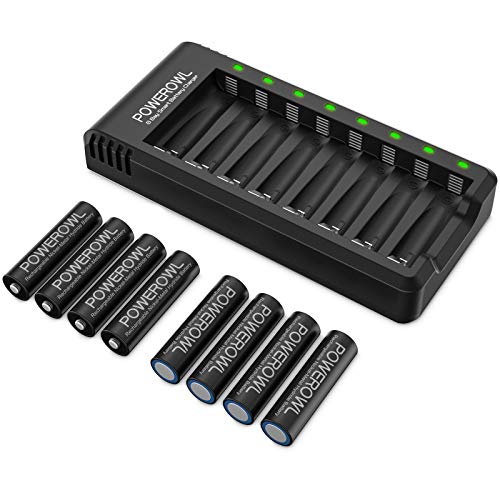
POWEROWL Rechargeable AA Batteries with Charger, 8 Pack of 2800mAh High Capacity Low Self Discharge Ni-MH Double A Batteries with Smart 8 Bay Battery Charger (USB Fast Charging, Independent Slot)
- High Capacity Rechargeable Batteries: 8 x 2800mAh Ni-MH AA batteries
- Smart Charger with Safety Certification: US certified with automatic stop and LED indicator
- Independent Charging Slots: Charge AA and AAA batteries separately
As an affiliate, we earn on qualifying purchases.
As an affiliate, we earn on qualifying purchases.
Frequently Asked Questions
How Do Certification Labels Impact Battery Safety?
Certification labels impact your battery safety by providing quality assurance and confirming regulatory compliance. When you see these labels, you can trust that the battery has met safety standards, reducing risks like overheating or fire. They guarantee the manufacturer followed strict guidelines, giving you confidence in the product’s safety and reliability. So, always check for certification labels before purchasing or using a battery to protect yourself and your devices.
Are All Certified Batteries Equally Reliable?
Like a passport, certification labels mark a battery’s journey through strict standards. Not all certified batteries are equally reliable because battery manufacturing quality varies, even after passing certification processes. Some brands follow rigorous procedures, ensuring safety and longevity, while others cut corners. Always check the certification details and choose reputable brands, because a well-certified battery offers better reliability, but it’s not a guarantee that every certified battery performs identically.
Can Certification Labels Indicate Battery Lifespan?
Certification labels don’t directly indicate battery lifespan, but they can hint at certification accuracy and overall quality. Higher-quality batteries often have certifications that guarantee better manufacturing standards, which may contribute to improved battery longevity. However, actual lifespan depends on usage, maintenance, and environmental factors. So, while certification labels can guide you toward reliable options, they don’t guarantee specific longevity, making proper care essential for lasting performance.
Do Labels Reflect Environmental Impact of Batteries?
Yes, labels can reflect a battery’s environmental impact. They often include information about recycling standards and eco-friendly certifications, helping you understand its environmental footprint. Certifications like EcoLabel or RoHS indicate adherence to standards that minimize hazardous materials and promote recycling. By checking these labels, you guarantee the battery complies with environmental guidelines, reducing pollution and supporting sustainable disposal practices.
Are Uncertified Batteries Safe to Use?
Uncertified batteries aren’t guaranteed safe because they might lack proper safety standards or contain counterfeit labels. Using them risks overheating, leaks, or even fires. To stay safe, prioritize batteries with verified certification labels, and always follow proper battery recycling practices to reduce environmental impact. Be cautious of counterfeit labels, which can mislead you into thinking a battery is certified when it’s not, increasing safety risks.

GoGreen Power (G-24048) Eco Friendly Alkaline AA Batteries – No Lead, Cadmium or Mercury – Pack of 48
- Type: Alkaline AA Batteries
- Quantity: Pack of 48
- Eco-Friendly: Lead, Cadmium, Mercury Free
As an affiliate, we earn on qualifying purchases.
As an affiliate, we earn on qualifying purchases.
Conclusion
By understanding battery certification labels, you gain greater grasp and guidance. They tell you about safety, standards, and sustainability, steering you toward smarter, safer choices. Don’t dismiss these details—delve into their details to discard doubts and discern quality. Recognize the relevance, realize the role they play, and remember: labels lead to lasting, legitimate, and reliable use. Make informed decisions, and let labels lift your understanding and your confidence in every charge.

Energizer Ultimate Lithium AA Batteries (2 Pack), 1.5V Lithium Double A Batteries
- Pack Size: 2-pack of AA batteries
- Longevity: World's longest lasting AA batteries
- Temperature Range: Operates from -40°F to 140°F
As an affiliate, we earn on qualifying purchases.
As an affiliate, we earn on qualifying purchases.

InStockLabels Lithium-Ion Battery Caution Label Stickers, 500 Labels
- Ideal for Small Packages: 3.25” x 4.25” size, 500 labels
- Strong Adhesive: Durable, long-lasting, stays in place
- Lithium-Ion Battery Labels: Regulatory compliant, promotes safe shipping
As an affiliate, we earn on qualifying purchases.
As an affiliate, we earn on qualifying purchases.