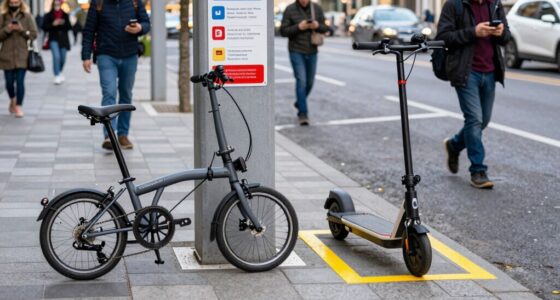
Understanding the differences between e-scooter and e-bike laws is key to avoiding tickets. E-scooters often require helmets and might be prohibited on sidewalks, while e-bikes may have different rules for helmet use and parking. Misjudging these regulations can lead to fines or impoundment. Staying informed about each category guarantees you’re riding safely and legally. Keep exploring to learn how to always stay compliant and avoid common pitfalls.
Key Takeaways
- E-scooter and e-bike laws often differ, especially regarding helmet requirements and parking rules, leading to potential violations.
- Misunderstanding specific local regulations can result in tickets for improper parking or riding in prohibited areas.
- Failing to adhere to helmet laws for either device increases the risk of fines and head injury.
- Parking outside designated zones for e-scooters or e-bikes can lead to impoundment or fines.
- Staying informed about each device’s specific laws is essential to avoid legal penalties and ensure safe riding.
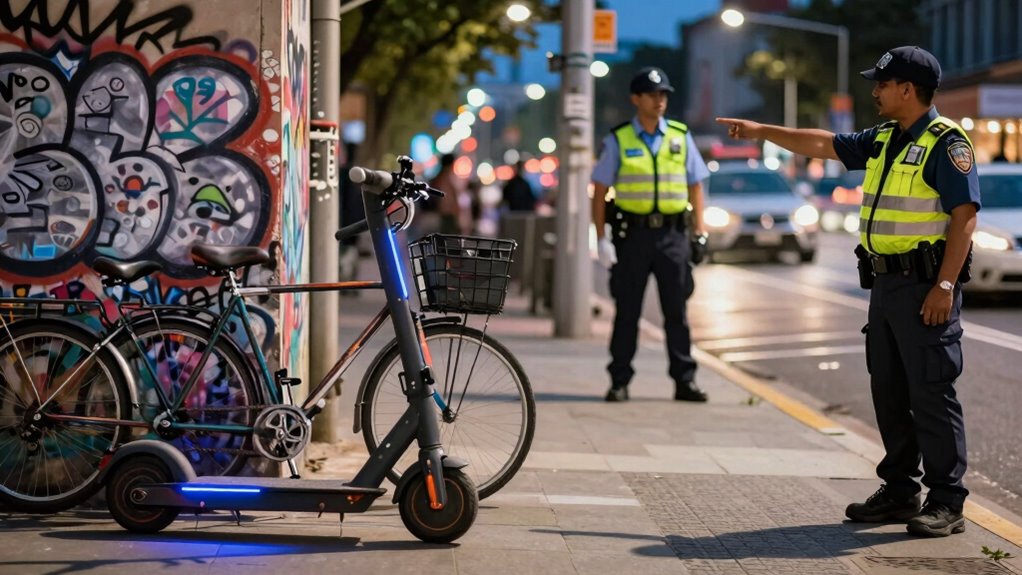
E‑scooter and e-bike laws often vary considerably from one city or state to another, which can be confusing if you’re unsure of the rules. If you don’t follow the specific regulations, you risk getting a ticket or even facing fines. One important area where many riders stumble is helmet safety. Some places require helmets for all riders, regardless of age, while others only mandate helmets for minors. Ignoring these rules can lead to citations, even if you’re just out for a quick ride. Helmets are designed to protect you, but laws surrounding them are enforced to promote safety and reduce injuries. Always check whether your city or state mandates helmet use, and wear one every time you ride. It’s a simple step that can save you from legal trouble and, more importantly, prevent serious head injuries. Additionally, understanding local regulations can help you avoid unintended violations and stay compliant with safety standards.
Parking regulations are another area where confusion can cause trouble. Many cities have designated parking zones for e-scooters and e-bikes, and parking outside these zones can result in fines or scooters being impounded. For example, some cities prohibit parking on sidewalks, in bike lanes, or blocking access to entrances. If you ignore these rules, you might find your scooter or bike being ticketed or removed. To avoid this, always look for designated parking areas and follow local signage. Proper parking not only helps you avoid penalties but also keeps the streets safe and accessible for pedestrians and other riders. Take a moment to familiarize yourself with these regulations before setting out on your ride.
Understanding the differences in laws can seem overwhelming, but prioritizing safety and proper parking is straightforward. Many jurisdictions treat e-scooters and e-bikes differently, especially regarding helmet safety and parking rules. For instance, some cities might require helmets for e-scooter riders but not for e-bike riders, or vice versa. Similarly, parking regulations can vary widely—some allow you to leave your e-scooter on the sidewalk, while others strictly prohibit it. If you get these details wrong, you risk not only fines but also contributing to cluttered sidewalks and bike lanes. Staying informed about your local laws, wearing a helmet when required, and parking responsibly are simple yet vital steps to ensure you ride legally and safely. Always double-check your city’s rules before riding, so you can enjoy your trip without the worry of unwanted citations.
Frequently Asked Questions
Are E-Scooters and E-Bikes Legal on Sidewalks?
You should avoid riding e-scooters and e-bikes on sidewalks, as doing so often violates local laws. Sidewalk safety is vital to protect pedestrians’ rights, and many areas restrict or ban riding in these zones. Riding on sidewalks can lead to tickets and unsafe situations. Instead, stick to designated bike lanes or streets to make certain you’re respecting pedestrian rights and keeping everyone safe.
Can I Ride E-Scooters or E-Bikes on Private Property?
Think of private property as your personal playground, where you can freely ride your e-scooter or e-bike without the city’s rules. You can legally ride on private property for recreational use, but using it for commercial purposes, like deliveries, often requires special permits. Always get permission from the property owner first, or you risk fines or legal trouble. Respecting these boundaries keeps your ride smooth and your legal record clean.
What Safety Gear Is Required for E-Scooter and E-Bike Riders?
You should wear a helmet when riding an e-scooter or e-bike, as many laws require it for safety. Additionally, use reflective gear, especially at night or in low-light conditions, to stay visible to others. Always check local regulations, but generally, don’t ride without a helmet and reflective gear to protect yourself and avoid getting ticketed. Staying safe and compliant keeps your ride smooth and worry-free.
How Do Law Enforcement Officers Verify E-Scooter or E-Bike Registration?
Your chances of being caught are higher than a hawk in a chicken coop. Law enforcement officers verify e-scooter or e-bike registration through registration verification and license checks. They may ask to see your registration documents, scan QR codes, or run your license plate through their database. Always keep your registration and license info accessible, so officers can quickly confirm you’re legally riding. Failing to do so can lead to fines or other penalties.
Are There Age Restrictions for Riding E-Scooters and E-Bikes?
You need to be at least 16 years old to ride e-scooters and e-bikes, depending on your city’s regulations. Some areas also require licensing or age-specific permits, so check local laws before riding. Ignoring age restrictions or licensing requirements can lead to fines or even riding privileges revoked. Always verify the age restrictions in your area to stay compliant and avoid getting ticketed while enjoying your ride.
Conclusion
Understanding the difference between e-scooter and e-bike laws is like steering a busy city street — one wrong turn can lead to a costly ticket. Make sure you know the rules before you hit the road, so you don’t get caught in a legal traffic jam. Stay informed, ride responsibly, and keep your journey smooth. Think of legal knowledge as your GPS, guiding you safely through the rules of the road.