
TL;DR
Prime for Young Adults — start your free trial
Fast free delivery, streaming and member deals for eligible 18–24 year olds.
Try it freeAs an affiliate, we earn on qualifying purchases.
The federal government is exploring the removal of the steering wheel requirement for autonomous taxis. This move aims to reduce regulatory hurdles and accelerate deployment of driverless ride-hailing services, but details and implications are still emerging.
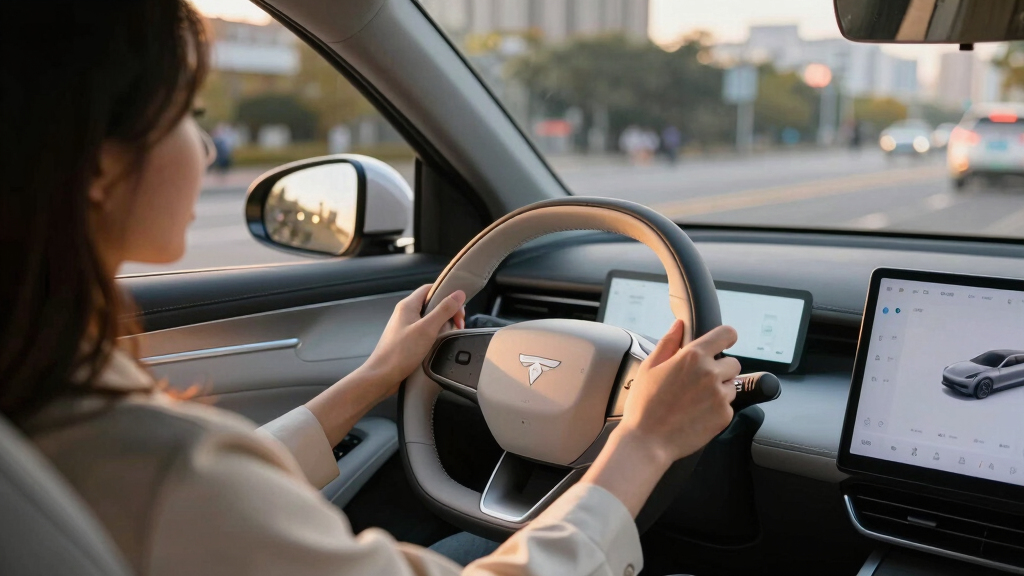
The U.S. Department of Transportation is considering removing the requirement for a steering wheel in autonomous vehicles used as robotaxis, a move that could significantly accelerate their deployment. This potential policy change is aimed at easing regulatory barriers and fostering innovation in autonomous mobility services, according to sources familiar with the matter.
Federal officials are actively reviewing regulations that currently mandate a steering wheel and other manual controls in self-driving vehicles. This review follows industry lobbying and technological advancements suggesting that fully autonomous vehicles may not need traditional driving interfaces to operate safely. The proposal, if adopted, would mark a major shift in federal policy, potentially allowing autonomous taxis to operate without manual controls in certain conditions.
Sources indicate that discussions are still in progress, with no final decision announced. The Department of Transportation has not officially confirmed the policy change but has acknowledged ongoing consultations with industry stakeholders and safety advocates. The move aligns with broader efforts to streamline autonomous vehicle deployment and reduce regulatory complexity.
Industry leaders have welcomed the potential change, arguing that removing the steering wheel could lower costs, simplify vehicle design, and facilitate faster deployment of driverless taxis. However, safety advocates have expressed caution, emphasizing the need for rigorous testing and safety standards before such a significant regulatory shift occurs.
Impact of Removing the Steering Wheel on Autonomous Vehicle Deployment
If the federal government proceeds with removing the steering wheel requirement, it could dramatically accelerate the deployment of driverless robotaxis across U.S. cities. This change would reduce manufacturing costs and enable more flexible vehicle designs, potentially making autonomous taxis more affordable and widespread. It could also influence state and local regulations, prompting a reevaluation of existing safety standards and vehicle certification processes.
For consumers, this may mean quicker access to autonomous ride-hailing services, especially in urban areas where traffic congestion and parking are significant issues. For the industry, it represents a step toward fully autonomous mobility without human controls, possibly reshaping transportation infrastructure and business models. Nonetheless, safety and reliability concerns remain central to the debate, with regulators emphasizing the importance of ensuring passenger safety amidst technological change.
autonomous vehicle steering wheel removal kit
As an affiliate, we earn on qualifying purchases.
As an affiliate, we earn on qualifying purchases.
Regulatory Evolution and Industry Push for Autonomous Vehicles
Currently, federal regulations require autonomous vehicles to be equipped with manual controls, including a steering wheel, to ensure driver intervention if necessary. This rule has been a significant barrier for companies developing fully driverless taxis, as it limits design flexibility and adds costs. Over the past year, industry leaders such as Waymo, Cruise, and others have lobbied for regulatory adjustments, citing advancements in sensor technology and safety systems that could make manual controls redundant in certain scenarios.
Recent pilot programs and testing have demonstrated the safety of vehicles operating without manual controls in specific urban environments. These developments have prompted regulators to reconsider existing rules, with some states already easing restrictions for autonomous vehicles. The federal review is part of a broader trend toward regulatory modernization to keep pace with technological progress in autonomous driving.
While no formal proposal has been finalized, the discussion reflects a growing consensus that traditional vehicle controls may not be necessary for fully autonomous operation, especially in controlled environments or geo-fenced areas.
“We are actively exploring how to modernize regulations to better accommodate the capabilities of autonomous vehicles, including the potential removal of the steering wheel requirement where appropriate.”
— a senior official at the Department of Transportation
As an affiliate, we earn on qualifying purchases.
Unresolved Questions About Safety and Implementation
It is not yet clear when or if the federal government will finalize the removal of the steering wheel requirement. Details regarding which vehicle types or operational zones might be exempt remain uncertain. Safety standards, testing protocols, and liability issues are still under discussion, and no specific timeline has been announced for policy changes.
Additionally, states and local jurisdictions may implement their own rules, which could complicate nationwide deployment. Industry representatives and regulators are still evaluating the best practices to ensure passenger safety without manual controls, but consensus has not yet been reached.
self-driving car control interface
As an affiliate, we earn on qualifying purchases.
As an affiliate, we earn on qualifying purchases.
Next Steps in Regulatory Review and Industry Testing
The Department of Transportation is expected to publish a formal proposal for public comment within the next few months. Industry stakeholders will likely submit feedback and provide data from ongoing testing programs. Final decisions on policy adjustments could be announced later this year or early 2025.
Meanwhile, companies developing driverless taxis will continue testing autonomous systems in controlled environments, preparing for potential regulatory changes. State-level regulators may also update their own rules to align with federal policy shifts, paving the way for broader deployment of fully autonomous ride-hailing services.
As an affiliate, we earn on qualifying purchases.
Key Questions
Why is the steering wheel requirement currently in place?
The steering wheel requirement exists to ensure driver intervention capability in case of system failure, serving as a safety backup under current regulations.
What are the potential benefits of removing the steering wheel?
Removing the steering wheel could lower manufacturing costs, enable more flexible vehicle designs, and accelerate the deployment of driverless taxis in urban areas.
Could this change affect safety standards?
Yes, safety standards would need to be updated to ensure autonomous vehicles operate safely without manual controls, which is currently under review.
When might the policy change take effect?
There is no confirmed timeline; a proposal is expected to be published for public comment within the next few months, with final decisions possibly by early 2025.
Will this apply to all autonomous vehicles?
It is unclear whether the removal of the steering wheel will apply universally or only to specific vehicle types or operational zones. Details are still under discussion.
Source: rss
NFL season / tailgating Picks
team gear
As an affiliate, we earn on qualifying purchases.