
Following local fire codes for your charging setups guarantees safety and helps prevent fires caused by faulty wiring, overloading outlets, or poor ventilation. These regulations specify proper installation, materials, and distances from flammable surfaces to reduce risks. Ignoring fire codes can lead to dangerous hazards, property damage, and legal issues. Staying compliant protects you and your community. If you want to understand more about how to keep your setup safe, keep exploring the key points below.
Key Takeaways
- Fire codes ensure proper wiring and outlet placement to prevent overheating and electrical fires during charging setups.
- Compliance helps avoid fines and safety violations caused by improper or unsafe charging installations.
- Regulations specify ventilation and distance from flammable materials to reduce fire risks.
- Regular inspections and maintenance mandated by fire codes help identify hazards early and ensure safety.
- Adhering to local fire codes promotes community safety and protects property from potential fire hazards.

Charging setups might seem straightforward, but ignoring fire codes can lead to serious safety hazards. When you set up charging stations, you might think all you need is a power source and a device, but neglecting fire safety and electrical regulations can put you at risk of fires, injuries, or property damage. Local fire codes are designed to guarantee that electrical systems are safe and reduce the chance of accidents. They specify how wiring should be done, what materials to use, and where to place outlets and charging stations. By following these regulations, you help prevent overheating, short circuits, and electrical fires. Proper compliance with electrical regulations ensures a safer environment for everyone involved.
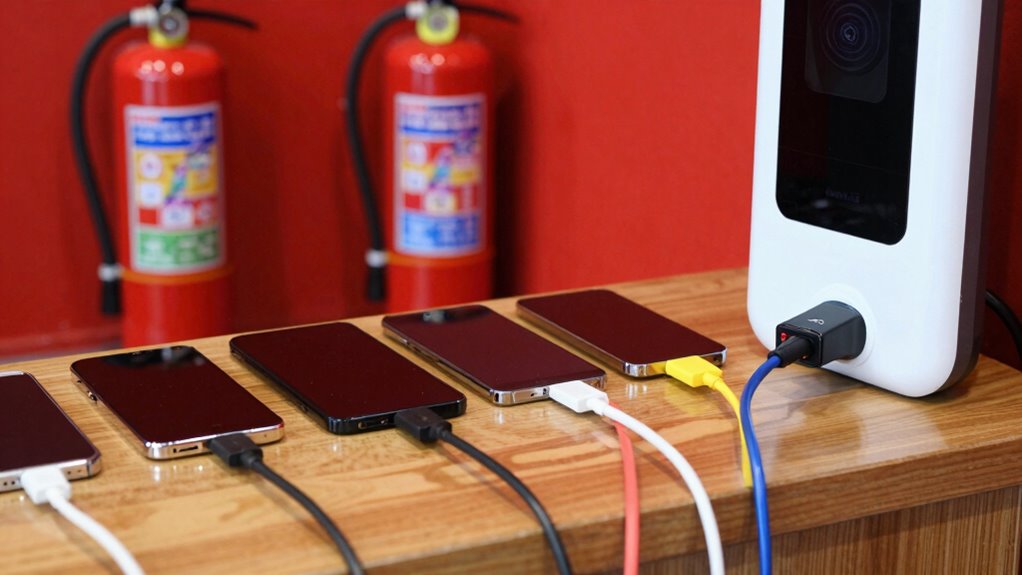
Understanding and adhering to fire safety rules isn’t just about avoiding fines; it’s about protecting yourself, others, and your property. Many fires start because of improperly installed or overloaded electrical systems. For example, using cheap or damaged cables, plugging multiple devices into a single outlet, or placing chargers near flammable materials can quickly become dangerous. Fire codes address these issues by setting clear standards for circuit capacity, proper grounding, and the use of approved materials. If you overlook these regulations, you risk creating an environment where a small fault can escalate into a major fire.
Proper installation and avoiding overloads are essential to prevent electrical fires and ensure safety.
Electrical regulations also influence how and where you install charging stations. These guidelines often specify distance requirements from combustible surfaces, proper ventilation, and the need for circuit breakers or surge protectors. Ignoring these details might seem minor at first, but they are essential for fire safety. For example, installing a charging station too close to curtains or paper could lead to ignition if a malfunction occurs. Proper spacing and ventilation help dissipate heat and reduce the risk of electrical fires. Following local codes ensures your setup is compliant and minimizes hazards. Additionally, adhering to local fire codes can facilitate smoother inspections and peace of mind, knowing your setup meets safety standards. Ensuring that your setup is fire-safe not only protects your property but also promotes overall community safety.
Another reason fire codes matter is that they provide a clear framework for inspections and maintenance. Regular checks and adherence to regulations help catch potential problems before they cause fires. If you maintain your charging setup according to electrical regulations, you’re less likely to experience electrical faults or overheating. This proactive approach keeps your environment safe and sustainable in the long run.
fire-resistant charging station enclosure
As an affiliate, we earn on qualifying purchases.
As an affiliate, we earn on qualifying purchases.
Frequently Asked Questions
How Often Do Fire Codes for Charging Setups Change?
Fire codes for charging setups typically change every few years, but it varies by location. You should stay informed about fire safety and code updates by checking with local authorities or fire departments regularly. These updates ensure your charging station remains compliant and safe. Ignoring code changes could lead to violations or safety hazards, so proactive monitoring helps you adapt quickly and uphold a secure environment for your equipment and personnel.
Are There Specific Fire Codes for Residential Versus Commercial Charging?
Ever wondered if residential and commercial charging setups follow different fire codes? They do. Residential fire safety and electrical standards focus on preventing household fires and ensuring safety in home environments. Commercial spaces, however, follow stricter fire safety regulations to handle higher loads and greater risks. Knowing these distinctions helps you design or upgrade your charging setup correctly, ensuring compliance with local fire codes and protecting everyone from potential hazards.
What Penalties Exist for Non-Compliance With Fire Codes?
If you don’t comply with fire safety codes, you risk hefty fines, penalties, or even legal action. Non-compliance can also lead to insurance issues or liability if a fire occurs. Authorities enforce these codes to guarantee safety, so maintaining code compliance helps protect your property and loved ones. Penalties serve as a reminder of the importance of following fire safety regulations and proper charging setup practices.
Can I Upgrade My Charging Station to Meet Fire Codes?
Yes, you can upgrade your charging station to meet fire codes. You should prioritize electrical safety by consulting a qualified electrician who understands local regulations. They’ll perform necessary inspection procedures to guarantee your setup complies with fire safety standards. Upgrading might involve installing proper wiring, circuit breakers, or fire-resistant materials, all essential for preventing hazards. Staying compliant protects your property and ensures safe, reliable charging for your vehicles.
Who Enforces Fire Codes on Charging Installations?
You’ll find that fire safety authorities, like your local fire department or building inspector, enforce fire codes on charging installations. They’re the gatekeepers of code compliance, ensuring your setup isn’t turning into a fiery disaster waiting to happen. Think of them as the fun police of fire safety, making sure your charging station stays safe and compliant, so you can charge up without risking an unintended barbecue.
surge protector with circuit breaker
As an affiliate, we earn on qualifying purchases.
As an affiliate, we earn on qualifying purchases.
Conclusion
Following local fire codes for your charging setup isn’t just about ticking boxes—it’s about playing it safe and protecting your home and loved ones. When you adhere to these regulations, you avoid putting all your eggs in one basket and reduce the risk of fire hazards. Remember, it’s better to be safe than sorry. By respecting fire codes, you’re not only following the law but also ensuring peace of mind, because safety always comes first.
industrial-grade extension cords
As an affiliate, we earn on qualifying purchases.
As an affiliate, we earn on qualifying purchases.
vented electrical outlet box
As an affiliate, we earn on qualifying purchases.
As an affiliate, we earn on qualifying purchases.