
TL;DR
A report by The Drive, citing Wired, describes how robotaxi operators use cameras, microphones and remote staff to monitor rides and respond to safety concerns. Waymo says its interior microphones are active when staff communicate with riders or when riders enable them; its policy allows some data to be shared with law enforcement under specified circumstances. The extent of routine recording, retention and access across services remains unclear.
A report by The Drive, citing Wired, has drawn attention to how robotaxi companies monitor passengers through cameras, microphones and remote communications systems, and to policies that may allow some collected data to be shared with law enforcement. The disclosures raise privacy questions for riders, but the available information does not establish that robotaxis continuously record every passenger conversation or routinely send recordings to police.
The report describes an incident involving Waymo riders whose trip was stopped after the vehicle’s onboard cameras detected what appeared to be a firearm. The object was reportedly a device that fires water beads, not bullets. Waymo ended the ride and contacted law enforcement, which arrived and detained the riders, according to the account. The source does not provide the incident’s exact date or further details about the riders or any legal outcome.
Wired also reported other instances in which Waymo’s monitoring or intervention affected a trip, including a case where a 35-year-old rider was asked to confirm his age after the system apparently mistook him for a minor. These examples illustrate that automated or staff-assisted checks may affect ordinary passengers as well as situations treated as safety risks. The company’s system also lets staff communicate with riders inside a vehicle.
Waymo says its interior microphones are on when staff need to communicate with passengers or when riders deliberately enable them. The company says its external microphones can filter out human communication and are intended to detect emergency vehicles. Its support information says certain data may be shared with law enforcement to meet legal requirements, enforce agreements or protect safety, and says agencies seeking data are directed to use valid legal processes. Wired reported that Zoox and Tesla have similar data-sharing language, but the material does not set out their detailed recording practices.
Passenger Privacy in Driverless Cars
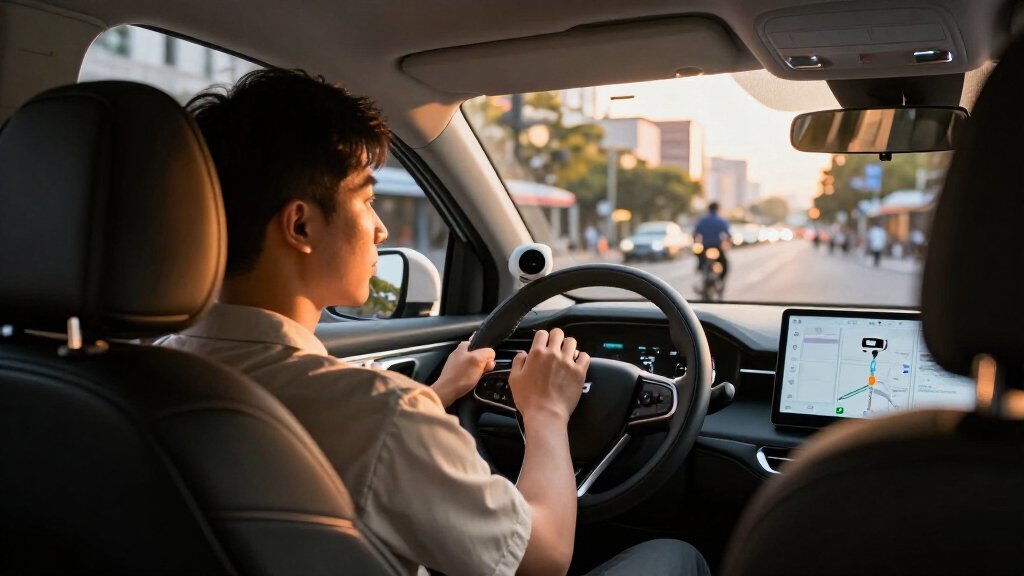
In a conventional taxi, passengers can generally see and speak with a human driver; a robotaxi replaces that direct interaction with sensors, automated systems and remote support. Those tools may help companies respond to suspected threats or emergencies, but they also create questions about what information a ride produces and who may access it.
For riders, the distinction between a camera being present, a microphone being active, data being stored and a recording being shared is consequential. The source describes company statements and policy language, not a full technical audit. Without clearer information about when recording occurs, how long data is kept and how access is controlled, passengers may find it difficult to judge what privacy protections apply during a trip.
The issue also extends beyond a single operator. Robotaxis travel through public spaces where other cameras and data systems may be operating. That broader surveillance environment is relevant context, but it does not prove that robotaxi companies combine their recordings with other systems or share data absent the conditions described in their policies.
As an affiliate, we earn on qualifying purchases.
Safety Monitoring Meets Data Policy
Ride-hail and taxi drivers have traditionally been expected to notice potential dangers and respond to disruptive conduct. Autonomous vehicles do not have a driver in the cabin, so operators rely on vehicle sensors and remote assistance to manage some situations. The report presents monitoring as part of that safety role, including the ability for staff to communicate with passengers.
The water-bead-gun incident shows how a safety response can turn on what a system detects, rather than what an object ultimately proves to be. The age-check example points to a different risk: a system’s assessment can be mistaken, requiring a rider to resolve the issue. The source does not describe the technical thresholds used for either intervention or how passengers can challenge a decision.
Data-sharing terms are another part of the picture. Waymo’s cited policy says information may be shared with law enforcement in specified circumstances and points to valid legal process for agency requests. The report says Zoox and Tesla have similar language, but policy wording alone does not reveal how often requests occur or what data is provided.
As an affiliate, we earn on qualifying purchases.
Recording Practices Still Unclear
The source material does not establish whether interior audio is continuously recorded, whether conversations are stored when microphones are active, or how long any recordings or related data are retained. Waymo’s description of microphone activation is a company statement; the report does not independently verify the systems’ operation.
It is also unclear how frequently staff intervene in rides, how often passengers are mistakenly flagged, and how many law enforcement requests each company receives. The material does not detail what information Zoox or Tesla collect in practice, beyond the report’s statement that their policies contain similar language. No evidence is provided that companies routinely share passenger recordings with police or that robotaxi data is linked to automated license-plate systems.
As an affiliate, we earn on qualifying purchases.
Questions for Robotaxi Operators
The immediate issue is whether robotaxi operators will provide more specific public information about recording triggers, data retention, staff access and law enforcement disclosures. The source material does not identify a new regulation, company policy change or scheduled announcement, so no particular next milestone is confirmed.
Riders can consult each service’s current privacy notice and support materials for its stated data practices. Any clearer assessment will depend on further company disclosures, reporting or regulatory information that explains how monitoring works in real trips, rather than relying on policy language alone.
As an affiliate, we earn on qualifying purchases.
Key Questions
Are robotaxi passengers continuously recorded?
The report does not establish that. Waymo says its interior microphones are on when staff need to communicate with riders or when riders enable them, but the source does not independently verify how the systems operate or explain recording and storage in every situation.
Can robotaxi companies share passenger data with police?
Waymo’s cited policy says certain data may be shared with law enforcement for legal requirements, agreement enforcement or safety, and says agencies are directed to use valid legal processes. The report says Zoox and Tesla have similar language. It does not give figures for requests or disclosures.
Why did a Waymo trip end after a camera detected a gun-shaped object?
According to the report, Waymo’s cameras detected what appeared to be a firearm, prompting the company to end the ride and contact law enforcement. The object was reportedly a water-bead device, not a firearm that fired bullets.
What privacy details are still unknown?
The source does not specify how long audio or video is retained, how often staff review it, how frequently monitoring interrupts rides, or how many law enforcement requests companies receive.
Source: rss