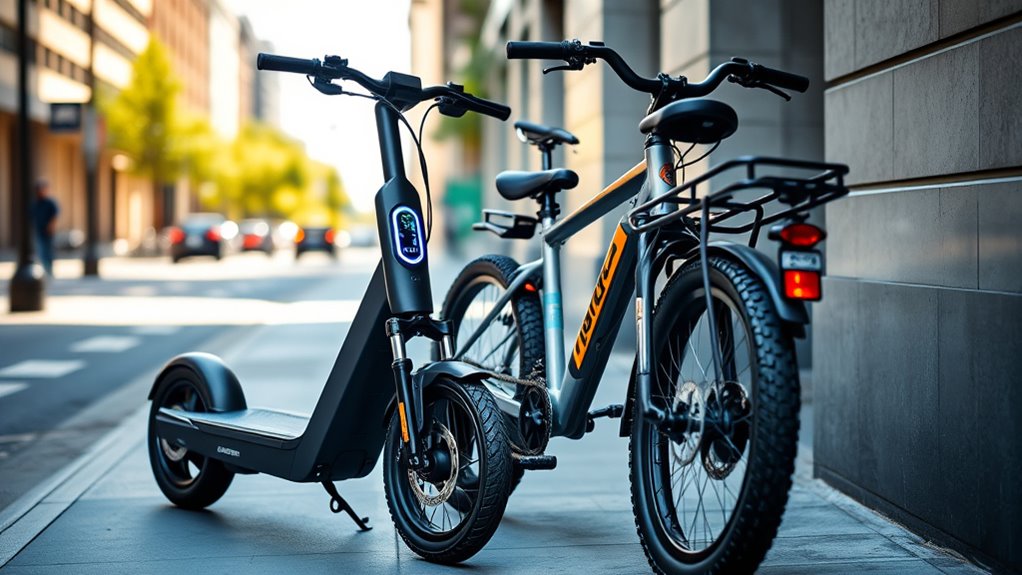

E-scooter rules focus mainly on speed limits of around 15 mph and often require riders to wear helmets, especially on shared services, with strict enforcement in many areas. In contrast, e-bike regulations depend on their classification—Class 1 or 2 generally top out at 20 mph, while Class 3 can reach 28 mph—sometimes with age restrictions. Understanding these differences helps you stay safe and compliant; if you keep going, you’ll uncover more about how these rules shape your ride.
Key Takeaways
- E-scooter laws typically restrict speeds to 15 mph and mandate helmets for rental users, with strict enforcement.
- E-bike regulations vary by classification, allowing speeds up to 20-28 mph, often with fewer helmet requirements for adults.
- Helmet laws for e-scooters are usually mandatory, while e-bike helmet rules depend on local jurisdiction and rider age.
- E-scooter speed limits are enforced via app controls, whereas e-bike speeds depend on classification and regional rules.
- Practical safety measures include helmet use and adherence to speed limits, with stricter regulations generally applied to e-scooter rentals.
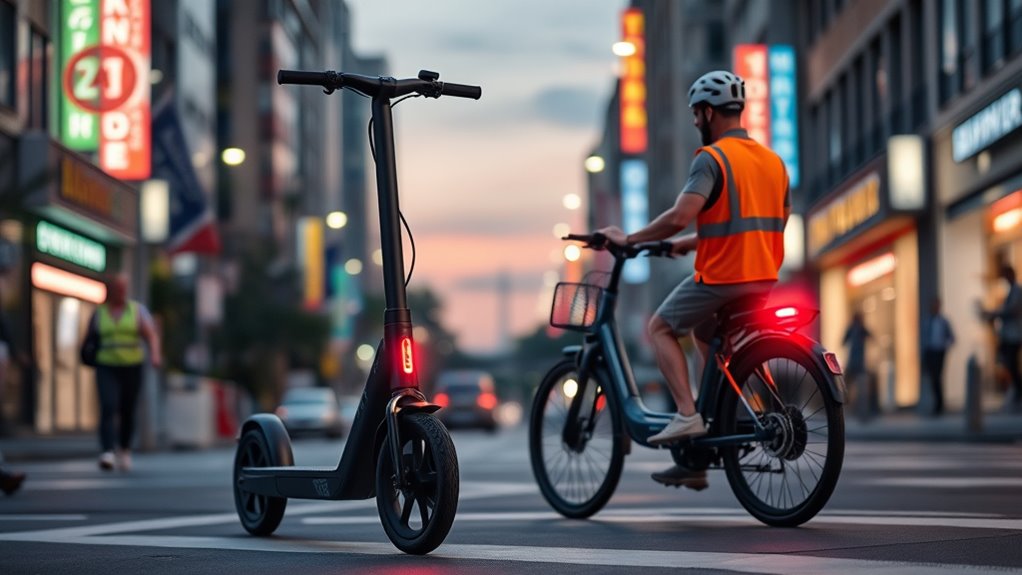
As e-scooters and e-bikes become increasingly popular modes of urban transportation, understanding the differences in their rules and regulations is vital for safe and legal riding. Two important areas to focus on are helmet laws and speed regulations, which vary between these two devices and can notably impact your safety and compliance.
Helmet laws are one of the most significant safety regulations to be aware of. In many cities, e-scooter riders are often required to wear helmets regardless of age, especially if the scooter is rented through a shared service. These laws are enforced to minimize head injuries in case of falls or collisions. On the other hand, e-bike helmet laws can be more nuanced. Some jurisdictions mandate helmets only for riders under a certain age, typically 18 or 21, while others leave helmet use optional for adults. If you’re riding your e-bike, it’s essential to check local regulations because failure to wear a helmet where it’s mandated can result in fines or penalties. Wearing a helmet is always a good safety practice, but knowing the specific laws helps you avoid legal trouble. Additionally, the technology used in high-quality projectors can significantly influence your viewing experience.
Helmet laws vary: e-scooter riders often must wear helmets, while e-bike requirements depend on local regulations and rider age.
Speed regulations also differ considerably between e-scooters and e-bikes. E-scooters are generally restricted to lower speeds, often capped at 15 mph (24 km/h), to reduce injury risk and promote safe sharing of crowded sidewalks and bike lanes. Many cities prohibit e-scooters from exceeding this limit, and some even enforce speed caps through app controls or hardware restrictions. E-bikes, however, tend to have more flexible speed limits. Many e-bikes are classified as Class 1 or Class 2, with top speeds of 20 mph (32 km/h), although Class 3 e-bikes can reach up to 28 mph (45 km/h). These higher speeds often come with additional regulations, such as the requirement to ride on bike paths or roads designated for faster traffic. Understanding these speed distinctions helps you stay within legal limits and avoid accidents or citations.
In essence, while both e-scooters and e-bikes are convenient urban transport options, they come with different rules about helmet use and speed regulation. Staying informed about these differences ensures you ride safely, legally, and responsibly. Always check local laws before hitting the streets, wear your helmet regardless of the law, and keep your speed within the permitted limits. Doing so not only keeps you safe but also helps foster a respectful and harmonious shared urban environment.
Frequently Asked Questions
Can I Use E-Scooters and E-Bikes Interchangeably in All Areas?
You can’t use e-scooters and e-bikes interchangeably everywhere because shared lanes and speed limits vary by area. Some places allow both, but others restrict e-scooters to specific paths or have lower speed limits for safety. Always check local regulations before riding. In some zones, e-bikes might be permitted on bike lanes, while e-scooters are limited to sidewalks or shared spaces. Stay informed to ride legally and safely.
Are Helmet Laws Different for E-Scooters and E-Bikes?
Imagine yourself gliding smoothly, helmet laws, and safety gear requirements vary between e-scooters and e-bikes. For e-scooters, you often need to wear a helmet, especially for riders under 18, and safety gear may be recommended. With e-bikes, helmet laws can be more flexible, but local regulations might still require helmets for safety. Always check specific rules to stay protected and ride responsibly on your adventure.
How Do Age Restrictions Vary Between E-Scooters and E-Bikes?
You’ll find that age restrictions differ between e-scooters and e-bikes due to licensing age differences and regulatory discrepancies. Generally, e-scooters require riders to be at least 16, while e-bikes often have a minimum age of 14 or 15, depending on local laws. These age limit discrepancies aim to guarantee rider safety, but always check your specific city or state regulations, as they can vary profoundly.
Do E-Scooters and E-Bikes Have Different Insurance Requirements?
You should know that e-scooters and e-bikes often have different insurance coverage and liability requirements. Generally, e-scooter users might need to carry specific insurance or meet liability standards depending on local laws, whereas e-bike regulations can vary more widely based on power and speed. It’s crucial to check your area’s rules to make sure you’re compliant, as insurance coverage and liability requirements can differ greatly between these two modes of transportation.
Are There Specific Parking Rules Unique to Each Vehicle Type?
You’ll find that e-scooters and e-bikes have distinct parking rules. E-scooters often require designated parking or parking zones to prevent clutter, while e-bikes may be parked in bike racks or designated bike parking areas. Visualize a city with clear parking zones—e-scooters neatly tucked into designated spots, and e-bikes securely parked at bike racks. Following these rules guarantees sidewalks stay clear and ensures smooth city mobility.
Conclusion
Now that you know the key differences between e-scooter and e-bike rules, you can confidently navigate the streets, feeling the breeze against your face as you glide smoothly or zip through busy city corners. Picture yourself riding responsibly, with the city lights flickering around you and the wind whispering past. Whether you’re cruising on an e-scooter or pedaling on an e-bike, understanding these rules keeps your journey safe and enjoyable—so hit the road with clarity and confidence.