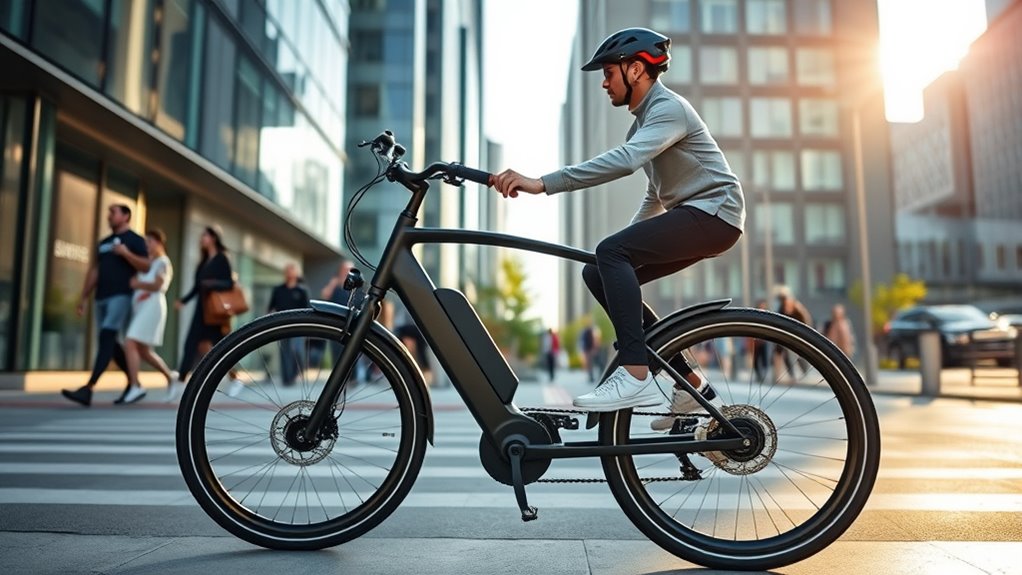

In 2025, your e-bike in the UK must have a motor no stronger than 250 watts and cut off assistance once you reach 15.5 mph. If your bike meets these criteria, you won’t need a license or registration to ride on public roads and cycle paths. Staying within these limits keeps your e‑bike legal and safe. Keep exploring to find out more about what steps you need to stay compliant in 2025.
Key Takeaways
- E‑bikes must have motor power limited to 250W and assistance cut off at 15.5 mph (25 km/h).
- No license or registration is required if the bike complies with power and speed limits.
- Batteries must meet European safety standards, ensuring safe performance and compliance.
- Bikes exceeding 250W or 15.5 mph are classified as motor vehicles, requiring registration and insurance.
- Staying informed of evolving regulations ensures legal riding and supports safety standards in 2025.

Are you familiar with the UK EAPC rules? If you’re considering riding an electric bike, understanding what qualifies as an E‑bike in 2025 is vital. The regulations have evolved, especially around battery regulations and licensing requirements, to guarantee safety and clarity for riders. An E‑bike, under the current UK rules, must meet specific criteria concerning its motor power and speed capabilities. Generally, if your bike’s motor doesn’t exceed 250 watts and it can’t assist beyond 15.5 mph, it’s classified as a legal E‑bike. This classification allows you to ride it on public roads and cycle paths without a license or registration, making it accessible for most riders.
Understanding UK E‑bike rules in 2025 ensures safe, legal riding with motor limits under 250 watts and 15.5 mph assistance.
Battery regulations are a fundamental part of these rules. The UK has strict standards regarding the type, safety, and capacity of batteries used in E‑bikes. The batteries must comply with European safety standards to prevent overheating, leaks, or other hazards. These regulations also specify how batteries should be tested and marked, ensuring manufacturers produce safe, reliable products. For you as a rider, this means that buying from reputable brands that adhere to these battery regulations guarantees a safer riding experience. Additionally, the capacity of the battery impacts the bike’s range but also influences licensing requirements. Bikes with larger batteries or higher power output might push the limits of the current regulations, potentially requiring registration or licensing in the future.
When it comes to licensing requirements, the UK has streamlined rules for E‑bikes that meet the standard criteria. If your bike falls within the legal limits—motor power up to 250 watts and assistance cut-off at 15.5 mph—you don’t need a license, insurance, or registration. However, if your E‑bike exceeds these limits, it could be classified as a motor vehicle, and you’d need to follow the same licensing rules as for mopeds or motorcycles. This includes obtaining a license, registering the vehicle, and possibly paying road tax. It’s essential to verify your bike’s specifications before riding on public roads to avoid legal issues.
As 2025 approaches, the UK’s EAPC rules continue to prioritize rider safety and clarity. Staying informed about battery regulations and licensing requirements guarantees you stay compliant and enjoy your rides without concern. Always check the specifications of your E‑bike, buy from compliant manufacturers, and keep an eye on any updates to regulations. Understanding these rules helps you make smarter choices and ride confidently within the law. Whether you’re commuting or exploring, knowing what counts as an E‑bike in 2025 keeps your riding experience smooth, safe, and legal.
As an affiliate, we earn on qualifying purchases.
Frequently Asked Questions
Are E‑Bikes Allowed on All UK Public Roads?
Yes, e-bikes are allowed on all UK public roads, but you need to make certain your e-bike meets licensing and insurance requirements. For example, if your e-bike exceeds certain power limits, you may need to register or have insurance. Always check your e-bike’s specifications and keep proof of licensing and insurance with you when riding. Following these rules helps you stay legal and safe on public roads.
What Safety Gear Is Mandatory for E‑Bike Riders?
You must wear a helmet while riding your e-bike, especially if you’re under 18. Reflective gear is also mandatory, so you should equip your bike with reflective materials or clothing to improve visibility, particularly at night or in low-light conditions. These safety measures help protect you on the road and ensure you comply with UK regulations, making your rides safer and more legal.
How Is E‑Bike Speed Regulated in Different Regions?
You’ll find that regional speed limits vary across different areas, with some regions capping e-bike speeds at 15.5 mph and others allowing up to 20 mph. Enforcement mechanisms, such as speed cameras and police checks, help guarantee riders stick to these limits. It’s important to stay aware of local regulations to avoid fines or penalties, and always ride responsibly within the designated speed zones for safety.
Can I Upgrade My E‑Bike to Improve Performance?
You can definitely upgrade your e-bike to boost performance, but it’s a coincidence that such modifications often involve battery upgrades and motor modifications. By swapping out your battery for a higher-capacity one or installing a more powerful motor, you can improve speed and range. Just remember, these changes might affect your bike’s compliance with local regulations and safety standards, so review rules before making enhancements.
Are There Age Restrictions for E‑Bike Riders in the UK?
In the UK, there are no specific age restrictions for riding e-bikes, but you must meet licensing requirements if your e-bike exceeds certain power limits. If your e-bike is classed as a standard pedal-assist, you can ride it without a license, regardless of age. However, for more powerful e-bikes, you might need to register or have a license, so check local regulations before riding if you’re under 18 or older.
electric bike battery safety standards
As an affiliate, we earn on qualifying purchases.
As an affiliate, we earn on qualifying purchases.
Conclusion
So, as you prepare for 2025, remember that understanding the UK EAPC rules isn’t just about compliance—it’s about staying ahead of the curve. Coincidentally, your next ride could be a game-changer, blending innovation with regulation seamlessly. Keep an eye on the latest updates, because what counts as an e-bike today might surprise you tomorrow. Stay informed, stay safe, and enjoy the ride—your journey into the future of e-biking starts now.
As an affiliate, we earn on qualifying purchases.
As an affiliate, we earn on qualifying purchases.