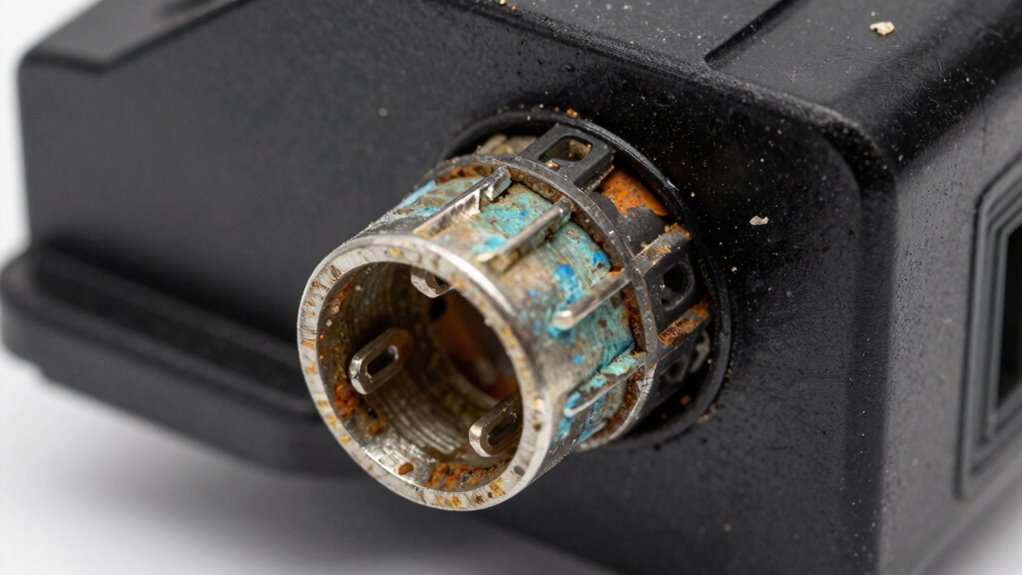

Dirty connectors can cause strange electrical problems because dirt, dust, and corrosion build up on contact surfaces, increasing resistance and disrupting signal flow. This can lead to flickering lights, sudden device shutdowns, or erratic behavior. Over time, high contact resistance reduces power efficiency and may damage components. If you want to understand how to prevent and fix these issues, keep exploring the specific causes and solutions that can help maintain reliable connections.
Key Takeaways
- Dirt and grime increase contact resistance, disrupting proper electrical flow and causing unpredictable device behavior.
- Corrosion deposits create oxide layers on contacts, leading to weak connections and intermittent issues.
- Contaminated connectors can cause voltage drops, resulting in flickering lights or sensor errors.
- Environmental exposure can compromise seal integrity, allowing further contamination and electrical malfunctions.
- High contact resistance from dirt buildup can cause overheating and premature component failure.
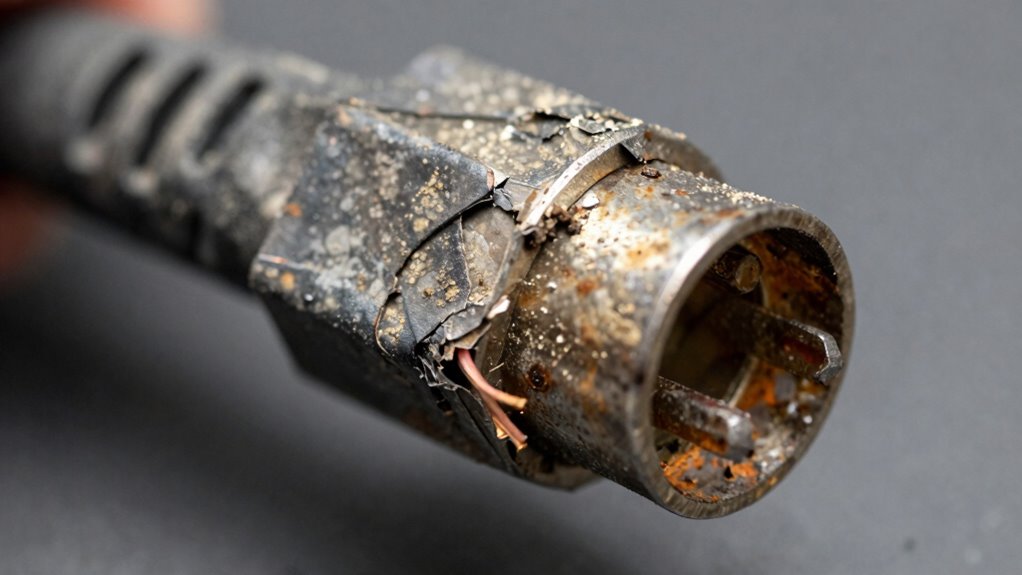
Dirty connectors are a common but often overlooked cause of electrical problems in vehicles and electronic devices. When connectors become contaminated with dirt, dust, or grime, they can develop issues that disrupt the flow of electricity, leading to unpredictable behavior or outright failures. One of the primary culprits behind these problems is battery corrosion, which often occurs at the terminals and can spread to the connectors. Corrosion creates a layer of oxide or other deposits that interfere with proper contact, increasing contact resistance and making it harder for electrical current to pass through. This buildup not only hampers performance but can also cause intermittent connections that are tough to diagnose.
Dirty connectors and corrosion disrupt electrical flow, causing unpredictable issues in vehicles and devices.
You might notice strange electrical symptoms—like flickering lights, erratic sensor readings, or sudden device shutdowns—that seem to come and go without a clear reason. These issues often stem from increased contact resistance caused by dirty or corroded connectors. As contact resistance rises, the voltage at the connection point drops, leading to insufficient power supply or signal loss. Over time, this can cause components to malfunction or wear out prematurely. Regularly inspecting and cleaning your connectors can prevent this buildup from becoming a serious problem.
When connectors are dirty, the electrical pathway becomes less efficient, forcing the current to seek alternative routes or causing voltage drops. This not only affects the device’s operation but also contributes to further corrosion, creating a vicious cycle. Battery corrosion, in particular, accelerates this process because the corrosive deposits can seep into the connector slots and prevent a solid, low-resistance connection. The resulting high contact resistance means your electrical system has to work harder, which can lead to overheating and additional damage. Maintaining clean, corrosion-free connections is vital to guarantee your electrical system functions smoothly and reliably. Additionally, understanding and preventing corrosion buildup can save time and money by avoiding extensive repairs later. Regular maintenance, including checking for signs of battery corrosion, can help catch issues early before they develop into costly problems. Ensuring that connectors are properly sealed and protected from environmental factors can further reduce the risk of corrosion, prolonging the life of your electrical system.
electrical connector cleaning kit
As an affiliate, we earn on qualifying purchases.
As an affiliate, we earn on qualifying purchases.
Frequently Asked Questions
How Often Should I Inspect Connectors for Dirt or Corrosion?
You should inspect connectors for dirt or corrosion during regular connector maintenance, ideally every 6 to 12 months. The inspection frequency depends on your environment; if you’re in a harsh or dusty area, more frequent checks are necessary. During each inspection, look for signs of dirt, corrosion, or damaged pins. Keeping connectors clean and dry helps prevent electrical issues, ensuring peak performance and longevity of your system.
Can Cleaning Connectors Damage Their Pins or Internal Components?
Cleaning connectors can risk damaging pins or internal components if you’re too aggressive or use harsh chemicals. While it’s tempting to remove all dirt, aggressive scrubbing might cause connector corrosion or worsen electrical interference issues. Think of it like delicate surgery—you need gentle hands and proper tools. If done carefully, proper cleaning prevents electrical interference caused by dirt and corrosion, ensuring your connections stay reliable without risking damage.
Are There Specific Cleaning Products Recommended for Electrical Connectors?
You should use electrical contact cleaners specifically designed for connectors, as they effectively clean without damaging pins or internal parts. Look for products that offer corrosion prevention to protect against future buildup. Avoid harsh chemicals or household cleaners, which can cause corrosion or degrade the connector’s material. Using the right electrical contact cleaners guarantees a thorough clean, preserves ideal conductivity, and extends the lifespan of your connectors.
What Are Signs of Hidden Connector Damage Beyond Dirt?
You notice subtle glitches or intermittent failures—hidden connector damage might be lurking. Look for signs like discoloration, corrosion, or a brittle, melted connector material, which indicate deeper issues beyond dirt. These problems can disrupt connections despite clean surfaces. To prevent further damage, prioritize corrosion prevention and guarantee connectors are properly sealed and maintained. If you spot these signs, it’s time to inspect thoroughly before costly repairs happen.
Do Environmental Factors Influence Connector Dirt Buildup?
Yes, environmental factors considerably influence connector dirt buildup. Environmental exposure, like dust, moisture, and pollution, accelerates contaminant accumulation on connectors. Humid conditions can cause corrosion, while airborne dirt and debris settle into connectors, leading to poor connections. By understanding these factors, you can take preventive steps, such as sealing connectors or reducing exposure, to minimize dirt buildup and maintain reliable electrical performance.
battery terminal corrosion cleaner
As an affiliate, we earn on qualifying purchases.
As an affiliate, we earn on qualifying purchases.
Conclusion
In fact, over 60% of electrical issues are caused by dirty connectors, making regular cleaning vital. When you keep your connectors clean, you prevent strange malfunctions and guarantee your devices run smoothly. Don’t overlook these tiny connections—they’re the heart of your system’s reliability. Staying proactive with simple maintenance can save you hours of troubleshooting. So, next time your gadget acts up, check those connectors first—you might just fix the problem in seconds!
automotive connector repair kit
As an affiliate, we earn on qualifying purchases.
As an affiliate, we earn on qualifying purchases.
electrical contact cleaner spray
As an affiliate, we earn on qualifying purchases.
As an affiliate, we earn on qualifying purchases.