
TL;DR

Get bike and ride gear delivered free with Prime
- Fast, free delivery on millions of items
- Prime Video, Amazon Music and more included
- Member-only deals all year
A report from the NextGen Mechanics initiative and European Cycling Industries estimates Europe needs 45,000 additional cycle mechanics now and 105,000 by 2032. It cites survey findings that repair barriers are linked to reduced cycling, while industry representatives say technical bikes and busy customers are bringing more work into shops.
A report by the NextGen Mechanics initiative and European Cycling Industries estimates that Europe needs 45,000 more cycle mechanics now to meet current demand, with a further workforce requirement bringing the total need to 105,000 by 2032. The report warns that gaps in access to bike repairs may be discouraging people from cycling, a concern as e-bikes and shared-bike fleets add to workshop demand.
The report draws on Shimano’s State of the Nation 2026 survey, which questioned 25,000 people. It says 212 million people across Europe experience barriers to maintaining their bikes. Among them, the report says, 121 million cycle less as a result and 7.6 million have stopped cycling altogether. These are survey-based estimates reported by the study, rather than a count of repair-shop customers.
The report also maps reported access to mechanics by country. It says 34.92% of Dutch cyclists reported barriers to maintaining their bikes. The United Kingdom was among the countries with fewer reported difficulties, but 40.92% of UK respondents still said they had repair-access issues. The report puts the share reporting problems at 55% in Romania and Turkey. The supplied findings do not give the full country-by-country methodology or explain how each type of barrier was defined.
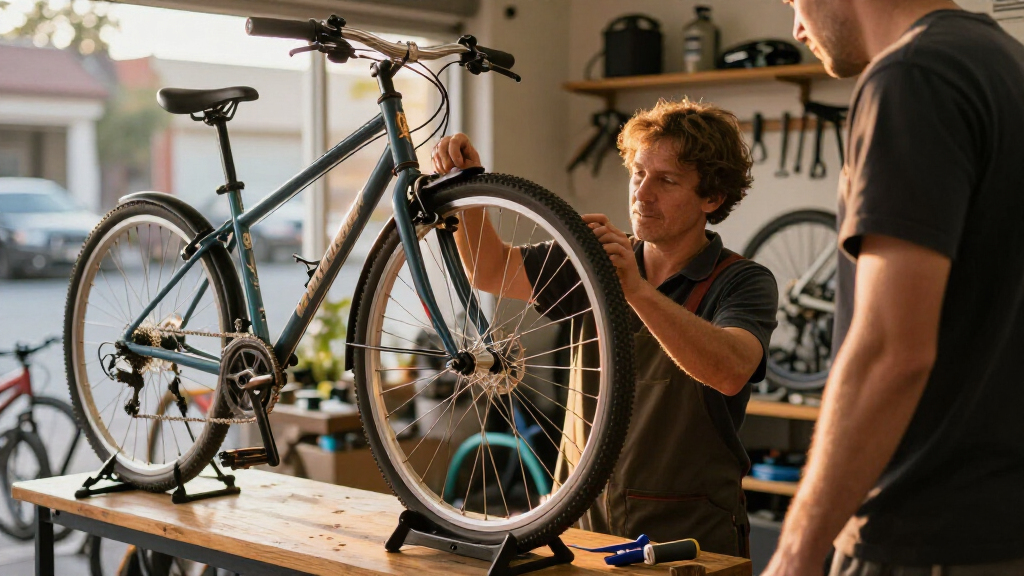
Industry representatives say demand is growing as bicycles become more complicated to service and more customers bring routine jobs to shops. Jonathan Harrison, director of the Association of Cycle Traders and Cytech, told Cycling Weekly that mechanics’ work includes e-bike electrical systems, software diagnostics and hydraulic components. Henry Silvester, of Silvester Bros. Cycles in Farnborough, said he had not seen the report but the figures did not surprise him. He estimated that customers now bring shops “pretty much 90%” of bike repairs, including punctures, tyre inflation and adjustments.
Repair Access Can Shape Cycling
A shortage of mechanics could affect more than workshop waiting times. If riders cannot get bikes repaired, they may cycle less or stop, as the report’s survey findings suggest. That matters to people who rely on bikes for daily trips, as well as to cities and operators seeking to support cycling and shared-bike services.
Harrison told Cycling Weekly that a lack of mechanics could undermine wider transport goals: if shared bikes are unavailable or privately owned bikes remain out of service, some people may turn back to public transport or cars. That is his assessment of the possible consequences, not a measured prediction in the report. The workforce estimate highlights a practical constraint in efforts to expand cycling: more bikes on roads and in fleets also mean more demand for skilled maintenance.
The report’s claim that 105,000 mechanics will be needed by 2032 may also affect training providers, bike businesses and people weighing career options. Harrison argued that the work should be seen as a skilled profession and better paid. The report does not set out a wage target or guarantee that additional demand will translate into higher pay.
Popular right now

KitchenAid Artisan 5-Quart Tilt-Head Stand Mixer, Blue Velvet

Ninja Foodi Smart 6-in-1 Indoor Grill and Air Fryer, 4 Qt, Black/Silver, FG551

Samsung 75-Inch The Frame Pro 4K Neo QLED Smart TV (QN75LS03FW)
As an affiliate, we earn on qualifying purchases.
More Technical Bikes, More Shop Work
The report links future mechanic demand to a growing bicycle market, including e-bikes, leasing and fleet models such as London’s Lime bikes. Those products can create repair needs beyond basic adjustments, particularly where electrical systems and diagnostics are involved. The article also quotes Silvester saying customers often use shops for simple repairs because they are short on time, not necessarily because they could not do the work themselves.
Harrison said the profession is sometimes treated as a stop-gap job, with too few prospects for pay and career progression. He said the initiative hopes to raise the perceived professionalism of bike servicing so wages and career interest can follow. He described the job as hands-on and skilled, and said that makes it relatively resistant to automation by AI. That is his characterization; the source does not provide an independent assessment of AI’s likely effect on mechanic employment.
Silvester said his business was seeing growth in repairs and that workshops had helped keep local bike shops running. He also said shop closures had fallen and new businesses were opening, though the source provides no figures for those trends. He expects the workforce and pay effects to take time to develop.
“A lot of them now will come to cycle shops for pretty much 90% of bike repairs.”
— Henry Silvester, Silvester Bros. Cycles
How the Shortfall Was Calculated
The source material does not detail how the report calculated the estimate of 45,000 mechanics needed now or the projected need for 105,000 by 2032. It also does not clarify whether the 2032 figure means 105,000 additional mechanics beyond today’s workforce, or a total workforce requirement. The report’s full methodology, assumptions about cycling growth and definition of a mechanic shortage are not provided in the article.
The Shimano survey figures describe respondents’ reported barriers and changes in cycling. The available material does not specify the survey’s country breakdown, the exact questions asked or how the Europe-wide totals were extrapolated. Silvester’s “90%” estimate relates to customers at his own shop and should not be read as an industry-wide statistic. It is also unclear how many of the projected roles will be in independent shops, fleet maintenance, manufacturing or other settings.
Training and Pay Are Key Tests
The NextGen Mechanics initiative and European Cycling Industries say the report is intended to draw attention to workforce needs and repair access. Harrison said he hoped it would begin work to raise the profession’s standing. The source does not announce a specific training programme, funding commitment, recruitment target or timetable for follow-up actions.
The next test will be whether the industry turns the estimate into practical steps: expanding mechanic training, improving career progression and addressing pay concerns, while building repair capacity for e-bikes and shared fleets. Readers and employers will need further detail on the report’s methodology and how progress will be measured against the 2032 projection.
For now, the reported figures point to a demand gap, but they do not show exactly how quickly employers can fill it or whether better access to repairs will reverse the reported decline in cycling among people facing maintenance barriers.
Key Questions
How many cycle mechanics does Europe need?
The report estimates that Europe needs 45,000 additional mechanics now to meet current demand and says 105,000 will be needed by 2032. The article does not clarify whether the later figure is an additional number or a total workforce requirement.
What did the Shimano survey find about bike repairs?
The report says the State of the Nation 2026 survey of 25,000 respondents found 212 million people across Europe experience barriers to maintaining bikes. It says 121 million cycle less as a result and 7.6 million have stopped cycling altogether.
Does the 90% repair figure apply across Europe?
No. The estimate that customers bring shops “pretty much 90%” of bike repairs came from Henry Silvester, describing his experience at Silvester Bros. Cycles. It is not a Europe-wide survey result.
Why are more mechanics needed?
The report points to current repair demand and growth involving e-bikes, leasing and shared-bike fleets. Harrison also said modern electrical systems, software diagnostics and hydraulic components make some bicycle repairs more technical.
Source: rss