You’ll know it’s time to replace your bike grips, pedals, or saddle if you notice slipping, tearing, or cracks, which can affect comfort and safety. Worn grips feel uneven or slip easily, pedals wobble or make noise, and saddles show tears or become uncomfortable. If these parts cause discomfort or seem damaged, it’s best to swap them out. Keep an eye on these signs to stay safe, and you’ll find out how to spot issues early.

Get bike and ride gear delivered free with Prime
- Fast, free delivery on millions of items
- Prime Video, Amazon Music and more included
- Member-only deals all year
Key Takeaways
- Check for slipping, tears, cracks, or missing parts on grips, pedals, or saddle surfaces.
- Look for uneven wear, loose components, or wobbling during use.
- Notice discomfort, numbness, or pain indicating worn or damaged contact points.
- Inspect for grinding, unusual noises, or instability during riding.
- Perform regular safety checks to identify early signs of deterioration before failure.
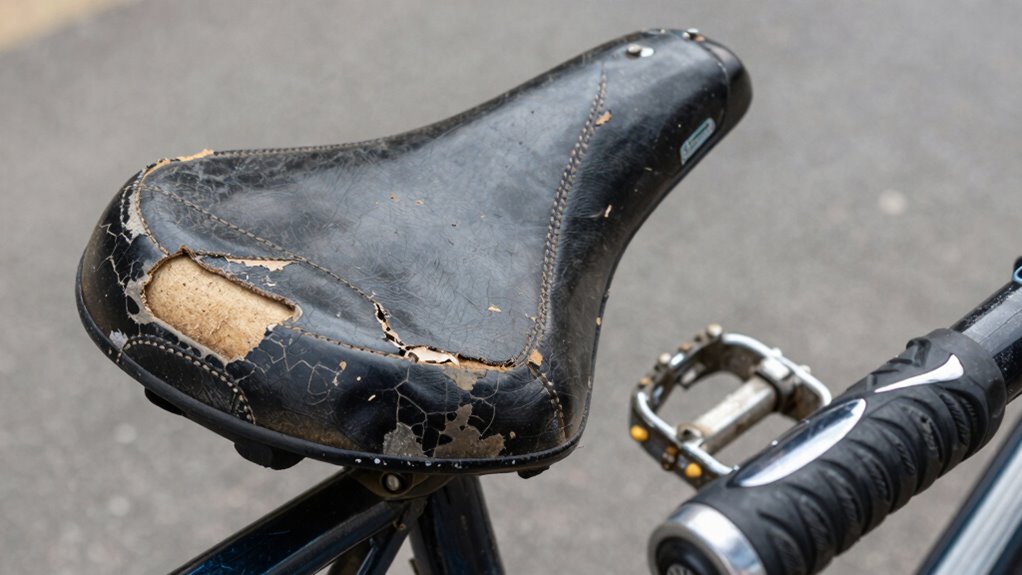
Knowing when to replace bike parts is essential for maintaining safe and efficient rides. Your bike’s grips, pedals, and saddle are vital contact points that directly affect your comfort and control. Over time, these parts wear out or become damaged, making it necessary to recognize the signs early. Doing so not only keeps your rides safe but also extends the lifespan of your bike. Incorporate regular bike maintenance tips and cycling safety checks into your routine to catch issues before they become serious problems.
Start with your grips. They’re the first point of contact when you’re riding, so if they’re slipping, torn, or worn smooth, it’s time for a replacement. Slippery grips reduce your control, especially on wet or rough terrain, increasing the risk of accidents. Check for cracks or chunks missing, and feel for any unevenness or loss of grip texture. If your hands start to slip more often or you notice discomfort, swapping out the grips will improve your safety and riding experience. Proper grip maintenance can help extend their lifespan and ensure a secure hold. Regularly inspecting your grips can prevent sudden failures during rides, especially in challenging conditions.
Worn or slipping grips compromise control; replace them for safer, more comfortable rides.
Pedals are another essential component that often gets overlooked. Worn or damaged pedals can be dangerous, especially if they make your feet unstable or cause your shoes to slip. Look for signs like excessive play, missing or loose reflectors, or a grinding sensation when you spin the pedals. If your pedals have a loose or wobbling feel, it indicates internal damage or wear. Also, if the surface of the pedals is chipped or the grip pins are worn down, replacing them will improve your pedal grip and power transfer. Remember, cycling safety checks should include a quick spin of the pedals to detect any unusual noise or movement. Pedal wear can significantly impact your riding efficiency and safety.
The saddle is fundamental for comfort and proper riding posture. If your saddle is cracked, torn, or visibly deformed, it’s time for a new one. An uncomfortable or damaged saddle can cause chafing, numbness, or even pain over long rides, impacting your performance and enjoyment. Keep an eye out for loose rails or broken padding, which can lead to instability. When the saddle no longer supports your riding position comfortably or causes discomfort, replacing it will make your rides more enjoyable and prevent long-term issues. Regularly inspecting your bike parts helps ensure bike safety, especially as components wear over time. Staying attentive to saddle condition can prevent discomfort that might lead to poor riding posture or injury.
bike handlebar grips replacement
As an affiliate, we earn on qualifying purchases.
As an affiliate, we earn on qualifying purchases.
Frequently Asked Questions
How Often Should I Inspect Bike Grips, Pedals, and Saddles?
You should inspect your bike grips, pedals, and saddles every few rides or monthly, especially if you ride frequently. Look for signs like worn or torn grips, loose pedals, or cracked saddles, which can affect your comfort and safety. Also, check your bike frame integrity and tire tread wear during these inspections to guarantee everything functions smoothly. Regular checks prevent unexpected failures and keep your ride safe and comfortable.
Can Worn Grips Cause Hand Numbness or Discomfort?
Worn grips can definitely cause hand numbness or discomfort, especially if the grip material becomes slick or uneven. Imagine riding for hours on a cracked, hard rubber grip — your hands might tighten involuntarily, leading to numbness. The lack of proper cushioning and grip can strain your nerves and muscles. Replacing worn grips with softer, textured materials helps improve comfort and reduces hand numbness during long rides.
Are There Specific Signs of Damage on Bike Pedals?
You’ll notice specific signs of damage on bike pedals, like excessive pedal wear or grip damage. If the pedals look worn down, have loose or broken parts, or the grip surface is smooth or torn, it’s time to replace them. These signs can affect your control and safety. Regularly inspecting your pedals helps catch damage early, ensuring a smooth, secure ride and preventing potential accidents caused by compromised pedal integrity.
What’s the Best Way to Clean and Maintain These Parts?
You might think cleaning is just about appearance, but it actually preserves material durability and extends your bike’s life. Use gentle cleaning tips like warm water and a soft brush for pedals, grips, and saddles. Avoid harsh chemicals that can degrade materials. Regular maintenance keeps parts functioning smoothly and prevents buildup that can cause damage. Remember, consistent cleaning and inspection help you catch early signs of wear and tear, ensuring a safer ride.
Do Replacement Parts Vary Between Bike Types?
Yes, replacement parts do vary between bike types because of bike material differences and compatibility of parts. For example, mountain bikes often require more durable grips and pedals suited for rough terrain, while road bikes use lightweight, sleek components. Always check your bike’s specifications and material compatibility before buying replacements. This guarantees a perfect fit and peak performance, making your ride safer and more comfortable.
As an affiliate, we earn on qualifying purchases.
Conclusion
Regularly inspecting your bike parts is key to safe riding. For instance, if your saddle feels cracked or your pedals wobble, it’s time for a replacement. Imagine riding confidently on smooth, secure grips—no slipping or discomfort. By paying attention to signs like wear, cracks, or decreased performance, you’ll keep your bike in top shape. Remember, catching these issues early can prevent accidents and make every ride more enjoyable. Stay vigilant, and enjoy your cycling adventures!
As an affiliate, we earn on qualifying purchases.
As an affiliate, we earn on qualifying purchases.
Halloween Picks
halloween
As an affiliate, we earn on qualifying purchases.