
When storing your e-bike battery for weeks without riding, keep it in a cool, dry, and well-ventilated spot away from direct sunlight. Partially charge it to 50-70% before disconnecting, and avoid fully charging or completely draining it. Check and recharge the battery every few weeks to maintain its health. Handle it gently, and keep it in a secure location, free from hazards. For detailed tips to keep your battery safe and long-lasting, continue exploring.
Key Takeaways
- Charge the battery to 50-70% before storage and disconnect it from the e-bike.
- Store in a cool, dry, well-ventilated area away from direct sunlight and extreme temperatures.
- Check and recharge the battery every few weeks to maintain optimal charge level.
- Handle the battery gently, avoiding tampering, leaks, or damage during storage.
- Recycle the battery responsibly at a certified disposal center when no longer in use.

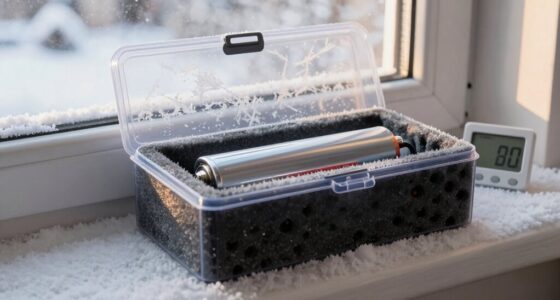
Storing your e-bike battery properly is vital to maintaining its performance and longevity. When you know you won’t be riding for several weeks, taking the right steps guarantees your battery stays healthy and ready to go when you need it again. First, aim to store the battery in a cool, dry place, away from direct sunlight or extreme temperatures. Excessive heat can accelerate battery degradation, while cold environments might temporarily reduce its capacity. Ideally, keep the battery at room temperature, around 68°F to 77°F (20°C to 25°C).
Store your e-bike battery in a cool, dry place at room temperature to preserve its performance and lifespan.
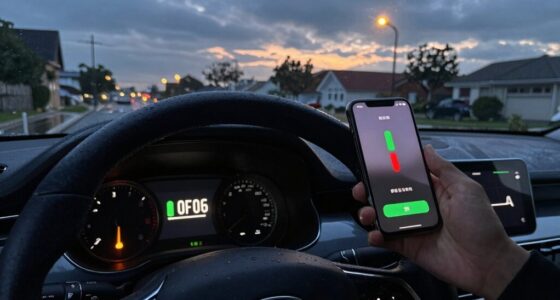
Before storing, make sure the battery is partially charged, ideally around 50-70%. Avoid storing it fully charged or completely discharged, as both extremes can harm the battery over time. If your battery has a built-in charge indicator, use it to check the level; if not, use a multimeter or follow manufacturer guidelines. During this period, it’s vital to follow proper charging precautions. Don’t leave the battery plugged in for extended periods, as overcharging can damage the cells, reduce capacity, and shorten its lifespan. Instead, charge it to the recommended level and then disconnect. If you’re storing it for months, check the battery every few weeks and recharge to the ideal level if it drops markedly. Additionally, understanding the importance of battery recycling helps ensure proper disposal when the battery reaches the end of its lifespan or shows signs of reduced performance. Proper storage also involves care when disposing of or recycling your battery later on. When the battery reaches the end of its lifespan or shows signs of reduced performance, avoid tossing it in the trash. Instead, look for local battery recycling programs or certified disposal centers. Recycling your battery prevents harmful chemicals from polluting the environment and allows valuable materials to be recovered and reused. This responsible approach is vital for sustainable e-bike use and aligns with environmental best practices. Proper storage also involves being aware of battery safety precautions to prevent potential hazards. While storing, do not attempt to modify or tamper with the battery’s casing or terminals. Handling it gently prevents damage that could lead to leaks or safety hazards. If you notice any swelling, leaks, or corrosion, discontinue use and take the battery to a professional for inspection or recycling. To further reduce risks, store batteries in ventilated areas, which helps dissipate any residual heat or gases. Knowing the correct storage conditions and precautions can significantly extend your battery’s lifespan and ensure safe handling. Remember, by following these storage tips, you’re extending your battery’s life and guaranteeing it remains safe and effective for future rides. Proper storage, combined with responsible disposal, helps you get the most out of your e-bike battery and supports eco-friendly practices in the long run.

FLASLD E-Bike Battery Safe Bag Explosionproof – Large Capacity Fireproof Lipo Bag for Ebike Battery Charging and Storage (19.3 x 4.3 x 7in)
- Safeguards LiPo Batteries: Protects during charging, transit, and storage
- Fireproof and Waterproof: Reduces damage risk, waterproof silicone coating
- Three-proof Design: Fireproof, explosionproof, waterproof, up to 1800℉
As an affiliate, we earn on qualifying purchases.
As an affiliate, we earn on qualifying purchases.
Frequently Asked Questions
Can I Leave My E-Bike Battery Outside During Storage?
You shouldn’t leave your e-bike battery outside during storage. Exposure to weather can damage the battery, leading to safety hazards and reduced lifespan. Instead, store it in a cool, dry place away from direct sunlight, and keep it partially charged around 50-70%. When recycling the battery, use proper channels. Also, store charging accessories separately to prevent accidental discharge or damage. Proper storage guarantees safety and extends your battery’s life.
How Often Should I Check the Battery During Long-Term Storage?
You should check your e-bike battery every 4 to 6 weeks during long-term storage. This practice guarantees proper battery maintenance and storage safety, preventing issues like capacity loss or damage. When checking, ensure the battery’s charge stays around 50-70%. If it drops below, recharge it slightly. Regular inspections keep your battery in good shape and avoid potential safety risks, making sure it’s ready for your next ride.
Is It Better to Store the Battery Fully Charged or Partially Charged?
It’s better to store your e-bike battery partially charged, around 40-60%, for ideal battery maintenance. Fully charging or completely discharging can harm the battery over time. Follow good charging practices by checking the charge level periodically and topping it up as needed. This approach helps preserve battery health during long-term storage, ensuring it’s ready to go when you’re back to riding.
What Temperature Range Is Ideal for Storing an E-Bike Battery?
You should store your e-bike battery at a temperature between 50-68°F (10-20°C). This range helps protect the battery chemistry and prevents degradation. Keep the storage environment dry and control humidity to avoid corrosion or damage. High humidity can harm the battery, so choose a cool, dry place. Maintaining this temperature and humidity balance guarantees your battery stays healthy during periods of inactivity.
Can I Store the Battery in a Sealed Container?
Coincidentally, storing your e-bike battery in a sealed container isn’t advisable because it can trap moisture, leading to battery corrosion. While sealing the container might seem like a good idea to keep out dust, it can create a humid environment that harms the battery. Instead, choose a breathable, moisture-resistant container, store it in a cool, dry place, and guarantee proper ventilation to prevent corrosion and maintain ideal battery health during long-term storage.
As an affiliate, we earn on qualifying purchases.
Conclusion
So, next time you plan to leave your e-bike parked for a few weeks, remember these storage tips. Keep the battery in a cool, dry place, and make sure it’s partially charged—around 50-60%. Will neglecting these steps cause your battery to lose its power faster? Probably. By following these simple guidelines, you’ll help preserve your battery’s health and ensure it’s ready to ride when you are. Why not give your e-bike the care it deserves?

Attwood Group 24 Vented Marine Battery Box
- Battery Compatibility: Fits Group 24 marine and RV batteries
- Size Dimensions: Interior measures 10.6 x 7 x 10.125 inches
- Durable Material: Impact-tested polypropylene construction
As an affiliate, we earn on qualifying purchases.
As an affiliate, we earn on qualifying purchases.

EZ on the Earth – Dry Cell Battery Recycling Container Kit – 1 Gallon Battery Recycling Pail – Pre-Paid/Mail-Back Recycle kit that Holds up to 13.2 lbs Batteries – Recycling Pail with Cardboard Box
- UN Approved Battery Container: Holds various dry cell batteries
- Easy Recycling Process: Drop batteries, attach label, send back
- Environmental Protection: Prevents landfill disposal of batteries
As an affiliate, we earn on qualifying purchases.
As an affiliate, we earn on qualifying purchases.