To responsibly dispose of your e-bike batteries, take them to designated recycling centers or authorized collection points instead of throwing them away with regular trash. Proper recycling prevents hazardous materials like lithium and cobalt from contaminating land and water while allowing valuable materials to be recovered. Follow local guidelines for safe disposal and consider working with certified facilities that handle e-waste. Continuing will help you understand more about protecting the environment and staying compliant.

Get bike and ride gear delivered free with Prime
- Fast, free delivery on millions of items
- Prime Video, Amazon Music and more included
- Member-only deals all year
Key Takeaways
- Always take old e-bike batteries to authorized recycling centers or designated collection points.
- Avoid discarding batteries with regular waste to prevent environmental hazards.
- Follow local guidelines and regulations for proper battery disposal and recycling procedures.
- Use certified e-waste facilities equipped to handle hazardous materials safely.
- Recycling recovers valuable materials, reduces environmental impact, and supports sustainability efforts.
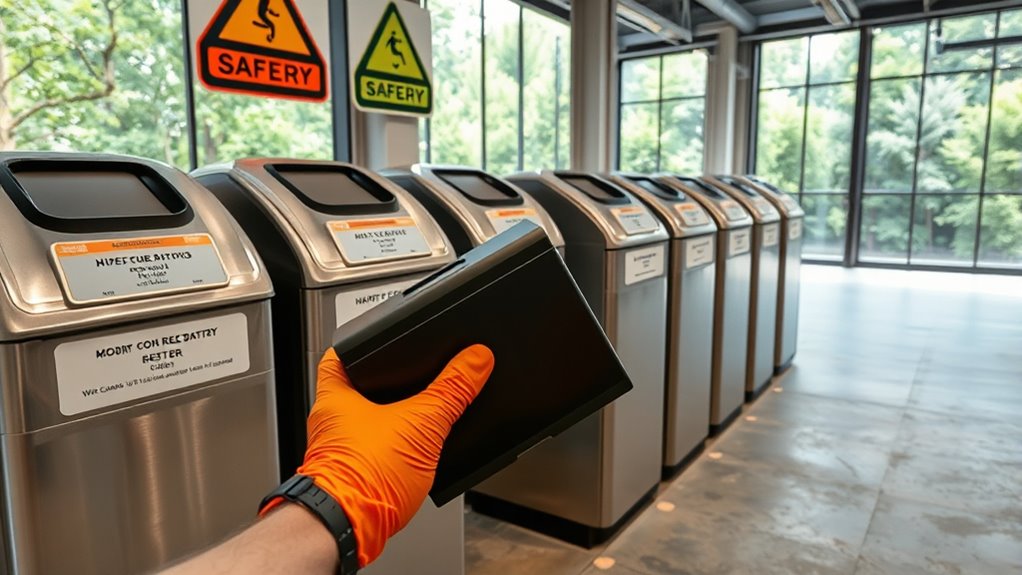
As e-bike popularity continues to surge, recycling e-bike batteries becomes more essential than ever. When you replace or upgrade your e-bike battery, it’s vital to understand how to handle the old one properly. Proper battery collection is the first step in ensuring these batteries don’t end up in landfills where they can pose serious environmental risks. Instead of discarding your used e-bike batteries with regular waste, you should take them to designated recycling centers or collection points. Many communities now offer specific drop-off locations for batteries, so look for local programs or authorized e-waste collection sites. By doing so, you help prevent hazardous waste from contaminating soil and water sources, which can happen if batteries are improperly disposed of.
E-bike batteries contain hazardous materials like lithium, cobalt, and other chemicals that can be highly damaging to the environment and human health if mishandled. When you participate in proper battery collection, you’re actively reducing the risk of these substances leaking into the ecosystem. It’s not just about environmental impact; mishandling batteries can also pose safety hazards, including fires or chemical spills. Recycling facilities are equipped to safely process these batteries, extracting valuable materials for reuse and ensuring hazardous waste is managed responsibly. This process not only conserves resources but also minimizes the need for mining new raw materials, making your e-bike use more sustainable. Moreover, using proper recycling methods ensures compliance with regional regulations and promotes responsible disposal practices.
As an affiliate, we earn on qualifying purchases.
Frequently Asked Questions
How Can I Identify if My E-Bike Battery Needs Recycling?
You can tell if your e-bike battery needs recycling by checking its battery health and charge cycle count. If your battery’s capacity drops markedly or it struggles to hold a charge, it’s likely time to recycle it. Additionally, if you’ve reached or exceeded the recommended charge cycles, the battery’s performance may decline, signaling it’s due for proper disposal. Regularly monitoring these signs helps you decide when to recycle responsibly.
Are There Specific Disposal Regulations for E-Bike Batteries in Different Countries?
Think of e-bike batteries as treasure chests that need careful handling. You’ll find that disposal regulations vary across countries, often guided by international standards. Many nations have dedicated disposal programs to ensure safe recycling, but rules differ—some demand special drop-offs, others impose strict bans. Always check local regulations, follow official disposal programs, and don’t toss your battery in the trash; responsible disposal safeguards both your community and the planet.
What Are the Environmental Impacts of Improper Battery Disposal?
Improper battery disposal can cause serious environmental pollution, contaminating soil and water with toxic chemicals. When you neglect proper battery recycling, hazardous materials like heavy metals leach into ecosystems, harming wildlife and human health. By responsibly recycling your e-bike batteries, you prevent environmental pollution and help reduce the harmful impact of toxic waste, ensuring a cleaner, safer planet for everyone.
Can E-Bike Batteries Be Refurbished or Repurposed?
Sure, e-bike batteries can be refurbished or repurposed, but isn’t it ironic that we often overlook their potential? You can participate in battery recycling programs or explore battery reuse options to extend their life. Instead of tossing them out, you help reduce environmental impact and conserve resources. Embracing refurbishment and reuse not only benefits the planet but also gives these batteries a second chance, proving there’s more to them than just disposal.
What Safety Precautions Should I Take When Handling Damaged Batteries?
When handling damaged batteries, you should wear personal protective equipment like gloves and safety goggles to prevent chemical burns or electrical shocks. Always handle damaged batteries with care, avoiding punctures or crushing that could cause leaks or fires. Work in a well-ventilated area, and keep a fire extinguisher nearby. If a battery is severely damaged, consider contacting professionals for safe disposal or repair to guarantee your safety.
lithium battery recycling container
As an affiliate, we earn on qualifying purchases.
As an affiliate, we earn on qualifying purchases.
Conclusion
By recycling your e-bike batteries properly, you’re doing your part to protect the environment and conserve resources. Don’t let the opportunity slip through your fingers—responsible disposal is the responsible thing to do. Remember, every small step counts in making a big difference. When you take action today, you’re helping turn the tide on waste and ensuring a cleaner, greener future for everyone. After all, a little effort now can save the day later.
As an affiliate, we earn on qualifying purchases.
certified e-waste recycling center
As an affiliate, we earn on qualifying purchases.
As an affiliate, we earn on qualifying purchases.
Fall Picks
fall essentials
As an affiliate, we earn on qualifying purchases.