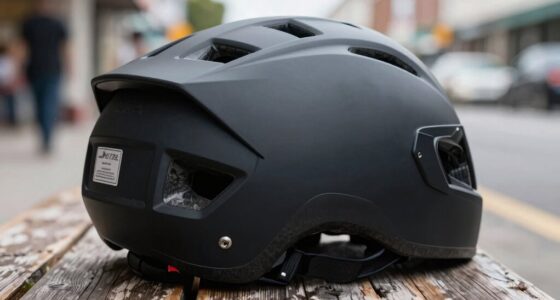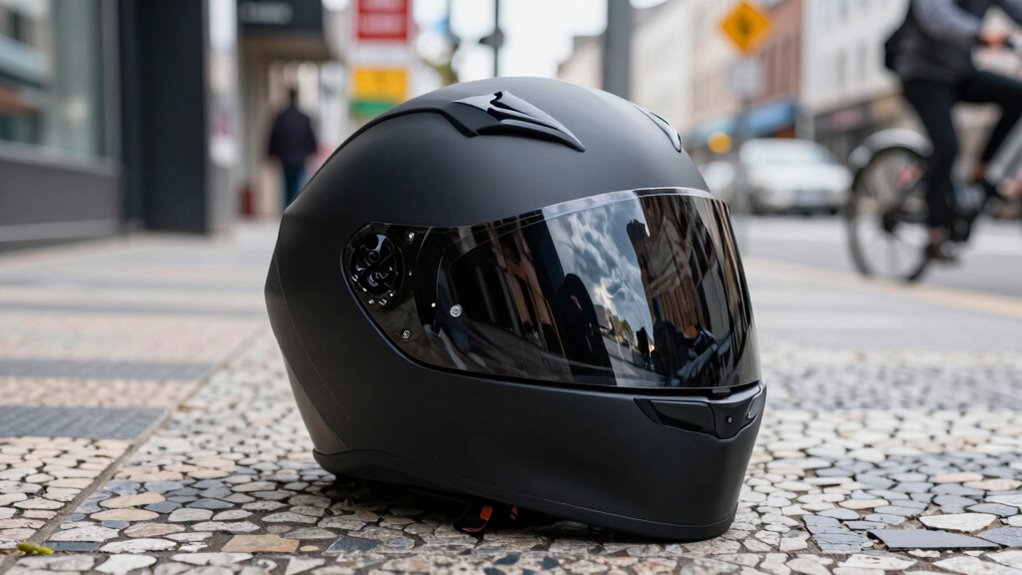

Full-face helmets are great for commuting when safety, communication, and aerodynamic efficiency matter most, especially on longer or higher-speed rides. They provide full protection and built-in systems that keep you connected while reducing distractions. However, they can feel bulky for short city trips, and their weight might be uncomfortable during quick stops. If you want to know more about when these helmets make sense or fall short, keep exploring the details.
Key Takeaways
- Full-face helmets offer maximum protection and safety, making them ideal for long-distance or high-speed commuting.
- They improve aerodynamics and reduce wind noise, benefiting riders on extended or faster routes.
- Less suitable for short, urban trips with frequent stops due to their weight and bulkiness.
- Integrated communication systems enhance connectivity but require maintenance, making them better for dedicated commuters.
- Modular or lighter helmets may be preferable for city riding, where quick face access and agility are prioritized.

When it comes to daily commuting, full-face helmets offer unmatched protection and peace of mind. You might find that their extensive coverage shields your entire head, face, and chin, reducing the risk of injury in case of an accident. Beyond safety, many full-face helmets now come equipped with integrated communication systems, allowing you to connect effortlessly with fellow riders or stay in touch with loved ones during your commute. This feature can be a game-changer if you rely on your phone for navigation or need to coordinate with others. The seamless integration of communication devices within the helmet minimizes distractions and keeps your focus on the road.
Full-face helmets provide unmatched protection and integrated communication for safer, more connected daily commutes.
Another advantage that full-face helmets bring to daily commuters is aerodynamic efficiency. Unlike open-face options, these helmets are designed with sleek, contoured shapes that cut through the air more effectively. This reduces wind resistance, helping you conserve energy and maintain stability at higher speeds. When you’re riding through city streets or on highways, this aerodynamic design minimizes buffeting and noise, making your commute more comfortable. Plus, a well-ventilated full-face helmet can help regulate temperature, preventing you from overheating during long rides or hot days.
However, despite these benefits, full-face helmets aren’t always the best choice for every commuter. If your route involves short trips, frequent stops, or urban riding where speed isn’t a concern, the added weight and bulk might feel cumbersome. Some riders also find that the integrated communication systems require regular maintenance or updates, which can be inconvenient. Additionally, if you prefer a more open feeling or need quick access to your face for tasks like eating or drinking, a full-face helmet could be restrictive.
It’s also worth noting that the aerodynamic benefits are most noticeable at higher speeds. If you chiefly ride in slow-moving city traffic, the efficiency gains may be minimal. In such cases, lighter or modular helmets might suit your needs better, offering comfort and convenience without sacrificing safety. Ultimately, whether a full-face helmet makes sense depends on your riding style, comfort preferences, and safety priorities. If safety, integrated communication, and aerodynamic efficiency are high on your list, then investing in a quality full-face helmet could be a smart move. But if your rides are short or involve lots of stop-and-go traffic, you might want to consider other helmet types better suited to urban commuting.
Frequently Asked Questions
Are Full-Face Helmets Legal for All Types of City Commuting?
Full-face helmets are legal for city commuting if they meet helmet standards and legal requirements in your area. You should check local laws, as regulations vary by city and country. Generally, as long as your helmet complies with safety standards like DOT or ECE, and you’re following the legal requirements, you’re permitted to wear a full-face helmet while commuting. Always verify specific rules to stay compliant and safe.
How Do Full-Face Helmets Affect Communication With Other Cyclists?
A full-face helmet can feel like talking through a thick wall, making voice communication with other cyclists challenging. When group riding, you might struggle to hear or be heard clearly, which can hinder coordination and safety. However, some helmets come with built-in microphones or Bluetooth tech, so you can stay connected. Just be aware that these features might reduce awareness of surrounding sounds vital for city commuting.
Can Full-Face Helmets Be Comfortably Worn With Glasses?
Yes, you can comfortably wear glasses with a full-face helmet. Look for helmets with good ventilation to reduce visor fogging, which can make wearing glasses uncomfortable. Adjustable vents help circulate air, preventing moisture buildup on your visor and glasses. Make certain the helmet fits snugly but isn’t too tight, so your glasses don’t press uncomfortably against your face. With the right helmet, commuting becomes comfortable and clear.
What Is the Average Lifespan of a Full-Face Helmet?
Like a vintage record, your full-face helmet lasts about 5 to 7 years with proper care. Regular helmet cleaning keeps it fresh, while good helmet storage prevents damage from sunlight or extreme temperatures. Over time, the shell and padding may degrade, reducing protection. Keep an eye on cracks or worn-out foam, and replace it sooner if needed. Proper maintenance guarantees your helmet stays safe and comfortable longer.
Are Full-Face Helmets Suitable for Short, Low-Speed Trips?
Full-face helmets can work for short, low-speed trips, but they might not be the best choice for comfort. You’ll benefit from their superior protection, especially if accidents happen unexpectedly. However, they can feel bulky and warm during quick rides. If you prioritize comfort and convenience for brief, slow trips, consider a modular or open-face helmet instead. Still, if safety is your main concern, a full-face helmet provides excellent coverage.
Conclusion
So, next time you gear up for your commute, ask yourself: is a full-face helmet really the safest choice? Will you face unexpected hazards that demand maximum protection? Or can you embrace a lighter, more breathable option today? Remember, the right helmet can be a game changer—but only if you choose wisely. The road ahead is full of surprises. Are you ready to make that call before it’s too late?