To make certain your helmet fits properly in just 60 seconds, start with the “two-finger” strap check. Buckle the chin strap and snug it down until you can comfortably fit only two fingers between the strap and your chin. Too many fingers mean it’s too loose, risking wobbling during a crash. If it’s too tight, you may be uncomfortable. Keep practicing this quick check, and you’ll discover simple tips to get it right every time.

Get bike and ride gear delivered free with Prime
- Fast, free delivery on millions of items
- Prime Video, Amazon Music and more included
- Member-only deals all year
Key Takeaways
- Place the helmet level on your head, covering the forehead just above the eyebrows for proper positioning.
- Use the “two-finger” rule: fit only two fingers between the strap and your chin; more or fewer indicates improper tightness.
- Check that side straps form a “V” shape under your ears and the buckle is centered below your chin for stability.
- Shake your head; the helmet should not slide, wobble, or shift to ensure a secure fit.
- Regularly perform this quick check to confirm your helmet fits correctly and provides optimal safety.
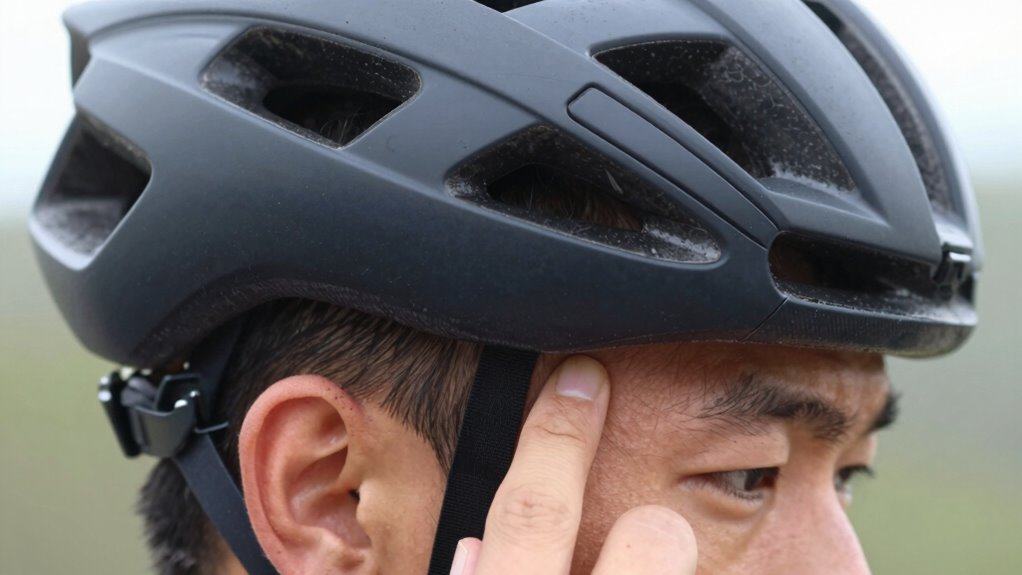
Ever wonder if your helmet fits properly in just 60 seconds? Many riders overlook the importance of a well-fitted helmet, but it’s vital for helmet safety. A helmet that’s too loose or too tight can compromise protection during a crash. Fortunately, checking your helmet’s fit is quick and straightforward, especially when you know what to look for. The most common method is the “two-finger” check, which many people fail to perform correctly. Understanding helmet styles can also help you choose the right helmet that fits comfortably and securely.
To start, place your helmet on your head, making sure it sits level and covers your forehead just above your eyebrows. The key is that it shouldn’t wobble or shift easily when you move your head. Now, with your helmet in place, try the two-finger test. You should be able to fit only two fingers between the strap and your chin. If you can fit more, the strap isn’t tight enough, and your helmet may not stay secure during a fall. Conversely, if your fingers don’t fit, the strap might be too tight, causing discomfort and possibly reducing blood flow. Adjust the strap so that it’s snug but not constricting, ensuring you can comfortably breathe and move your jaw.
Next, check the side straps. They should form a “V” shape that fits snugly under your ears, with the buckle centered below your chin. This ensures the helmet is stable and won’t shift sideways during movement. When you shake your head, the helmet should stay in place without sliding or wobbling. This quick test is essential because a helmet that doesn’t fit correctly might not absorb impact properly or could come off during a crash. Proper helmet fit is also supported by helmet safety standards that ensure the equipment provides the necessary protection. Different helmet styles, such as full-face, open-face, or modular helmets, can influence how you perform these fit checks. For example, full-face helmets often require more precise fit because they cover more of your face, while open-face helmets give more room but still need to sit securely on your head. Regardless of style, the goal is a firm fit that feels comfortable and stable. Remember, helmet safety isn’t just about choosing the right helmet but also about ensuring it fits perfectly every time you ride. Taking just a minute to do this simple check can make all the difference in keeping you protected on your journey.
As an affiliate, we earn on qualifying purchases.
Frequently Asked Questions
Can the “Two-Finger” Check Be Used for All Helmet Types?
You can use the “two-finger” check for most helmet types, but it’s not foolproof for all, especially those with unique helmet materials or ventilation systems. Helmets with advanced ventilation or softer materials might require a different fit assessment. Always verify your helmet is snug but comfortable, and consider additional checks if your helmet has complex features, to guarantee proper protection and airflow.
How Often Should I Recheck My Helmet Fit?
You should recheck your helmet fit every time you put it on, or at least once a month, to keep safety standards up to snuff. Helmets can settle or shift over time, and regular helmet maintenance guarantees you’re protected. Think of it as tightening a loose screw before it causes trouble—staying vigilant keeps your safety standards high. A quick fit check helps prevent surprises and keeps you riding safe.
What Signs Indicate My Helmet No Longer Fits Properly?
If your helmet no longer fits properly, you’ll notice discomfort or your helmet shifting during rides. Check for loose straps or if the helmet feels too tight or too loose, affecting comfort and safety. Proper strap tightness ensures it stays secure without causing pressure points. If you experience discomfort or movement, it’s time to reexamine the fit. A well-fitting helmet should feel snug but comfortable, with no pinching or excessive looseness.
Does Helmet Fit Vary Between Bike and Motorcycle Helmets?
Yes, helmet fit varies between bike and motorcycle helmets because they follow different helmet standards and have distinct padding designs. Motorcycle helmets typically offer more padding for impact absorption and a snugger fit, while bike helmets prioritize ventilation and comfort. Always guarantee your helmet fits snugly, with proper padding, regardless of type, and check that it meets relevant helmet standards for safety. Proper fit prevents injury and enhances protection.
Are There Different Fit Guidelines for Children’s Helmets?
Think of children’s helmets as tailored suits for their tiny heads. You should choose a helmet size that’s snug but not tight, ensuring it stays secure. Age-appropriate fit is vital because a helmet that’s too big or small won’t protect effectively. Always check that the helmet sits level, covers the forehead, and that you can fit two fingers between the strap and chin. Proper fit keeps your little one safe and comfortable.
As an affiliate, we earn on qualifying purchases.
Conclusion
Now that you know the quick “two-finger” test, you’re better equipped to protect your head in seconds—like a knight checking their armor before battle. Remember, a helmet that fits right isn’t just about comfort, it’s about safety. Don’t let a poor fit be your Achilles’ heel. With this simple check, you’re ready to face any ride confidently, knowing you’ve got your helmet’s fit as tight as King Arthur’s trust in Excalibur.
As an affiliate, we earn on qualifying purchases.
As an affiliate, we earn on qualifying purchases.
Fall Picks
fall essentials
As an affiliate, we earn on qualifying purchases.