To handle sudden temperature swings, focus on layering with moisture-wicking base layers made from fabrics like merino wool or polyester, which keep sweat away from your skin. Add versatile insulation like fleece or lightweight down that can easily be shed or added as needed. Choose materials that offer breathability and quick-drying properties to stay comfortable and dry. Knowing how to select flexible layers helps you stay prepared for changing weather—keep going to discover more tips.
Key Takeaways
- Prioritize moisture-wicking base layers to keep sweat away from the skin during sudden temperature changes.
- Use lightweight, quick-drying insulating layers like fleece or down for easy adjustment.
- Select breathable fabrics that allow moisture to escape while providing insulation.
- Layer versatility is essential; choose pieces that can be added or removed quickly.
- Recognize fabric properties for effective moisture management and thermal regulation in fluctuating weather.
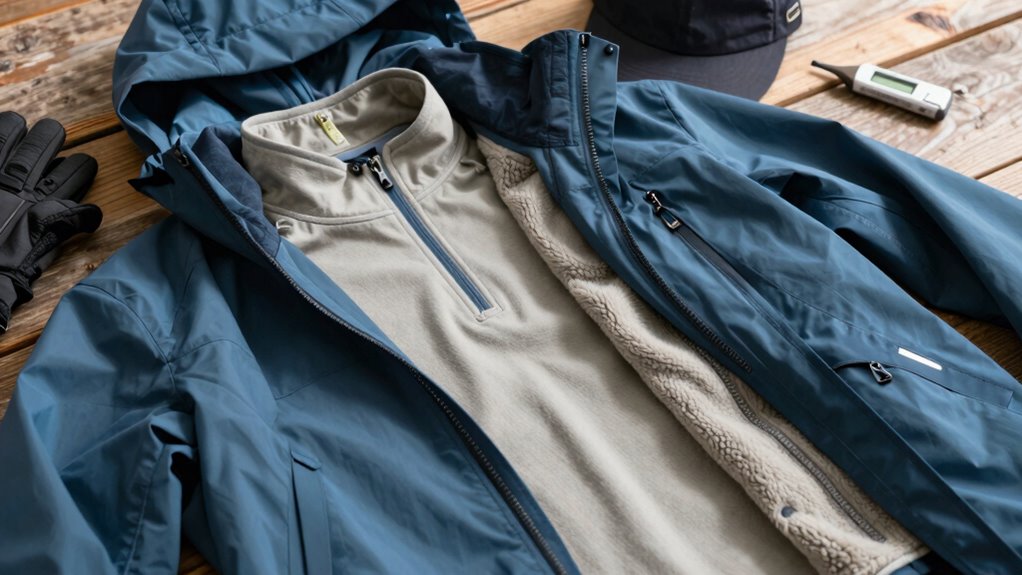
When facing unpredictable temperature swings, choosing the right layers can make all the difference in staying comfortable and warm. You need to think about layer materials that work well together and adapt to changing conditions. The key is to select fabrics that provide insulation but also wick moisture away from your skin, preventing you from feeling clammy or chilled. The core principle is moisture management—keeping sweat away so your body stays dry and temperature regulation remains effective.
Start with a base layer made from moisture-wicking materials such as merino wool, synthetic fibers like polyester, or nylon. These fabrics pull sweat from your skin quickly, helping you stay dry even if the temperature suddenly drops or rises. Avoid cotton because it absorbs moisture and dries slowly, which can leave you feeling damp and cold. When your base layer efficiently manages moisture, it prevents the chill that comes from wet clothing pressed against your skin, especially when the temperature dips unexpectedly. Incorporating moisture-wicking fabrics into your layering system is crucial for effective temperature regulation.
Choose moisture-wicking base layers like merino wool or polyester to stay dry and prevent chill from damp clothing.
Next, add an insulating layer that traps body heat without sacrificing moisture control. Fleece, down, or wool are excellent options for insulation because they provide warmth while still allowing moisture to escape. If you anticipate a rapid temperature change, choose an insulating layer that’s lightweight and easy to remove or add as needed. For example, a fleece jacket can be quickly shed if the sun comes out, or layered back on if a cold front moves in. The goal is to maintain a balance—warm enough to combat the cold, but breathable enough to let moisture escape. Additionally, selecting appropriate layer materials that excel in both insulation and moisture management is essential for fluctuating weather conditions. Recognizing the importance of layer versatility can further enhance your comfort during sudden temperature shifts. Being aware of the different properties of these materials helps you make better choices for unpredictable weather, particularly when considering the breathability of your layers.
moisture-wicking base layer shirts
As an affiliate, we earn on qualifying purchases.
As an affiliate, we earn on qualifying purchases.
Frequently Asked Questions
How Do I Adjust Layers for High-Intensity Outdoor Activities?
For high-intensity outdoor activities, you should layer smartly by starting with moisture-wicking base layers to stay dry. Adjust your layers as you heat up or cool down—add or remove a lightweight insulating layer or shell as needed. When layering for hiking or adjusting for mountain biking, focus on flexibility and breathability, ensuring you can easily adapt to changing conditions without overheating or getting chilled.
What Materials Are Best for Extreme Cold Temperature Fluctuations?
Imagine you’re hiking in unpredictable cold weather. For extreme temperature fluctuations, you need insulation materials like down or synthetic fill that trap heat well, combined with breathable fabrics to wick moisture away. These materials work together to keep you warm during cold spells and prevent overheating during active moments. Selecting layered pieces made from these fabrics guarantees your body stays comfortable, no matter how rapidly temperatures change.
How Can I Prevent Overheating During Sudden Temperature Increases?
To prevent overheating during sudden temperature increases, skip the layering myths that suggest adding multiple bulky layers; instead, choose lightweight, breathable clothing that offers durability. Opt for moisture-wicking fabrics that keep sweat away from your skin, and remove layers promptly as it warms up. This strategy helps you stay comfortable and avoid overheating, ensuring your clothing remains durable and effective in changing conditions.
Are There Specific Layers for Rainy Versus Dry Cold Weather?
Think of your layers as a weatherproof fortress. For rainy cold weather, you’ll want waterproof gear that keeps you dry and breathable fabrics to prevent overheating. In dry cold, opt for insulating layers that trap warmth without moisture-wicking concerns. Always choose versatile, moisture-resistant layers for rain, and lightweight, insulating options for dry cold, so you’re prepared no matter what Mother Nature throws your way.
How Often Should I Update My Layering System for Seasonal Changes?
You should update your layering essentials at least twice a year during seasonal shifts. As temperatures change, reassess your layers to guarantee they provide adequate insulation and protection. Pay attention to weather patterns, and add or remove items accordingly. This proactive approach helps you stay comfortable and prepared, making your seasonal shift smoother and confirming your layering system remains effective for sudden temperature swings.
lightweight fleece jacket for layering
As an affiliate, we earn on qualifying purchases.
As an affiliate, we earn on qualifying purchases.
Conclusion
Just like a well-prepared fortress withstands sudden storms, choosing the right layers keeps you comfortable through temperature swings. Think of layering as your personal armor—flexible, adaptable, and ready for anything. When you select versatile pieces that can be added or removed easily, you’re building a shield against unpredictable weather. Stay ahead of the forecast, and you’ll navigate those sudden temperature swings with confidence and ease, no matter what Mother Nature throws your way.
quick-drying down insulation layer
As an affiliate, we earn on qualifying purchases.
As an affiliate, we earn on qualifying purchases.
versatile outdoor layering system
As an affiliate, we earn on qualifying purchases.
As an affiliate, we earn on qualifying purchases.