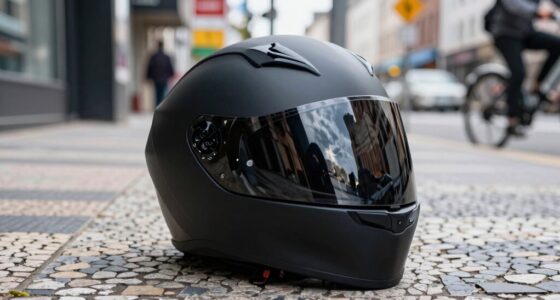
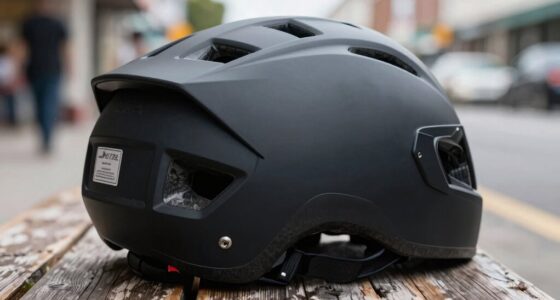
In a crash, a MIPS helmet can actively reduce rotational forces that cause serious head injuries, unlike non-MIPS helmets which rely only on foam padding. MIPS helmets allow the helmet to slide relative to your head, absorbing some energy and decreasing the risk of concussions or severe trauma. Particularly in angled or oblique impacts, MIPS offers better protection by controlling energy transfer. To understand how this impacts your safety further, keep exploring the key differences.
Key Takeaways
- MIPS reduces rotational forces during a crash, lowering the risk of head injuries like concussions.
- It offers enhanced protection in angled or oblique impacts by controlling energy transfer.
- Helmets with MIPS help prevent severe head and neck injuries for passengers.
- MIPS technology can indirectly minimize vehicle damage by reducing impact forces transmitted to the head.
- Overall, MIPS provides superior safety by better managing rotational impact forces compared to non-MIPS helmets.
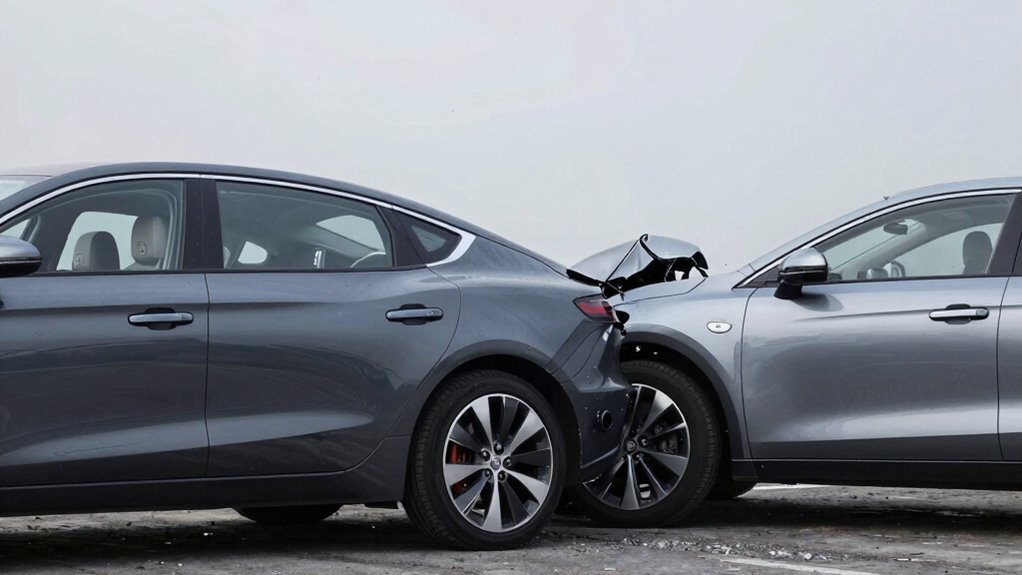
When evaluating crash outcomes, understanding the difference between MIPS and non-MIPS protection systems is essential. These systems influence how your helmet responds during an impact, which can markedly affect both engine damage and passenger injuries. MIPS (Multi-directional Impact Protection System) is designed to reduce rotational forces transmitted to your head and neck during a crash. In contrast, non-MIPS helmets rely solely on traditional foam padding, which absorbs some impact but doesn’t specifically address rotational motion. This distinction isn’t just a technical detail; it can determine the severity of injuries you sustain and the extent of damage to your vehicle’s engine compartment.
During a collision, rotational forces are often the main culprit behind serious head injuries. MIPS technology allows the helmet to slide slightly relative to your head, absorbing some of these forces before they reach your skull. This can considerably lower the risk of passenger injuries, especially in angled or oblique crashes where rotational motion is pronounced. Without MIPS, those forces are transferred directly to your head, increasing the likelihood of concussions or more severe trauma. For the driver, this means the difference between a manageable injury and a life-altering one.
From an automotive perspective, the type of helmet you wear can also indirectly influence engine damage. In high-impact crashes, a helmet that reduces rotational forces can prevent the driver’s head from striking the dashboard or steering wheel violently. This reduces the chance of intrusion into the engine bay, which can lead to engine damage. When the head strikes parts of the vehicle with more force, it can result in structural damage that’s costly to repair and can compromise safety further. MIPS helmets help control the energy transfer, potentially minimizing the force transmitted to critical vehicle components during a crash. Additionally, understanding the impact dynamics involved in crashes can help you better appreciate how helmet technology plays a vital role in safety outcomes.
Choosing a MIPS helmet doesn’t just protect your head; it offers a broader safety advantage. Less rotational force means a lower likelihood of passenger injuries and less damage to key vehicle parts. While no helmet can prevent all injuries or damage, MIPS technology provides a tangible edge in managing complex impact dynamics. It’s a smart investment for anyone who values safety in crashes where angular forces are involved. Ultimately, understanding these differences helps you make better decisions, ensuring you’re not only protecting yourself but also reducing the risks of costly vehicle damage and severe injuries during an accident.
Frequently Asked Questions
How Does MIPS Impact Insurance Premiums After a Crash?
MIPS can lower your insurance premiums after a crash by qualifying you for insurance discounts, as it demonstrates your commitment to safety. This potentially results in better claim settlements, since insurers see you as a lower risk. By actively improving your safety features with MIPS, you’re more likely to enjoy reduced costs and faster claim processing, making your riding experience more affordable and secure.
Are Mips-Equipped Vehicles More Expensive to Repair?
Think of MIPS-equipped vehicles like high-tech gadgets—more advanced, but often pricier to repair. A cost analysis shows repairs can be more complex because specialized parts and calibration are needed. I once saw a MIPS system repair that took longer and cost 30% more than a standard repair. So, yes, MIPS vehicles tend to be more expensive to fix due to repair complexity.
Can MIPS Technology Prevent Injuries in Severe Crashes?
Yes, MIPS technology can help prevent injuries in severe crashes. It enhances helmet safety by allowing a small amount of rotational movement during impact, reducing the risk of brain injuries. By improving injury reduction, MIPS-equipped helmets provide better protection, especially in high-impact situations. This innovation helps you stay safer on the road, giving you peace of mind knowing that your helmet offers advanced safety features designed to minimize injury risks.
Is MIPS Standard in All New Vehicle Models?
Think of MIPS as a new safety feature, like seat belts becoming standard. Not all new vehicles include MIPS technology yet because vehicle manufacturing still prioritizes traditional safety standards. While some brands offer it on select models, it’s not universally standard across all new vehicles. As consumer demand grows, more manufacturers are likely to adopt MIPS to meet evolving safety standards.
How Does MIPS Compare to Other Crash Safety Systems?
You’ll find that MIPS offers superior helmet efficacy compared to standard systems, as it reduces rotational forces during crashes. Unlike some other safety systems, MIPS is designed to move slightly within the helmet, providing better protection. Plus, many insurance companies offer discounts for helmets with MIPS, saving you money while enhancing safety. Overall, MIPS stands out by combining advanced protection with potential financial benefits, making it a smart choice for riders.
Conclusion
Understanding the difference between MIPS and non-MIPS ratings can markedly impact your safety decisions. Did you know that vehicles with higher MIPS scores can reduce rotational crash forces by up to 45%? This statistic highlights how choosing a helmet with MIPS can make a real difference in protecting your head during a crash. So, next time you’re shopping for safety gear, consider the MIPS rating—your head’s safety might depend on it.