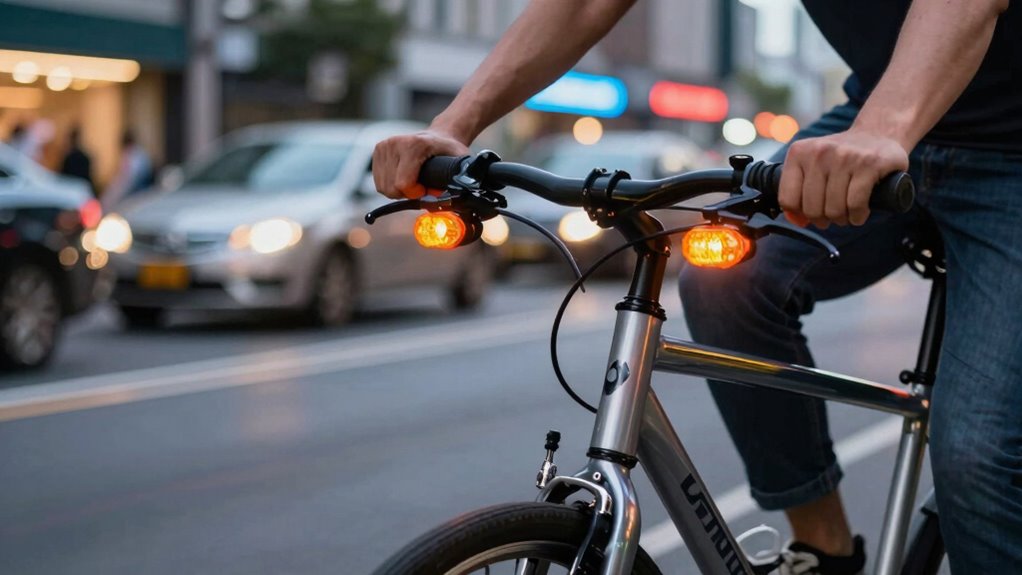

Using turn signals on faster urban rides helps you communicate your intentions clearly to other drivers and pedestrians, reducing confusion and unexpected stops. Proper signaling allows you to coordinate turns and lane changes smoothly, preventing bottlenecks and accidents. It also helps pedestrians anticipate your movements, making crossings safer. By signaling early and consistently, you can maintain better traffic flow and avoid delays. Keep exploring to discover more ways signals improve your urban riding experience.

Get bike and ride gear delivered free with Prime
- Fast, free delivery on millions of items
- Prime Video, Amazon Music and more included
- Member-only deals all year
Key Takeaways
- Turn signals communicate driver intentions early, allowing for smoother and quicker lane changes in busy traffic.
- Proper signaling reduces hesitation and sudden stops, maintaining a steady flow of urban traffic.
- Clear signals help other drivers anticipate movements, preventing delays and congestion during rapid urban rides.
- Effective signaling enhances pedestrian safety by providing predictable crossing cues in congested areas.
- Consistent turn signaling promotes organized traffic, reducing confusion and facilitating faster urban commutes.
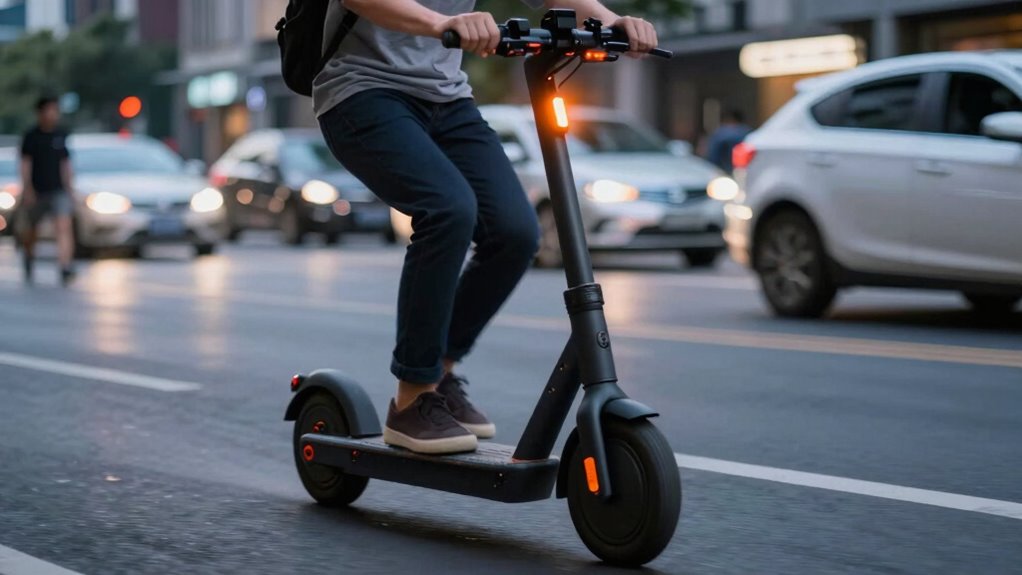
In busy urban environments, quick communication between riders and drivers can substantially reduce delays and improve safety. Turn signals play a fundamental role in this process by providing clear, immediate cues about your intentions. When you activate your turn signal, you’re not just indicating your next move—you’re helping everyone around you understand your plans, which is especially important amidst the chaos of city traffic. Pedestrian awareness benefits markedly from this simple act because pedestrians rely heavily on vehicle signals to gauge when it’s safe to cross. When drivers signal properly, pedestrians can better anticipate turns or lane changes, reducing the risk of accidents and making crossings safer and more predictable. Proper use of vehicle signaling also contributes to a more comfortable driving experience for everyone involved.
Using turn signals improves pedestrian safety and helps everyone understand your intentions amid busy urban traffic.
Traffic flow management also hinges on effective use of turn signals. Urban roads are often congested, with vehicles constantly merging, turning, or changing lanes. Your signals help orchestrate this movement smoothly, preventing sudden stops or last-minute maneuvers that can cause bottlenecks or collisions. By signaling early and clearly, you alert other drivers of your intentions, allowing them to adjust their speed or position accordingly. This coordinated effort keeps traffic moving steadily, reducing the chances of gridlock during peak hours. When everyone uses turn signals consistently, it minimizes confusion and hesitation among drivers, which are common culprits behind unnecessary delays. Additionally, consistent signaling contributes to traffic flow management, making urban rides more efficient. Recognizing the importance of driver communication can dramatically improve overall road safety and efficiency. Incorporating proper signaling habits into your driving routine is essential for fostering a safer and more organized traffic environment.
Popular right now

eufy E25 Robot Vacuum and Mop with HydroJet Roller Mop, 20,000 Pa Suction

KitchenAid Artisan Series 5-Quart Tilt-Head Stand Mixer, Dried Rose

Dyson V8 Cyclone Cordless Vacuum
As an affiliate, we earn on qualifying purchases.
Frequently Asked Questions
How Do Turn Signals Improve Traffic Flow in Busy Cities?
Turn signals improve traffic flow in busy cities by clearly communicating your intentions to other drivers, reducing sudden stops or surprises. When your vehicle is well-maintained, signals work reliably, ensuring safety. Plus, following road signage and using signals properly helps coordinate lane changes and turns, preventing congestion. This smooth communication keeps traffic moving efficiently, especially during rush hours, making city driving safer and less stressful for everyone.
Are There Specific Turn Signal Regulations for Urban Areas?
Yes, there are specific turn signal regulations in urban areas, even if it seems obvious. You’re expected to signal your turns to improve parking regulations and pedestrian interactions, ensuring everyone stays safe. Ironically, many drivers ignore these rules, risking accidents. Proper use of turn signals helps coordinate with pedestrians and other drivers, making city driving smoother. So, follow the regulations diligently—your signals are more essential than you might think!
What Are the Best Types of Turn Signals for City Riding?
For city riding, LED turn signals are your best choice because they’re highly visible and energy-efficient. Consider motorcycle accessories like signal extensions or bright, reflective covers to improve signal visibility even in busy urban environments. These enhancements guarantee your signals stand out, helping you communicate your intentions clearly to other drivers. Prioritizing high-quality, visible signals keeps you safer and more predictable, especially amid the fast-paced, unpredictable nature of urban traffic.
How Do Turn Signals Affect Rider Safety During Rush Hours?
During rush hours, turn signals greatly boost your safety by clearly communicating your intentions to other drivers. Using proper signal timing and hand gestures ensures you’re predictable, reducing sudden movements that could cause accidents. When you signal early, others can anticipate your actions, especially in dense traffic. Combining electronic turn signals with hand gestures makes your intentions more visible, helping you navigate busy urban streets more confidently and safely.
Can Turn Signals Reduce the Risk of Accidents in Urban Environments?
Turn signals are your car’s eyes and voice, making vehicle visibility and pedestrian awareness clear. When you signal, you’re guiding others through the busy streets like a lighthouse in fog, reducing the risk of accidents. By clearly indicating your intentions, you help pedestrians and fellow drivers anticipate your moves, creating a safer urban environment. So, always use your turn signals—they’re your best tools for steering through the chaos safely.
Conclusion
Using your turn signals isn’t just about legal compliance—it’s about safety and efficiency on busy city streets. When you signal your intentions clearly, you help other drivers anticipate your moves, reducing surprises and potential accidents. So, next time you’re steering through urban traffic, ask yourself: do I want to be a cautious rider or a reckless one? Turning on your signals might just be the smartest move you make for a faster, smoother ride.