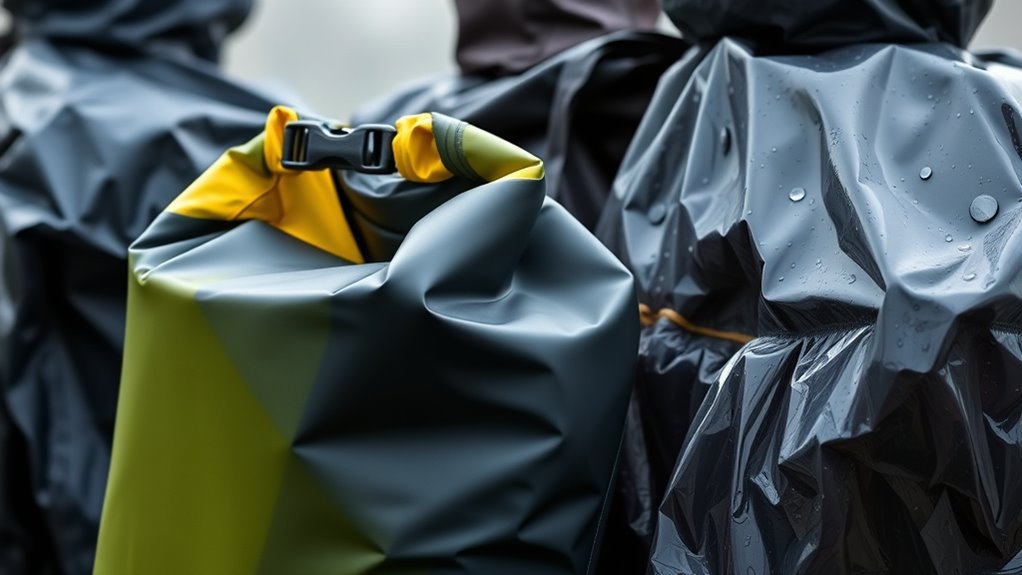

To keep your belongings dry in rain-safe bags, use waterproof features like sealed seams, waterproof zippers, and durable fabrics such as PVC or coated nylon. Fold-over or roll-top closures add extra rain protection, while waterproof liners or drybags inside provide added security. Make sure all seals and zippers are in good shape before heavy rain. With these tricks, you’ll stay dry—discover more tips to maximize your waterproofing efforts.
Key Takeaways
- Use waterproof drybags or liners inside your bag to add an extra moisture barrier.
- Apply rain covers or waterproof shells over your bag for external protection during heavy rain.
- Opt for bags with waterproof zippers, sealed seams, and water-resistant materials for maximum water resistance.
- Employ fold-over or roll-top closure systems to prevent water ingress at openings.
- Regularly check and maintain seals, zippers, and covers to ensure continued waterproof effectiveness.

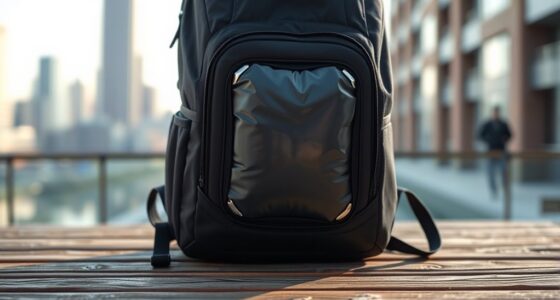
Rain‑safe bags are designed to protect your belongings from unexpected downpours, ensuring your items stay dry no matter the weather. When choosing a rain‑safe bag, one of the key features to look for is waterproof zippers. Unlike standard zippers that can allow water to seep in through tiny gaps, waterproof zippers are specially designed with a sealing strip or coating that keeps moisture out. These zippers create a tight barrier, even during heavy rain or splashes, giving you peace of mind that your gear remains dry.
Waterproof zippers ensure your belongings stay dry during heavy rain or splashes.
Another vital element in ensuring your bag stays waterproof is seam sealing. Seams are often the weak points where water can enter, especially if the fabric has a lot of stitched sections. Seam sealing involves applying a waterproof tape or sealant along the stitched areas, preventing water from wicking through the thread holes. When combined with waterproof zippers, seam sealing greatly enhances the overall water resistance of your bag. Many high-quality rain‑safe bags come with sealed seams as a standard feature, but if you’re customizing or repairing a bag, make sure to apply seam sealing tape properly to maintain its waterproof integrity.
It’s also worth noting that just having waterproof zippers and sealed seams isn’t enough if your bag isn’t made from waterproof material. Look for bags crafted from durable, waterproof fabrics like PVC, TPU, or coated nylon. These materials inherently resist water penetration, further boosting your bag’s ability to keep contents dry. Additionally, consider how the bag’s closure system works; some bags fold over or have roll-top designs that create a barrier against rain, complementing the waterproof zippers and sealed seams.
When packing your rain‑safe bag, organize your belongings in waterproof liners or drybags inside to add an extra layer of protection. Even with all these features, no bag is completely waterproof if not used properly. Always check the bag’s seals and zippers before heading out in the rain, and make sure they’re securely closed. During heavy downpours, avoid exposing the bag to prolonged water contact or submersion, as no waterproof feature can guarantee complete protection in extreme situations.
In short, choosing a bag with waterproof zippers and properly sealed seams is essential to keep your gear dry in wet conditions. These features work together to block water ingress at the most vulnerable points, ensuring your valuables stay safe and dry, no matter how fierce the storm. Incorporating waterproof materials into your selection process can significantly improve your bag’s overall resistance to water.
Frequently Asked Questions
What Materials Are Best for Waterproof Bags?
You should look for waterproof fabrics like TPU, PVC, or nylon with a waterproof coating, which keep your belongings dry. Make sure the bag uses seam sealing to prevent water from seeping through stitch holes. These materials are durable and reliable, especially when combined with proper seam sealing techniques, ensuring your gear stays dry no matter the weather. This way, you can confidently carry your essentials without worry.
How Do I Clean and Maintain Waterproof Covers?
You might think waterproof covers are low-maintenance, but investigating reveals that proper care extends their lifespan. To clean, first check the bag material compatibility to avoid damage. Use gentle cover cleaning techniques like rinsing with mild soap and cold water, then air dry away from direct sunlight. Avoid harsh chemicals and abrasive scrubbers, ensuring your waterproof covers stay effective and durable while maintaining their water-resistant properties.
Are Drybags Suitable for Electronic Devices?
Drybags are excellent for digital device protection because their waterproof bag features keep your electronics safe from water damage. They’re suitable for electronics, especially during outdoor activities or in rainy weather. Make sure to choose a drybag with a secure closure and high-quality waterproof material. This way, you can confidently store your digital devices, knowing they’re protected from water, dust, and dirt, ensuring peace of mind wherever you go.
Can Liner Tricks Be Used With All Bag Types?
Liner tricks can work with many bag types, but not all. Think of it like fitting a puzzle piece; your bag’s material compatibility determines success. For example, silicone liners work well with smooth, waterproof fabrics, while fabric bags need special liner application techniques to prevent leaks. You should assess your bag’s material first and choose the right liner method to guarantee your belongings stay dry no matter the bag type.
How Do I Ensure a Waterproof Seal During Heavy Rain?
To guarantee a waterproof seal during heavy rain, you should use proper sealing techniques like overlapping flaps and tight closures. Invest in bags with waterproof zippers, which provide an extra barrier against water ingress. Additionally, consider lining your bag with a plastic liner or using sealing tape on seams for added protection. Always double-check all closures and seams before heading into heavy rain to keep your gear dry.
Conclusion
Now that you know all the tricks to keep your gear completely dry, you’ll never fear a sudden downpour again. With these rain-safe bags, covers, and liners, your belongings are practically invincible against any storm Mother Nature throws your way. Imagine your equipment staying bone-dry through even the fiercest rainstorms—it’s like having an impenetrable fortress protecting your gear! So go ahead, embrace the rain—your dry, happy adventure awaits, rain or shine!