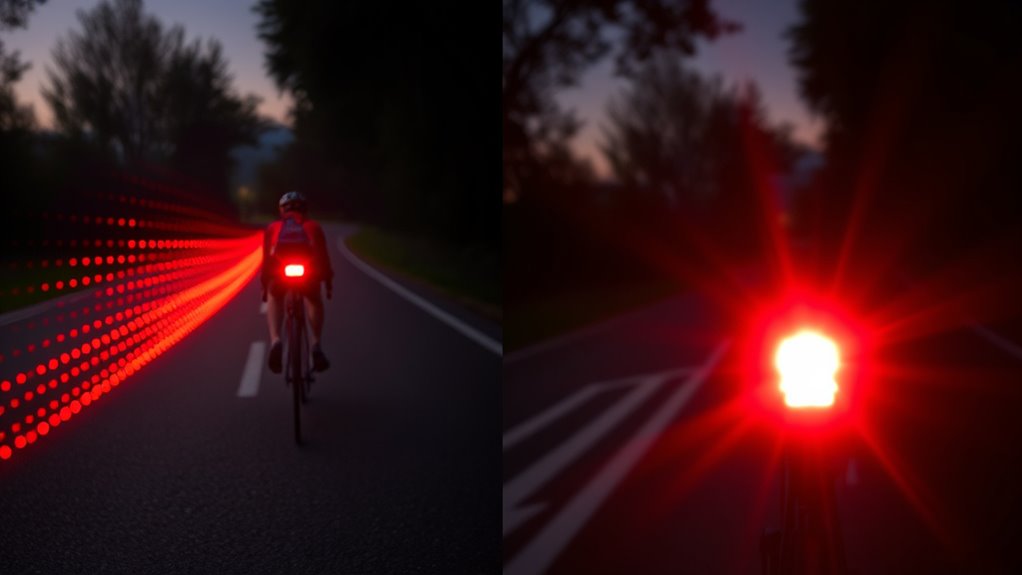

Choosing between pulse and steady rear lights depends on your driving needs. Steady lights are reliable for consistent visibility in fog or rain, while pulsing lights can attract more attention, especially in busy or dark areas. Pulsing modes also save energy and extend battery life but must meet local regulations. If you want to maximize safety and compliance, understanding when and where to use each setting is key. Keep exploring to discover how to optimize your rear light use effectively.

Get bike and ride gear delivered free — and shop member deals
- Fast, free delivery on millions of items
- Access to Prime Big Deal Days deals on October 6–7
- Prime Video, Amazon Music and more included
Key Takeaways
- Steady rear lights provide consistent visibility, making vehicle intentions clear and compliant with most legal standards.
- Pulsing lights attract more attention, especially in low visibility or emergency situations, enhancing safety.
- Pulsing lights generally consume less power, extending battery life and increasing energy efficiency.
- Regional regulations may restrict or specify the use of pulsing vs. steady lights; verify local laws.
- For optimal safety, switch to steady lights in fog, rain, or poorly lit conditions; use pulsing for increased visibility in dark environments.

Ever wondered how to guarantee your rear lights are set correctly for safety and visibility? It’s a question many drivers overlook, but proper rear light settings can make a vital difference on the road. Whether you choose pulse or steady lighting, understanding their impact is key. First, it’s essential to consider battery efficiency. Steady rear lights tend to consume more power because they draw a constant current. If you’re concerned about conserving battery life—especially on electric or hybrid vehicles—pulse lighting might be more efficient. Pulsing lights use less energy overall, as they turn on and off rapidly, which helps extend your battery’s lifespan and reduces overall power consumption. This isn’t just about saving your battery; it also aligns with the legal requirements in many regions, which specify minimum visibility standards for rear lights to guarantee other drivers can see your vehicle clearly. Both pulse and steady lights must meet these legal standards, but pulse lighting can sometimes draw attention more effectively, especially in low-visibility conditions. Recognizing the importance of narcissistic traits in drivers, such as seeking attention, can influence how some choose to use pulsing lights to stand out more on the road.
Choosing between pulse and steady rear lights isn’t just about battery efficiency and legal compliance; it’s also about your safety and how you want to communicate your intentions to other drivers. Steady lights are traditional and widely recognized as a signal for braking or slowing down. They are straightforward and easily understood, which is why most vehicles default to steady rear lights in normal driving conditions. Pulsing lights, on the other hand, can be more eye-catching and may be used to alert drivers behind you more effectively, especially in emergency situations or when you want to draw extra attention. However, some regions have regulations restricting certain lighting modes, so it’s vital to familiarize yourself with local laws to avoid penalties. Additionally, understanding the psychological motives behind certain behaviors, such as the desire for admiration or dominance, can help you make more responsible choices about your vehicle’s lighting.
Furthermore, modern vehicle systems often allow you to switch between pulse and steady modes, offering flexibility based on your needs. If you’re driving in heavy fog, rain, or poorly lit areas, a steady light might provide more consistent visibility. Conversely, if you’re trying to stand out in a busy or poorly lit environment, pulse lighting could give you an edge. Remember, whichever setting you choose, it’s your responsibility to guarantee it complies with legal requirements and that your rear lights are functioning correctly. Regularly check your rear lights for proper operation, clean the lenses, and ensure your vehicle’s electrical system supports your chosen mode. Proper rear light settings not only keep you within the law but also greatly boost your safety and visibility on the road.
rear vehicle light with pulse and steady modes
As an affiliate, we earn on qualifying purchases.
As an affiliate, we earn on qualifying purchases.
Frequently Asked Questions
Can Rear Light Settings Affect Battery Life Significantly?
Yes, rear light settings can affect battery life considerably. Using the steady mode consumes more power than pulse mode, leading to quicker battery drain. If you want better power efficiency, opt for pulse or flashing settings, as they use less battery consumption. Switching between these modes based on visibility needs helps extend your bike’s battery life while keeping you safe on the road.
Are There Legal Regulations for Rear Light Flashing Modes?
You might worry about flashing patterns and legal compliance when choosing your rear light mode. Legally, many regions restrict certain flashing modes to make certain drivers recognize your signals clearly. Flashing patterns must usually adhere to specific standards, like steady or slow pulse, to be street-legal. So, before you ride, check local regulations to avoid fines and guarantee your rear light’s mode keeps you visible and compliant.
How Do Different Rear Light Settings Impact Rider Safety?
Using steady rear lights enhances your visual visibility, making it easier for others to see you clearly, especially in low-light conditions. Pulsing or flashing lights can boost rider awareness by grabbing attention quickly, but they might be less predictable. Combining both modes when appropriate can improve safety, ensuring you’re noticed without causing confusion. Always consider your riding environment and local regulations to maximize safety for yourself and others.
Can Switching Modes Cause Malfunction or Damage?
Switching modes on your rear light generally won’t cause malfunction or damage if you follow the manufacturer’s instructions. Regular mode switching is designed to be safe and shouldn’t impact rear light durability. However, frequent or rough mode switching might wear out internal components over time. To keep your rear light functioning properly, avoid excessive force, and choose a model with durable switches built for regular use. Proper handling guarantees safe visibility without risking damage.
Are Certain Rear Light Settings Better for Night Riding?
Sure, steady lights are the ‘boring’ choice, but they actually boost rear light visibility better at night. Flashing patterns might catch attention, but their effectiveness can vary, and they might not be as reliable in poor visibility. For night riding, you’re better off using a steady rear light, ensuring consistent visibility. Sometimes, the classic approach is the most effective—who knew?
LED bicycle rear light for visibility
As an affiliate, we earn on qualifying purchases.
As an affiliate, we earn on qualifying purchases.
Conclusion
Choosing between pulse and steady rear light settings is about prioritizing visibility, safety, and awareness. Whether you prefer the eye-catching pulse or the constant steady glow, remember that your goal is to be seen, to be noticed, and to be safe. Both settings serve their purpose, but your choice should reflect your riding environment and personal style. Stay alert, stay visible, and ride confidently—because your safety depends on it.
car tail lights with energy-saving modes
As an affiliate, we earn on qualifying purchases.
As an affiliate, we earn on qualifying purchases.
automotive rear light regulation compliant
As an affiliate, we earn on qualifying purchases.
As an affiliate, we earn on qualifying purchases.
Fall Picks
fall essentials
As an affiliate, we earn on qualifying purchases.