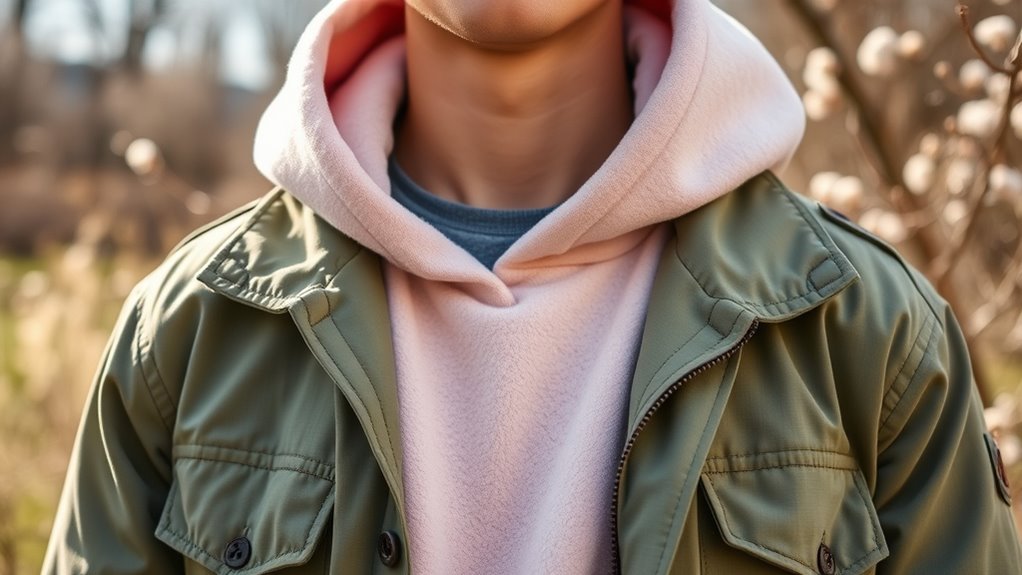

During spring and fall, layering is your best strategy for shoulder season gear. Start with a moisture-wicking base layer to stay dry, add an insulating layer like fleece or a thin down vest for warmth, and top with a waterproof or windproof shell. Opt for packable and adjustable pieces to easily adapt to changing weather. Mastering this layering technique keeps you comfortable and protected. Keep exploring to discover the essential materials and gear options that make your shoulder season adventures more enjoyable.
Key Takeaways
- Use moisture-wicking base layers to manage sweat and stay dry during temperature fluctuations.
- Incorporate lightweight insulating layers like fleece or thin down vests for adaptable warmth.
- Select packable, versatile outer shells with waterproof and windproof features to protect against elements.
- Opt for adjustable, ventilated gear that allows quick cooling or warming as weather changes.
- Layer strategically to easily peel or add clothing, ensuring comfort and protection throughout spring and fall.

As the weather shifts between the extremes of summer and winter, choosing the right shoulder season gear becomes vital for staying comfortable and prepared. During spring and fall, temperatures can fluctuate dramatically throughout the day, making it essential to adapt quickly. That’s where effective layering techniques come into play. Instead of relying on a single heavy coat or a thin T-shirt, you can build a versatile outfit that adjusts to changing conditions. Start with a lightweight base layer, such as moisture-wicking fabrics that keep sweat away from your skin. Over this, add an insulating layer like a fleece or a thin down vest to retain warmth without bulk. Finally, top it off with a windproof or waterproof shell that shields you from rain, wind, or sudden cold snaps. This layered approach allows you to peel off or add layers as needed, keeping you comfortable no matter how the weather shifts. Utilizing appropriate material choices**** enhances the effectiveness of each layer, ensuring optimal performance and comfort.
Material choices are just as vital as layering techniques when selecting your shoulder season gear. Opt for fabrics that balance breathability with insulation. For your base layer, look for moisture-wicking synthetics or merino wool, which draw sweat away from your skin and dry quickly. When choosing insulating layers, consider lightweight fleece or down, which trap heat efficiently without adding unnecessary weight. For outer shells, waterproof and windproof materials like Gore-Tex or similar membranes are ideal. They prevent moisture from seeping in while still allowing perspiration to escape, reducing the risk of overheating or getting damp. The right material choices ensure each layer performs its role effectively, helping you stay dry, warm, and comfortable.
Another tip is to select pieces that are easy to pack and layer. A packable puffer or a compact fleece can be easily carried in your bag, ready to be added or removed as needed. Ventilated jackets with adjustable hoods and vents also give you more control over airflow. When choosing your gear, think about versatility and durability—items that can handle a variety of conditions without wearing out quickly. By combining smart layering techniques with thoughtful material choices, you’ll be prepared for unpredictable spring and fall days. This approach not only enhances your comfort but also extends the lifespan of your gear, as you can adapt it to different weather scenarios instead of constantly switching out entire outfits. Staying flexible and prepared ensures you can enjoy your outdoor adventures regardless of what Mother Nature throws your way.
Frequently Asked Questions
How Do I Choose the Right Transitional Layers for Different Activities?
To choose the right transitional layers, consider your activity’s intensity and weather conditions. For active pursuits, pick breathable fabrics with good insulation to wick moisture and keep you warm. If rain or wind is expected, go for waterproof and windproof fabrics. Layering smartly allows you to adjust as temperatures change, ensuring you stay comfortable whether you’re hiking or running errands. Always prioritize breathability and protection based on your activity needs.
What Materials Are Best for Shoulder Season Clothing?
You should choose materials with good fabric breathability, like merino wool or technical polyester, to stay comfortable during shoulder seasons. These fabrics wick moisture and regulate temperature, keeping you dry and warm. Look for sustainable textiles such as recycled polyester or organic cotton, which offer eco-friendly options without sacrificing performance. Combining these materials guarantees your layers adapt well to changing weather and activity levels, keeping you comfortable and environmentally conscious.
How Can I Pack Efficiently for Variable Weather?
To pack efficiently for variable weather, use smart packing hacks like rolling clothes and packing versatile pieces that layer well. Check weather forecasting before you pack so you can bring lightweight, quick-drying layers that adapt to changing conditions. Include a compact rain jacket and a warm layer. By planning ahead and choosing multi-use items, you stay prepared without overpacking, making your trip more comfortable and stress-free.
Are There Eco-Friendly Options for Transitional Layers?
Yes, you can find eco-friendly options for evolutionary layers by choosing sustainable fabrics like recycled polyester, organic cotton, or hemp. Look for eco-conscious brands committed to environmental responsibility, ensuring your gear minimizes impact. These layers are designed to be versatile and durable, helping you stay comfortable while reducing your carbon footprint. By selecting eco-friendly evolutionary layers, you support sustainable fashion and enjoy gear that aligns with your values.
How Do Layering Strategies Differ Between Spring and Fall?
In spring, you’ll want lighter, breathable layers with seasonal color choices that reflect fresh, vibrant tones. Fall calls for warmer, earth-toned layers that trap heat effectively. Use layering accessories like scarves or hats to adapt to changing temperatures. You’ll layer differently by adding or removing pieces as needed, ensuring your gear stays comfortable and functional, no matter the season’s fluctuations.
Conclusion
As you gear up for spring and fall, these transitional layers become your ultimate shield against unpredictable weather. With the right pieces, you’ll conquer chilly mornings, sudden storms, and warm afternoons like a weather warrior. Don’t let the fickle shoulder seasons catch you off guard—arm yourself with the perfect gear and turn every day into an adventure. Because when you’re prepared, you can face anything Mother Nature throws your way with confidence and unstoppable style!