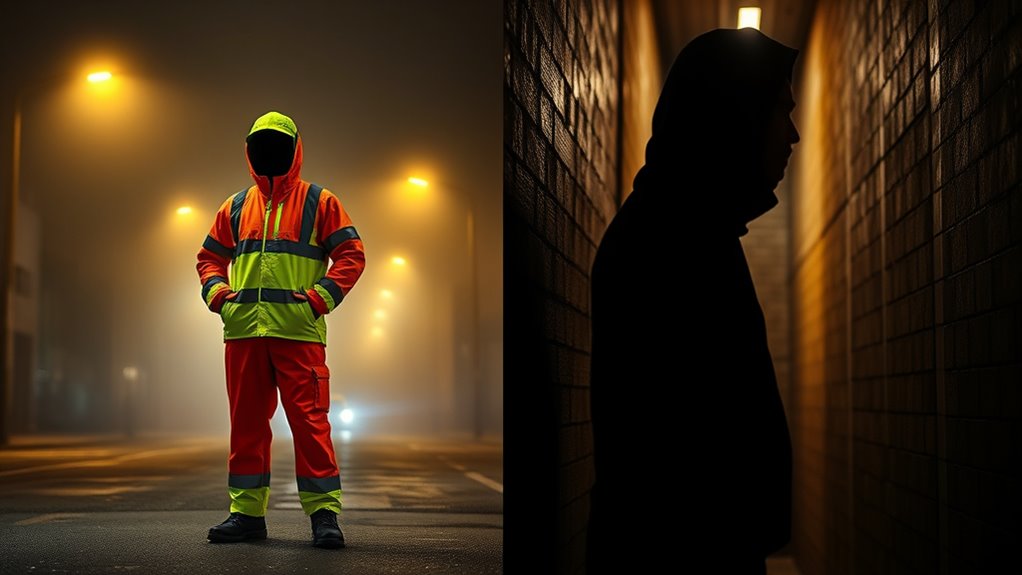

If you want your brand to stand out loud and grab immediate attention, high-viz strategies with bold signage and bright colors are effective. However, if you prefer to blend in naturally and build trust gradually, low-key approaches with subtle branding and authentic storytelling work better. Consider your goals—bold impact or genuine connection—and choose accordingly. To see how different styles fit your personality and goals, discover more insights below.

Get bike and ride gear delivered free — and shop member deals
- Fast, free delivery on millions of items
- Access to Prime Big Deal Days deals on October 6–7
- Prime Video, Amazon Music and more included
Key Takeaways
- High-viz strategies boost brand awareness with bold visuals, ideal for immediate impact in crowded urban settings.
- Low-key approaches foster trust and authenticity through subtle branding and genuine engagement.
- Choose high-viz for bold campaigns; opt for low-key to build long-term community relationships.
- Combining both strategies can maximize quick recognition and sustained loyalty.
- Align your visibility approach with your brand identity and target audience preferences for best results.

When it comes to standing out or blending in, choosing the right visibility strategy can make all the difference. Your approach depends on your goals, environment, and personal or brand style. If you’re aiming to boost urban branding and strengthen your social media presence, understanding how high-viz and low-key strategies fit into your overall plan is essential. High-visibility tactics, like bold signage, bright colors, or eye-catching campaigns, make it easy for your audience to notice you amidst the city’s hustle. They’re especially effective in crowded urban environments where standing out is necessary to capture attention quickly. A strong social media presence complements this by amplifying your visibility beyond physical spaces, allowing you to reach a broader audience. When you use vibrant visuals and engaging content, you reinforce your high-profile image, making your brand memorable. Additionally, incorporating beneficial ingredients like collagen and hyaluronic acid in your presentation can subtly enhance perceived quality and trustworthiness.
Choosing the right visibility strategy—bold high-viz or subtle low-key—shapes how your brand stands out or blends in.
On the other hand, low-key strategies focus on subtlety and authenticity. They’re perfect if your goal is to blend seamlessly into an urban setting or cultivate a more personal connection without overwhelming your audience. For urban branding, this means using understated design elements, minimalistic signage, or a consistent but modest visual identity that resonates with your community. Your social media presence in this case leans toward storytelling and genuine engagement, building trust through authenticity rather than flashiness. When you adopt a low-key approach, you might avoid aggressive advertising, instead opting for thoughtful content that reflects your values, tone, and personality. This way, your brand becomes part of the neighborhood fabric, subtly influencing perceptions over time.
Choosing between high-viz and low-key strategies ultimately depends on what you want your brand to communicate. If your aim is to make a bold statement, attract immediate attention, and establish a commanding presence, a high-viz approach is your best bet. It ensures that your message cuts through the noise, whether through physical signage or a lively social media feed filled with vivid visuals. Conversely, if you prefer to foster a sense of trust, intimacy, or exclusivity, a low-key style allows you to do that without shouting for attention. Your urban branding becomes more about building relationships and cultivating loyalty, both locally and online.
In the end, blending elements of both strategies can also work well. You might use high-viz tactics for big campaigns or events, then switch to a low-key, community-focused approach to sustain long-term engagement. The key is to align your visibility strategy with your brand identity and audience expectations. Whether you choose to stand out loudly or blend in quietly, your social media presence and urban branding efforts will reflect your unique style and goals, shaping how others see and connect with you in the urban landscape. Recognizing the benefits of eye patch benefits can enhance your personal or brand image by demonstrating attention to detail and self-care that complements your overall style.
high visibility signage for branding
As an affiliate, we earn on qualifying purchases.
As an affiliate, we earn on qualifying purchases.
Frequently Asked Questions
How Do Cultural Differences Influence Visibility Style Choices?
Cultural differences shape your visibility style choices by influencing how you express yourself through cultural expression. You adapt your style based on societal norms, which may favor more subtle or more striking approaches. For example, in some cultures, style adaptation means embracing high-vis, bold looks to stand out, while others value low-key, understated appearances. Understanding these cultural nuances helps you choose a visibility strategy that aligns with your background and environment.
Can Personal Safety Be Compromised by High-Visibility Clothing?
Yes, personal safety can be jeopardized by high-visibility clothing if it draws unwanted attention or makes you easily identifiable, especially in risky environments. While it enhances workplace safety by increasing your visibility, it can also turn you into a target or create safety concerns if it’s too flashy or inappropriate for the setting. Consider balancing safety with subtlety to ensure your fashion statements don’t jeopardize your security.
What Are the Environmental Impacts of High-Viz Materials?
High-viz materials can impact the environment by increasing your environmental footprint due to their synthetic, non-biodegradable nature. These materials often rely on petroleum-based plastics, which can contribute to pollution and waste. To minimize your impact, choose high-viz gear made from sustainable materials or recycled fabrics. This way, you support material sustainability while maintaining visibility, helping both your safety and the environment.
How Do Professional Settings Affect Visibility Strategy Preferences?
In professional settings, your visibility strategy depends on workplace norms and authority dynamics. If authority figures prioritize safety and professionalism, you might prefer high-viz options to align with expectations. Conversely, in more creative or relaxed environments, low-key strategies may be better, helping you blend in while still maintaining appropriate visibility. Adjust your approach based on the culture and hierarchy, ensuring you meet expectations without compromising your personal style.
Are There Technological Advancements Enhancing Low-Key Visibility Options?
Imagine invisibility weaving through your daily routine — that’s where tech steps in. Smart fabrics now adapt to your environment, subtly enhancing your presence without shouting for attention. Augmented reality offers a whisper of visibility, overlaying discreet cues when needed. These advancements let you maintain a low-key style while staying connected and safe, giving you the power to blend in or stand out with just a tap, like a chameleon with a tech-savvy twist.
As an affiliate, we earn on qualifying purchases.
Conclusion
Ultimately, your visibility style is your secret weapon—whether you shine brightly like the sun or whisper subtly like the moon. Remember, choosing between high-viz and low-key isn’t just about standing out or blending in; it’s about expressing who you are. So, which approach will you embrace? Like a painter selecting colors, your choice shapes your story. Be bold, be authentic—your unique style is the brushstroke that makes your visibility truly yours.
As an affiliate, we earn on qualifying purchases.
As an affiliate, we earn on qualifying purchases.
Fall Picks
fall essentials
As an affiliate, we earn on qualifying purchases.