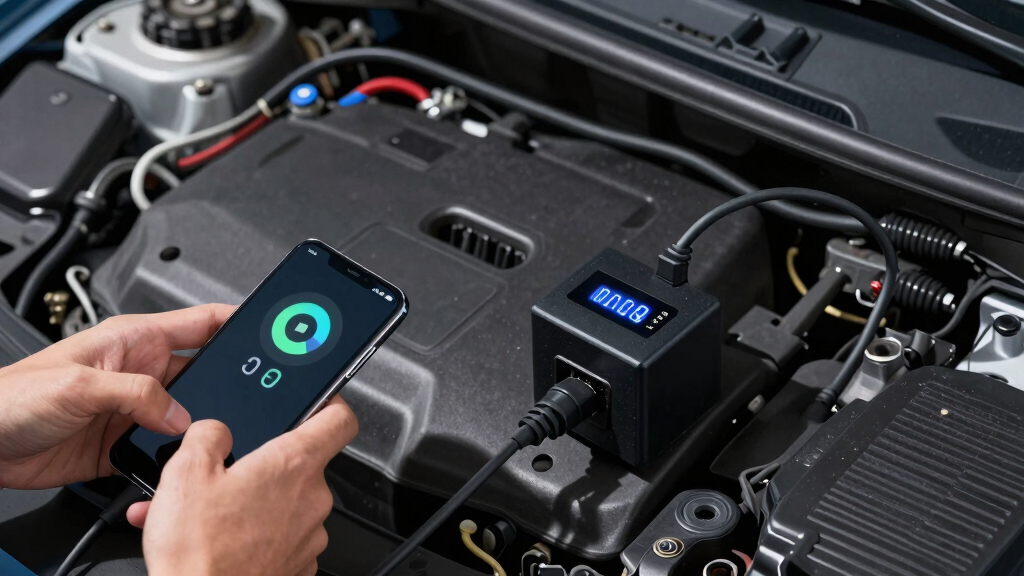

Finding the best smart plug for scheduled battery charging involves balancing convenience, reliability, and compatibility. The leading choice, the Kasa Smart Plug, Matter Compatible, stands out for its seamless integration and energy monitoring, ideal for precise scheduling. For a budget-friendly option, the GHome Smart Plug offers solid app control without extra features, making it suitable for simple setups. Meanwhile, the Charge-O-Matic introduces a unique timer feature for complex cycle scheduling, but it lacks smart home integration. Keep reading to see how these options compare and which best fits your specific needs.
Open a free Amazon Business account
Business pricing, bulk buying and tax-exempt orders.
Create a free accountAs an affiliate, we earn on qualifying purchases.
Key Takeaways
- Energy monitoring features greatly enhance scheduling accuracy and energy efficiency.
- Compatibility with major smart home ecosystems (Alexa, Google, Apple) influences ease of use.
- Advanced timers like Charge-O-Matic are suited for complex charging cycles but lack smart integration.
- Smaller, compact plugs are preferable for tight spaces, while power strips add outlet flexibility.
- Higher-priced options often include additional features like surge protection and USB ports, but not always necessary for scheduling.





More Details on Our Top Picks
Kasa Smart Plug, Matter Compatible, Energy Monitoring, Compact Design, 15A/1800W Max, Super Easy Setup, Works with Apple Home, Alexa & Google Home, UL Certified, 2.4G Wi-Fi Only, White, KP125M(2-Pack)
This Kasa Smart Plug stands out for its Matter compatibility, allowing it to integrate smoothly across multiple platforms like Apple Home, Alexa, Google, and Samsung SmartThings. Unlike the GHome Smart Plug, which requires separate app setup, this model offers a more unified experience with local LAN control—meaning it continues working even if your internet drops. Its energy monitoring feature helps track power usage, which is essential for scheduled charging routines, especially when managing battery cycles. The compact design prevents blocking adjacent outlets, and its UL certification adds confidence in safety. However, its reliance on 2.4GHz Wi-Fi can sometimes cause connectivity issues in crowded networks, and it lacks the additional USB ports found on the Kasa Power Strip HS300. Compared to the EIGHTREE Smart Plug, it offers broader compatibility but at a higher price point. This pick makes the most sense for users seeking a reliable, versatile smart plug that works seamlessly with multiple ecosystems and provides detailed energy insights.
Pros:- Seamless Matter protocol integration across popular platforms
- Energy monitoring to track power consumption
- Compact, space-saving design with UL certification
Cons:- Limited to 2.4GHz Wi-Fi, which can cause connectivity issues in crowded networks
- Higher price compared to simpler models without Matter support
Best for: Homeowners who want a versatile, platform-agnostic smart plug with energy monitoring for scheduled battery charging.
Not ideal for: Users with complex mesh networks or 5GHz-only Wi-Fi environments, as the plug supports only 2.4GHz, which may limit connectivity.
- Max Load:1800W/15A
- Compatibility:Apple Home, Alexa, Google, SmartThings, Matter
- Wi-Fi Frequency:2.4GHz only
- Energy Monitoring:Yes
- Certification:UL Certified
- Control Method:App & Voice
Bottom line: Ideal for users needing a reliable, multi-platform compatible smart plug with energy tracking for scheduled charging routines.
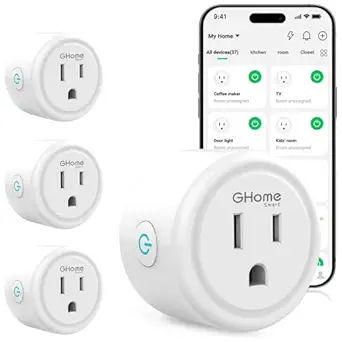
GHome Smart Plug, WiFi Smart Plugs Work with Alexa and Google Home, Smart Outlet Timer with APP Remote Control, 2.4GHz Wi-Fi Only, No Hub Required, ETL FCC Listed
The GHome Smart Plug offers easy setup with quick connection via Bluetooth or Wi-Fi, making it suitable for those new to smart home tech. Unlike the more feature-rich Kasa options, it primarily focuses on basic scheduling and remote control, which is sufficient for simple scheduled battery charging routines. Its support for Alexa and Google Assistant allows voice commands, but it lacks Matter compatibility, which means less flexibility with newer smart home ecosystems. The app works well for managing timers and group controls, but it doesn’t provide detailed energy monitoring—limiting its usefulness if you want to analyze power consumption. Its 2.4GHz Wi-Fi support ensures stable connectivity, but it might struggle in congested networks or larger smart home setups. This model is better suited to budget-minded users who want straightforward scheduling without extra bells and whistles.
Pros:- Affordable price point with simple setup
- Supports Alexa and Google voice commands
- Stable 2.4GHz Wi-Fi connection
Cons:- Lacks energy monitoring features
- No Matter support, limiting ecosystem flexibility
- Limited to basic scheduling and control
Best for: Entry-level users or budget-conscious consumers who need basic scheduled charging without the need for detailed energy data.
Not ideal for: Advanced smart home enthusiasts who want local LAN control, energy monitoring, or Matter support for future-proofing.
- Max Load:1800W/15A
- Compatibility:Alexa & Google
- Wi-Fi Frequency:2.4GHz only
- Energy Monitoring:No
- Certification:ETL, FCC
- Control Method:App & Voice
Bottom line: A good choice for beginners seeking an affordable, easy-to-use plug for scheduled battery charging routines.
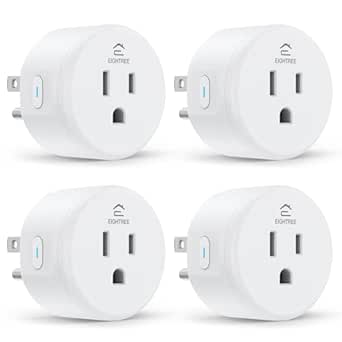
EIGHTREE Smart Plug, WiFi Outlet Works with Alexa & Google Home, Smart Home Socket with Remote Control & Timer Function, 2.4GHz WiFi Only, 4 Packs
The EIGHTREE Smart Plug makes a compelling case for those who want multiple outlets in a small package, especially if controlling several devices with scheduled charging is needed. Its easy Bluetooth-based setup minimizes complexity, which is a plus for users who dislike complicated installations like the more advanced Kasa models. While it supports Alexa and Google Assistant, it doesn’t offer Matter or local LAN control, which are features increasingly important for future-proofing. The inclusion of four packs provides excellent value for bulk setups. Its primary limitation is the absence of energy monitoring, which could be a drawback if you want to analyze power consumption patterns for optimized battery charging. Compared to the Kasa Power Strip HS300, it’s less feature-rich but more affordable and easier to set up. This plug suits users needing simple, multiple outlets with straightforward controls for scheduled routines.
Pros:- Supports multiple devices with four-pack value
- Simple Bluetooth setup for quick installation
- Compatible with Alexa and Google Assistant
Cons:- No energy monitoring capabilities
- Limited to 2.4GHz Wi-Fi, which may affect stability in busy networks
- Lacks Matter support for ecosystem flexibility
Best for: Budget-conscious households or small offices needing multiple outlets with easy scheduling for battery charging and device management.
Not ideal for: Power users requiring detailed energy analytics or local LAN control for more precise scheduled charging management.
- Max Load:1800W/15A
- Compatibility:Alexa & Google
- Wi-Fi Frequency:2.4GHz only
- Energy Monitoring:No
- Certification:Unknown
- Control Method:App & Voice
Bottom line: Best suited for users wanting multiple outlets with hassle-free setup for scheduled charging routines, on a budget.
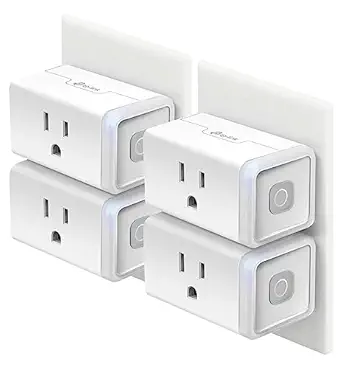
Kasa Smart Plug HS103P4, Smart Home Wi-Fi Outlet Works with Alexa, Echo, Google Home & IFTTT, No Hub Required, Remote Control, 15 Amp, UL Certified, 4-Pack, White
This Kasa model offers an affordable way to control multiple devices remotely, making it suitable for simple scheduled battery charging routines. Its 4-pack provides excellent value, especially when managing several gadgets. While it supports Alexa, Google, and IFTTT, it doesn’t include energy monitoring or Matter support, limiting its ability to optimize power usage or integrate into a more advanced ecosystem. Setup is straightforward, requiring only a 2.4GHz Wi-Fi connection, but it may lack the local LAN control that some power users prefer for uninterrupted operation during internet outages. The absence of energy metrics means you’ll need separate tools if you want to analyze power consumption for battery health management. Compared to the single-unit EIGHTREE, it’s less flexible in setup, but more cost-effective for multiple devices. This option makes sense for users focused on basic scheduling and remote control across multiple outlets without complex features.
Pros:- Affordable, multi-outlet pack for household or office use
- Reliable remote control with app and voice support
- No hub required, easy setup
Cons:- Lacks energy monitoring for power analysis
- No Matter support or local LAN control
- Basic scheduling without advanced automation
Best for: Budget-conscious consumers needing multiple outlets for scheduled device control without the need for detailed energy data.
Not ideal for: Enthusiasts seeking advanced features like local LAN operation, energy monitoring, or ecosystem integration beyond basic control.
- Max Load:1800W/15A
- Compatibility:Alexa, Google, IFTTT
- Wi-Fi Frequency:2.4GHz only
- Energy Monitoring:No
- Certification:UL
- Control Method:App & Voice
Bottom line: Suitable for users wanting multiple outlets with simple scheduling at a low cost, but without energy tracking features.
TP-Link 𝗧𝗮𝗽𝗼 Smart Plug Wi-Fi Mini, Energy Monitoring, Compatible with Alexa & Google Home & Samsung SmartThings, Timer, 15A/1800W Max, ETL Certified, 2.4G Wi-Fi Only, Tapo P115(2-Pack)
This pick stands out because of its comprehensive energy tracking features combined with scheduling capabilities, making it ideal for those who want to optimize power use while preventing overcharging. Unlike the Amazon Smart Plug, which prioritizes simplicity and voice control, the Tapo P115 offers detailed energy insights and cost estimation, but this added complexity could overwhelm beginners. Its ability to automatically cut power once a device reaches a low-battery threshold is particularly useful for scheduled battery charging, yet the reliance on 2.4 GHz Wi-Fi can pose connectivity issues in crowded networks. The energy statistics and billing estimates help manage costs, especially when paired with off-peak schedules, giving it an edge for energy-conscious users. Compared with the YoLink Energy Plug, which excels in high-power load management and long-range reliability, the Tapo is more suited to typical household setups and smart home integration. However, its limited protocol support means it might not be ideal for advanced automation setups needing Zigbee or LoRa.
Pros:- Advanced energy monitoring with detailed statistics and charts
- Ability to estimate energy bills and optimize cost savings
- Supports automatic power shutoff to prevent overcharging
Cons:- Limited to 2.4 GHz Wi-Fi, which can affect connection stability
- Slightly more complex setup than basic smart plugs
Best for: Homeowners seeking detailed energy insights and scheduled charging control through a user-friendly app.
Not ideal for: Users who require ultra-reliable connectivity in large or crowded Wi-Fi environments, or those preferring minimal setup and simple control.
- Current Rating:15 Amps
- Operating Voltage:125 Volts
- Control Method:App, Voice
- Max Wattage:1800 Watts
- Connectivity Protocol:Wi-Fi 2.4G
- Compatibility:Alexa, Google Home, Samsung SmartThings
Bottom line: Ideal for users who want detailed energy management and scheduled battery charging without extensive automation complexity.
SONOFF Zigbee Smart USB Outlet, 5-22V DC Outlet Timer Smart Switch, Smart Home Devices Compatible with Alexa and Google Home, Zigbee Switch Wireless Support Fast Charging, USB 2.0 ZBMicro (1)
This device makes the list for those invested in Zigbee smart home setups, offering stable communication and reliable control over USB-powered devices. Unlike Wi-Fi-based options like the Amazon Smart Plug, the ZBMicro relies on a Zigbee gateway, which can provide more consistent connectivity and less interference. Its ability to set timers and scenarios for USB devices makes it highly suitable for scheduled battery charging, especially for devices like rechargeable batteries or portable gadgets. The fast-charging support plus real-time control via the app adds convenience, but the need for a Zigbee hub means extra hardware and setup complexity. Compared with the YoLink Energy Plug, which excels in high-power and long-range outdoor applications, the ZBMicro is better suited for indoor, Zigbee-equipped environments. However, its compatibility is limited to Zigbee ecosystems, which might not appeal to users relying on Wi-Fi or other protocols.
Pros:- Stable Zigbee communication reduces disconnection issues
- Supports precise timer and scenario scheduling for USB devices
- Fast charging and data transfer capabilities
Cons:- Requires a Zigbee hub, adding to setup complexity
- Limited to Zigbee protocol, less flexible for Wi-Fi-only homes
Best for: Users with Zigbee hubs looking for stable, scheduled control over USB devices and chargers.
Not ideal for: Those without a Zigbee hub or who prefer direct Wi-Fi control without extra hardware complexity.
- Voltage Range:5-22V DC
- Control Method:App, Voice
- Connectivity Protocol:Zigbee
- Support:Alexa, Google Home
- Fast Charging:Yes
Bottom line: Best for users already committed to Zigbee ecosystems needing reliable scheduled charging for USB devices.
Amazon Smart Plug, Works with Alexa, Simple Setup, Endless Possibilities
This choice makes the list for its straightforward setup and seamless compatibility with Alexa, making it perfect for beginners or those who prefer effortless control over routine tasks. Unlike the energy-focused Tapo P115, the Amazon Smart Plug doesn’t provide detailed energy insights but excels in simple on/off scheduling and voice control. Its reliable connection and integration into Alexa routines make scheduled power management easy, though it lacks the advanced features needed for fine-tuned battery charging or energy monitoring. The compact design ensures it doesn’t block other outlets, which is a plus for small spaces. Compared to the Kasa Mini, which offers similar functionality, the Amazon plug is ideal for those already invested in the Alexa ecosystem and who prioritize simplicity over detailed energy stats. Its main drawback is limited customization for complex schedules or energy savings.
Pros:- Easy setup and intuitive Alexa integration
- Reliable connection with automatic reconnection after outages
- Compact design fits most outlets without blocking
Cons:- Limited to basic scheduling, no energy monitoring
- No detailed control over charge cycles or energy use
Best for: Beginners or Alexa users seeking a hassle-free way to schedule device power cycles without energy monitoring.
Not ideal for: Power users who want detailed energy data or advanced scheduling features for battery charging optimization.
- Control Method:Alexa, App
- Max Wattage:1800 Watts
- Connectivity:Wi-Fi 2.4G
- Design:Compact
- Certification:UL
Bottom line: Best for users who want simple, voice-activated control for scheduled device power without the need for energy insights.
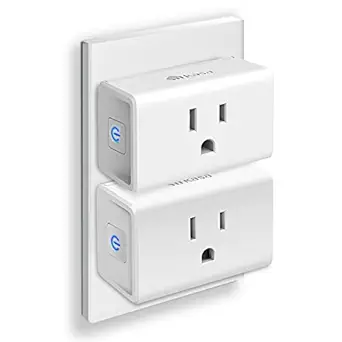
Kasa Smart Plug Ultra Mini 15A, Smart Home Wi-Fi Outlet Works with Alexa, Google Home & IFTTT, No Hub Required, UL Certified, 2.4G WiFi Only, 2 Count (Pack of 1)(EP10P2) , White
This model is ideal for those needing a small footprint with reliable voice control and scheduling. Compared to the Tapo P115, the Kasa Mini sacrifices some energy monitoring features, focusing instead on ease of installation and compatibility with multiple platforms including IFTTT. Its compact size makes it perfect for tight spaces or daisy-chaining multiple devices. The scheduling functions support basic timed on/off routines suitable for battery charging, but it doesn’t offer detailed energy tracking or bill estimates. Its UL certification and 2-year warranty add peace of mind for safety and durability, making it a good choice for users who want dependable, straightforward scheduling without extra complexity. However, the lack of energy insights limits its usefulness for energy-conscious users aiming to optimize charging cycles.
Pros:- Extremely compact size fits in tight spaces
- Works with Alexa, Google, and IFTTT for versatile automation
- UL Certified for safety
Cons:- Limited energy monitoring features
- Basic scheduling without detailed analytics
Best for: Users wanting a small, versatile Wi-Fi plug for basic scheduled charging and voice control across multiple ecosystems.
Not ideal for: Those seeking detailed energy analytics or cost estimation for optimizing battery charging routines.
- Current Rating:15 Amps
- Max Wattage:1800 Watts
- Connectivity Protocol:Wi-Fi 2.4G
- Control Platforms:Alexa, Google, IFTTT
- Size:Ultra Mini
Bottom line: Great for users who want a tiny, reliable Wi-Fi smart plug with flexible voice control and simple scheduling.
YoLink Smart Energy Plug 15A – 1/4 Mile LoRa Range, High-Power Devices with Cycle Schedule, Real-Time Energy Monitoring, Overload Protection, Alerts, Alexa, Google, IFTTT, HA, Hub Required YS6614
This device makes the list for its ability to handle high-power appliances and operate over long distances, making it suitable for outdoor or large property applications. Unlike Wi-Fi-based plugs like the Amazon Smart Plug or Kasa Mini, the YoLink Energy Plug uses LoRa technology, which offers superior range and reliability, especially for scheduled battery charging of high-capacity devices. Its cycle scheduling feature allows for precise control over charging times, while real-time energy monitoring enables detailed tracking and energy savings analysis. Overload protection adds safety, but the requirement of a YoLink Hub and the initial setup complexity may deter casual users. Compared with the Tapo P115, which is more suited to typical household use, the YoLink is better for heavy-duty, outdoor, or large-scale automation needs. Its reliance on proprietary LoRa tech might limit integration with some smart home ecosystems.
Pros:- Supports high-power loads up to 15A
- Long-range LoRa connectivity up to 1/4 mile outdoors
- Cycle scheduling with real-time energy monitoring
Cons:- Requires YoLink Hub for full functionality
- Setup complexity and proprietary protocol may limit some integrations
Best for: Homeowners or professionals managing high-power equipment over large areas needing reliable scheduled charging and energy insights.
Not ideal for: Users seeking a simple, Wi-Fi-based plug without additional hub requirements or those with small indoor setups.
- Current Rating:15 Amps
- Range:Up to 1/4 mile (outdoor)
- Control Method:App, Voice
- Connectivity Protocol:LoRa
- Overload Protection:Yes
Bottom line: Best for users requiring reliable, long-range control and detailed energy monitoring for high-power, outdoor, or large-scale applications.
Charge-O-Matic – The Timer That Makes Any Charger Smart
This timer stands out for its simplicity and unmatched flexibility in managing long-term battery maintenance routines. Unlike the TP-Link Tapo Mini, which offers smart home integration, the Charge-O-Matic is purely dedicated to scheduled power control without any app dependence. Its 99-hour continuous power and up to 99-day cycle off make it ideal for batteries that require infrequent, precise charging. The physical dial interface, which requires no Wi-Fi or app setup, makes it perfect for users who want a “set and forget” device, even years later. While it doesn’t offer smart home voice control, its durability and ease of programming outweigh this for off-grid or battery-focused applications. The main tradeoff is lack of app or voice control, which is fine for straightforward scheduled charging but less suited for multi-device smart home setups.
Pros:- Simple, intuitive dial-based programming for easy setup
- No Wi-Fi or app required, ideal for off-grid use
- Flexible cycle options: up to 99 hours on, 99 days off
Cons:- Lacks smart home integration or remote control features
- No real-time monitoring or app-based scheduling
Best for: Buyers needing a reliable, manual timer for maintaining lithium-ion or NMH batteries with minimal fuss.
Not ideal for: Smart home enthusiasts who want integrated control via Alexa or Google Assistant, or those seeking remote access.
- Maximum Power On Duration:99 hours
- Cycle Off Duration:up to 99 days
- Timer Modes:30, 60, 90 day
- Certification:ETL
- Manual Operation:Yes
- Number of Outlets:1
Bottom line: This pick is perfect for users who want a straightforward, durable timer to automate battery charging without digital complexity.
TP-Link Tapo Matter Supported Smart Plug Mini, Compact Design, 15A/1800W Max
This smart plug excels at combining ease of use with broad compatibility, making it ideal for those who want scheduled battery charging integrated into a smart home system. Compared with the Charge-O-Matic, which is purely manual and off-grid, the Tapo P125M supports Matter, allowing direct device-to-device control on the local network and future-proofing for new smart home features. Its compact design avoids blocking adjacent outlets, and the app setup takes seconds thanks to Bluetooth onboarding. Voice control through Alexa, Google, or Apple Home makes adjusting schedules effortless for users who prefer remote or voice-activated routines. The main tradeoff is that it relies on Wi-Fi, so internet outages or Wi-Fi issues could affect scheduled charging routines, unlike the Charge-O-Matic’s independence from network connectivity.
Pros:- Supports Matter, ensuring broad compatibility with smart home platforms
- Super quick setup via Bluetooth, no complex network configuration
- Compact, space-saving design with UL certification
Cons:- Requires Wi-Fi connection for operation, vulnerable to network issues
- Limited to 15A/1800W maximum, less suitable for high-power devices
Best for: Homeowners seeking a simple, reliable smart plug with integrated scheduling via voice or app for battery maintenance.
Not ideal for: Off-grid users or those who prefer completely manual timers without smart capabilities.
- Operation Mode:On-Off
- Maximum Load:15A/1800W
- Connectivity:Wi-Fi, Matter
- Control Methods:App, Voice
- Certification:UL
- Setup Time:Seconds
Bottom line: Ideal for users who want a seamless, app-controlled scheduled charging solution integrated into their smart home ecosystem.
Govee Smart Plug, WiFi Plugs Work with Alexa & Google Assistant
This plug shines in environments where managing multiple devices simultaneously is key. It supports both Wi-Fi and Bluetooth, offering a more stable connection for scheduled battery charging compared to single Wi-Fi devices like the GHome Smart Plug. Its group control feature allows users to turn multiple chargers on or off with a single command, ideal for managing several batteries or chargers at once. However, it only works on 2.4G Wi-Fi, which might limit speed or stability in some networks, and it lacks the advanced local control features of the TP-Link Matter plug. Its ETL and FCC certifications add confidence in safety, but it doesn’t support local device-to-device control via Matter, making it less future-proof for smart home expansion.
Pros:- Supports group control for managing multiple devices simultaneously
- Works with Alexa & Google Assistant for voice commands
- Supports scheduled on/off routines for energy savings
Cons:- Limited to 2.4G Wi-Fi, which may reduce connection stability
- No local device-to-device control or Matter support
Best for: Users with multiple batteries or chargers who want easy group control and scheduling via voice commands.
Not ideal for: Those seeking a fully integrated Matter-compatible device or off-grid solutions, as it relies solely on Wi-Fi.
- Max Power Load:10A/1200W
- Connectivity:Wi-Fi 2.4G
- Control:App, Voice, Group
- Certifications:ETL, FCC
- Control Range:Remote
- Setup:Easy
Bottom line: This plug offers flexible scheduling and group control, making it ideal for managing multiple batteries in a connected smart home setup.

How We Picked
This lineup was selected based on a combination of performance, usability, build quality, and compatibility with scheduled battery charging routines. Priority was given to plugs that support reliable scheduling, energy monitoring, and seamless integration with popular smart home platforms. We also considered the ease of setup, safety certifications, and value for different use cases. Products were ranked to highlight options suitable for both basic and advanced charging schedules, ensuring a range of choices for different budgets and technical needs.Factors to Consider When Choosing Best Smart Plug For Scheduled Battery Charging
Choosing the best smart plug for scheduled battery charging requires understanding key features that impact functionality and reliability. Beyond basic control, factors like energy monitoring, timer flexibility, and ecosystem compatibility can make a significant difference. It’s important to consider your specific charging routines, space constraints, and whether you want a plug that integrates smoothly with existing smart home setups. Making the right choice can prevent overcharging, reduce energy waste, and simplify your charging management.Compatibility and Ecosystem Support
Select a smart plug that works seamlessly with your existing smart home devices and voice assistants. Compatibility with Alexa, Google Assistant, or Apple HomeKit can make routine scheduling more straightforward. If you already use a specific voice ecosystem, prioritize plugs that integrate without extra hubs or bridges. Remember, some advanced features may only be available within certain ecosystems, so check for app support and required firmware updates before purchasing.
Timer and Scheduling Capabilities
Look for plugs with flexible timer options that allow for cycling on and off at specific intervals. Some products, like Charge-O-Matic, excel at complex cycle scheduling but may lack smart features. Conversely, standard plugs often have basic timers but may not support recurring or conditional schedules. Consider how precise your charging routines need to be—more advanced timers can prevent overcharging and extend battery lifespan, but they may come with a steeper learning curve.
Energy Monitoring and Reporting
Energy monitoring is a key feature for optimizing battery charging. Real-time data helps identify power consumption patterns and avoid unnecessary energy use. If you’re charging high-capacity batteries or multiple devices, choose a plug that provides detailed reports and alerts. Keep in mind that energy monitoring can sometimes add to the cost and complexity but can deliver long-term savings and better control over your routines.
Build Quality and Safety Certifications
Safety certifications like UL, ETL, or FCC indicate that the plug meets electrical safety standards. Durable build quality ensures longevity and reliable operation, especially if you plan to leave the plug in continuous use. Surge protection and overload safeguards are additional features worth considering, particularly if you’re charging sensitive or high-power batteries. Investing in certified, well-built plugs can prevent hazards and extend device lifespan.
Size, Design, and Power Capacity
Size and form factor matter when plugging into crowded outlets or power strips. Compact designs prevent blocking adjacent outlets, while power capacity determines whether the plug can handle your device’s power draw. For charging larger batteries or multiple devices simultaneously, verify the maximum wattage and current ratings. Balancing size and capacity ensures your setup remains safe and uncluttered.
Frequently Asked Questions
Can I use a smart plug to prevent overcharging my battery?
Yes, many smart plugs with scheduling and energy monitoring features can help prevent overcharging by turning off power after a set time or once a certain energy threshold is reached. For more advanced control, pairing a smart plug with a compatible app that supports detailed timers and real-time energy tracking is ideal. This setup can extend battery life and reduce energy waste, especially with high-capacity or sensitive batteries.
Are there any safety concerns with using smart plugs for battery charging?
Using certified smart plugs from reputable brands minimizes safety risks. Look for models with UL or ETL approval, surge protection, and overload safeguards. Ensure the plug’s power capacity exceeds the demands of your charging device. Proper placement and avoiding daisy-chaining multiple devices can further reduce hazards. When chosen carefully, smart plugs are generally safe for managing battery charging routines.
How does energy monitoring improve scheduling for battery charging?
Energy monitoring provides real-time insights into power consumption, allowing you to fine-tune charging times and durations. By analyzing usage patterns, you can set schedules that avoid unnecessary power draw, thus saving energy and reducing costs. It also helps detect anomalies that could indicate faulty batteries or wiring issues, adding an extra layer of safety and efficiency.
Is it worth paying more for a smart plug with advanced timers?
Investing in a smart plug with advanced timers makes sense if you require precise control over complex charging cycles or need to coordinate multiple devices. These plugs often offer features like cycle repeats and conditional scheduling, which can prevent overcharging and extend battery lifespan. However, if your needs are simple, basic timers or standard models may suffice and save you money.
Can I control a smart plug remotely for battery charging?
Yes, most smart plugs allow remote control via their dedicated apps, giving you the ability to start or stop charging from anywhere. This feature is especially useful if you want to delay charging until off-peak hours or adjust routines based on changing needs. Ensure your chosen model supports reliable remote access and has a stable internet connection for seamless operation.
Conclusion
The best overall smart plug for scheduled battery charging depends on your budget and technical comfort. For most users seeking reliable performance and broad compatibility, the Kasa Smart Plug, Matter Compatible offers excellent value. If you want advanced timers and energy monitoring, the Charge-O-Matic is a strong choice, despite lacking smart home integrations. Beginners should consider simple, plug-and-play options like the Amazon Smart Plug, while power users with complex routines might prefer multi-outlet strips like the Kasa Smart Plug Power Strip HS300. For those prioritizing energy efficiency and safety, certified models with surge protection are recommended. As an affiliate, we earn on qualifying purchases.Flea & tick season Picks
flea and tick prevention