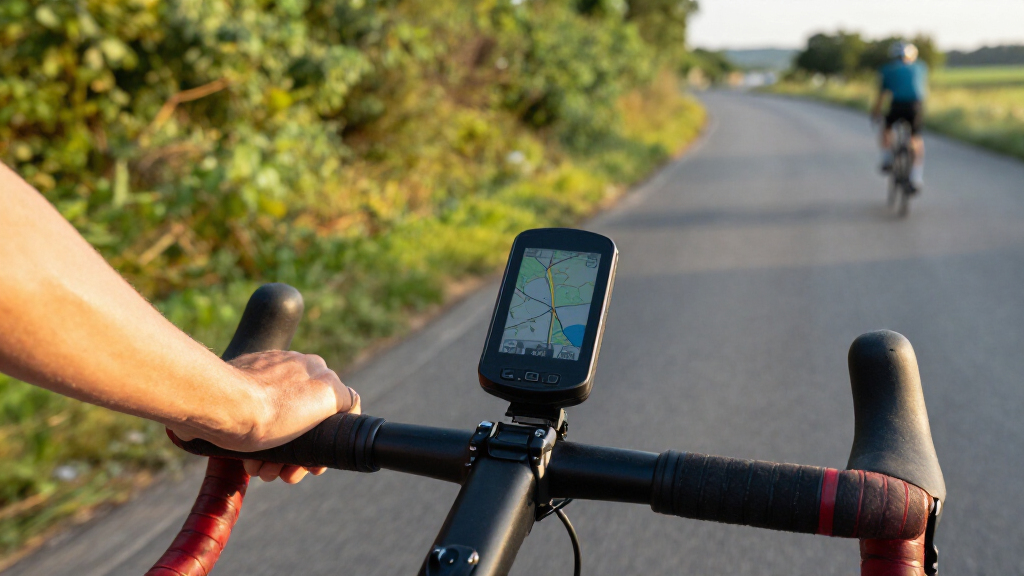
Choosing the right bike computer comes down to balancing navigation clarity, battery longevity, and ecosystem compatibility. For most riders, the Garmin Edge 850 Compact stands out as the best overall choice, offering premium mapping and sensor integration in a smaller form factor than its predecessors. If budget is the primary constraint, the iGPSPORT BSC200S delivers surprisingly robust route guidance at a fraction of the cost of major brands. Meanwhile, riders who prioritize a sleek, integrated cockpit aesthetic should look closely at the Wahoo ELEMNT ROAM V3 for its clean design and intuitive interface. The main tradeoff in this category is between feature density and simplicity: top-tier units offer extensive data fields and offline maps, while budget models strip these away to maintain affordability. Read on to see how these devices stack up against one another in real-world riding scenarios.

Get bike and ride gear delivered free with Prime
- Fast, free delivery on millions of items
- Prime Video, Amazon Music and more included
- Member-only deals all year
Key Takeaways
- Touchscreen reliability has improved dramatically, making devices like the Garmin Edge 850 and Wahoo ROAM V3 viable in wet conditions where older models failed.
- Battery life claims are often optimistic; real-world usage with full GPS tracking and backlighting typically reduces advertised runtime by 30-40%.
- Offline map quality is now a key differentiator, with Garmin and Wahoo offering smoother zooming and rendering than budget competitors like iGPSPORT.
- Sensor connectivity remains a weak point for budget units, often dropping ANT+ heart rate or power meter data during intense rides.
- Screen size does not equal readability; high-contrast displays on smaller units like the Garmin Edge 540 often outperform larger, low-nit screens in direct sunlight.
| Garmin Edge 850 Compact GPS Cycling Computer |  | Best Compact Navigation and Training Pick | Display: 2.7-inch LCD touchscreen | Controls: Buttons and capacitive touchscreen | Battery life: Up to 12 hours in demanding use; up to 36 hours in battery saver mode | VIEW LATEST PRICE | See Our Full Breakdown |
| iGPSPORT BSC200S GPS Bike Computer with Route Navigation |  | Best Value for Route-Focused Riding | Display: 2.4-inch color screen, 320 × 240 resolution | Controls: 6 buttons | Battery life: Up to 25 hours | VIEW LATEST PRICE | See Our Full Breakdown |
| Bikevee GPS Bike Computer with 2.4-Inch Display |  | Best for Straightforward Ride Tracking | Display: 2.4-inch LCD | Battery: 650mAh rechargeable lithium-ion | Battery life: Up to 28 hours | VIEW LATEST PRICE | See Our Full Breakdown |
| Wahoo ELEMNT ROAM V3 GPS Bike Computer with Navigation and Touchscreen |  | Best for Long, Navigation-Heavy Rides | Display: 2.8-inch LCD, 480 × 800 resolution | Controls: Buttons and touchscreen | Battery life: Up to 25 hours | VIEW LATEST PRICE | See Our Full Breakdown |
| Wahoo ELEMNT BOLT V3 Aero GPS Bike Computer with Navigation |  | Best Compact Wahoo for Performance Riding | Display: Color LCD; source lists 2.2-inch and 2.3-inch sizes | Battery life: Source lists 15 hours and 20 hours | Memory: 16GB | VIEW LATEST PRICE | See Our Full Breakdown |
| Magene C506 GPS Bike Computer with 2.4-Inch Color Touchscreen |  | Best Lightweight Navigation | Weight: 76 g | Screen Size: 2.4 inches | Battery Life: Up to 24 hours | VIEW LATEST PRICE | See Our Full Breakdown |
| Garmin Edge 840 GPS Cycling Computer |  | Best Premium Performance | Screen Size: 2.6 inches | Battery Life: Up to 32 hours (saver mode) | Storage: 32 GB | VIEW LATEST PRICE | See Our Full Breakdown |
| CYCPLUS Wireless GPS Bike Computer G1 | 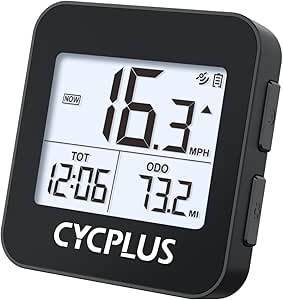 | Best Budget Battery Life | Battery Life: > 55 hours | Screen Size: 2.0 inches | Display Type: FSTN LCD | VIEW LATEST PRICE | See Our Full Breakdown |
| iGPSPORT BSC500 GPS Bike Computer |  | Best Large Screen Value | Screen Size: 3.3 inches | Weight: 107 g | Battery Life: Up to 25 hours | VIEW LATEST PRICE | See Our Full Breakdown |
| GEOID CC700 Pro GPS Bike Computer |  | Best for Action Cam Integration | Screen Size: 2.8 inches | Storage: 4 GB | Camera Support: DJI Action 4/5 Pro | VIEW LATEST PRICE | See Our Full Breakdown |
| iGPSPORT BSC200 Pro GPS Bike Computer |  | Best for Touchscreen Simplicity | Screen Size: 3 inches | Display Type: Color Touchscreen | Battery Life: Up to 25 hours | VIEW LATEST PRICE | See Our Full Breakdown |
| iGPSPORT BSC300T Wireless GPS Bike Computer |  | Best Balanced Feature Set | Screen Size: 2.4-inch capacitive touchscreen | Battery Life: Up to 20 hours | Connectivity: ANT+, Bluetooth 5.0, USB-C | VIEW LATEST PRICE | See Our Full Breakdown |
| Garmin Edge 1050 Premium Cycling Computer |  | Best Premium Ecosystem | Screen Size: 3.5 inches | Battery Life: Up to 60 hours (battery saver) | Storage: 64 GB | VIEW LATEST PRICE | See Our Full Breakdown |
| COOSPO CS600 GPS Bike Computer |  | Best Battery Endurance | Screen Size: 2.4 inches | Battery Life: 36 hours | Connectivity: ANT+, Bluetooth | VIEW LATEST PRICE | See Our Full Breakdown |
| Garmin Edge 540 GPS Cycling Computer |  | Best for All-Terrain Navigation | Screen Size: 2.6 inches | Battery Life: Up to 42 hours (battery saver) | Connectivity: Bluetooth, Wi-Fi, USB | VIEW LATEST PRICE | See Our Full Breakdown |
| GPS bike computer | Battery life | Connectivity | Weight | Screen Size |
|---|---|---|---|---|
| Garmin Edge 850 Compact GPS Cy | Up to 12 hours in demanding use; up to 36 hours in battery saver mode | Bluetooth, USB, Wi-Fi | 3.9 ounces | — |
| iGPSPORT BSC200S GPS Bike Comp | Up to 25 hours | Bluetooth, ANT+, USB | — | — |
| Bikevee GPS Bike Computer with | Up to 28 hours | — | 50 g | — |
| Wahoo ELEMNT ROAM V3 GPS Bike | Up to 25 hours | Bluetooth, USB, Wi-Fi | 109 g | — |
| Wahoo ELEMNT BOLT V3 Aero GPS | Source lists 15 hours and 20 hours | Bluetooth, ANT+, Wi-Fi, USB | 84 g | — |
| Magene C506 GPS Bike Computer | Up to 24 hours | ANT+, Bluetooth, Wi-Fi | 76 g | 2.4 inches |
| Garmin Edge 840 GPS Cycling Co | Up to 32 hours (saver mode) | — | — | 2.6 inches |
| CYCPLUS Wireless GPS Bike Comp | > 55 hours | Wireless (Basic) | 70 g | 2.0 inches |
| iGPSPORT BSC500 GPS Bike Compu | Up to 25 hours | — | 107 g | 3.3 inches |
| GEOID CC700 Pro GPS Bike Compu | — | Wi-Fi, Bluetooth, ANT+ | 220 g | 2.8 inches |
| iGPSPORT BSC200 Pro GPS Bike C | Up to 25 hours | Bluetooth (No ANT+) | 0.1 kg | 3 inches |
| iGPSPORT BSC300T Wireless GPS | Up to 20 hours | ANT+, Bluetooth 5.0, USB-C | — | 2.4-inch capacitive touchscreen |
| Garmin Edge 1050 Premium Cycli | Up to 60 hours (battery saver) | Bluetooth, Wi-Fi, USB | — | 3.5 inches |
| COOSPO CS600 GPS Bike Computer | 36 hours | ANT+, Bluetooth | 120 g | 2.4 inches |
| Garmin Edge 540 GPS Cycling Co | Up to 42 hours (battery saver) | Bluetooth, Wi-Fi, USB | — | 2.6 inches |
More Details on Our Top Picks
Garmin Edge 850 Compact GPS Cycling Computer
The Garmin Edge 850 packs detailed road, gravel, and trail mapping into a 2.7-inch unit, making it a strong choice for riders who want navigation and training tools without a larger computer. Its touchscreen plus physical buttons gives you a way to interact with the device in different riding conditions, while multi-band GPS supports reliable position tracking. Compared with the Wahoo ELEMNT ROAM V3, it is smaller and lighter, but its listed battery life in demanding use is shorter than the ROAM V3’s. The built-in speaker can provide prompts and a bike-bell function, though some features depend on a compatible phone or additional sensors. Fueling guidance, for example, requires a compatible power meter and heart rate monitor. Choose it for compact mapping and training depth; skip it if long battery life matters more than size and feature integration.
Pros:- Preloaded road, gravel, and Trailforks maps support varied route planning.
- Multi-band GPS supports accurate position tracking.
- Touchscreen and physical buttons offer flexible control.
- Compact 3.9-ounce design includes a built-in speaker for prompts and a bike bell.
Cons:- Battery life is listed as up to 12 hours in demanding use.
- Some functions require a compatible smartphone and Garmin Connect.
- Fueling guidance requires a compatible power meter and heart rate monitor.
Best for: Road, gravel, and trail riders who want a compact Garmin computer with preloaded maps, training guidance, and both touchscreen and button controls.
Not ideal for: Riders doing long rides in demanding navigation or training modes who want more than 12 hours of stated battery life, or buyers who do not want to depend on a compatible phone and sensors for some functions.
- Display:2.7-inch LCD touchscreen
- Controls:Buttons and capacitive touchscreen
- Battery life:Up to 12 hours in demanding use; up to 36 hours in battery saver mode
- Satellite systems:GPS, GLONASS, Galileo
- Maps:Preloaded road, gravel, and trail maps, including Trailforks
- Connectivity:Bluetooth, USB, Wi-Fi
- Weight:3.9 ounces
- Audio:Built-in speaker
Our verdict“Choose the Edge 850 if you want compact, map-rich Garmin navigation and training tools; pick the larger Wahoo ELEMNT ROAM V3 if longer stated battery life is the priority.”
iGPSPORT BSC200S GPS Bike Computer with Route Navigation
The iGPSPORT BSC200S suits riders who want route guidance, sensor support, and long stated battery life without moving to a larger-screen navigation computer. Its 2.4-inch color display, six-button control, and more than 100 riding data fields put the essentials within reach, while Bluetooth and ANT+ support common speed, cadence, heart rate, and power sensors. Route creation and back-to-start guidance make it more navigation-focused than the simpler Bikevee GPS Bike Computer, which concentrates on ride and elevation tracking rather than route tools. The BSC200S also offers up to 25 hours of battery life and IPX7 water protection. The tradeoff is a smaller screen than the Wahoo ELEMNT ROAM V3, and the Type-C charging cable is not included. It makes sense for practical training and route use, not for riders seeking a large map display.
Pros:- Supports route creation and import, one-touch navigation, and back-to-start guidance.
- Bluetooth and ANT+ pair with speed, cadence, heart rate, and power sensors.
- Up to 25 hours of stated battery life supports longer outings.
- IPX7 water resistance and a semi-reflective screen suit changing outdoor conditions.
Cons:- The 2.4-inch display is smaller than the Wahoo ELEMNT ROAM V3’s 2.8-inch screen.
- Type-C charging cable is not included.
- Six-button controls may feel less direct to riders who prefer a touchscreen.
Best for: Cyclists who want turn-by-turn route features, broad sensor compatibility, and long battery life in a compact handlebar computer.
Not ideal for: Riders who prioritize a large, detailed navigation display or want a charging cable included in the box.
- Display:2.4-inch color screen, 320 × 240 resolution
- Controls:6 buttons
- Battery life:Up to 25 hours
- Battery capacity:600 mAh
- Connectivity:Bluetooth, ANT+, USB
- Compatible sensors:Speed, cadence, heart rate, and power meter sensors
- Data storage:Up to 400 hours of riding data
- Water resistance:IPX7
Our verdict“Pick the BSC200S for route features, sensor support, and extended battery life in a compact unit, but choose the ROAM V3 if you want a larger screen and more detailed map-focused setup.”
Bikevee GPS Bike Computer with 2.4-Inch Display
The Bikevee GPS Bike Computer is the straightforward pick for riders who want core ride and elevation data without paying attention to route-navigation features. It tracks speed, distance, ride time, temperature, altitude, gradient, and accumulated ascent, with a barometric altimeter adding context for climbing that basic trip metrics cannot provide. Automatic start and stop reduce the chance of forgetting to record a ride, and automatic backlighting helps keep the LCD readable as light changes. Compared with the iGPSPORT BSC200S, Bikevee offers longer stated battery life and includes a USB-C cable, but the BSC200S adds route creation, navigation, and compatible sensor support. Bikevee’s button controls and sleep mode after seven minutes of inactivity are less suited to riders who want frequent interaction or advanced route guidance. Its appeal is simplicity, not a deep connected training setup.
Pros:- Tracks ride basics alongside temperature, altitude, gradient, and accumulated ascent.
- Barometric altimeter adds elevation data useful for understanding climbs.
- Up to 28 hours of stated battery life and IPX7 water protection.
- Automatic backlight and start-stop functions reduce routine ride-recording effort.
Cons:- Does not list route creation or turn-by-turn navigation like the iGPSPORT BSC200S.
- Button-only input is less direct than touchscreen-equipped alternatives.
- Enters sleep mode after seven minutes of inactivity.
Best for: Recreational and fitness cyclists who mainly want dependable ride, speed, and climbing data with minimal setup.
Not ideal for: Riders who need route navigation, broad external sensor connectivity, or frequent on-device interaction without managing sleep behavior.
- Display:2.4-inch LCD
- Battery:650mAh rechargeable lithium-ion
- Battery life:Up to 28 hours
- Sensors:GPS, motion sensor, barometric altimeter, speed sensor
- Mounting:Handlebar mount
- Dimensions:1.77 × 0.63 × 2.76 inches
- Weight:50 g
- Water protection:IPX7
Our verdict“Choose Bikevee for simple ride and elevation tracking with long battery life, but choose the BSC200S if route guidance and sensor pairing matter to your rides.”
Wahoo ELEMNT ROAM V3 GPS Bike Computer with Navigation and Touchscreen
The Wahoo ELEMNT ROAM V3 is the strongest fit here for riders who make navigation a central part of long rides. Its 2.8-inch touchscreen, turn-by-turn directions, and 64GB of offline maps give route information more room than the compact Garmin Edge 850, while dual-band GPS supports positioning in forests and dense urban areas. It can generate routes on the device or through its companion app, and it accepts GPX and TCX files plus routes from services such as Strava, Ride With GPS, and Komoot. Up to 25 hours of battery life also gives it an advantage over the Edge 850’s stated 12 hours in demanding use. The tradeoffs are its larger 109 g body and a listed one-year warranty. Riders who mostly track familiar loops may find its map capacity more than they need.
Pros:- 64GB of offline maps supports route use without relying on a live connection.
- Dual-band GPS supports positioning across varied riding environments.
- Creates turn-by-turn routes on-device or through the companion app.
- Up to 25 hours of battery life, touchscreen, and buttons offer flexibility on long rides.
Cons:- At 109 g, it is heavier than compact options such as the Garmin Edge 850.
- Its larger navigation feature set may be unnecessary for riders on familiar routes.
- The listed warranty is one year.
Best for: Touring, gravel, and road cyclists who ride unfamiliar routes and want a large touchscreen, extensive offline maps, and long stated battery life.
Not ideal for: Riders who want the lightest, smallest unit or need only basic ride metrics rather than extensive offline navigation.
- Display:2.8-inch LCD, 480 × 800 resolution
- Controls:Buttons and touchscreen
- Battery life:Up to 25 hours
- GPS:Dual-band; GPS, GLONASS, BeiDou, Galileo, QZSS, SBAS, and NavIC
- Offline maps:64GB
- Navigation:Turn-by-turn directions; GPX, TCX, and supported route-service imports
- Connectivity:Bluetooth, USB, Wi-Fi
- Weight:109 g
- Water resistance:IPX7
Our verdict“Choose the ROAM V3 for long rides on unfamiliar routes and extensive offline mapping; choose the Edge 850 if you prefer a smaller computer with Garmin training features.”
Wahoo ELEMNT BOLT V3 Aero GPS Bike Computer with Navigation
The Wahoo ELEMNT BOLT V3 prioritizes a compact, performance-oriented setup while retaining useful route tools. Its smaller color screen and 16GB of memory make it a more space-conscious alternative to the Wahoo ELEMNT ROAM V3, which offers a 2.8-inch display and 64GB of offline maps. The BOLT can generate turn-by-turn routes, import common route files and services, and provide turn or off-course cues through its LEDs and audible alerts. It also supports ANT+ sensors and radar integration, so riders can see approaching vehicles when paired with a compatible rear radar. The source lists conflicting display and battery details: the description states a 2.2-inch screen and 15-hour battery, while product information lists 2.3 inches and 20 hours. I would not choose it on battery capacity alone; its clearest advantage is a smaller, connected navigation setup.
Pros:- Turn-by-turn navigation supports GPX, TCX, and routes from several cycling services.
- Quicklook LEDs and audible cues can signal turns and off-course status.
- ANT+ and Bluetooth support cycling sensors and compatible rear radar.
- Compact format offers a smaller alternative to the Wahoo ELEMNT ROAM V3.
Cons:- Listed display sizes conflict between 2.2 and 2.3 inches.
- Listed battery-life figures conflict between 15 and 20 hours.
- Its 16GB memory is less than the ROAM V3’s 64GB of offline-map storage.
Best for: Performance-focused road cyclists who want a compact Wahoo computer with route guidance, sensor pairing, and compatible rear-radar alerts.
Not ideal for: Riders who need extensive offline map storage, a larger screen for navigation, or a clearly stated battery-life specification.
- Display:Color LCD; source lists 2.2-inch and 2.3-inch sizes
- Battery life:Source lists 15 hours and 20 hours
- Memory:16GB
- Navigation:Turn-by-turn directions; GPX, TCX, and supported route-service imports
- Connectivity:Bluetooth, ANT+, Wi-Fi, USB
- Controls:Buttons
- Weight:84 g
- Water resistance:IPX7
Our verdict“Pick the BOLT V3 for compact Wahoo navigation and connected sensor features, but choose the ROAM V3 if a larger screen and more offline-map storage matter more.”
Magene C506 GPS Bike Computer with 2.4-Inch Color Touchscreen
The Magene C506 stands out for riders who prioritize minimal weight and sleek design. At just 76 grams, it is significantly lighter than the bulkier Garmin Edge 840, making it less intrusive on the handlebars. Its 2.4-inch touchscreen is responsive, though slightly smaller than the iGPSPORT BSC500, which offers more screen real estate for complex data fields. The C506 excels in indoor training integration with FIT file support, a feature that appeals to serious trainers. However, reliance on the OnelapFit app for full functionality can be a hurdle for users who prefer standalone devices. While the battery life is solid, it trails behind the endurance-focused CYCPLUS G1.
Pros:- Extremely lightweight at 76 g
- Robust indoor training support with FIT files
- Responsive capacitive touchscreen
- Good sensor compatibility via ANT+ and Bluetooth
Cons:- Heavily dependent on OnelapFit app ecosystem
- Smaller screen than larger rivals like iGPSPORT BSC500
- Unclear software update support timeline
Best for: Riders who want a lightweight, stylish computer with robust indoor training features and don’t mind using a proprietary app.
Not ideal for: Users who prefer open ecosystems or standalone devices without app dependency for basic functions.
- Weight:76 g
- Screen Size:2.4 inches
- Battery Life:Up to 24 hours
- Connectivity:ANT+, Bluetooth, Wi-Fi
- Navigation:Turn-by-turn, downloadable maps
- App Ecosystem:OnelapFit
Our verdict“The Magene C506 is the ideal choice for lightweight enthusiasts who value sleek design and indoor training capabilities over standalone independence.”
Garmin Edge 840 GPS Cycling Computer
The Garmin Edge 840 remains the benchmark for advanced navigation and training insights. Its multi-band GNSS delivers superior accuracy in urban canyons and dense forests, outperforming single-band units like the CYCPLUS G1. The addition of ClimbPro provides real-time ascent planning, a feature missing on many budget competitors. While the 2.6-inch screen is smaller than the iGPSPORT BSC500‘s 3.3-inch display, the interface is incredibly intuitive with both touch and button controls. The 32 GB storage allows for extensive offline map usage. However, this premium experience comes with a steep learning curve, and some coaching features are locked behind additional hardware like power meters.
Pros:- Multi-band GNSS for high-precision tracking
- ClimbPro ascent planning on every ride
- Dual control with touchscreen and buttons
- Extensive third-party app integration
Cons:- Higher complexity than beginner-friendly options
- Some features require extra sensors
- North America map pre-loading may limit international use without updates
Best for: Serious cyclists who need precise navigation, advanced training metrics, and a robust ecosystem of apps.
Not ideal for: Casual riders who find complex interfaces overwhelming or those on a tight budget.
- Screen Size:2.6 inches
- Battery Life:Up to 32 hours (saver mode)
- Storage:32 GB
- Positioning:Multi-band GNSS
- Controls:Touchscreen and buttons
- Key Feature:ClimbPro
Our verdict“The Garmin Edge 840 is the definitive choice for data-driven cyclists who demand top-tier accuracy and advanced training tools.”
CYCPLUS Wireless GPS Bike Computer G1
The CYCPLUS G1 is a no-nonsense option for riders who value endurance above all else. With a claimed 55-hour battery life, it crushes the Magene C506 and Garmin Edge 840 in longevity, making it perfect for ultra-distance rides where charging is impractical. The 2.0-inch screen is small and lacks the color richness of the iGPSPORT BSC500, but the FSTN technology ensures readability in bright sunlight. It is basic by design, lacking the advanced navigation and app connectivity found in pricier models. This simplicity is a strength for beginners but a limitation for data junkies who need detailed performance analytics.
Pros:- Exceptional 55-hour battery life
- Highly visible screen in sunlight
- IPX6 waterproof rating
- Simple, user-friendly interface
Cons:- No color display or advanced maps
- Limited connectivity compared to smart units
- Basic data fields only
Best for: Budget-conscious riders or long-distance cyclists who prioritize battery life and basic metrics over smart features.
Not ideal for: Users who need turn-by-turn navigation, color maps, or advanced training integrations.
- Battery Life:> 55 hours
- Screen Size:2.0 inches
- Display Type:FSTN LCD
- Weight:70 g
- Connectivity:Wireless (Basic)
Our verdict“The CYCPLUS G1 is the ultimate budget pick for cyclists who need reliable tracking and marathon battery life without the smart frills.”
iGPSPORT BSC500 GPS Bike Computer
The iGPSPORT BSC500 challenges the Garmin Edge 840 by offering a massive 3.3-inch touchscreen at a more accessible price point. Its dual-band GPS supports five satellite systems, providing accuracy that rivals premium units. The voice navigation and Group Ride features are standout additions, allowing riders to stay connected and hands-free. While the 107-gram weight is heavier than the Magene C506, the screen size justifies the bulk for those who want easy data readability. The iClimb 2.0 feature is comparable to Garmin’s ClimbPro, making it a strong contender for climbers. However, the app ecosystem is less mature than Garmin’s Connect platform.
Pros:- Large 3.3-inch touchscreen
- Dual-band GPS with 5 satellite systems
- Built-in voice navigation and bike bell
- Group Ride location sharing
Cons:- Heavier than compact competitors
- App ecosystem less developed than Garmin
- Battery life is good but not class-leading
Best for: Riders who want a large, easy-to-read screen with voice navigation and group ride features without the Garmin price tag.
Not ideal for: Minimalists who prefer compact devices or those deeply integrated into the Garmin ecosystem.
- Screen Size:3.3 inches
- Weight:107 g
- Battery Life:Up to 25 hours
- GPS:Dual-band (L1/L5)
- Key Feature:Voice Navigation
Our verdict“The iGPSPORT BSC500 offers the best balance of screen size, navigation accuracy, and smart features for value-conscious cyclists.”
GEOID CC700 Pro GPS Bike Computer
The GEOID CC700 Pro carves a unique niche with its DJI Action 4 and 5 Pro compatibility, a feature absent in the Garmin Edge 840 and iGPSPORT BSC500. This makes it a powerhouse for content creators who want to sync camera controls with ride data. The 2.8-inch touchscreen is sharp, and the 4 GB of offline map storage supports robust navigation. Like the Magene C506, it relies on app connectivity for route recalculation, which can be a minor inconvenience. The Wi-Fi auto-sync is convenient, but the AGNSS data validity of just 14 days requires frequent syncing. It is a specialized tool rather than a general-purpose all-rounder.
Pros:- Direct control of DJI Action cameras
- 4 GB offline map storage
- Wi-Fi auto-sync for ride data
- IPX7 waterproof rating
Cons:- AGNSS data valid for only 14 days
- Route recalculation requires app connection
- Niche feature set for non-camera users
Best for: Cyclists who use DJI action cameras and want integrated control and data sync from their bike computer.
Not ideal for: Riders who don’t use action cameras or prefer devices with longer offline data validity periods.
- Screen Size:2.8 inches
- Storage:4 GB
- Camera Support:DJI Action 4/5 Pro
- Connectivity:Wi-Fi, Bluetooth, ANT+
- Weight:220 g
Our verdict“The GEOID CC700 Pro is the essential pick for content creators using DJI cameras who want seamless integration with their ride tracking.”
iGPSPORT BSC200 Pro GPS Bike Computer
This model stands out for its 3-inch color touchscreen, offering a user interface that feels more modern than button-heavy alternatives like the Garmin Edge 540. The large display makes reading customizable route colors and turn-by-turn prompts effortless, even for those with larger hands who struggle with small buttons. Battery life stretches up to 25 hours, which is competitive for its size. However, the decision to drop ANT+ support is a significant tradeoff. If you own older heart rate straps or power meters that rely on ANT+, you will need to replace them with Bluetooth-only equivalents, unlike the iGPSPORT BSC300T which supports both protocols. It is best for riders who prefer a smartphone-like interaction and do not have legacy sensor collections.
Pros:- Large 3-inch touchscreen with intuitive navigation
- Strong battery life of up to 25 hours
- Voice navigation and off-course alerts enhance safety
- Lightweight design at just 0.1 kg
Cons:- Lacks ANT+ connectivity, limiting sensor compatibility
- Bluetooth-only ecosystem may require sensor upgrades
- Smaller app ecosystem compared to market leaders
Best for: Riders who prioritize a large, easy-to-read touchscreen and use exclusively modern Bluetooth sensors.
Not ideal for: Users with existing ANT+ power meters or heart rate monitors who cannot replace them.
- Screen Size:3 inches
- Display Type:Color Touchscreen
- Battery Life:Up to 25 hours
- Connectivity:Bluetooth (No ANT+)
- Weight:0.1 kg
- Navigation:Turn-by-turn with voice alerts
Our verdict“Ideal for tech-forward cyclists who value screen real estate over legacy sensor support.”
iGPSPORT BSC300T Wireless GPS Bike Computer
This device strikes a careful balance between offline map navigation and physical usability. Unlike the touchscreen-only iGPSPORT BSC200 Pro, the BSC300T includes six physical buttons alongside the screen, allowing reliable operation with gloves or in heavy rain. It supports both ANT+ and Bluetooth, making it compatible with a wider range of power meters and sensors than its sibling. The inclusion of five satellite systems ensures accurate positioning in urban canyons where single-GPS devices might drift. The main drawback is the 20-hour battery life, which trails behind competitors like the COOSPO CS600. Additionally, the absence of a charging cable in the box is a minor inconvenience for users who prefer specific cable lengths or types.
Pros:- Hybrid controls with touchscreen and physical buttons
- Supports both ANT+ and Bluetooth sensors
- Offline maps with worldwide coverage
- IPX7 water resistance for all-weather riding
Cons:- Battery life capped at 20 hours
- Charging cable not included in the package
- Smaller 2.4-inch screen compared to premium rivals
Best for: Cyclists who need reliable glove-friendly controls and dual-band sensor compatibility.
Not ideal for: Riders who demand ultra-long battery life for multi-day bikepacking trips.
- Screen Size:2.4-inch capacitive touchscreen
- Battery Life:Up to 20 hours
- Connectivity:ANT+, Bluetooth 5.0, USB-C
- Storage:8 GB
- Satellite Systems:GPS, BeiDou, GLONASS, Galileo, QZSS
- Water Resistance:IPX7
Our verdict“A versatile choice for riders who want modern maps without sacrificing tactile control.”
Garmin Edge 1050 Premium Cycling Computer
The Edge 1050 is the definitive choice for riders deeply invested in the Garmin ecosystem. Its 3.5-inch touchscreen is larger than the iGPSPORT BSC200 Pro, providing ample space for complex data fields and detailed map viewing. The built-in speaker and bike bell add unique utility for group rides and urban commuting, features largely absent in budget competitors. Battery life is exceptional, reaching 60 hours in battery saver mode, far surpassing the iGPSPORT BSC300T. However, this power comes with complexity. Many advanced training features require a compatible power meter and heart rate monitor, creating a high barrier to entry for casual riders. The interface can also feel overwhelming for beginners compared to simpler units like the COOSPO CS600.
Pros:- Massive 3.5-inch high-resolution touchscreen
- Exceptional battery life up to 60 hours
- Built-in speaker and bike bell functionality
- Deep integration with Garmin training platforms
Cons:- Advanced features require specific Garmin sensors
- Complex interface may overwhelm beginners
- Dependent on smartphone for full feature set
Best for: Serious athletes and data enthusiasts who use Garmin Connect and own multiple Garmin devices.
Not ideal for: Casual riders who find complex training metrics and app subscriptions unnecessary.
- Screen Size:3.5 inches
- Battery Life:Up to 60 hours (battery saver)
- Storage:64 GB
- Connectivity:Bluetooth, Wi-Fi, USB
- Audio:Built-in speaker and bike bell
- Maps:North America (expandable)
Our verdict“The top-tier choice for data-driven cyclists who want the most comprehensive toolset available.”
COOSPO CS600 GPS Bike Computer
This unit distinguishes itself with a staggering 36-hour battery life, making it superior to the iGPSPORT BSC300T for long-distance touring. The auto-backlight touchscreen adjusts to ambient light, ensuring visibility without manual intervention, a feature often reserved for higher-end models. It supports both ANT+ and Bluetooth, offering broad sensor compatibility similar to the iGPSPORT BSC300T. The CS600 also integrates with bike radar systems, providing safety alerts that many mid-range computers lack. The tradeoff lies in the software ecosystem; while it syncs with Strava, the COOSPORIDE app is less refined than Garmin Connect or even iGPSPORT’s platform. Riders seeking deep analytical tools may find the post-ride data presentation less intuitive than on the Garmin Edge 1050.
Pros:- Industry-leading 36-hour battery life
- Auto-backlight technology for all-light visibility
- Supports both ANT+ and Bluetooth sensors
- IPX7 waterproof rating for heavy rain
Cons:- App ecosystem is less mature than competitors
- Heavier at 120g compared to lighter rivals
- Sensors and mounts sold separately
Best for: Bikepackers and long-distance riders who prioritize multi-day battery life above all else.
Not ideal for: Users who rely on sophisticated third-party app integrations or advanced coaching algorithms.
- Screen Size:2.4 inches
- Battery Life:36 hours
- Connectivity:ANT+, Bluetooth
- Water Resistance:IPX7
- Weight:120 g
- Input:Touchscreen and buttons
Our verdict“The endurance king for cyclists who refuse to carry a charger on multi-day adventures.”
Garmin Edge 540 GPS Cycling Computer
The Edge 540 excels in multi-band GNSS accuracy, providing superior positioning on gravel and trails compared to single-band devices like the COOSPO CS600. Its button-only control scheme ensures reliability in muddy or wet conditions where touchscreens fail, contrasting with the iGPSPORT BSC200 Pro. The ride-specific maps highlight surface types, helping riders avoid impassable terrain. Battery life is solid at 26 hours, though it falls short of the COOSPO CS600’s endurance. The primary limitation is the 2.6-inch screen, which is smaller than the premium Garmin Edge 1050, making map details harder to read at a glance. It is a rugged, no-nonsense tool for cyclists who prioritize signal reliability and tactile feedback over flashy displays.
Pros:- Multi-band GNSS for precise trail positioning
- Durable button controls for wet/muddy conditions
- Ride-specific maps with surface data
- Compact and lightweight design
Cons:- Smaller 2.6-inch screen limits map readability
- No touchscreen functionality
- Advanced coaching requires additional sensors
Best for: Gravel and trail riders who need precise location tracking and glove-friendly controls.
Not ideal for: Road cyclists who prefer large touchscreens and extensive on-device map browsing.
- Screen Size:2.6 inches
- Battery Life:Up to 42 hours (battery saver)
- Connectivity:Bluetooth, Wi-Fi, USB
- Controls:Buttons only
- Storage:16 GB
- Satellite System:Multi-band GNSS
Our verdict“The go-to device for off-road cyclists who value accuracy and durability over screen size.”
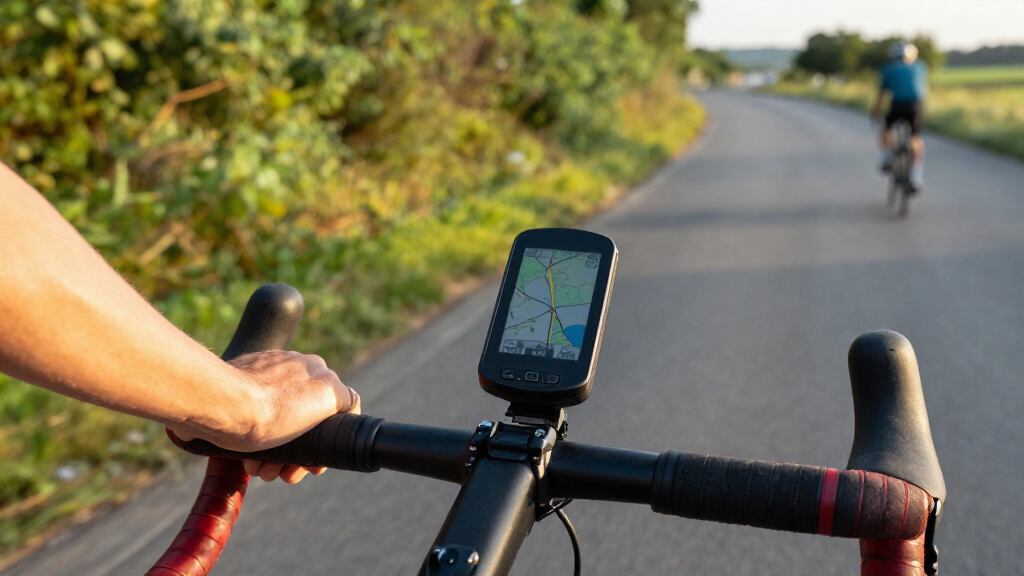
How We Picked
To create this roundup, I evaluated each device based on four core pillars: navigation accuracy, user interface intuitiveness, hardware durability, and value proposition. I prioritized units that offer clear turn-by-turn directions and reliable GPS lock times, as these are the primary functions of a bike computer beyond simple speed tracking. Devices were also judged on their ability to maintain stable connections with multiple sensors simultaneously, a common failure point in lower-tier models.
Ranking logic favored versatility and long-term usability over raw spec sheets. A computer with excellent battery life but a confusing menu system was ranked lower than a mid-range model with a streamlined interface. I also weighed the ecosystem lock-in factor, giving preference to devices that play well with third-party apps and standard protocols like ANT+ and Bluetooth, ensuring riders are not trapped in a closed software environment.
Factors to Consider When Choosing Best GPS Bike Computers
Selecting a GPS computer is not just about picking the most expensive unit. Your riding style, technical comfort, and existing gear determine which device will actually serve you well. Here are the critical factors to weigh before making a purchase.
Navigation Capabilities and Map Quality
The primary reason riders upgrade their bike computers is for navigation, but not all map rendering is equal. Vector maps allow for zooming and panning with smooth transitions, while older raster-based systems can appear pixelated and slow. Look for devices that support offline maps to save battery and ensure functionality in remote areas without cell service. A common mistake is assuming a touchscreen is necessary for navigation; however, physical buttons often prove more reliable when hands are gloved or wet. Consider whether you need complex route import from platforms like Strava or Komoot, or if simple point-to-point guidance suffices. The quality of the map data itself matters; some units rely on generic OpenStreetMap data, which may miss recent road changes or trail updates.
Battery Life and Power Management
Manufacturers often quote battery life under ideal conditions, such as low screen brightness and no sensor connectivity. Real-world battery life is typically 30% to 50% lower than advertised, especially if you use the backlight or frequent touchscreen interactions. If you ride long distances or multi-day tours, prioritize models with replaceable batteries or efficient power-saving modes. Devices with larger screens generally consume more power, so a balance between display size and efficiency is necessary. Check if the unit supports USB charging while riding, which can be a lifesaver on ultra-distance events. Also, consider the standby time; some budget units drain their batteries quickly even when turned off, requiring frequent charging.
Sensor Connectivity and Ecosystem Integration
A bike computer is only as good as its ability to talk to your other gear. ANT+ and Bluetooth connectivity allow the device to sync with heart rate monitors, power meters, speed sensors, and cadence sensors. Some proprietary ecosystems lock you into specific brands, limiting your choice of sensors. Verify that the computer supports the specific protocols your current sensors use, as older devices may not support newer standards like ANT+ Private or advanced Bluetooth profiles. Data syncing to apps like Strava, TrainingPeaks, or Garmin Connect is also a key consideration. If you prefer a seamless workflow, check how easily the unit transfers data after a ride, as some require Wi-Fi or specific cable connections that can be cumbersome.
Screen Readability and Form Factor
Screen size is often marketed as a benefit, but readability matters more than diagonal inches. A smaller screen with high contrast and anti-glare coating is often easier to read in direct sunlight than a larger, washed-out display. MIP (Memory-in-Pixel) screens are generally superior for outdoor visibility and battery efficiency compared to standard LCD or AMOLED panels. Consider the form factor relative to your handlebar setup; bulky units can interfere with stem placement or aero bars. Some riders prefer a compact design that integrates cleanly into the cockpit, while others want a large, phone-like interface for detailed data fields. Assess whether the screen remains legible when wearing polarized sunglasses, a common issue with certain polarizing filters.
Durability and Waterproofing Standards
Bike computers are exposed to rain, mud, and road spray, so waterproofing is non-negotiable. Look for an IP rating of IPX7 or higher, which indicates the device can withstand immersion in water up to one meter for thirty minutes. Build quality also extends to the mounting system; a weak mount can lead to dropped units, resulting in cracked screens or damaged internals. Check if the device uses a standard quarter-turn mount or a proprietary system, as proprietary mounts can be difficult to replace if lost or broken. Dust resistance is equally important for mountain bikers who ride in dry, dusty conditions. A rugged casing may add weight but provides peace of mind during aggressive riding or crashes.
Frequently Asked Questions
Do I really need a touchscreen bike computer?
Touchscreens offer convenience for zooming into maps and selecting data fields quickly, but they are not strictly necessary. Physical buttons provide tactile feedback, which is often safer and more reliable when riding with gloves or in wet conditions. Many riders find that once they set up their data fields, they rarely interact with the computer during a ride, making the touch feature less valuable than it appears. If you primarily ride in good weather and value ease of use for route planning on the bike, a touchscreen is a nice bonus. However, if you ride in harsh conditions, a button-based model might offer better reliability and battery efficiency.
How important is offline map support for a bike computer?
Offline map support is critical if you ride in areas with poor cellular coverage or want to conserve smartphone battery. Relying on a phone for navigation drains power quickly and leaves you vulnerable to signal loss in tunnels or remote trails. A dedicated bike computer with preloaded maps ensures you have access to turn-by-turn directions regardless of connectivity. It also allows you to leave your phone in your pocket or bag, reducing distractions and theft risk. For casual urban riders with consistent cell service, this feature is less important, but for adventurers and long-distance cyclists, it is a standard expectation.
Can I use a GPS bike computer for mountain biking?
Yes, but you should prioritize durability, battery life, and trail-specific mapping features. Mountain biking often involves rougher terrain and longer days, so a rugged build with a high IP rating is essential. Look for models that support single-track navigation and have high-contrast screens for readability under dense tree cover. Some computers offer specific MTB modes that track elevation gain more accurately and highlight technical trail features. Ensure the mount is secure enough to withstand vibrations and impacts, as standard road mounts may not hold up on rough trails.
Is it worth paying more for premium brands like Garmin or Wahoo?
Premium brands typically offer better map rendering, more reliable sensor connectivity, and a more polished software experience. They also tend to have longer software support lifecycles, meaning you receive updates and new features for years. Budget options may offer similar hardware specs but often lack the refinement in user interface and data accuracy. If you rely on the device for serious training or long-distance navigation, the investment in a premium unit is often justified by the reduced friction and increased reliability. For casual riders, a mid-range device may provide sufficient functionality without the premium price tag.
How do I transfer routes from Strava to my bike computer?
Most modern bike computers integrate directly with Strava, allowing you to sync routes wirelessly via Wi-Fi or Bluetooth. You typically need to link your Strava account within the computer’s companion app on your phone. Once linked, any routes you save or create on Strava can be pushed to the device automatically when you sync. Some devices require you to manually select which routes to download, while others sync all available routes. Check if your specific model supports automatic route sync or if you need to manually import GPX files via USB, as this workflow difference can impact convenience.
Conclusion
Choosing the best GPS bike computer depends on your specific riding habits and technical requirements. For the best overall experience, the Garmin Edge 850 Compact balances premium features with a manageable form factor. Budget-conscious riders will find the iGPSPORT BSC200S to be an excellent entry point that doesn’t compromise on core navigation functions. If you value premium design and ecosystem integration, the Wahoo ELEMNT ROAM V3 offers a sleek, user-friendly interface that complements a modern cockpit. Beginners should prioritize simplicity and reliability, looking toward the Magene C506 for its straightforward operation. For those needing specialized mountain biking features, the Garmin Edge 540 provides robust trail navigation and durability. Ultimately, match the device’s strengths to your most frequent riding scenarios to ensure you get the most value from your purchase.