The best kids bicycle helmets combine a secure fit, useful adjustability, and features a child will wear comfortably. My best overall pick is the Bell Richter for its bicycle-focused design, while the Thousand Kids stands out for families who want a more polished multi-sport option and the LED-light models add visibility features for rides near dusk. The main tradeoffs are choosing between a helmet sized for a narrower age range and one with broader adjustability, and deciding whether extras such as a visor or light matter for your routes. A multi-sport label alone does not confirm that a helmet suits every activity, so check its intended use and fit. Read on for my full comparison and guidance on choosing a helmet your child can wear securely.

Get bike and ride gear delivered free — and shop member deals
- Fast, free delivery on millions of items
- Access to Prime Big Deal Days deals on October 6–7
- Prime Video, Amazon Music and more included
Key Takeaways
- The Bell Richter is my best overall pick for a bicycle-first choice, while the Bell Rally offers another child-focused Bell option; compare their sizing against your child’s head before choosing.
- LED lights and removable visors are convenience features, not substitutes for a correctly fitted helmet or other visibility measures.
- Several helmets span broad age ranges or multiple head sizes, but stated age coverage does not guarantee a secure fit on an individual child.
- The Thousand Kids and several multi-sport models suit families seeking use across activities; confirm the manufacturer’s activity guidance before relying on that versatility.
- Two-size and three-size options can make sizing changes easier to manage, though a size range still needs to match the child’s measured head circumference.
| Retrospec Remi Youth Bike Helmet for Kids |  | Best Overall | Ventilation: 11 air vents | Fit system: ErgoKnob dial adjustment | Padding: Removable, washable, fast-drying | VIEW LATEST PRICE | See Our Full Breakdown |
| Kids Bike Helmet with LED Light |  | Best for Low-Light Visibility | Material: PC shell with EPS foam | Head circumference: 50–57 cm (19.7–22.4 in) | Weight: Approx. 250 g (0.55 lb) | VIEW LATEST PRICE | See Our Full Breakdown |
| Bell Marvel Spider-Man Kids’ Bike Helmet |  | Best for Reluctant Little Riders | Brand: Bell | Model: 7081692 | Age range: Little Kid | VIEW LATEST PRICE | See Our Full Breakdown |
| SIFVO Kids’ Adjustable Lightweight Helmet with Removable Visor |  | Best Extended Coverage | Shell: PC | Liner: Impact-resistant EPS | Fit: Two adjustable positions | VIEW LATEST PRICE | See Our Full Breakdown |
| Atphfety Kids Bike Helmet – 2 Sizes for Youth, Girls & Boys, Multi-Sport |  | Best for Growing Kids and Shared Use | Brand: Atphfety | Model: W-012 | Age range: Youth/Teen (5–14 years) | VIEW LATEST PRICE | See Our Full Breakdown |
| Bell Richter Youth Bike Helmet |  | Best for Older Kids | Recommended Age: 8-14 years | Head Size Fit: 54-58 cm | Fit System: True Fit one-step adjustment | VIEW LATEST PRICE | See Our Full Breakdown |
| Bienbee Adjustable Kids Multi-Sport Helmet, Ages 1–14 |  | Best Grow-With-Me Pick | Materials: ABS shell and thick EPS foam | Weight: 13.2 oz | Sizes: X-small, small, and medium | VIEW LATEST PRICE | See Our Full Breakdown |
| Kids Bike Helmet with LED Light, Adjustable Fit, and Removable Visor |  | Best for Visibility | Shell: Polycarbonate | Impact Liner: EPS foam | Head Circumference: 19.7-22.4 in (50-57 cm) | VIEW LATEST PRICE | See Our Full Breakdown |
| Bell Rally Child Bike Helmet |  | Best for Younger Riders | Recommended Age: 5-8 years | Head Circumference: 52-56 cm | Fit System: True Fit one-step adjustment | VIEW LATEST PRICE | See Our Full Breakdown |
| LOKJIJI Adjustable Kids Multi-Sport Helmet |  | Best Style Pick for Multi-Sport Kids | Age Range: 5-14 years | Sizes: Small (51-54 cm), Medium (55-58 cm) | Weight: 380 g (Small), 410 g (Medium) | VIEW LATEST PRICE | See Our Full Breakdown |
| Schwinn Thrasher Youth Bike Helmet, 55–58 cm |  | Best Ventilation for Older Kids | Brand: Schwinn | Head circumference: 55–58 cm | Recommended age: 8–14 years | VIEW LATEST PRICE | See Our Full Breakdown |
| Thousand Kids Multi-Sport Safety Helmet |  | Best Style and Visibility Pick | Head circumference: 49–53 cm | Ventilation: 6 vents | Buckle: Magnetic, no-pinch | VIEW LATEST PRICE | See Our Full Breakdown |
| OnBros Kids Bike Helmet with Adjustable Fit and Removable Visor, 50–57 cm |  | Best Lightweight All-Rounder | Brand: OnBros | Size: 50–57 cm (19.65–22.45 in) | Materials: PC shell, EPS foam | VIEW LATEST PRICE | See Our Full Breakdown |
| BURSUN Kids Multi-Sport Helmet – Adjustable & Ventilated for Ages 2-14 |  | Best Budget Multi-Sport Pick | Brand: BURSUN | Recommended age: 2–14 years (best fit 3–8) | Size: 18.9–21.3 in (48–54 cm) | VIEW LATEST PRICE | See Our Full Breakdown |
| OUWOER Kids Bike Helmet – Adjustable Multi-Sport Helmet, Toddler to Youth, 3 Sizes |  | Best Size Range for Growing Families | Brand: OUWOER | Model: W-001 | Sizes: S 48–54 cm (ages 2–8); M 54–57 cm (ages 8–14); L 57–61 cm (ages 14+) | VIEW LATEST PRICE | See Our Full Breakdown |
| kids bicycle helmet | Ventilation |
|---|---|
| Retrospec Remi Youth Bike Helm | 11 air vents |
| Kids Bike Helmet with LED Ligh | 16 air channels |
| Bell Marvel Spider-Man Kids’ B | — |
| SIFVO Kids’ Adjustable Lightwe | 15 vents |
| Atphfety Kids Bike Helmet | 14 vents |
| Bell Richter Youth Bike Helmet | — |
| Bienbee Adjustable Kids Multi- | — |
| Kids Bike Helmet with LED Ligh | 16 air vents |
| Bell Rally Child Bike Helmet | — |
| LOKJIJI Adjustable Kids Multi- | 11 top and side vents |
| Schwinn Thrasher Youth Bike He | — |
| Thousand Kids Multi-Sport Safe | 6 vents |
| OnBros Kids Bike Helmet with A | 15 vents |
| BURSUN Kids Multi-Sport Helmet | — |
| OUWOER Kids Bike Helmet | — |
More Details on Our Top Picks
Retrospec Remi Youth Bike Helmet for Kids
The Retrospec Remi earns the top spot because it balances safety, comfort, and versatility without leaning on gimmicks. Its ErgoKnob dial adjustment makes dialing in a snug fit quick, which matters when you’re fitting a helmet on a squirming kid every morning. The removable, washable padding is a genuine plus after a sweaty summer of riding. Compared with the Bell Marvel Spider-Man, the Remi skips the character styling but covers a broader age range and adds reflective straps for visibility. The tradeoff: hand washing only, and it lacks the rear LED light the Kids Bike Helmet with LED Light offers for dusk riders.
Pros:- ErgoKnob dial makes fitting quick and precise
- 11 vents keep airflow reasonable for a multi-sport lid
- Removable padding is washable and fast-drying
- Reflective straps add visibility without extra gear
Cons:- Padding requires hand washing and air drying
- No integrated rear light for low-light riding
Best for: Parents who want one durable, multi-sport helmet that fits ages 5 and up and survives daily use
Not ideal for: Families who ride frequently at dusk or dawn — there’s no built-in rear light
- Ventilation:11 air vents
- Fit system:ErgoKnob dial adjustment
- Padding:Removable, washable, fast-drying
- Safety standard:U.S. CPSC Safety Standards
- Recommended age:5 years and up
- Visibility:Reflective straps
- Use:Biking, skateboarding, and scootering
Our verdict“The most well-rounded pick for everyday riders who need one helmet that does everything competently.”
Kids Bike Helmet with LED Light
This helmet stands out for one reason the others can’t match: a rear light with three flash modes, so cars see your child from behind when rides run long. At roughly 250 g, it’s also among the lightest here, and its 16 ventilation channels beat the Retrospec Remi’s 11 vents — a real difference on hot climbs. The in-mold PC shell with EPS foam construction keeps weight low while meeting CPSC standards. The tradeoffs are practical: the light runs on a CR2032 battery you’ll eventually replace, and the fixed 50–57 cm range means smaller kids fall outside the fit. Compared with the SIFVO, it trades extended rear coverage for visibility and airflow.
Pros:- Three-mode rear LED light improves visibility from behind
- 16 ventilation channels offer strong airflow
- Lightweight at approximately 250 g
- Detachable visor adds flexibility
Cons:- Rear light requires CR2032 battery replacement
- Fixed 50–57 cm size range excludes smaller riders
Best for: Families whose kids ride to school or in the evening and need extra rear visibility
Not ideal for: Younger children with heads under 50 cm — the size range won’t accommodate them
- Material:PC shell with EPS foam
- Head circumference:50–57 cm (19.7–22.4 in)
- Weight:Approx. 250 g (0.55 lb)
- Ventilation:16 air channels
- Rear light modes:Steady flash, slow flash, fast flash
- Battery:1 CR2032, 3.0 V, 210 mAh
- Visor:Detachable
- Safety compliance:U.S. CPSC bicycle helmet standard, age 5+
Our verdict“The clear choice when dusk rides and busy streets make being seen from behind the priority.”
Bell Marvel Spider-Man Kids’ Bike Helmet
Sometimes the safest helmet is simply the one your kid will actually wear. This Bell Spider-Man model wins helmet battles with its molded mohawk design, turning protective gear into something a four-to-six-year-old wants to put on. The True Fit system and side-squeeze buckle make it easy for parents to adjust quickly, and high-impact reflectors add visibility. It’s also dual-certified to CPSC 1203 and ASTM F1492, covering both biking and skateboarding. Compared with the Retrospec Remi, it fits a narrower band — just 50–54 cm — and only 8 vents, so it runs warmer than the 16-channel LED helmet. Kids outgrow it fast, but for the picky-wearer years, that’s a fair trade.
Pros:- Character design and mohawk make kids want to wear it
- True Fit system simplifies adjustment
- Dual CPSC and ASTM skate certification
- High-impact reflectors aid visibility
Cons:- Narrow 50–54 cm fit range is quickly outgrown
- Only 8 vents — warmer than competing models
Best for: Parents of preschoolers and young grade-schoolers who resist wearing a helmet
Not ideal for: Older or larger kids — the 50–54 cm range is outgrown quickly
- Brand:Bell
- Model:7081692
- Age range:Little Kid
- Head circumference:50–54 cm
- Cooling vents:8
- Safety certifications:CPSC 1203; ASTM F1492
- Warranty:1 year limited
Our verdict“The helmet to buy when the battle is getting it on your kid’s head at all.”
SIFVO Kids’ Adjustable Lightweight Helmet with Removable Visor
The SIFVO takes a different design philosophy from the others here: its full-coverage shell wraps around the back of the head, the area most exposed in backward falls from scooters and skateboards. Where the LED Light helmet prioritizes airflow and visibility, the SIFVO prioritizes protecting more of the head, backed by CE, CPSC, and ASTM certifications for multi-sport use. The removable visor and 15 vents keep it wearable in sun and heat. Two caveats temper the recommendation: the listing gives no head-size range and no weight figure, so you’re buying partly on faith regarding fit. Compared with the Atphfety, which publishes two clear size bands, sizing confidence here is weaker — measure carefully before ordering.
Pros:- Full-coverage design protects the back of the head
- Triple certification: CE, CPSC, and ASTM
- 15 vents keep airflow decent despite extra coverage
- Removable visor shields eyes from sun
Cons:- No published head-size range or fit measurements
- No weight information provided
Best for: Skateboarders and scooter riders who fall backward and need rear-head protection
Not ideal for: Buyers who need precise fit data — no published size range or weight makes pre-purchase confidence low
- Shell:PC
- Liner:Impact-resistant EPS
- Fit:Two adjustable positions
- Ventilation:15 vents
- Visor:Removable
- Certifications:CE, CPSC, ASTM
- CPSC age standard:Persons age 5 and older
Our verdict“A sensible pick for skate-park kids, provided you verify fit on arrival.”
Atphfety Kids Bike Helmet – 2 Sizes for Youth, Girls & Boys, Multi-Sport
What makes the Atphfety work is its sizing system: two size bands (50–54 cm and 54–58 cm) covering ages 5 through 14, plus two sets of interchangeable pads (5mm and 8mm) so you can fine-tune the fit as heads grow or pass the helmet between siblings. That’s more fit flexibility than the Bell Spider-Man’s fixed little-kid range or the single-size LED Light helmet. The 14 vents sit mid-pack for airflow, and the CPSC-certified shell handles biking, skating, and scootering. The honest drawbacks: no warranty is included, and unlike the Retrospec Remi’s dial, you’ll need to measure head circumference carefully upfront to pick the right size.
Pros:- Two size bands span ages 5–14
- Two interchangeable pad sets allow fit fine-tuning
- 14 vents with lightweight PC/EPS construction
- Multi-sport certified for bike, skate, scooter, and inline skating
Cons:- No warranty included
- Requires accurate head measurement to choose the correct size
Best for: Families with multiple kids or a fast-growing rider who need one helmet to adapt over years
Not ideal for: Buyers who want warranty protection — none is offered here
- Brand:Atphfety
- Model:W-012
- Age range:Youth/Teen (5–14 years)
- Size S:50–54 cm (19.7–21.2 in), ages 5–8
- Size M:54–58 cm (21.2–22.8 in), ages 8–14
- Ventilation:14 vents
- Padding:Removable, 2 sets (5mm and 8mm)
- Safety certification:U.S. CPSC Safety Standard (Age 5+)
Our verdict“The smart buy for sibling hand-me-downs and growth spurts, as long as you measure before ordering.”
Bell Richter Youth Bike Helmet
The Richter earns its place as the go-to pick for pre-teens and young teens, a group most kids’ helmets simply ignore. Its True Fit one-step adjustment means less morning fuss — the helmet self-adjusts to the head position rather than requiring dial fiddling, which matters when your 12-year-old is already resistant to wearing one. Compared with the Bell Rally, the Richter covers a larger head range (54–58 cm vs. 52–56 cm) and carries the same patented Pinch Guard buckle, so younger siblings can graduate to it without learning a new system. The tradeoff is real, though: this is a cycling-only helmet with a classic low-profile shape, so if your kid also skateboards, the multi-sport Bienbee offers harder-shell protection for impacts. Measure your child’s head first — age-based sizing here is optimistic.
Pros:- True Fit system adjusts in one step, minimizing daily fiddling
- Patented Pinch Guard buckle protects tender chin skin
- Classic low-profile design with solid head coverage
- CPSC safety certified for riders age 5 and older
Cons:- Fit varies considerably by head shape despite the age recommendation
- Cycling-only certification limits versatility for skateboarding or skating
- Head circumference must be measured before purchase to avoid returns
Best for: Parents of kids aged 8–14 who want a trusted brand name, simple self-adjusting fit, and pinch-free buckling for everyday bike riding
Not ideal for: Multi-sport families — the Richter is certified for cycling only, so skateboarders and scooter riders should look at ABS-shelled options like the Bienbee or LOKJIJI
- Recommended Age:8-14 years
- Head Size Fit:54-58 cm
- Fit System:True Fit one-step adjustment
- Buckle:Pinch Guard (patented)
- Design:Classic low-profile with extensive coverage
- Safety Standard:U.S. CPSC Safety Standard (Persons Age 5 and Older)
Our verdict“A dependable, fuss-free choice for older kids and young teens whose heads have outgrown most youth helmets, provided you measure before buying.”
Bienbee Adjustable Kids Multi-Sport Helmet, Ages 1–14
The Bienbee’s pitch is longevity: one helmet spanning roughly ages 1 to 14 across three sizes, built for biking, skateboarding, scootering, and ice skating. That versatility is genuinely rare — most cycling-specific lids like the Bell Richter only certify for bike use, while this one’s ABS hard shell over thick EPS foam handles the repeated low-speed knocks that come with skate parks and ice rinks. At 13.2 oz, it’s light enough that toddlers won’t fight it, and the breathable padding keeps things tolerable on warm days. The catch is fit precision: the size ranges overlap confusingly, and unlike helmets with a 360° dial like the LED-light helmet in this lineup, fine-tuning is less exact. If you want one purchase to cover a multi-sport, multi-year childhood, this makes sense; if your child only rides a bike, a dedicated cycling helmet will fit more precisely.
Pros:- Multi-sport design covers biking, skating, scootering, and ice skating
- ABS shell with thick EPS foam suits repeated low-speed impacts
- Lightweight 13.2 oz build with breathable padding
- Three sizes span a wide childhood age range
Cons:- Overlapping size ranges make choosing the right one confusing
- Adjustment system is less precise than 360° dial competitors
- Growing room means fit may feel loose on the smallest head in each range
Best for: Budget-conscious families with multiple kids or one child who bikes, skates, and scooters and needs a single multi-sport helmet to grow with
Not ideal for: Parents who want dial-precise fit adjustment or cycling-only performance — the overlapping size ranges and generic fit system demand careful measuring
- Materials:ABS shell and thick EPS foam
- Weight:13.2 oz
- Sizes:X-small, small, and medium
- Age Range:Approximately 1-14 years
- Activities:Biking, skateboarding, scootering, and ice skating
- Padding:Adjustable, breathable foam
Our verdict“The smart buy for families who want one durable, multi-sport helmet to last through years of growth, as long as they measure carefully.”
Kids Bike Helmet with LED Light, Adjustable Fit, and Removable Visor
This helmet’s defining feature is the rear LED safety light with three flash modes — a genuine visibility upgrade for kids riding in the early morning or at dusk that none of the Bell models in this roundup offer. Pair that with 16 air vents (more than the LOKJIJI’s 11) and a light 290 g build, and it’s one of the coolest-wearing, lowest-profile options here for hot-climate riding. The 360° dial adjustment also gives finer fit control than the Bell Richter’s True Fit, and the removable visor adds sun and drizzle coverage. The honest caveat: the CPSC certification applies to riders age 5 and older, even though the size range starts at 19.7 inches — small enough for younger heads. Parents of 3–4-year-olds should verify certification for their child’s age before relying on it.
Pros:- Rear LED light with three modes boosts low-light visibility
- 16 ventilation vents outperform most competitors in airflow
- Light 290 g build reduces neck fatigue on longer rides
- 360° dial and removable visor add fit precision and weather flexibility
Cons:- CPSC certification covers ages 5 and up despite sizing that fits younger children
- LED light adds a battery to replace and a potential failure point
- Head measurement required to confirm fit within the 19.7–22.4 in range
Best for: Families whose kids ride to school or play outside at dusk, where the LED light and 16-vent cooling justify the choice
Not ideal for: Parents of under-5 riders — the CPSC certification covers ages 5 and up, so toddler families should pick an age-appropriate certified option like the Bienbee
- Shell:Polycarbonate
- Impact Liner:EPS foam
- Head Circumference:19.7-22.4 in (50-57 cm)
- Weight:290 g
- Ventilation:16 air vents
- Safety Light:3 modes: steady, slow flash, fast flash
- Fit Adjustment:360° dial and adjustable side straps
- Visor:Removable
- Safety Standard:U.S. CPSC bicycle helmet standard (ages 5+)
Our verdict“The pick for low-light commuters-in-training who need to be seen, provided your child is 5 or older.”
Bell Rally Child Bike Helmet
The Rally is essentially the Bell Richter scaled down for the 5–8 crowd, and that lineage is its main selling point: same True Fit one-step adjustment, same Pinch Guard buckle, same classic low-profile coverage — just sized for 52–56 cm heads. For kids who panic at chin-pinching buckles (most of them), the Pinch Guard alone justifies this over generic helmets with standard buckles. Compared with the Bienbee, the Rally fits its size range more precisely but sacrifices multi-sport versatility and grow-with-me adjustability — a 7-year-old with a larger head will outgrow it quickly. The limited 52–56 cm window is the real constraint here; it’s a great two-to-three-year helmet rather than a long-term one. For a first ‘big kid’ bike helmet that parents can fasten without a meltdown, it’s hard to beat the simplicity.
Pros:- True Fit system simplifies daily adjustment for parents and kids
- Pinch Guard buckle eliminates the chin-pinching kids dread
- Trusted Bell build quality with CPSC certification
- Classic low-profile design provides solid coverage
Cons:- Narrow 52–56 cm fit range means fast-growing kids outgrow it quickly
- Cycling-only design doesn’t suit skateboarding or skating
- Head measurement is required since age range alone is unreliable
Best for: Parents of 5–8-year-olds buying their child’s first proper bike helmet who value easy, pinch-free buckling over growth room
Not ideal for: Kids with heads outside the 52–56 cm range or families wanting one multi-sport helmet — the Richter or Bienbee covers more ground
- Recommended Age:5-8 years
- Head Circumference:52-56 cm
- Fit System:True Fit one-step adjustment
- Buckle:Pinch Guard (patented)
- Design:Classic low-profile with extensive coverage
- Safety Standard:U.S. CPSC Safety Standard (Persons Age 5 and Older)
Our verdict“An excellent first big-kid helmet for 5–8-year-olds within the size range, best treated as a short-term purchase rather than a growth investment.”
LOKJIJI Adjustable Kids Multi-Sport Helmet
Some kids refuse helmets on pure aesthetics, and the LOKJIJI targets exactly that resistance with its eye-catching color gradient finishes that double as visibility boosters in traffic. Underneath the looks sits a legitimate multi-sport package: an ABS hard shell with EPS foam, suitable for cycling, skateboarding, and skating — the same protective approach as the Bienbee, but split into just two sizes (51–54 cm and 55–58 cm) instead of three. At 380–410 g, it’s noticeably heavier than the 290 g LED-light helmet, and with 11 vents versus that model’s 16, it runs warmer on hot summer rides — the standard hard-shell tradeoff. What you give up in airflow, you gain in durability against the scraped, dropped, and knocked-about reality of skate parks. The one-year warranty is a nice touch at this tier, but with only two sizes, head measuring before ordering is non-negotiable.
Pros:- Color gradient design increases visibility while appealing to reluctant wearers
- ABS shell and EPS foam handle multi-sport impacts, not just cycling
- Two sizes with adjustable straps support years of growth
- One-year warranty adds purchase confidence
Cons:- Heavier than cycling-specific helmets at 380–410 g
- Only 11 vents — noticeably warmer than vented competitors like the LED-light helmet
- Two-size range leaves gaps for some head shapes
Best for: Style-conscious kids aged 5–14 who bike and skateboard and will actually keep a helmet on if it looks cool
Not ideal for: Hot-climate road cyclists or kids with heads between the two size ranges — the heavier shell and limited sizing run warm and fit imprecisely
- Age Range:5-14 years
- Sizes:Small (51-54 cm), Medium (55-58 cm)
- Weight:380 g (Small), 410 g (Medium)
- Shell Material:Impact-resistant ABS
- Foam:High-quality EPS
- Ventilation:11 top and side vents
- Adjustment:Adjustable straps
- Activities:Cycling, skateboarding, scooter, skating
- Warranty:1 year
Our verdict“The helmet for kids who wear it because they want to, offering real multi-sport protection in exchange for a little extra weight and warmth.”
Schwinn Thrasher Youth Bike Helmet, 55–58 cm
The Schwinn Thrasher stands out for its 20 air vents — more than any other helmet in this lineup — which makes it a smart choice for sweaty riders on long summer rides. The adjustable dial fit system paired with full-coverage 360° washable padding gives it a more secure, dialed-in feel than the BURSUN, which relies on a basic dial without that wraparound padding. The removable visor is a nice touch for sunny commutes to school.
The tradeoff is sizing: this fits 55–58 cm heads only, so it genuinely suits ages 8–14 and skips younger siblings entirely. Compared with the OUWOER, which spans toddler to teen across three sizes, the Thrasher covers a narrower band — but within that band, its lighter microshell build and superior airflow make it the more comfortable choice for serious pedaling.
Pros:- 20 air vents provide the best airflow in this roundup
- Dial fit plus 360° washable padding keeps the helmet fresh and secure
- Featherweight microshell construction reduces neck fatigue on long rides
- Removable visor adds sun protection for daytime riding
Cons:- Limited 55–58 cm sizing excludes younger or smaller-headed children
- Microshell construction offers less rugged impact protection than ABS-shell multi-sport models like the BURSUN
Best for: Kids aged 8–14 with larger heads who ride often and overheat easily in bulkier helmets
Not ideal for: Families with multiple kids of different ages — the single narrow size range means buying separate helmets anyway
- Brand:Schwinn
- Head circumference:55–58 cm
- Recommended age:8–14 years
- Construction:Microshell
- Fit system:Adjustable dial with side and chin straps
- Padding:Removable, washable full-coverage 360° padding
- Air vents:20
- Safety standard:U.S. CPSC bicycle helmet standard (age 1+)
Our verdict“Buy this for a heat-prone tween or teen who logs real miles; skip it if you need one helmet to pass down across siblings.”
Thousand Kids Multi-Sport Safety Helmet
Thousand’s kids helmet earns its spot through details most competitors ignore: a magnetic no-pinch buckle that spares kids the chin-snapping dread of traditional clips, and a pack of removable reflective stickers that let children personalize the shell while making them more visible to drivers at dusk. That visibility angle matters — unlike the LED-lit helmets elsewhere in this roundup, the reflectivity here requires no charging and never dies mid-ride.
It’s also certified across CPSC, ASTM, and CE standards for biking, skating, and skateboarding, a broader certification stack than the Schwinn Thrasher’s CPSC-only compliance. The compromise is ventilation: six vents is the lowest count in this lineup, so hot-climate riders will feel it. And the 49–53 cm range fits smaller heads only, making this a better match for the Thousand’s design-conscious young skater than for a sweating 12-year-old cyclist.
Pros:- Magnetic no-pinch buckle eliminates the most-hated feature of kids helmets
- Reflective sticker pack adds passive visibility without batteries or charging
- Triple certification (CPSC, ASTM, CE) covers biking, skating, and skateboarding
- Premium design that kids actually want to wear
Cons:- Only six vents — the least ventilated option compared with the Schwinn Thrasher’s twenty
- Narrow 49–53 cm size range excludes most riders over age 8
Best for: Style-minded parents of younger kids (roughly 3–8) who want a skatepark-ready helmet with built-in low-light visibility
Not ideal for: Older kids or hot-climate riders — the small size range and minimal six-vent airflow will frustrate both
- Head circumference:49–53 cm
- Ventilation:6 vents
- Buckle:Magnetic, no-pinch
- Certifications:CPSC, ASTM, and CE
- Suitable activities:Biking, roller skating, skateboarding
- Included:Removable reflective sticker pack
Our verdict“This pick makes the most sense for a younger multi-sport kid whose parents value visibility and style over maximum airflow.”
OnBros Kids Bike Helmet with Adjustable Fit and Removable Visor, 50–57 cm
At 240 grams, the OnBros is the lightest helmet in this batch, and that weight difference translates directly into fewer complaints from kids who fuss about wearing one. Its PC shell over EPS foam with an extended rear section gives more occipital coverage than the Schwinn Thrasher’s shorter microshell profile, while the 50–57 cm range spans a wider band of head sizes — covering most kids from about age 5 through early teens without buying multiple helmets.
The 15 vents split the difference between the Thousand’s six and the Thrasher’s twenty, adequate for casual riding though noticeably warmer than the Schwinn on hard climbs. The included helmet bag and removable lining are thoughtful extras at this tier, and dual CPSC/CE listing adds reassurance. The catch: kids outside the 50–57 cm window — particularly toddlers — need a different option, and the ABS-shelled BURSUN remains the tougher choice for skatepark abuse.
Pros:- 240 g weight is the lightest in this roundup, ideal for complaint-prone kids
- Extended rear coverage protects more of the head than shorter-shell rivals
- Wide 50–57 cm adjustable range spans many years of growth
- Includes helmet bag, removable lining, and detachable visor
Cons:- PC shell is less rugged than the ABS construction on the BURSUN for skatepark falls
- Doesn’t fit toddlers or children with heads outside 50–57 cm
Best for: Parents seeking one lightweight, comfortable helmet that grows with a child from roughly age 5 into the early teens
Not ideal for: Toddlers and kids with heads under 50 cm, plus aggressive skaters who need a hard ABS shell
- Brand:OnBros
- Size:50–57 cm (19.65–22.45 in)
- Materials:PC shell, EPS foam
- Weight:240 g
- Ventilation:15 vents
- Recommended age:5–14 years
- Safety standards:CPSC and CE
- Warranty:1 year
Our verdict“The best balance of weight, coverage, and size range for everyday cycling families with school-age kids.”
BURSUN Kids Multi-Sport Helmet – Adjustable & Ventilated for Ages 2-14
The BURSUN wins on toughness-per-dollar logic: its hard ABS shell over EPS foam is the same construction approach as the OUWOER but positioned as a simpler single-size purchase, and ABS shrugs off the dropped, kicked, and scraped-along-the-sidewalk abuse that kids inflict. With 11 vents, an adjustment dial, and CPSC certification, it covers the fundamentals for cycling, skateboarding, scootering, and skating without anything extraneous.
Where it stumbles is its stated age range: 48–54 cm actually fits kids from about 3 to 8, so the ‘2–14’ label oversells it — toddlers may swim in it, and most 10-year-olds won’t close the dial far enough. The OUWOER solves this with three separate sizes, but at the cost of guessing right on your order. If your child falls squarely in that 3–8 window and rides everything with wheels, this model is better suited to your needs than the pricier, sticker-fancier Thousand.
Pros:- Durable ABS shell handles skatepark falls and everyday abuse better than microshell rivals
- Adjustment dial and straps let the fit grow with your child within the size band
- CPSC certified with extended head coverage
- Works across biking, skating, scootering, and roller skating
Cons:- Actual fit tops out around age 8 despite marketing claims up to 14
- Only 11 vents — warmer than the OnBros or Schwinn Thrasher for long hot rides
Best for: Budget-conscious families with one child aged 3–8 who bikes, skates, and scooters and is hard on gear
Not ideal for: Anyone shopping by the stated 2–14 age range — toddlers and kids over about 8 fall outside the actual 48–54 cm fit
- Brand:BURSUN
- Recommended age:2–14 years (best fit 3–8)
- Size:18.9–21.3 in (48–54 cm)
- Material:ABS shell, EPS foam
- Air vents:11
- Adjustability:Adjustment dial and adjustable straps
- Safety standard:U.S. CPSC Safety Standard (age 1+)
- Colors:Black, Blue, Pink, Red, Green
Our verdict“A tough, no-frills multi-sport helmet for the 3–8 crowd — just measure the head, don’t trust the age label.”
OUWOER Kids Bike Helmet – Adjustable Multi-Sport Helmet, Toddler to Youth, 3 Sizes
No other helmet in this roundup solves the growth problem as thoroughly as the OUWOER. Its three-size system — Small (48–54 cm), Medium (54–57 cm), and Large (57–61 cm) — covers everything from toddler to adult, where the BURSUN’s single shell maxes out around age 8 and the Schwinn Thrasher only starts at age 8. Inside each size, a crank dial, two pad sets, and adjustable chin straps fine-tune the fit beyond what simpler dial systems manage.
The tradeoff is that sizing accuracy is entirely on you: measure wrong and you’re exchanging it, since the ranges don’t overlap much. Its 11 vents and ABS/EPS construction put it alongside the BURSUN in both cooling and toughness — durable and versatile across cycling, skating, and scootering, but never as airy as the 15-vent OnBros for long rides. For a household that wants to hand helmets down for a decade, though, this is the most future-proof structure here.
Pros:- Three sizes span toddler through adult, the widest range in this roundup
- Crank dial plus two pad sets allows finer fit tuning than dial-only rivals
- Tough ABS shell with EPS foam suits skateparks and cycling alike
- CPSC certified for multiple wheeled sports
Cons:- Requires accurate head measurement — size bands leave little margin for guessing
- 11 vents run warm compared with lighter models like the OnBros
Best for: Families with multiple children or a fast-growing kid who want to buy the right size now and pass it down later
Not ideal for: Buyers unwilling to measure head circumference carefully — the tight size bands leave little room for error
- Brand:OUWOER
- Model:W-001
- Sizes:S 48–54 cm (ages 2–8); M 54–57 cm (ages 8–14); L 57–61 cm (ages 14+)
- Shell material:ABS
- Liner:EPS foam
- Vents:11 top and side vents
- Adjustability:Crank dial, 2 pad sets, length-adjustable chin straps
- Safety certification:U.S. CPSC standard (riders age 5+)
- Intended use:Cycling, skateboarding, kick scooter, inline/roller skates
Our verdict“The sizing-flexibility champion for growing families, provided you measure first and order accordingly.”
How We Picked
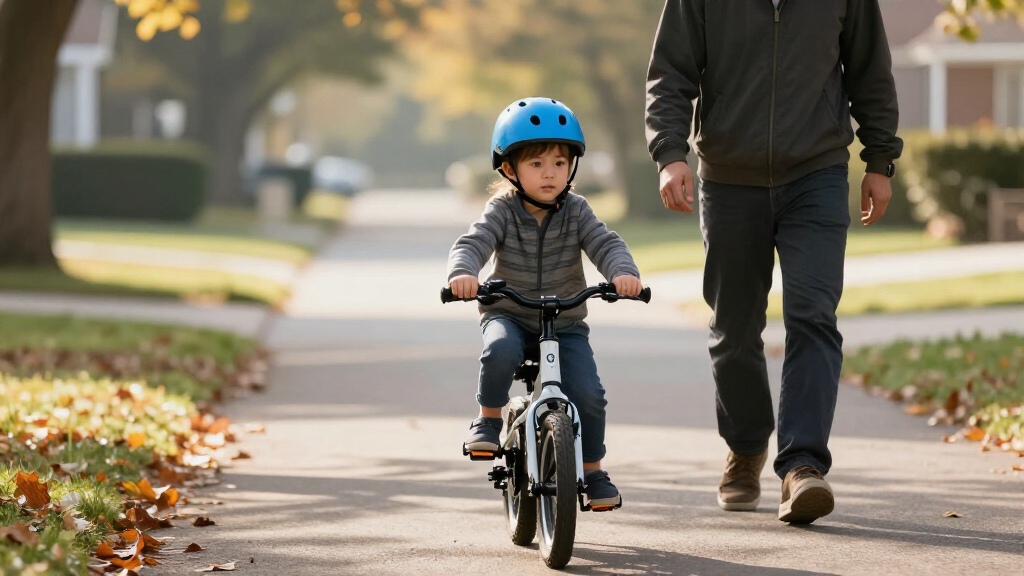
I compared the 15 listed helmets on the factors that most affect a child’s day-to-day use: whether the sizing information gives a practical starting point, how the product describes adjustability, and whether its design is aimed at cycling or several sports. I also weighed useful extras such as lights and removable visors against the added complexity they bring. A feature only helps if the helmet fits and the child will wear it.
The ranking favors clear bicycle use and buyer-relevant fit information over decorative extras or broad age claims. Models with multi-sport positioning may suit families who want one helmet for several activities, but that label does not establish that every activity is covered. Product names and descriptions alone cannot establish certification, fit on a particular child, or comparative impact performance, so check the label, instructions, and current manufacturer information before purchase.
Factors to Consider When Choosing Best Kids Bicycle Helmets
Before choosing a model, start with your child’s head and riding routine. These broader checks can help avoid common mismatches that feature lists and age ranges do not resolve.
Measure Before You Choose a Size
Use a soft tape to measure around the widest part of the head, just above the eyebrows and ears, then compare that number with the manufacturer’s size chart. Age labels are rough guides; children of the same age can need different sizes. If the measurement sits between sizes, check the brand’s instructions instead of assuming the larger shell will adjust down safely. A helmet that is too large can shift during a ride even when its dial is tightened. Recheck fit as your child grows, particularly when moving from a child-size model to youth sizing.
Check the Fit With the Straps Fastened
A helmet should sit level and low on the forehead, with the front edge close to the eyebrows rather than tilted back. Once the chin strap is fastened, it should feel snug without making it hard to speak or breathe. Ask your child to shake their head gently; the helmet should not slide around independently. Adjust the side straps so they meet just below each ear, and check that the buckle stays under the chin. Try this fit check again after changing pads or adjusting the retention dial, because one adjustment can affect another.
Match the Helmet to the Activity
Bike, skateboard, and scooter helmets can have different intended uses and certification requirements. A multi-sport description is a reason to inspect the label and manual, not proof that a product meets every activity’s needs. If your child will use the helmet for more than cycling, confirm the manufacturer lists those activities and check the relevant safety markings for your location. For a family that mainly rides bicycles, a model clearly designed for cycling may be the simpler choice. Pick according to the activities your child actually does, rather than a broad age or sport count.
Weigh Extras Against the Riding Routine
An integrated light may add a visibility cue for low-light rides, while a visor can help shade the eyes or deflect light debris. Neither replaces active lights on the bicycle, reflective clothing, or a helmet that fits correctly. Removable parts can also be misplaced or need occasional cleaning, so consider whether your family will use them regularly. For rides in daylight on familiar paths, these extras may matter less than comfort and a straightforward adjustment system. For evening commutes or rides in changing conditions, treat them as supporting features and check the instructions for care and charging.
Plan for Growth Without Buying Too Large
Some products offer more than one size or broad adjustment ranges, which can make a later replacement easier to plan. That flexibility does not make it safe to buy a shell that currently sits loose on your child. Check whether the manufacturer sells replacement pads or gives a fit range for each size, and measure again as your child grows. A helmet that no longer sits level, has damaged parts, or has been involved in an impact may need replacement according to its maker’s guidance. Set the fit now; treat future growth as a reason to reassess, not to leave extra room.
Frequently Asked Questions
Should I choose a child or youth size if my child is between the two?
Measure your child’s head and compare the result with each model’s size chart; the word “youth” does not identify a universal size. If both charts appear to include the measurement, try each helmet with its straps fastened and choose the one that sits level and stays put. Do not choose a larger shell to extend its useful life if it moves around on the child’s head. Fit and comfort matter more than the age label. If neither size fits securely, look at another model or ask the manufacturer for guidance.
Can a multi-sport kids helmet be used for cycling and skateboarding?
Only if the helmet’s manufacturer identifies both activities as intended uses and the helmet carries the applicable safety markings. A product title that says multi-sport does not by itself confirm suitability for every sport. Read the packaging and manual, since guidance can differ by model and region. Check that the helmet fits securely for the activity and follow any restrictions on use. If the information is unclear, contact the manufacturer before using it outside cycling.
Is an LED light on the helmet enough for riding after dark?
No single helmet feature should be treated as a complete night-riding setup. A helmet light can help make a child more visible, but visibility also depends on the bicycle’s lights, reflective details, route, and surrounding traffic. Check whether the light is removable, how it is powered, and whether your child can operate it reliably. Follow local requirements for bicycle lighting, and favor well-lit routes where possible. The helmet still needs a proper fit regardless of its light.
How can I tell when my child needs a different helmet?
Measure again periodically and whenever the helmet becomes difficult to adjust or no longer sits level and stable. A child’s head can outgrow a helmet before the shell looks small, so rely on fit and the manufacturer’s size range. Replace a helmet after an impact when its maker’s guidance calls for it, even if visible damage is absent. Also inspect straps, buckles, shell, and adjustment parts for damage or wear. Do not keep using a helmet whose fit or condition you cannot verify.
Is a removable visor useful, or should I choose a simpler helmet?
A visor can be handy for shade or light debris, but its value depends on where and when your child rides. If most trips are short rides in open daylight, a simpler model with a secure fit may be easier to manage. For changing conditions, check that the visor attaches securely and can be removed without disturbing the helmet’s fit. Keep the manufacturer’s instructions for cleaning and reattachment. Do not let a visor feature outweigh sizing, comfort, or the helmet’s stated intended use.
Conclusion
For a best overall bicycle-first choice, start with the Bell Richter and confirm its fit against your child’s measurement. The best value depends on the exact listing and included features, since this comparison does not establish current prices; compare size options and intended use before deciding. For a premium-style multi-sport pick, consider the Thousand Kids if its fit and activity guidance suit your family. For beginners, choose the helmet your child can put on comfortably and keep level, then practice fastening it before rides. If you need an extra feature, shortlist the LED models for added visibility cues or a removable-visor design for shade, while treating those as secondary to fit and safety markings.
Evergreen bestsellers Picks
bestsellers
As an affiliate, we earn on qualifying purchases.