
Finding the right backpack for electric bike riding comes down to one question: do you want the weight on your back or on the bike? After comparing the current field, I landed on three picks that answer that question differently. The Rainsmore 15L Bike Bag takes my Best Overall spot because it mounts on your rear rack and converts into a backpack, shoulder bag, or handbag — the most flexible formula for commuters. The Outdoor Cycling Backpack 18L is my Best for Long Rides pick thanks to its 2L hydration bladder compatibility and hidden helmet net. And the 15L Waterproof Hiking Backpack earns Best Value for riders who want a light, organized pack with safety extras like a whistle and reflective strips at a friendlier price.

Get bike and ride gear delivered free with Prime
- Fast, free delivery on millions of items
- Prime Video, Amazon Music and more included
- Member-only deals all year
The tradeoffs are real: rack-mounted bags keep sweat off your back but cap out at 15 liters, while worn backpacks carry more and add hydration support at the cost of shoulder fatigue on longer rides. Water resistance also varies — the Rainsmore includes a rain cover and waterproof coating, while the hiking pack’s ripstop fabric is only water-resistant out of the box. My goal here is to make those differences obvious so you can match the bag to how you actually ride.
Key Takeaways
- The Rainsmore 15L is the only pick that mounts on a rear rack, keeping weight and sweat off your back during e-bike commutes.
- The Outdoor Cycling Backpack 18L is the only option with a 2L hydration bladder compartment and hidden helmet net, making it the pick for longer rides.
- The 15L Waterproof Hiking Backpack is the lightest at 1.06 pounds and includes an emergency whistle, but its ripstop fabric is water-resistant, not waterproof.
- Two of the three picks ship with a rain cover (Rainsmore and the 18L pack); the hiking backpack does not, so rain-heavy commuters should factor that in.
- All three include reflective safety strips, but none replaces proper bike lights for night riding.
| Rainsmore Bike Bag for Bicycle Rear Rack 15L Waterproof Ebike Trunk Bag |  | Best Overall | Capacity: 15 liters | Material: 600D Oxford fabric with PU waterproof coating | Dimensions: 15.75 x 8.66 x 7.48 inches | VIEW LATEST PRICE | See Our Full Breakdown |
| Outdoor Cycling Backpack, 18L, Black |  | Best for Long Rides | Capacity: 18 liters | Material: Waterproof, tear-resistant nylon | Water Bladder Capacity: 2 liters | VIEW LATEST PRICE | See Our Full Breakdown |
| 15L Waterproof Hiking Backpack, Small Bike Cycling Backpack |  | Best Value | Capacity: 15 liters | Material: Water-resistant ripstop oxford cloth | Weight: 1.06 pounds | VIEW LATEST PRICE | See Our Full Breakdown |
| electric bike backpack | Capacity | Material | Safety | Weight |
|---|---|---|---|---|
| Rainsmore Bike Bag for Bicycle | 15 liters | 600D Oxford fabric with PU waterproof coating | Reflective strips | 0.72 kg |
| Outdoor Cycling Backpack | 18 liters | Waterproof, tear-resistant nylon | Reflective strips | — |
| 15L Waterproof Hiking Backpack | 15 liters | Water-resistant ripstop oxford cloth | Reflective strips, emergency whistle | 1.06 pounds |
More Details on Our Top Picks
Rainsmore Bike Bag for Bicycle Rear Rack 15L Waterproof Ebike Trunk Bag
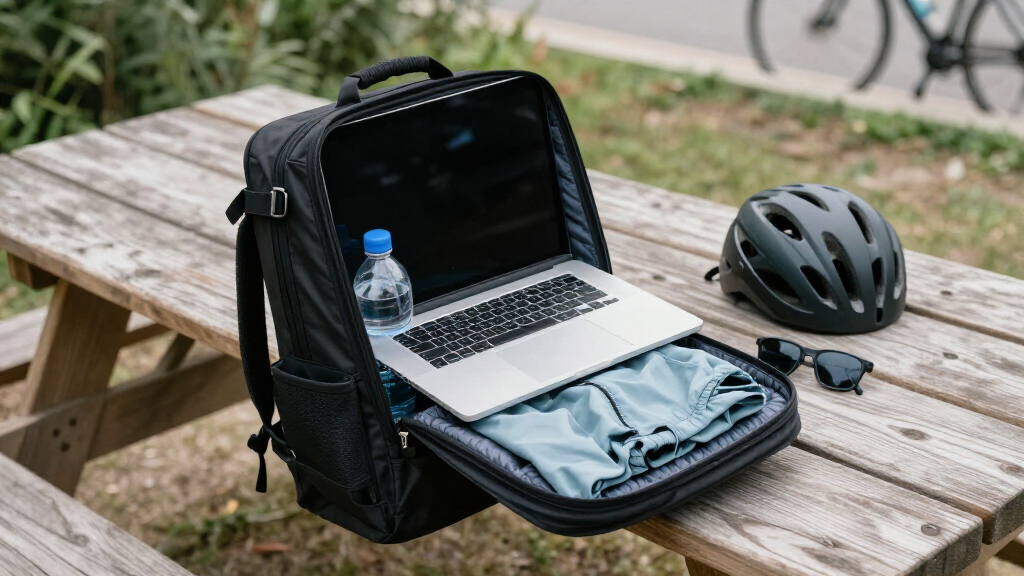
This option stands out for solving the core problem of e-bike carrying: weight placement. Instead of loading your shoulders, it mounts tool-free onto a rear rack, which matters more on an electric bike than a regular one — e-bikes are heavier and faster, and a shifting backpack at 25 mph is a distraction you don’t need. Once you arrive, the bag converts into a backpack, shoulder bag, or handbag, which is why I ranked it first. It handles the full journey, not just the ride.
The 600D Oxford fabric with a PU waterproof coating plus an included rain cover gives it two layers of weather defense — more than either competitor in this lineup. The 18L Outdoor Cycling Backpack matches the rain cover but not the coated fabric, and the 15L hiking pack offers neither. Organization is another strength: seven compartments keep a laptop, charger, tools, and lunch separated, compared with the simpler pocket layouts of the other two picks.
The tradeoffs are worth understanding before buying. It requires a rear rack, so riders without one will need to buy and install one first. At 0.72 kg it’s also the heaviest of the three, and the reflective strips may wear over time — a fair criticism that applies to all three bags here, honestly. If you want something worn on the body for trail riding, the 18L pack below makes more sense.
Pros:- Converts between backpack, shoulder bag, and handbag for off-bike versatility
- Dual weather protection with waterproof PU coating plus included rain cover
- Seven compartments keep commuting gear organized
- Tool-free installation on most bike and e-bike racks
Cons:- Requires a rear rack, which not all e-bikes have
- At 0.72 kg, it’s the heaviest of the three picks
- Reflective strips may wear down with regular use
Best for: E-bike commuters who have (or will add) a rear rack and want weatherproof, organized storage that converts for off-bike use.
Not ideal for: Riders without a rear rack, or anyone who needs more than 15 liters for large loads.
- Capacity:15 liters
- Material:600D Oxford fabric with PU waterproof coating
- Dimensions:15.75 x 8.66 x 7.48 inches
- Weight:0.72 kg
- Compartments:7
- Water Resistance:Waterproof with included rain cover
- Mounting:Rack mount, tool-free
- Safety:Reflective strips
Our verdict“This pick makes the most sense for commuters who want rack-mounted, weatherproof storage that works as hard off the bike as on it.”
Outdoor Cycling Backpack, 18L, Black
Where the Rainsmore is built around the commute, this pack is built around the ride itself. Its 18-liter capacity is the largest here, and more importantly, it’s the only option in this comparison with a dedicated 2L water bladder compartment. For e-bike riders covering serious distance — where you’re moving faster, sweating more, and stopping less — that hydration setup is the difference between a recreational pack and a genuine long-ride tool.
The hidden helmet net is a quietly brilliant feature for this use case. Electric bike riders often wear helmets they’d rather not carry into a café or store, and stowing it on the bag beats locking it to the bike or leaving it on the bars. Neither the Rainsmore nor the 15L hiking pack offers anything similar. Add the included rain cover and phone case, and the accessories bundle beats the hiking pack outright on value for wet-weather riders.
Compared with the Rainsmore, though, it keeps everything on your back — fine for a few hours, less appealing on a sweaty summer commute when you’d rather arrive dry. The tear-resistant nylon construction feels like the most durable fabric of the three, but the reflective strips are less visible in poor lighting than I’d like for higher-speed riding, so lights remain non-negotiable. This model is better suited to weekend riders and touring types than daily office commuters.
Pros:- Largest capacity in this lineup at 18 liters
- 2L hydration bladder compartment for drinking on the move
- Hidden helmet net stows your helmet hands-free at stops
- Tear-resistant waterproof nylon with rain cover and phone case included
Cons:- Worn on the back, which can cause sweat and fatigue on longer rides
- Reflective strips are less visible in poor lighting conditions
- Cycling-focused design limits usefulness for everyday or office carry
Best for: Long-distance and recreational e-bike riders who want hydration on board, helmet storage, and the biggest capacity of the group.
Not ideal for: Commuters who want to arrive sweat-free, or riders who prefer rack-mounted storage.
- Capacity:18 liters
- Material:Waterproof, tear-resistant nylon
- Water Bladder Capacity:2 liters
- Color:Black
- Helmet Net:Hidden, deployable
- Included Accessories:Rain cover, phone case
- Safety:Reflective strips
Our verdict“The clear choice for riders whose e-bike trips are measured in hours, thanks to hydration support and helmet storage no other pick offers.”
15L Waterproof Hiking Backpack, Small Bike Cycling Backpack
This pack earns its place by doing the fundamentals well at a lower complexity level than the other two. At 1.06 pounds, it’s the lightest option here by a wide margin — the Rainsmore weighs roughly half again as much — and that lightness translates directly into a nicer ride when you’re wearing a bag for an hour or more. The water-resistant ripstop oxford cloth won’t match the Rainsmore’s coated fabric in a downpour, but it handles drizzle and splashes fine for most riding conditions.
What surprised me is the pocket layout: two zippered belt pockets, two front pockets, and two side pockets put small items within reach without stopping, something neither competitor matches. The hydration reservoir sleeve adds trail capability, though unlike the 18L pack’s bundled approach, the reservoir is not included — you’ll need to buy one separately if you want hydration on board.
The emergency whistle on the chest strap is a genuinely useful safety extra for riders who venture onto trails or quiet roads, and it’s unique in this lineup. Compared with the 18L Outdoor pack, you give up three liters of capacity, the helmet net, and the rain cover; compared with the Rainsmore, you give up rack mounting and full waterproofing. In exchange you get the lowest price point and the lightest carry. This pick makes the most sense for budget-minded riders, students, and casual e-bikers who ride mostly in fair weather.
Pros:- Lightest option in this comparison at just 1.06 pounds
- Six well-placed pockets including two zippered belt pockets for on-bike access
- Emergency whistle adds a safety feature the other picks lack
- Hydration reservoir sleeve for optional on-the-go drinking
Cons:- Water-resistant fabric only — no waterproof coating or included rain cover
- Hydration reservoir sold separately
- 15L capacity limits usefulness for longer trips
Best for: Budget-conscious riders, students, and casual e-bikers who want a light, well-organized pack for fair-weather riding.
Not ideal for: Rain-heavy commuters, long-distance riders who need hydration included, or anyone carrying more than day-trip loads.
- Capacity:15 liters
- Material:Water-resistant ripstop oxford cloth
- Weight:1.06 pounds
- Hydration Reservoir Sleeve:Yes (reservoir not included)
- Pockets:2 zippered belt, 2 front, 2 side
- Safety:Reflective strips, emergency whistle
- Care:Hand wash only
Our verdict“The smartest spend for occasional riders who prioritize low weight and pocket access over weatherproofing and hydration bundles.”

How We Picked
Since electric bike backpacks serve riders who travel faster and often farther than pedal-only cyclists, I judged every option against a specific set of criteria rather than generic backpack qualities. The first factor was carry method and comfort at speed — a bag that bounces or shifts becomes a real problem at 20-plus mph, so I prioritized stable mounting systems and breathable back panels.
The second factor was weather protection. E-bike commuters frequently ride in unpredictable conditions, and a soaked laptop or change of clothes defeats the purpose of a dedicated bag. I gave weight to bags with waterproof coatings and included rain covers over water-resistant-only fabrics, and I noted which ones fall short so buyers can compensate.
Third, I evaluated capacity relative to intended use: 15 liters suits daily commutes and errands, while 18 liters makes more sense for longer recreational rides. Fourth, I scored visibility and safety features — reflective strips, emergency whistles, and anything that helps riders stay seen at higher speeds. Finally, I considered versatility: bags that convert between carry modes or transition from bike to office to trail earned higher marks than single-purpose designs. I then compared the finalists directly against each other to make the ranking logic transparent throughout this guide.
| electric bike backpack | Safety |
|---|---|
| Rainsmore Bike Bag for Bicycle | Reflective strips |
| Outdoor Cycling Backpack | Reflective strips |
| 15L Waterproof Hiking Backpack | Reflective strips, emergency whistle |
Factors to Consider When Choosing Electric Bike Backpacks
Before choosing between these three bags, it helps to understand the decisions that actually separate them. Here are the factors I weighed most heavily.Rack-Mounted vs. Worn
This is the biggest fork in the road. A rack-mounted bag like the Rainsmore keeps weight off your body, prevents back sweat, and stabilizes your load at higher speeds — ideal for commuting. A worn backpack like the 18L or 15L options offers more flexibility (you can walk, hike, or shop without uninstalling anything) and doesn’t require buying a rack. Riders who commute daily in work clothes almost always prefer rack-mounted; riders who mix cycling with trails and errands tend to prefer worn packs.
Water Resistance Levels
The three picks range from fully waterproof with a rain cover (Rainsmore) to water-resistant fabric only (the hiking backpack). If you carry electronics or papers, the difference matters: water-resistant fabric handles light rain and road spray but will soak through in sustained rain. If you already own a bag you like, a separate rain cover can close the gap cheaply — but buying a bag that includes one saves the hassle.
Capacity and Ride Length
15 liters covers a commute: laptop, charger, lunch, and a jacket. 18 liters adds room for layers, tools, and snacks on longer recreational rides. Beyond that, backpacks get uncomfortable quickly, and panniers or trunk bags become the better answer. Match capacity to your typical trip, not your hypothetical biggest one — extra empty volume just adds bulk and flopping fabric.
Hydration and Safety Features
On longer e-bike rides you cover ground fast and may not pass water sources, so a bladder compartment is genuinely useful — the 18L pack supports one out of the box, and the hiking pack has a sleeve but requires a separate purchase. For safety, reflective strips on all three picks supplement but never replace proper lights; the hiking pack’s emergency whistle is a nice bonus for trail riders who might need to signal for attention.
Frequently Asked Questions
Can I use a regular backpack for electric bike riding?
You can, but regular backpacks usually fall short in three ways that matter at e-bike speeds. First, they often lack reflective safety strips, and at 20-plus mph you need every visibility advantage you can get. Second, most everyday packs aren’t water-resistant, so a surprise shower can soak whatever you’re carrying. Third, they rarely have stabilizing straps or breathable back panels, so they bounce and trap sweat on faster, longer rides. Dedicated cycling backpacks like the three in this guide address all of those issues, and the price difference is usually small compared with replacing a water-damaged laptop.
Is a rack-mounted bag or a backpack better for e-bike commuting?
For commuting specifically, I lean rack-mounted, which is why the Rainsmore takes my top spot. E-bike riders typically travel at higher speeds than pedal cyclists, and a fixed rack bag eliminates the bounce, sway, and shoulder strain of a worn pack entirely. You also arrive without a sweaty back, which matters if you’re heading to an office. The catch is that you need a compatible rear rack, and you lose the walk-around flexibility of a backpack. Riders who combine commuting with hiking, shopping, or campus use often still prefer a worn pack like the 18L option for its versatility.
How much capacity do I need in an e-bike backpack?
For a typical commute — laptop, charger, lunch, and a light layer — 15 liters is enough, and both the Rainsmore and the hiking backpack hit that mark. If you’re carrying gym gear, extra layers for changing weather, or supplies for a long recreational ride, 18 liters like the Outdoor Cycling Backpack gives you breathing room without becoming unwieldy. As a rule, don’t buy capacity you won’t use: an underfilled large pack flops around and feels bulkier than a properly filled smaller one. If you regularly need more than 20 liters, a backpack probably isn’t the right tool at all — look at panniers or a larger trunk bag.
Do these backpacks work in heavy rain?
It varies by model, and that’s one of the sharpest distinctions in this comparison. The Rainsmore handles heavy rain best, combining a waterproof PU-coated fabric with an included rain cover for double protection. The 18L Outdoor Cycling Backpack includes a rain cover but relies on the cover alone for serious downpours. The 15L hiking backpack is the most vulnerable — its ripstop fabric is water-resistant, meaning it shrugs off drizzle and spray but will soak through in sustained rain, and no cover is included. If you commute year-round in a wet climate, either pick the Rainsmore or budget a few dollars for a universal rain cover.
Are reflective strips on a backpack enough for night riding?
No, and I’d caution anyone against treating them as a primary safety measure. Reflective strips are passive — they only work when a light source hits them at the right angle, and all three manufacturers acknowledge their strips can be less effective in poor conditions or wear down over time. They’re best understood as a supplement that makes you more visible when a headlight sweeps across you. For genuine night-riding safety, you need an active front light, a rear light on the bike itself, and ideally bright or hi-vis clothing. The strips on these bags add a helpful layer on top of that, not a replacement for it.
Conclusion
The right pick here depends less on which bag is objectively best and more on how you ride. For daily e-bike commuters with a rear rack, the Rainsmore 15L is the clear choice — its tool-free rack mounting, dual-layer waterproofing, and seven-compartment organization are built around the office commute, and its backpack conversion covers the walk from the bike rack to your desk.
For long-distance and recreational riders who spend weekends covering serious miles, the Outdoor Cycling Backpack 18L fits better. The 2L hydration bladder support, hidden helmet net, and extra capacity exist specifically for rides measured in hours, and no other pick replicates that combination. Weekend tourers and trail riders should start here.
For students, casual riders, and budget-conscious buyers who mostly ride in fair weather, the 15L Waterproof Hiking Backpack delivers the lightest carry and the best pocket layout at the lowest cost. Its lack of a rain cover and included reservoir are real limitations, but for short fair-weather trips they rarely matter. Whichever direction you take, matching the carry method — rack or back — to your riding style will do more for your daily satisfaction than any single spec on the list.