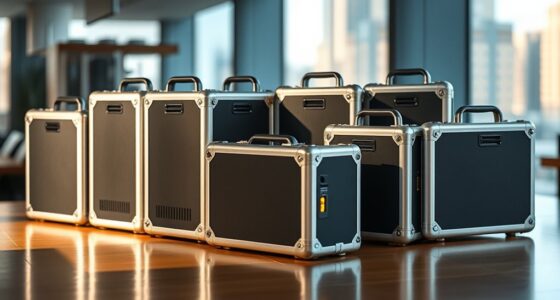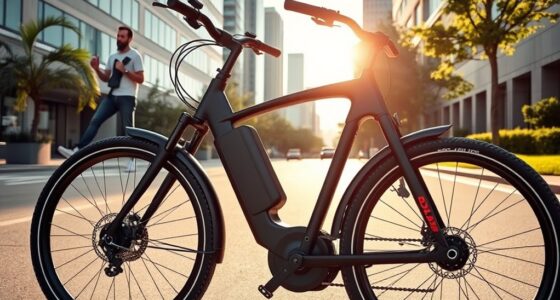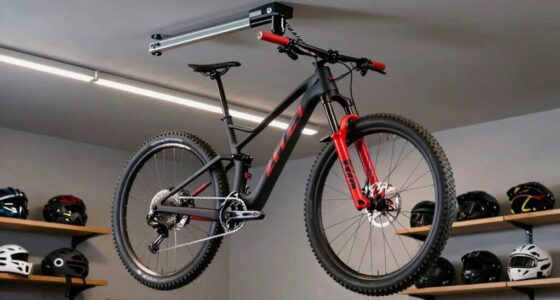

Among the best cargo electric bikes in this roundup, I’d choose the Jasion 52V dual-battery bike as the best overall for its stated 400-pound payload and long-range focus. The Eskute folding fat-tire bike stands out for riders who need a more compact bike, while the EUYBIKE step-through offers a more approachable mix of removable battery, cargo-friendly design, and everyday range. The main tradeoffs are carrying capacity versus size, battery range versus weight, and high power versus manageable speed and handling. Product claims vary, so I’d verify payload limits, local e-bike rules, and service support before buying. Read on for the full breakdown and advice on matching a cargo e-bike to your actual loads and routes.

Get bike and ride gear delivered free with Prime
- Fast, free delivery on millions of items
- Prime Video, Amazon Music and more included
- Member-only deals all year
Key Takeaways
- Payload claims separate the clearest hauling pick: Jasion lists a 400-pound payload, but buyers still need to check whether that figure includes the rider and how cargo is carried.
- Dual batteries are a recurring range strategy: several bikes advertise long distances, but real range depends on rider weight, hills, assist level, cargo, temperature, and battery condition.
- Compact utility takes a different form from maximum power: Eskute’s folding frame and step-through layout favor easier storage and access, while high-output models prioritize speed and motor output.
- Family-ready features are not the same as verified passenger safety: a seat, step-through frame, or fat tires alone do not establish that a bike is approved for carrying children or passengers.
- Published range and speed claims need context: the longest-range and fastest claims in this lineup should be checked against independent documentation, local regulations, and the seller’s warranty and support terms.


| cargo electric bike | Battery | Tires | Motor | Brakes |
|---|---|---|---|---|
| Jasion Electric Bike | 52V 40Ah dual battery | 20 × 3 inches, fat tires | 2000W peak | — |
| Adult Fat Tire E-Bike | 48V 15.6Ah removable lithium-ion | — | 1500W | Dual disc brakes |
| SISIGAD Family Electric Bike w | 48V 15Ah removable | 20 × 3.0 inches, fat tires | 1500W peak | Dual hydraulic disc brakes |
| eAhora Romeo Pro 3 Electric Bi | 60V 80Ah | 26-inch fat tires | 6000W dual motors | — |
| Dual Battery 48V 60Ah Electric | — | 20 × 4 inches, puncture-proof fat tires | 750W continuous / 1450W peak | Front and rear hydraulic disc brakes |
| Dual Battery Electric Bike for | Dual removable 52V 50Ah | 20 × 4 inches | — | 4-piston hydraulic disc brakes |
| Eskute Electric Bike for Adult | 48V 13Ah | 20 × 3 inches | — | — |
| EUYBIKE Electric Bike for Adul | 48V 20Ah, 960Wh, removable | 20 × 4 inches | — | Dual disc brakes |
More Details on Our Top Picks
Jasion Electric Bike, 52V 40Ah Dual Battery, Max 150 Miles, 400 LBS Payload
The Jasion Kago is a strong fit for riders who want long range and substantial carrying capacity in one cargo-oriented bike. Its 52V 40Ah dual-battery setup is rated for up to 150 miles, while the 400-pound payload limit gives it more hauling headroom than the eAhora Romeo Pro 3’s 500-pound frame rating only in range terms? The Romeo carries more, but its much higher-speed, dual-motor setup is a less restrained choice for everyday errands. Compared with the SISIGAD, the Jasion has a larger stated battery and higher top speed, but it lacks the SISIGAD’s integrated child seat and step-through frame. Fat tires, hydraulic brakes, and IP64 water resistance add practical versatility. The tradeoff is bulk and a learning curve: its weight can make storage or transport awkward, and the many riding modes may take time to learn.
Pros:- Dual 52V 40Ah battery system is rated for up to 150 miles of range.
- 400-pound payload capacity suits riders carrying substantial cargo.
- 2000W peak motor and 30 MPH stated top speed provide strong power for hills and faster routes.
- Hydraulic brakes, full lighting, and IP64 water resistance support varied everyday riding.
Cons:- Heavy build can make lifting, storage, and transport difficult.
- Multiple riding modes and features may take time to learn.
- The product data does not specify a child seat or passenger setup.
Best for: Commuters and errand runners who need extended assisted range, a high payload limit, and a bike suited to mixed weather.
Not ideal for: Riders who need a lightweight bike for stairs, frequent car transport, or a ready-made child-carrying setup.
- Battery:52V 40Ah dual battery
- Claimed range:Up to 150 miles
- Motor:2000W peak
- Top speed:30 MPH
- Payload capacity:400 lbs
- Tires:20 × 3 inches, fat tires
- Charging time:5–6 hours
- Water resistance:IP64-rated
Our verdict“Choose the Jasion Kago if long-range commuting and a 400-pound payload matter more than easy portability or integrated family seating.”
Adult Fat Tire E-Bike, 1500W 48V 15.6Ah, 20-inch Fat Tire Delivery Electric Bike, 35 mph
This steel-framed fat-tire bike makes sense for buyers who want a reconfigurable rear setup for cargo runs or passenger transport. Its detachable rack and rear module offer more utility than the Jasion Kago, whose supplied details emphasize range and payload rather than a convertible rear area. The 400-pound maximum load is substantial, and the 1500W motor is aimed at riders who need help carrying weight across paved streets and unpaved paths. A front light and rear taillight add basic visibility, while seven speeds give riders some choice over effort. The compromises are clear: the listed suspension information is inconsistent, and the description calls it rigid, so I would not choose it for comfort on rough trails. Its heavy steel frame also makes maneuvering and upkeep less appealing than a lighter urban bike.
Pros:- Detachable rear rack and module support cargo or passenger configurations.
- 400-pound maximum load accommodates substantial hauling.
- 1500W motor is suited to carrying weight on urban routes and mixed terrain.
- Front LED headlight and rear taillight provide basic visibility.
Cons:- Heavy alloy-steel frame can be difficult to maneuver, lift, or store.
- Suspension details conflict: the listing describes a rigid setup while also mentioning dual suspension.
- The 48V 15.6Ah battery has less stated capacity than the Jasion Kago and the 60Ah dual-battery bike in this roundup.
Best for: Delivery riders and practical commuters who want a high-load bike with a rear setup that can switch between cargo and passenger duties.
Not ideal for: Riders who regularly tackle rough, bumpy trails or need an easy-to-lift bike for apartment storage.
- Battery:48V 15.6Ah removable lithium-ion
- Motor:1500W
- Maximum load:400 lbs
- Tire size:20 inches
- Gears:7-speed
- Frame:Alloy steel
- Brakes:Dual disc brakes
- Cargo setup:Detachable rear rack and rear module
Our verdict“Pick this model for a flexible cargo-or-passenger rear setup, but skip it if trail comfort and clear suspension specifications are priorities.”
SISIGAD Family Electric Bike with Seat – 1500W Peak Motor, 20″ Fat Tire Cargo Ebike, 48V 15Ah Removable Battery, Dual Hydraulic Brakes, LCD & App Control, 7-Speed, Step-Thru
The SISIGAD is the clearest family-focused pick here because it comes with an integrated child seat and rear guardrail, rather than leaving the buyer to work out a passenger setup. Its step-through frame can also make frequent school-run stops easier than mounting the taller, more performance-oriented eAhora Romeo Pro 3. A 450-pound load limit, front suspension, and fat tires support errands with a child or other cargo, while the removable 48V 15Ah battery is rated for up to 60 miles. That range is well below the Jasion Kago’s stated 150 miles and the 60Ah dual-battery bike’s 160-mile claim, so this is a more local-use choice than a long-distance hauler. Family utility comes at the cost of heft; a full load can also reduce real-world range, and the six-month warranty is relatively short.
Pros:- Integrated child seat and rear guardrail provide a family-ready passenger setup.
- Step-through frame eases mounting and frequent stops.
- 450-pound load capacity exceeds the 400-pound limits listed for the Jasion and steel-frame fat-tire bike.
- Front suspension, fat tires, and hydraulic disc brakes support comfort and control with cargo.
Cons:- The stated 60-mile range is much shorter than the Jasion Kago and 60Ah dual-battery bike claims.
- Heavy, bulky construction can complicate storage and transport.
- The listed six-month warranty is short.
Best for: Parents who need a step-through cargo bike with an integrated child seat for school runs, errands, and nearby outings.
Not ideal for: Long-distance riders, people who need a compact bike for frequent lifting, or buyers seeking a long warranty.
- Motor:1500W peak
- Battery:48V 15Ah removable
- Claimed range:Up to 60 miles
- Load capacity:450 lbs
- Tires:20 × 3.0 inches, fat tires
- Brakes:Dual hydraulic disc brakes
- Frame and suspension:High-carbon steel low-step frame; front suspension
- Gearing and warranty:7-speed; 6-month warranty
Our verdict“Choose the SISIGAD for family rides that benefit from an included child seat and step-through access, not for maximum range or easy portability.”
eAhora Romeo Pro 3 Electric Bike for Adults, 6000W Dual Motor, 52 MPH, 60V 80Ah Battery, 300 Miles Range, 26” Fat Tires, Air Suspension
The Romeo Pro 3 is the high-performance outlier in this cargo-bike group. Its 6000W dual motors, 500-pound frame capacity, and air suspension suit riders who prioritize power and rough-terrain control over a conventional errand-bike feel. Against the Jasion Kago, it offers a higher stated load capacity and a much more powerful motor, while its 26-inch fat tires differ from the smaller 20-inch wheels on the Jasion and SISIGAD. The tradeoff is that its 52 MPH stated top speed and large battery make it a poor fit for buyers seeking a restrained school-run or neighborhood cargo bike; local rules and intended use matter. Its claimed 300-mile range is far above the other listed options, but charging takes 9–11 hours, and the heavy build is not suited to frequent lifting.
Pros:- 6000W dual motors provide the highest stated motor output in this group.
- 500-pound frame capacity is higher than the other reviewed models.
- Adjustable air suspension and 26-inch fat tires suit rougher terrain.
- 60V 80Ah battery is rated for up to 300 miles of range.
Cons:- 9–11-hour charging time requires planning between rides.
- Heavy construction makes lifting and compact storage difficult.
- The stated 52 MPH top speed may be excessive for routine cargo errands and may not suit all local riding rules.
Best for: Experienced riders seeking a powerful, high-capacity bike with air suspension for extended rides across rough terrain.
Not ideal for: Families looking for an easygoing school-run bike, riders who need quick charging, or anyone who must lift a bike regularly.
- Motor:6000W dual motors
- Top speed:52 MPH
- Battery:60V 80Ah
- Claimed range:Up to 300 miles
- Frame capacity:500 lbs
- Tires:26-inch fat tires
- Suspension and brakes:Air suspension; hydraulic disc brakes
- Charging time:9–11 hours
Our verdict“Choose the Romeo Pro 3 for high power, a high load rating, and suspension capability, but not for a simple, easy-to-store family cargo bike.”
Dual Battery 48V 60Ah Electric Bike for Adults – 160 Mile Long‑Range Cargo E‑Bike with Removable 2880Wh Battery, 1450W Peak Motor, 20″ x 4″ Fat Tires and Hydraulic Brakes
For riders whose main concern is going farther between charges, this model’s two removable 48V 30Ah batteries make it a standout: the listing claims up to 160 miles with assist and 100 miles in pure-electric mode. That is slightly beyond the Jasion Kago’s stated 150-mile range, though both claims depend on riding conditions and load. Its 750W continuous, 1450W peak motor is less powerful on paper than the Jasion’s 2000W peak motor or the Romeo Pro 3’s dual motors, making this a range-first rather than speed-first choice. Four-inch puncture-proof tires, front suspension, and hydraulic brakes are useful for stability and control when hauling. The downside is the same feature that extends its range: two large batteries add weight, and the wide tires can feel cumbersome in tight urban spaces.
Pros:- Two removable 48V 30Ah batteries provide 60Ah total capacity.
- Claimed range reaches up to 160 miles with assist and 100 miles in pure-electric mode.
- Hydraulic disc brakes support controlled stopping while carrying cargo.
- Four-inch puncture-proof tires and front suspension suit uneven surfaces.
Cons:- Dual batteries add weight and make transport more difficult.
- Wide tires and a large frame can be awkward in tight urban spaces.
- The 1450W peak output is lower than the Jasion Kago’s stated 2000W peak and well below the Romeo Pro 3’s dual-motor rating.
Best for: Cargo commuters and tour-minded riders who want removable dual batteries and long stated range for extended routes.
Not ideal for: Riders who prioritize a lightweight, narrow bike for crowded streets, stairs, or frequent vehicle loading.
- Voltage:48V
- Battery capacity:60Ah total; dual 30Ah batteries
- Battery energy:2880Wh
- Claimed range:Up to 160 miles assisted; up to 100 miles pure electric
- Motor:750W continuous / 1450W peak
- Tires:20 × 4 inches, puncture-proof fat tires
- Brakes:Front and rear hydraulic disc brakes
- Suspension and gearing:Front suspension spring; 7-speed
Our verdict“Pick this bike for removable battery capacity and long-distance cargo rides, but look elsewhere if maneuverability or a lighter build matters more.”
Dual Battery Electric Bike for Adults, 52V 50AH Long Range Cargo E‑Bike, Up to 200 Miles, 3000W Dual Motor Fat Tire, 31 MPH All‑Terrain Commuter with Hydraulic Brakes
The ET9 is the most power- and range-focused cargo pick in this group. Its 52V 50Ah dual battery is rated for up to 200 miles with pedal assist, while the 3000W peak dual-motor system targets steep hills and demanding terrain. That makes it a stronger fit for long, loaded rides than the folding Eskute, whose 48V 13Ah battery is rated for up to 55 miles. The ET9 also pairs a reinforced rack and rear basket with an extended double seat, giving it more passenger-oriented utility than a basic commuter setup. In exchange, the dual batteries add weight and more components to manage. Its 31 MPH top speed also calls for careful attention to local e-bike rules and where it can be ridden.
Pros:- Large dual removable battery system with a stated pedal-assist range of up to 200 miles.
- Dual motors and 120 Nm torque are suited to hills and heavier loads.
- Reinforced rear rack, basket, and extended double seat support cargo and passenger use.
- Four-piston hydraulic brakes and 4-inch tires offer strong stopping power and traction.
Cons:- Dual batteries add weight and create more charging and upkeep needs than the Eskute’s single-battery setup.
- The 31 MPH stated top speed may limit where the bike can be ridden legally.
- A long-range, dual-motor configuration is more capability than short, flat commutes require.
Best for: Riders carrying cargo or a passenger on long routes who want dual-motor climbing strength and a large stated pedal-assist range.
Not ideal for: Apartment dwellers or riders who need to lift and store a bike often; the dual-battery build adds weight, and its high speed may not suit local riding restrictions.
- Battery:Dual removable 52V 50Ah
- Range:80–100 miles electric; up to 200 miles pedal assist
- Motor power:3000W peak (1500W × 2)
- Torque:120 Nm
- Top speed:31 MPH
- Tires:20 × 4 inches
- Brakes:4-piston hydraulic disc brakes
- Gearing and display:7-speed drivetrain; smart LCD with 5 riding modes
Our verdict“Choose the ET9 if long-distance riding with cargo, passenger space, and hill-climbing power matters more than a lighter, simpler bike.”
Eskute Electric Bike for Adults – 1200W Peak Motor, Folding Fat Tire E-Bike, 48V 13Ah Battery, Step-Through Cargo, NFC Unlock, 20+ MPH, 7-Speed, Up to 55 Miles
The Eskute stands out for shoppers who need cargo utility but cannot dedicate a full-size parking spot to their bike. Its folding frame and step-through access make it more storage-friendly and easier to mount than the larger, long-range ET9, though the available details do not specify its folded dimensions or weight. A front basket and rear rack cover everyday bags and errands, while 20 × 3-inch tires give it a less bulky footprint than the 4-inch tires on the ET9 and EUYBIKE. Its stated range of up to 55 miles is better suited to local trips than extended routes, and the description provides little detail about brake or suspension equipment. I’d favor it for compact commuting, not heavy loads or buyers who need a fully specified safety setup.
Pros:- Folding frame can make storage and transport easier than with the non-folding ET9.
- Step-through design simplifies mounting and dismounting during frequent errands.
- Front basket and rear rack provide practical space for commuting essentials.
- 20 × 3-inch fat tires offer a balance of cushioning and a narrower footprint than 4-inch tires.
Cons:- The 48V 13Ah battery and stated range of up to 55 miles offer less range headroom than the ET9 or EUYBIKE.
- The product details do not specify brake or suspension equipment, making those parts harder to compare.
- Fat tires and battery add weight, which can reduce the benefit of folding when lifting the bike.
Best for: Urban commuters and apartment residents who need a step-through cargo bike that can fold for storage or transport.
Not ideal for: Riders planning long-distance trips, carrying heavy cargo, or choosing primarily on detailed brake and suspension specifications.
- Motor power:1200W peak
- Battery:48V 13Ah
- Range:Up to 55 miles
- Top speed:20+ MPH
- Tires:20 × 3 inches
- Frame:Folding, step-through
- Assist levels:3
- Cargo features:Front basket and rear rack
Our verdict“Pick the Eskute for compact storage and everyday errands, but choose the ET9 or EUYBIKE for more range-focused riding.”
EUYBIKE Electric Bike for Adults, 20×4 Fat Tire Cargo Ebike with Seat, 1450W Peak, 48V 20AH Removable Battery, 80 Miles Range, 7-Speed Step-Thru
The EUYBIKE takes a comfort-first approach to cargo riding. Its front suspension fork and seat suspension offer extra cushioning on rough streets, while the 20 × 4-inch tires are broader than the Eskute’s 3-inch tires and are intended for varied surfaces. The 48V 20Ah removable battery is listed for up to 80 miles, giving it more stated range than the Eskute but less pedal-assist range than the dual-battery ET9. A step-through frame and 7-speed gearing suit practical commuting, and the aluminum frame is described as lightweight, though no actual bike weight is supplied. The tradeoff is less clarity on performance: maximum speed and charging time are unspecified, and dual disc brakes are listed without the hydraulic detail provided for the ET9.
Pros:- Front fork and seat suspension add cushioning on rougher routes.
- Removable 48V 20Ah battery is listed for up to 80 miles of range.
- 20 × 4-inch tires suit varied terrain and provide a broad contact patch.
- Step-through frame and 7-speed gearing support practical everyday riding.
Cons:- Maximum speed and charging time are not specified, limiting performance and trip-planning comparisons.
- Dual disc brakes are listed, but hydraulic operation is not specified as it is on the ET9.
- Some assembly is required after delivery.
Best for: Commuters who ride on uneven pavement or mixed surfaces and want suspension, a removable battery, and broad tires.
Not ideal for: Buyers who need a confirmed top speed, charging schedule, or hydraulic-brake specification before choosing a cargo bike.
- Motor power:1450W peak
- Battery:48V 20Ah, 960Wh, removable
- Range:Up to 80 miles
- Tires:20 × 4 inches
- Brakes:Dual disc brakes
- Suspension:Front suspension fork and seat suspension
- Frame:Step-through aluminum alloy
- Gearing:7-speed
- Waterproof certification:IP67
Our verdict“Choose the EUYBIKE for a more cushioned ride on mixed surfaces, provided its unspecified speed and charging details are not deal-breakers.”

How We Picked
I compared these eight bikes as cargo options, not simply as powerful or long-range electric bikes. The main criteria were stated payload capacity, battery configuration, claimed range, motor setup, braking, frame access, tire size, and practical features such as folding or removable batteries. I also looked at whether the available product details support the intended use: a family-oriented bike needs more than a passenger-style seat, and a high-speed model needs more than an impressive motor claim to make sense as a cargo choice.
The ranking favors usable hauling capability, a credible blend of range and everyday control, and features that match a distinct buyer need. Jasion leads on its listed payload and dual-battery focus; EUYBIKE and Eskute earn attention for accessible everyday designs. Models built around extreme speed or unusually large range claims rank lower because those figures do not, by themselves, establish cargo safety, real-world range, or serviceability. I would treat all manufacturer specifications as claims to confirm with the seller before purchase.
| cargo electric bike | Claimed range |
|---|---|
| Jasion Electric Bike | Up to 150 miles |
| Adult Fat Tire E-Bike | — |
| SISIGAD Family Electric Bike w | Up to 60 miles |
| eAhora Romeo Pro 3 Electric Bi | Up to 300 miles |
| Dual Battery 48V 60Ah Electric | Up to 160 miles assisted; up to 100 miles pure electric |
| Dual Battery Electric Bike for | — |
| Eskute Electric Bike for Adult | — |
| EUYBIKE Electric Bike for Adul | — |
Factors to Consider When Choosing Best Cargo Electric Bikes
Choosing a cargo e-bike is less about finding the biggest motor or largest battery and more about matching the bike to the load, route, storage space, and local rules. I’d use the following checks to avoid paying for performance that does not improve the ride you need.
Match Payload to the Whole Load
A stated payload may mean rider plus cargo, rather than cargo alone, so check the manufacturer’s definition before comparing figures. Add the rider’s weight, passengers, bags, locks, and any child seat or accessories to estimate the real total. Then check whether the frame, rear rack, and any front carrier each have separate limits; a strong overall rating does not mean every attachment can take the same load. Leave room below the maximum for uneven roads and shifting cargo, which can affect handling. If a seller cannot provide a clear payload figure or rack rating, I would not rely on a large motor claim as a substitute. For family use, confirm that the bike and passenger equipment are specifically rated for that purpose.
Treat Range as a Planning Estimate
Advertised range is not a reliable promise for every trip: hills, cold weather, tire pressure, rider weight, cargo, and high assist all draw more energy. A dual-battery setup can reduce charging interruptions, but it may add weight and make battery removal or replacement more involved. Plan around the distance you need in your least favorable regular conditions, not a best-case number from a product listing. Ask whether the batteries can be charged on or off the bike and whether replacements are available. If your daily ride is short, a smaller, simpler battery may be easier to live with than a heavy setup built for occasional long trips. A margin for detours and battery aging also helps keep the bike useful over time.
Check Local Rules Before Prioritizing Speed
Motor wattage and advertised top speed do not tell you whether a bike can legally be used on your intended roads and paths. Rules differ by location and may set limits for motor assistance, speed, throttle use, and where an e-bike may ride. High-speed claims can also point toward a machine that behaves more like a moped than a conventional cargo bicycle, changing the safety gear, licensing, or access rules that apply. Verify the exact configuration and classification with local transport authorities before ordering. For loaded riding, controlled acceleration and predictable braking can matter more than peak output. I would prioritize a suitable legal class and clear operating documentation over a headline speed figure.
Budget for Weight, Storage, and Maintenance
Fat tires can help on loose or rough surfaces, but they do not make a loaded bike light or easy to carry up stairs. Measure the parking area, doorways, elevator, and vehicle rack before choosing a long or wide frame. Folding designs may solve storage problems, though a folded cargo e-bike can still be heavy and awkward to lift. Check the availability of replacement batteries, brake pads, tires, and authorized service before purchase, especially for less familiar brands. Hydraulic brakes can offer strong stopping power, but they may require shop servicing rather than the simple adjustments some riders do at home. A bike that fits your storage and maintenance routine is more useful than one with specs you rarely use.
Choose a Frame That Fits Your Routine
Step-through frames can make mounting easier when carrying groceries or riding in everyday clothes, but frame access is only one part of fit. Check the recommended rider height range, handlebar reach, saddle adjustment, and whether the bike can be adjusted for every regular rider. A shared family bike needs a setup that different riders can change without tools or lengthy adjustments. Take particular care with passenger seating: confirm the seat’s weight rating, mounting method, foot support, and compatibility with the frame. Do not assume that a seat included in a listing is appropriate for a child or another adult. If possible, arrange a fit check or confirm the seller’s return terms before committing.
Confirm What the Warranty and Listing Actually Cover
Long-range and high-power listings can leave important details unclear, including battery capacity, continuous motor output, included accessories, and which parts the warranty covers. Ask for the battery’s watt-hour capacity and clarify whether a quoted range assumes pedal assistance, light loads, and flat terrain. Check the warranty period and claim process for the battery, motor, frame, and electrical controls separately. A seller’s ability to supply parts may matter more over several years than a small difference in advertised output. Save the product specification and warranty terms that apply to the exact model you order. If the seller cannot answer basic questions in writing, I’d favor a more transparent option.
Frequently Asked Questions
Is the Jasion’s 400-pound payload enough to carry a passenger?
Not on its own: a total payload figure does not confirm that the frame or rack is designed for passenger use. Ask whether the stated limit includes the rider, then check the rack’s separate weight rating and which passenger seats are approved for the bike. You’ll also need suitable foot support and a secure, compatible mounting system. For a child passenger, follow the seat maker’s age, weight, and installation requirements. If the seller cannot verify compatibility in writing, choose a bike with explicit passenger-use documentation.
Should I choose a dual-battery bike or a lighter bike with one battery?
Choose a dual-battery setup if your regular trips are long, you carry heavy loads, or charging access is limited. A second battery can add useful capacity, but it also adds weight and may make the bike harder to lift, store, or service. For shorter commutes with a charging point at home or work, one battery may be simpler and easier to manage. Compare watt-hours and replacement availability rather than relying only on advertised miles. Estimate range with your likely cargo and route before deciding that extra capacity is worth carrying every day.
Can I ride a high-speed cargo e-bike on ordinary bike paths?
That depends on your local e-bike classification and the rules for the specific path. A product’s advertised speed or motor output does not establish where it can legally be ridden, and some high-powered models may fall outside ordinary e-bike categories. Check local limits for assisted speed, throttle operation, licensing, and path access before buying. Also confirm that the seller identifies the bike’s legal class for your region. If the classification is unclear, I would not plan a commute around access to bike paths until it is verified.
Are fat tires a good choice for carrying cargo on paved streets?
They can suit riders who also travel on gravel, soft ground, or rough streets, but width alone does not guarantee a more stable loaded ride. Fat tires add rolling resistance and can make an already heavy bike harder to pedal if the battery runs low. Tire pressure must match the rider, cargo, and surface, so follow the maker’s guidance rather than running them very soft by default. For mostly smooth pavement, ask whether replacement tires are readily available and whether a narrower setup would better match your route. Cargo handling still depends on load placement, frame design, and braking.
What should I verify before ordering a cargo e-bike online?
Confirm the exact model’s payload limit, battery capacity, motor specifications, assembled dimensions, and whether the listed accessories are included. Check shipping and assembly requirements, return conditions, and who handles warranty repairs in your area. Ask how to obtain replacement batteries and common wear parts, and whether service is available through a local shop. For family use, request documentation for the passenger seat and its mounting points rather than relying on photos. Keep the seller’s written answers and the model-specific warranty information for reference after delivery.
Conclusion
For the broadest mix of hauling capacity and range-oriented design, I’d start with the Jasion dual-battery bike as my best overall pick, while verifying its payload definition and battery details before purchase. Best value for an everyday, accessible setup: the EUYBIKE step-through, especially if its 80-mile claim and removable battery suit your routes. Best for beginners and compact storage: the folding Eskute, though I’d check its folded weight and cargo limits first. Best premium-style choice for power-focused buyers: the eAhora Romeo Pro 3, but only for riders who have confirmed its speed, legal class, and service support; it is not my default family cargo recommendation. For riders prioritizing long-distance capacity, compare the two 160- and 200-mile dual-battery listings by verified watt-hours and seller support rather than claimed range alone. If your priority is carrying passengers, choose only a model with documented passenger and rack ratings.