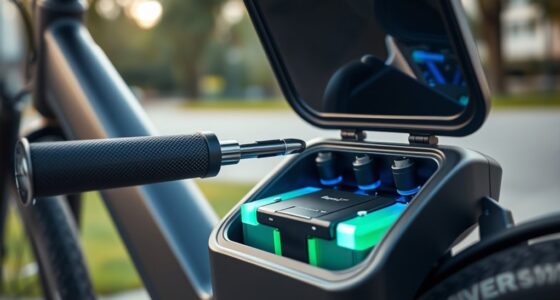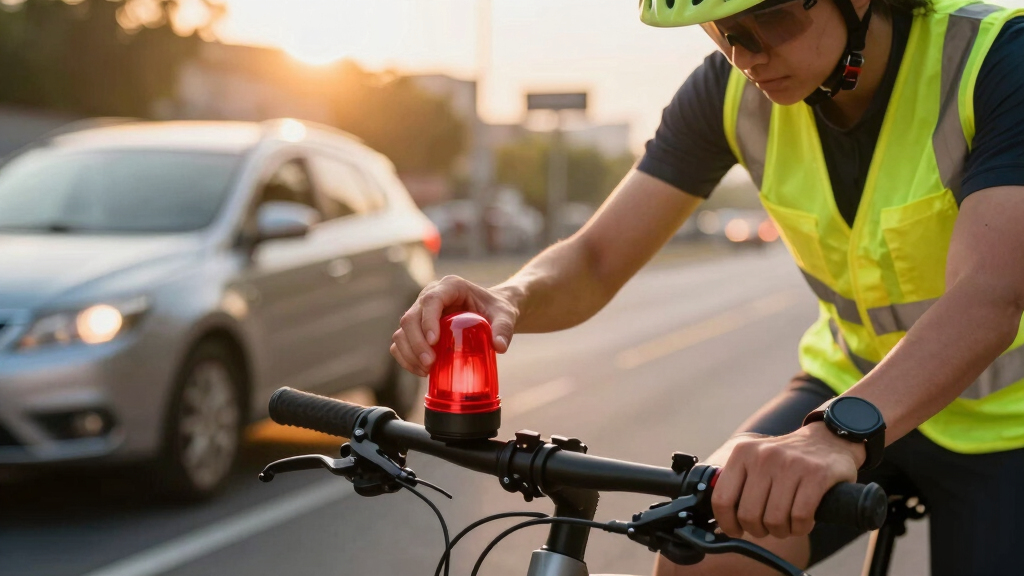
When cycling in remote areas or on busy roads, having a reliable emergency SOS beacon can be a lifesaver. The best devices offer quick, dependable communication with rescue services, GPS location sharing, and durability for outdoor use. The top pick, the GARMIN inReach Mini 2, stands out for its compact design and global coverage, while the ZOLEO Satellite Communicator offers versatile messaging. However, tradeoffs include cost, complexity, and feature sets—so choosing the right device depends on your specific riding style and environment. Continue reading for a detailed comparison to help you find the best emergency SOS beacon for your cycling adventures.
Prime for Young Adults — start your free trial
Fast free delivery, streaming and member deals for eligible 18–24 year olds.
Try it freeAs an affiliate, we earn on qualifying purchases.
Key Takeaways
- The GARMIN inReach Mini 2 offers the best balance of portability, global coverage, and usability for cyclists who need reliable communication anywhere.
- Devices with integrated GPS and SOS features, like the ACR ResQLink View, excel in outdoor durability and precise location sharing, ideal for remote terrain.
- Budget-friendly options, such as the McMurdo FastFind 220, provide basic emergency alerts but lack advanced features like two-way messaging.
- Satellite communicators with off-grid capabilities, like the Acr Bivy Stick, are better suited for serious outdoor riders who venture off the beaten path.
- Durability and water resistance are common themes among top picks, but some devices sacrifice size or simplicity for ruggedness and feature richness.


More Details on Our Top Picks
ZOLEO Satellite Communicator – Two-Way Global SMS Text Messenger & Email, Emergency SOS Alerting, Check-in & GPS Location – Android iOS Smartphone Accessory
This option stands out for its comprehensive global connectivity, allowing cyclists to send texts and emails over the Iridium satellite network when off the grid, unlike the Garmin Varia RTL515 which focuses solely on vehicle awareness. Its Emergency SOS feature directly contacts a 24/7 monitoring center with GPS location, making it ideal for long-distance or remote rides. Compared with the McMurdo FastFind 220, ZOLEO offers the advantage of smartphone integration and unlimited check-ins, but it relies on a subscription plan, adding ongoing costs. Its rugged IP68 design and 200+ hours battery life ensure durability and extended use in demanding conditions. Though it’s versatile, the need for a service plan and dependence on a smartphone app may be a hurdle for minimalists. Best for cyclists who want reliable communication beyond cell coverage and are comfortable with a subscription model.
Pros:- Global satellite messaging over Iridium network
- Unlimited check-ins and GPS location sharing
- Rugged IP68-rated durability and long battery life
Cons:- Requires a monthly subscription plan, increasing ongoing expenses
- Dependent on smartphone app for full functionality
Best for: Cyclists planning long-distance or remote rides needing two-way messaging and GPS location sharing.
Not ideal for: Casual riders or short-distance commuters who prefer simple, device-only SOS alerts without ongoing costs.
- Satellite Network:Iridium
- Battery Life:Over 200 hours
- Durability:IP68 rated
- Messaging:Unlimited SMS and email
- Connectivity:Cellular, Wi-Fi, Satellite
- GPS Sharing:Yes
Bottom line: A top choice for cyclists who require dependable, two-way communication and detailed location sharing in remote areas.
Garmin Varia RTL515, Cycling Rearview Radar with Tail Light, Visual and Audible Alerts for Vehicles Up to 153 Yards Away
This product excels at increasing awareness of approaching vehicles with its rearview radar and bright tail light, making it ideal for urban cyclists or those riding in traffic-heavy areas. It pairs seamlessly with Garmin’s bike computers and smartphones to provide visual, audible, and vibration alerts when cars approach from behind, unlike the ZOLEO which is primarily a communication device. Compared to the McMurdo FastFind 220, it offers no GPS or emergency signaling but significantly enhances rider safety through real-time alerts. Its daylight visibility up to a mile ensures that motorists notice you early, though its function is limited to vehicle awareness and it doesn’t support off-grid emergency SOS. Best for cyclists prioritizing rear visibility and vehicle alerts over global communication features.
Pros:- Seamless pairing with Garmin devices and smartphones
- Bright tail light with visibility up to 1 mile
- Vibration and audible alerts for approaching vehicles
Cons:- Limited to vehicle awareness, no GPS or SOS capability
- Battery life of up to 16 hours in flash mode, less in solid mode
Best for: Urban or group cyclists seeking enhanced rear visibility and vehicle awareness.
Not ideal for: Cyclists venturing into remote areas where emergency communication is essential, as it lacks GPS or SOS functions.
- Range:Up to 153 yards
- Battery Life:Up to 16 hours
- Visibility:Up to 1 mile
- Connectivity:Pairable with Garmin devices
- Alerts:Visual, audible, vibration
- Mounting:Easily attaches to most bikes
Bottom line: Ideal for urban cyclists or group rides needing early vehicle alerts and enhanced visibility, not for off-grid emergencies.
ACR ResQLink View – Buoyant Personal Locator Beacon with GPS for Hiking, Boating and All Outdoor Adventures (Model PLB 425)
This pick is well suited for those seeking a straightforward, reliable emergency beacon that activates directly with GPS coordinates to alert search and rescue, unlike the Garmin Varia which focuses on vehicle alerts. Its buoyant and rugged design makes it ideal for water-based activities or rough terrain. The device sends a distress signal via the COSPAS-SARSAT system, providing global coverage without the need for a subscription, unlike ZOLEO’s plan-dependent messaging. However, it lacks two-way communication or check-ins, limiting user updates during an incident. Its simple deployment and law-registration requirement make it a strong choice for users who prioritize durability and immediate SOS signals over messaging features. Best for outdoor enthusiasts who need a dependable, subscription-free SOS device for remote rescue.
Pros:- Global COSPAS-SARSAT coverage
- Buoyant, rugged, and waterproof
- No subscription needed for emergency signaling
Cons:- No two-way messaging or check-in features
- Limited to emergency alerts only
Best for: Hikers, boaters, or adventurers wanting a no-frills, reliable GPS SOS beacon for remote areas.
Not ideal for: Cyclists who need ongoing communication or check-ins during rides, as it only provides emergency alerting.
- GPS Type:Built-in
- Battery Life:Typically 24-30 hours
- Waterproof:Yes
- Buoyancy:Yes
- Global Coverage:COSPAS-SARSAT
- Registration:Required
Bottom line: Best suited for users needing a simple, reliable SOS device with global coverage for remote adventures.
ACR ResQLink View GPS Personal Locator Beacon Survival Kit Includes a Compact Beacon, GPS Tracking, Strobe Light, Signal Mirror, and Waterproof Gear for Emergencies
This kit offers a versatile set of survival tools alongside the GPS beacon, making it especially suitable for those who want more than just SOS signaling. The GPS beacon provides direct distress signals, akin to the ResQLink View, but the included signal mirror, strobe light, and waterproof gear enhance visibility and signaling options, unlike the Garmin inReach Mini 2 which is more compact and communication-focused. While it adds value with multiple tools, this makes it bulkier and less streamlined for quick deployment. Its comprehensive nature is perfect for multi-day adventures but overkill for casual cycling where minimal gear is preferred. Best for outdoor enthusiasts who value a multi-tool survival kit with integrated SOS capabilities.
Pros:- Includes GPS beacon, strobe, signal mirror, and waterproof gear
- Durable and waterproof construction
- Provides multiple signaling options in emergencies
Cons:- Bulkier and heavier than standalone beacons
- More expensive and complex to carry and operate
Best for: Backcountry explorers and adventure travelers needing a full survival kit with emergency signaling.
Not ideal for: Urban cyclists or short-distance riders who require lightweight, simple SOS devices only.
- GPS:Built-in
- Waterproof:Yes
- Includes:Strobe, Signal Mirror, Waterproof Gear
- Battery Life:Varies, typical 24 hours
- Weight:Heavier due to multiple tools
- Durability:Rugged, waterproof
Bottom line: Ideal for outdoor adventurers wanting a robust survival kit with integrated SOS and signaling tools.
McMurdo FastFind 220 Personal Locator Beacon – US Programming
This device is tailored for US users needing a straightforward SOS beacon with reliable activation via COSPAS-SARSAT, similar to the ResQLink but with a focus on US registration. Its simple deployment—pull the antenna and press the button—makes it accessible during urgent moments, unlike the more complex multi-tool kits. Compared to the ACR ResQLink View, it lacks additional signaling tools but offers a durable, no-frills emergency alert. Its pre-programmed US registration makes it ideal for American outdoor enthusiasts, though it doesn’t support two-way communication or check-ins. Its limited features mean it’s best for users who want a dedicated SOS device without extra bells and whistles. Best for US-based adventurers needing a dependable, registration-required SOS beacon.
Pros:- Pre-programmed for US registration
- Simple, one-button activation
- Reliable COSPAS-SARSAT alert system
Cons:- Limited to emergency SOS only, no messaging or check-ins
- Requires reprogramming for international use
Best for: US hikers, boaters, or outdoor enthusiasts seeking a simple, reliable emergency beacon with legal registration.
Not ideal for: International travelers or those needing multi-function survival tools, as it’s primarily an SOS device.
- Registration:US
- Activation:Pull antenna, press button
- Battery Life:Typically 24 hours
- Waterproof:Yes
- Global Coverage:COSPAS-SARSAT
- Weight:Lightweight
Bottom line: Excellent for US-based users who want a straightforward, registered SOS beacon for remote safety.
ResQLink 410 RLS GPS PLB SOS Emergency Safety & Survival Kit – Ideal for Hiking, Hunting, Boating & Fishing, with Global Satellite Coverage to Alert Search & Rescue for Any Outdoor Emergency
The ResQLink 410 RLS stands out for its combination of global satellite coverage and Return Link Service, which confirms that rescue teams have received your distress signal—an important feature most other personal beacons lack. Its impact-resistant case and water-activated LED strobe provide reliable visibility in critical moments, especially in aquatic environments where visibility can be compromised. Compared to simpler devices like the ResQLink 410, the RLS version offers added reassurance with its confirmation feature, though it comes at a slightly higher price and bulkier design. The inclusion of a water rescue light, emergency whistle, and signal mirror makes it a versatile kit suitable for multi-environment emergencies. Its tradeoff is the larger size and higher cost, which might be less appealing for ultralight cyclists or those seeking minimal gear. This beacon is ideal for cyclists who want comprehensive safety features and global coverage, especially those venturing into remote or aquatic areas.
Pros:- Global satellite coverage with Return Link Service for confirmed rescue
- Built-in water rescue light and signal mirror for versatile signaling
- Impact-resistant, water-activated strobe enhances visibility in emergencies
- Complete survival kit with whistle and drybag included
Cons:- Bulkier design may be uncomfortable for daily cycling
- Higher price point compared to simpler beacons
Best for: Cyclists seeking a rugged, all-in-one emergency device with confirmed rescue alert capabilities, especially in remote or water-adjacent routes.
Not ideal for: Urban commuters or casual riders who prefer lightweight, compact devices with basic alert functions, as this unit is larger and more expensive.
- Global Satellite Coverage:Yes
- Return Link Service (RLS):Yes
- LED Strobe Light:45 lumens, water-activated
- Battery Life:Up to 120 hours
- Water Resistance:Impact-resistant case
- Includes:Whistle, signal mirror, drybag
Bottom line: This device suits serious outdoor cyclists who prioritize confirmed rescue communication and multi-environment signaling capabilities.
ACR Bivy Stick Satellite Communicator – Two-Way Global SMS, GPS Tracker, Off-Grid Communication, SOS Emergency Beacon, Satellite Messenger & Location Sharing – iOS/Android App
The ACR Bivy Stick excels in providing two-way communication via satellite, making it ideal for cyclists who need continuous contact with loved ones or emergency services. Its ability to send and receive messages globally, plus share real-time GPS tracking, surpasses basic beacons like the ResQLink 410 by offering ongoing communication, rather than just distress signaling. The subscription plans give flexibility, but the ongoing cost may deter casual users. Its GroupTrack feature allows coordination for group rides or expeditions, adding a layer of safety that simple beacons can’t match. However, it requires a smartphone app and a subscription, which makes it less suitable for minimalists or those unwilling to pay monthly fees. This device makes the most sense for cyclists in remote areas or long-distance riders who want continuous, reliable communication and tracking.
Pros:- Global two-way SMS and email communication
- Real-time GPS tracking and location sharing
- Group messaging for team coordination
- Offline maps and detailed trip planning
Cons:- Requires ongoing subscription plans
- Dependent on smartphone app for full functionality
- Relatively heavier and bulkier than basic beacons
Best for: Cyclists on extended trips or remote routes who need real-time messaging, GPS tracking, and off-grid communication with emergency support.
Not ideal for: Urban commuters or short-distance riders who seek simple emergency alerts without ongoing costs or smartphone dependency.
- Global Satellite Coverage:Iridium
- Two-Way Messaging:Yes
- GPS Tracking:Yes
- Offline Maps:Yes
- Subscription Plans:$19.99/month and up
- Compatibility:iOS and Android
Bottom line: This communicator is perfect for cyclists needing ongoing contact and location sharing in remote areas, accepting the subscription cost as part of the safety package.
Garmin inReach Mini 2, Lightweight and Compact Satellite Communicator, Hiking Handheld, Orange – 010-02602-00
The Garmin inReach Mini 2 offers a highly portable solution for cyclists prioritizing lightweight gear without sacrificing essential emergency features. Its compact design makes it easy to carry on every ride, whether clipped to a bike bag or pocket, unlike bulkier models like the Bivy Stick. It supports two-way messaging, GPS tracking, and an interactive SOS, but requires an active satellite subscription, similar to the Bivy. This device shines in rugged conditions where minimal weight matters most, and its long battery life—up to 14 days in tracking mode—outperforms many bulkier counterparts. However, it lacks some of the advanced signaling or multi-function kit features found in larger units, making it less ideal for users who want a full emergency kit in one device. This pick makes the most sense for cyclists who need a lightweight, reliable satellite communicator for remote rides.
Pros:- Extremely lightweight and compact
- Supports two-way messaging and interactive SOS
- Long battery life of up to 14 days
- Syncs with Garmin Explore for detailed mapping
Cons:- Requires a subscription for full functionality
- Limited physical signaling options
- Higher price per feature compared to basic beacons
Best for: Cyclists seeking a compact, lightweight satellite beacon with reliable two-way messaging and SOS capabilities, especially for solo or long-distance rides.
Not ideal for: Group riders or those who want an all-in-one emergency kit, as this device focuses on communication and GPS rather than signaling accessories.
- Size:Small, pocket-sized
- Battery Life:Up to 14 days
- Global Coverage:Iridium
- Two-Way Messaging:Yes
- SOS Functionality:Interactive, with confirmation
- Compatibility:iOS and Android with Garmin Explore
Bottom line: This device suits cyclists who need a portable, reliable satellite communicator with minimal bulk for remote or solo rides.
ACR ResQLink 410 RLS – SOS Personal Locator Beacon with Return Link Service GPS Global Coverage Designed to Alert Search and Rescue for Any Outdoor Emergency
The ResQLink 410 RLS is a straightforward, no-subscription personal locator beacon that combines global GPS coverage with Return Link Service, ensuring you know when rescue has been dispatched. Its 5-year battery life and 24+ hours of operation make it a dependable choice for long outdoor adventures. Unlike the Bivy Stick or Garmin inReach Mini 2, it doesn’t support two-way messaging or offline maps, but it excels in providing a simple, reliable emergency signal with confirmed rescue notification. Its buoyant, lightweight design with infrared strobe lights enhances visibility in water-based emergencies, making it suitable for multi-terrain cyclists. The tradeoff is the lack of interactive features, which limits communication options during an emergency. This beacon is best for cyclists who want a durable, reliable device that guarantees rescue confirmation without ongoing costs.
Pros:- Global GPS with MEOSAR and Galileo compatibility
- Return Link Service confirms rescue has received the alert
- Long battery life of over 24 hours, 5-year battery lifespan
- Impact-resistant, buoyant design with infrared strobe for visibility
Cons:- No two-way messaging or offline maps
- Limited signaling options compared to multi-function devices
Best for: Cyclists seeking a dependable, easy-to-use emergency beacon with confirmed rescue alert and excellent global coverage, especially in water or mixed terrains.
Not ideal for: Riders who need real-time communication, GPS tracking, or offline navigation, as this device focuses solely on emergency signaling and rescue confirmation.
- Global Coverage:GPS, Galileo, MEOSAR
- Return Link Service:Yes
- Battery Life:Over 24 hours, 5-year lifespan
- Water Resistance:Buoyant, impact-resistant
- Lights:Infrared and strobe
- Size:Compact and lightweight
Bottom line: This beacon provides reliable, confirmed rescue alerting for cyclists who prioritize global coverage and simplicity over interactive features.

How We Picked
The products were evaluated based on several key criteria that matter most to cyclists: reliability of emergency signaling, GPS accuracy, ease of use, durability in harsh conditions, and overall value. We prioritized devices with proven satellite connectivity, long battery life, and user-friendly interfaces suitable for quick emergency response. Devices were ranked considering their suitability for cycling environments—compact size for mounting or carrying easily, resistance to weather, and practicality in action. This approach ensures that each pick addresses real cycling needs, whether for casual riders or serious off-road adventurers.Factors to Consider When Choosing Best Emergency Sos Beacon For Cyclists
Choosing the right emergency SOS beacon for cycling involves understanding several critical factors. It’s not just about having a device that can send an alert but ensuring it fits your riding style, environment, and budget. The following considerations help clarify what to look for and common pitfalls to avoid, so you can select a device that truly enhances your safety on the road or trail.Coverage and Connectivity
For cyclists, especially those venturing into remote areas, global satellite coverage ensures your device can reach rescue services regardless of cellular network availability. Devices with global coverage, like the Garmin inReach or ACR ResQLink, are more reliable in wilderness or isolated trails. Cheaper models that rely solely on local networks may leave you stranded if you ride outside their service area. Always verify the satellite network compatibility before buying, as this directly impacts your safety during emergencies.
Ease of Use and Quick Activation
In an emergency, every second counts. Devices that feature intuitive interfaces, simple one-button SOS activation, and clear instructions are essential. Overly complex menus or confusing operation can delay critical alerts. Look for models with dedicated emergency buttons or straightforward app controls. Practice using your device beforehand to ensure you can activate it swiftly when needed, reducing panic and response time during real incidents.
Durability and Weather Resistance
Cyclists often encounter diverse weather conditions—rain, mud, or extreme temperatures. A rugged, water-resistant device ensures it continues functioning when exposed to the elements. Many top options come with IP ratings indicating their resistance to dust and water. Avoid devices that are fragile or not rated for outdoor use, as they may fail when you need them most. Consider the device’s build quality, especially if you plan to ride in challenging environments.
Battery Life and Power Management
Long-lasting battery life is crucial, especially on extended rides where charging options are limited. Devices with standby modes and low power consumption can operate for days without recharging. Some models, like the ResQLink, offer several days of battery life in standby but may have shorter active use times. Be wary of devices that require frequent recharging or have limited battery endurance, which could leave you without support during critical moments.
Size, Weight, and Mounting Options
The device’s size and weight influence how easily it can be carried or attached to your bike. Compact, lightweight models like the Garmin inReach Mini 2 are ideal for minimal interference with your ride. Consider whether the device can be mounted securely or fits comfortably in your pocket or pack. Larger, bulkier options may offer more features but could be cumbersome to carry constantly, especially on fast-paced or technical rides.
Frequently Asked Questions
Can I use a satellite SOS beacon in urban areas?
While satellite SOS beacons are designed for remote areas where cellular signals are weak or unavailable, they still function in urban environments. However, in cities with dense skyscrapers, satellite signals might be obstructed temporarily. For urban cycling, a device with cellular capabilities or integrated emergency features might suffice, but satellite devices provide the highest reliability when venturing into less accessible regions. Always consider your typical riding environment when choosing, as satellite devices excel in rural or wilderness settings.
How does satellite coverage affect the cost of these devices?
Devices with global satellite coverage tend to be more expensive upfront due to their advanced technology and broader network access. Additionally, some services require subscription plans that add ongoing costs. Cheaper models often rely on local or regional networks, limiting their effectiveness outside specific areas. When choosing a device, weigh the initial investment and ongoing fees against the peace of mind and safety features they provide, especially if you frequently ride in remote locations.
Are there any maintenance tips for satellite SOS devices?
Regularly check the device’s battery life and ensure it is fully charged before long rides. Keep the device clean and dry, avoiding exposure to extreme conditions outside its ratings. Test the device periodically, following manufacturer instructions, to verify it’s operational. Store the device in a readily accessible location, especially if it has a waterproof case or mounting option. Proper maintenance ensures your device remains reliable when you need it most, especially during extended outdoor adventures.
What features should I prioritize as a beginner cyclist?
Beginners should focus on simplicity and ease of use, opting for devices with straightforward activation methods, clear instructions, and reliable connectivity. A lightweight, compact design makes carrying or mounting easier, reducing distraction during rides. Battery life is also important—choose a device that can last through your typical ride duration without frequent recharging. Features like waterproofing and durable construction will help prevent failures during unexpected weather or rough handling.
Is it worth paying extra for two-way messaging capabilities?
Yes, two-way messaging significantly enhances safety, allowing you to communicate with emergency contacts or rescue services directly during an incident. This feature is especially useful if your ride is long or in unpredictable environments, providing reassurance and the ability to confirm your status or relay additional info. However, these devices tend to be more expensive and may require subscription plans. Consider how often you ride in remote areas—if frequent, investing in a device with two-way communication can be a smart safety upgrade.
Conclusion
For casual riders or those new to cycling in remote areas, the Garmin inReach Mini 2 offers a perfect balance of ease of use, portability, and global coverage, making it the best overall choice. Budget-conscious cyclists will appreciate the McMurdo FastFind 220 for basic emergency alerts without breaking the bank. Experienced outdoor enthusiasts or those venturing into the most isolated locations should consider the ACR ResQLink View or Bivy Stick for rugged durability and advanced communication features. Ultimately, selecting the right device depends on your riding environment, comfort with technology, and safety priorities, but these options cover a broad spectrum of cycling needs. As an affiliate, we earn on qualifying purchases.Flea & tick season Picks
flea and tick prevention