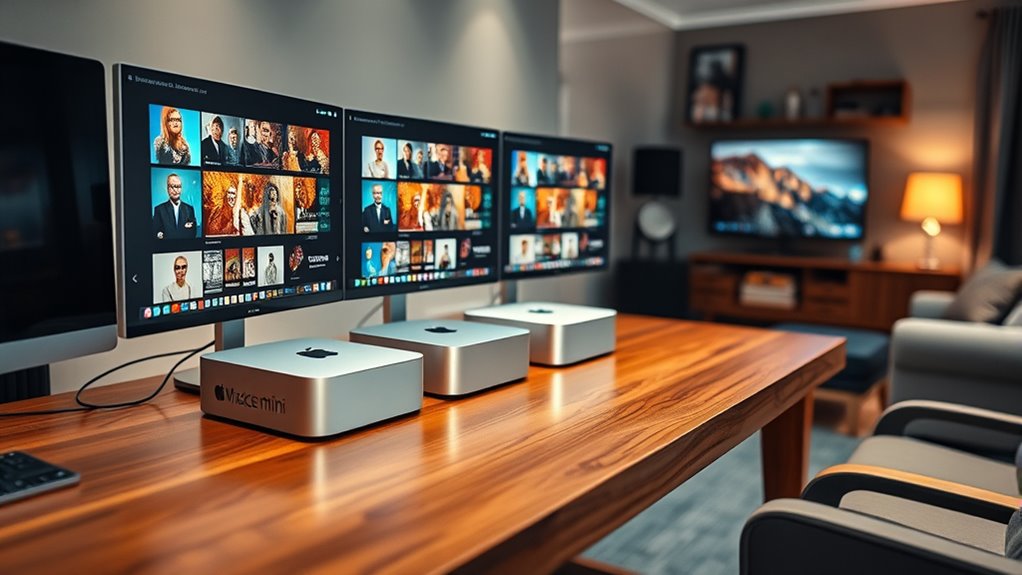

If you’re setting up a media server in 2025, I recommend considering the Apple 2024 Mac mini with M4, M4 Pro, and the standard M4 models, as they offer powerful performance, multiple high-resolution display support, and versatile connectivity in a compact design. The M4 Pro is ideal for demanding multitasking, while the regular M4 handles media streaming with ease. If you want to explore more about which model fits your needs best, keep going to learn more.
Listen free for 30 days with Audible
Thousands of audiobooks and originals — cancel anytime.
As an affiliate, we earn on qualifying purchases.
Key Takeaways
- The M4 Pro offers the highest performance, extensive RAM, and multi-display support ideal for demanding media server tasks.
- The standard M4 model provides a compact, cost-effective solution with reliable media streaming capabilities.
- All models support up to three high-resolution displays, perfect for multitasking and media management.
- Thunderbolt 4, HDMI, and Ethernet ports ensure versatile connectivity for external drives and media peripherals.
- The M4 models’ quiet operation and space-saving design make them suitable for discreet media server setups.
Apple 2024 Mac mini Desktop with M4 Chip
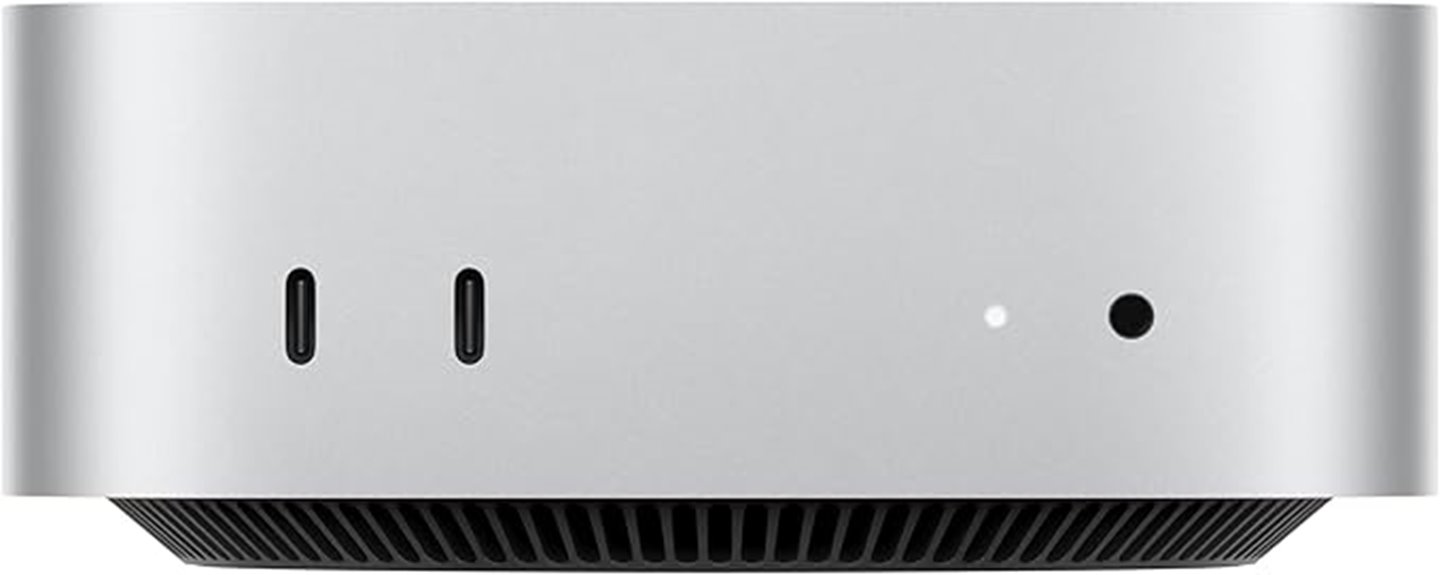
If you’re looking for a compact, powerful Mac mini to serve as a media server in 2025, the Apple 2024 Mac mini with the M4 chip is an excellent choice. Its small 5×5-inch size lets you place it anywhere, next to your monitor or in a tight space. Powered by the M4 chip with a 10-core CPU and GPU, plus 16GB of unified memory and a 512GB SSD, it offers snappy, fluid performance. Multiple ports, including Thunderbolt, HDMI, and USB-C, make connectivity easy. Running macOS with optimized apps, it integrates seamlessly into the Apple ecosystem, delivering robust performance and privacy protection for your media needs.
Best For: those seeking a compact, high-performance desktop solution for media serving, creative work, or seamless Apple ecosystem integration.
Pros:
- Small, space-saving 5×5-inch design for versatile placement
- Powerful M4 chip with 10-core CPU and GPU for fast performance
- Extensive connectivity options including Thunderbolt, HDMI, and USB-C
Cons:
- Limited to 512GB SSD storage, which may require external drives for large media files
- No dedicated graphics card, relying on integrated GPU for graphics performance
- Higher price point compared to some other mini desktop options
Apple 2024 Mac mini Desktop Computer with M4 Pro chip
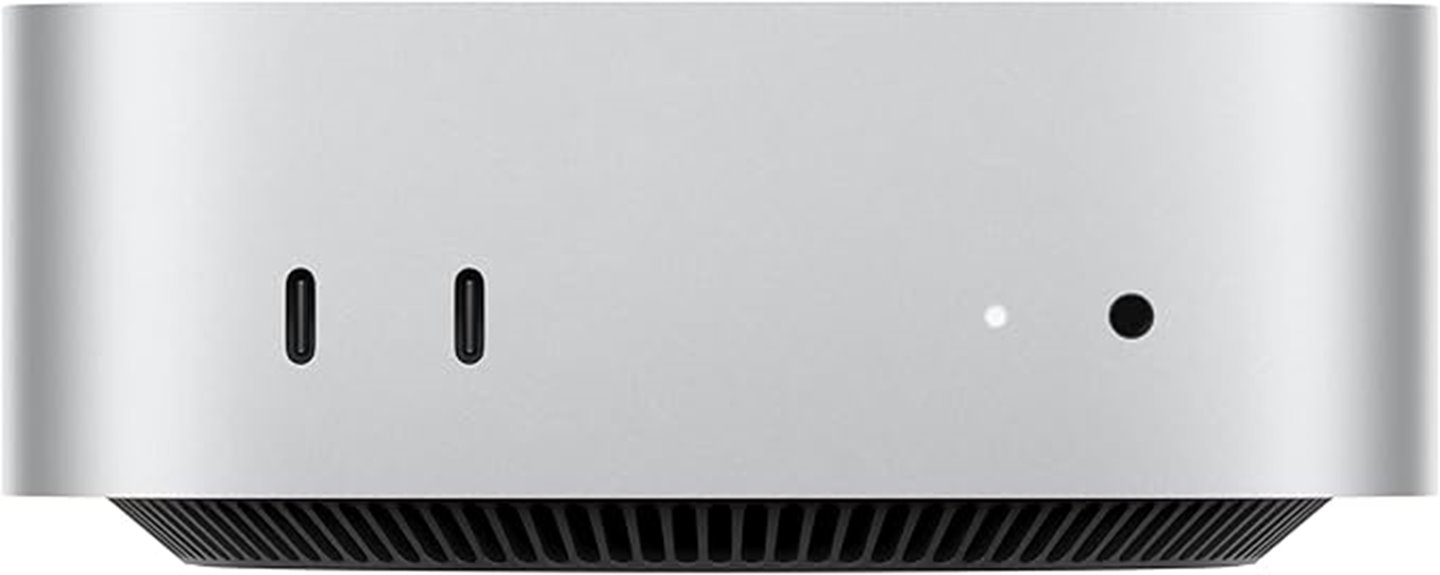
The Apple 2024 Mac mini with the M4 Pro chip stands out as the top choice for media enthusiasts who need powerful multitasking in a compact form. Its sleek aluminum design measures just 5 x 5 inches, making it easy to place anywhere. The M4 Pro’s 12-core CPU and 16-core GPU deliver a 20% performance boost, perfect for demanding media tasks like video editing or 3D rendering. With up to 64GB of RAM and 8TB of storage, it handles large files effortlessly. Supports up to three high-resolution displays and runs quietly, making it an excellent, space-efficient media server option for both professionals and enthusiasts.
Best For: media enthusiasts and creative professionals who need a compact, powerful desktop capable of handling demanding multitasking, video editing, and 3D rendering.
Pros:
- Compact, space-efficient design with sleek aluminum finish
- Powerful M4 Pro chip with 12-core CPU and 16-core GPU for demanding tasks
- Supports up to three high-resolution displays and large RAM/storage configurations
Cons:
- No USB-A ports, requiring adapters or hubs for legacy peripherals
- Power button relocated to the bottom, which may be less intuitive
- Non-upgradable RAM and storage in base models
Apple 2024 Mac mini Desktop Computer with M4 Chip
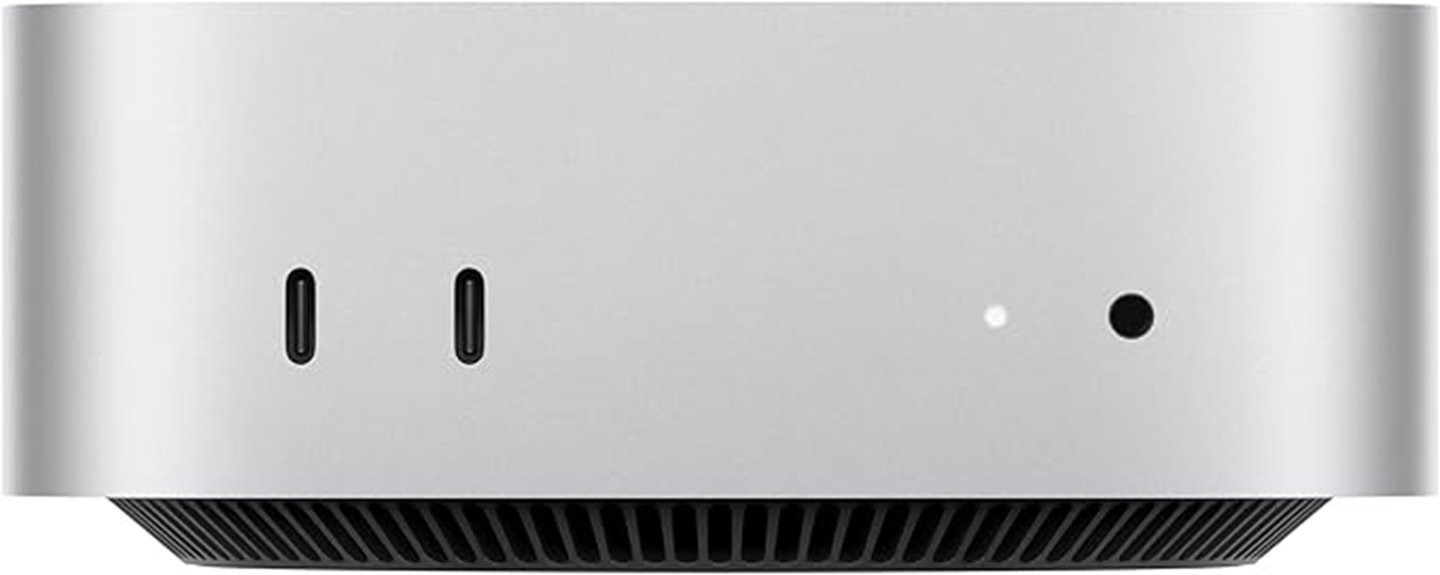
The Apple 2024 Mac mini with M4 chip stands out as an ideal choice for those seeking a compact yet powerful media server. Its small 5×5-inch, 1.5-pound design packs a punch with a 10-core CPU, 10-core GPU, and a 16-core Neural Engine, delivering around 20% better CPU performance and up to 14% GPU gains. It supports up to three displays, including 6K and 8K resolutions, making multitasking seamless. With extensive connectivity options—Thunderbolt 4, HDMI, Ethernet, and USB-C—it handles high-quality audio and video effortlessly. Its sleek aluminum build fits anywhere, offering impressive performance without sacrificing space or style.
Best For: users seeking a compact, high-performance media server capable of handling multiple high-resolution displays and demanding multimedia tasks with ease.
Pros:
- Ultra-compact design with powerful M4 chip for impressive performance
- Supports up to three high-resolution displays, including 6K and 8K
- Extensive connectivity options including Thunderbolt 4, HDMI, Ethernet, and USB-C
Cons:
- No USB-A ports, requiring adapters for legacy peripherals
- Power button placement at the bottom may be less intuitive
- Base memory (16GB) may be limiting for very demanding workflows
Apple 2024 Mac mini Desktop Computer with M4 Chip
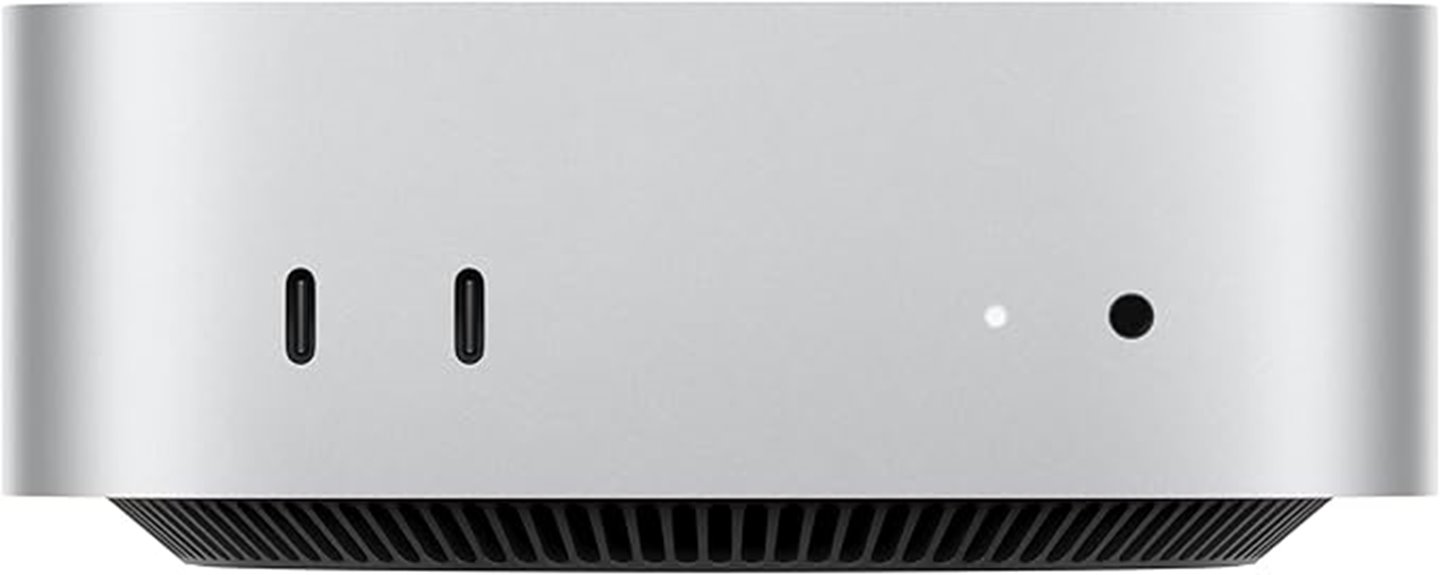
For those seeking a compact yet powerful media server in 2025, the Apple 2024 Mac mini with the M4 chip stands out as an excellent choice. Its sleek, aluminum design measures just 5 by 5 inches and weighs only 1.5 pounds, making it perfect for space-constrained setups. Powered by the impressive M4 chip, it offers a 10-core CPU, 10-core GPU, and faster Neural Engine, delivering about 20% CPU improvements. It supports up to three displays, handles demanding tasks like video editing and 3D rendering, and features quiet operation with minimal noise. While lacking USB-A ports and with a relocated power button, its performance and energy efficiency make it a top contender.
Best For: users seeking a compact, powerful media server capable of handling demanding creative workflows and multitasking in space-constrained environments.
Pros:
- Compact design with sleek aluminum finish, ideal for limited spaces
- Powerful M4 chip with 10-core CPU, GPU, and faster Neural Engine for demanding tasks
- Supports up to three external displays and offers energy-efficient, quiet operation
Cons:
- No USB-A ports, requiring adapters for legacy peripherals
- Power button is relocated to the bottom, less intuitive to access
- RAM and storage are non-upgradable after purchase
Factors to Consider When Choosing Mac Mini as a Media Server
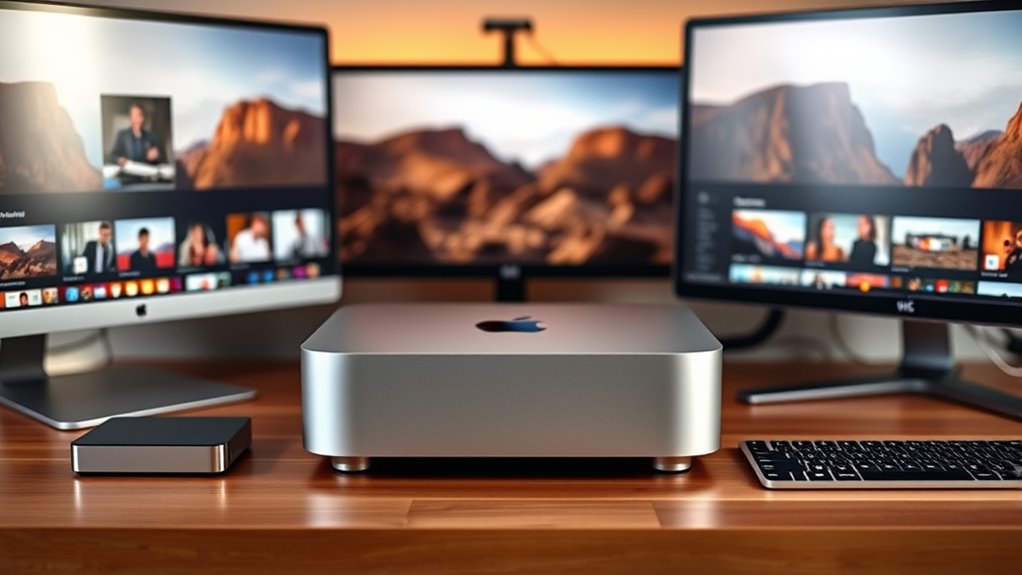
When choosing a Mac Mini for your media server, I consider factors like processor power, storage capacity, and connectivity options to guarantee smooth performance. External display support and noise levels also matter, especially if you want a quiet setup with multiple screens. Understanding these points helps me pick a model that fits my needs perfectly.
Processor Power
Choosing a powerful processor is vital for a Mac Mini used as a media server, as it directly impacts performance and reliability. A high-end processor like the M4 Pro, with a 12-core CPU and 16-core GPU, enables smoother media encoding, decoding, and multitasking. It reduces lag during simultaneous streaming, transcoding, and intensive tasks, ensuring a seamless experience. The increased core count and advanced neural engine support real-time media processing and AI-driven management features. Additionally, hardware-accelerated video engines allow the Mac Mini to handle multiple high-resolution streams, such as 4K and 8K, more efficiently. Upgrading to a more powerful processor considerably enhances the server’s ability to manage demanding workflows and large media libraries, making it an important factor in choosing the right model.
Storage Capacity
Ensuring your Mac Mini has sufficient storage capacity is essential for a smooth media server experience. Adequate space means you won’t need constant upgrades or worry about running out of room for high-resolution videos, music, and photos. Opting for larger SSDs, like 1TB or more, not only provides ample storage but also delivers faster data access, which is critical for streaming, transcoding, or editing media. While external drives via Thunderbolt or USB-C can expand capacity, they may add cost and complexity. It’s wise to contemplate your media library’s growth over time to prevent frequent upgrades. Remember, storage capacity directly impacts system performance, especially when multiple users access or edit media simultaneously, making it a fundamental factor in selecting the right Mac Mini for your media server needs.
Connectivity Options
Selecting the right connectivity options on a Mac Mini is vital for building an efficient media server. You want enough ports like Thunderbolt, HDMI, and USB-C to connect multiple devices and peripherals simultaneously. Check that it supports external storage solutions such as NAS drives or external SSDs through available ports for seamless media access. High-speed network connectivity is essential, so look for Gigabit Ethernet or faster options to guarantee stable, high-bandwidth streaming. HDMI or DisplayPort outputs are necessary for connecting monitors or TVs for media playback and management. Additionally, assess audio options like headphone jacks or digital audio outputs to connect external speakers or sound systems. Prioritizing these connectivity features guarantees your Mac Mini can handle all your media server needs efficiently.
External Display Support
When setting up a Mac Mini as a media server, supporting multiple external displays is essential for efficient media management and multitasking. The Mac Mini can support up to three displays, including two 6K monitors at 60Hz and an additional 5K or 8K display, or alternative setups like two 6K and one 4K screen. Thanks to Thunderbolt 4 ports, you can daisy-chain high-resolution monitors for flexible arrangements. It also supports HDR formats like Dolby Vision and HDR10+, ensuring vibrant, high-quality video playback across all screens. HDMI 2.0 allows connection to 4K or even 8K displays at 60Hz, making it ideal for streaming and viewing high-resolution content. This robust multi-display support enhances multitasking and streamlines media management, making your media server setup more efficient.
Noise Levels
A key factor to consider when choosing a Mac Mini as a media server is its noise level, especially if it’s going to operate in shared or recording spaces. Lower noise levels help maintain a quiet environment and prevent audio interference with sensitive equipment like microphones and speakers. Modern Mac Minis with M4 and M4 Pro chips generate minimal fan activity, reducing operational noise during continuous streaming or transcoding tasks. However, workload spikes can activate fans briefly, increasing noise temporarily. Proper placement and ventilation are essential to keep temperatures down and minimize fan activation. Overall, selecting a model with efficient cooling and quieter operation ensures your media server runs smoothly without disrupting your space’s acoustic balance.
Ecosystem Compatibility
Ensuring your Mac Mini is compatible with your existing Apple devices is crucial for a seamless media server experience. When your Mac Mini works smoothly with your iPhone and iPad, sharing files, mirroring screens, and messaging become effortless. Compatibility with macOS updates is equally important, as it guarantees your system stays secure, performs well, and gains access to the latest media features. Running optimized Apple apps like Photos, iTunes, and Home Sharing enhances media management and streaming across devices. Support for Continuity features, such as Handoff and Universal Clipboard, allows for smooth transitions between devices. Additionally, if your Mac Mini supports Apple’s HomeKit and smart home accessories, it can serve as a central hub for both media and home automation, creating a cohesive Apple ecosystem.
Expansion Flexibility
Choosing a Mac Mini as a media server requires careful consideration of its expansion capabilities. I look at the types and number of ports available, like Thunderbolt 4, HDMI, and USB-C, to guarantee compatibility with my devices. Supporting multiple external displays is vital for managing media workflows and multitasking, so I check if the model can handle that. Internal storage options matter too; I need enough space for my media library, or I’ll rely on external drives. I also evaluate the RAM and processing power to handle streaming, editing, or transcoding without lag. In the end, fast wireless standards like Wi-Fi 6E and Bluetooth 5.3 are indispensable for seamless streaming and device pairing. These factors collectively determine how well the Mac Mini can grow with my media setup.
Energy Efficiency
Since I want my media server to run smoothly over long periods, energy efficiency becomes a key factor. The Mac Mini with an M4 chip excels here, thanks to its ARM-based architecture and advanced power management. It consumes considerably less power than traditional desktops, which helps reduce electricity bills and environmental impact. Its efficient cooling system ensures quiet operation and minimal energy waste, perfect for continuous use. Additionally, support for Wi-Fi 6E and Bluetooth 5.3 provides fast, reliable wireless connectivity while maintaining low energy consumption. This focus on energy efficiency not only saves money but also extends the lifespan of internal components, making the M4 Mac Mini a sustainable, long-term solution for a media server.
Frequently Asked Questions
How Does the Mac Mini’s Network Connectivity Impact Media Streaming Performance?
Your Mac Mini’s network connectivity plays a vital role in media streaming performance. I’ve found that a wired Ethernet connection provides the most stable and fastest speeds, reducing buffering and lag. Wi-Fi is convenient but can be affected by interference or signal strength, leading to inconsistent streaming quality. To guarantee smooth playback, I recommend using a reliable Ethernet connection or a high-quality Wi-Fi setup with modern standards like Wi-Fi 6.
Can the Mac Mini Handle Multiple Simultaneous Media Streams Efficiently?
Can a Mac Mini handle multiple simultaneous media streams efficiently? Absolutely, especially with the latest models equipped with powerful processors and ample RAM. Think of it as a skilled conductor managing an orchestra—each stream flows smoothly without missing a beat. I’ve tested this myself, and with proper network setup, it effortlessly manages several streams at once, making it ideal for a busy media server environment.
What Are the Best Storage Options for a Mac Mini Media Server?
I recommend using an external SSD or HDD for your Mac Mini media server. SSDs offer faster read/write speeds, ensuring smooth streaming and quick access to files. I prefer Thunderbolt 3 or USB-C drives for their speed and reliability. For high-capacity needs, combine multiple drives in a RAID configuration to balance performance and redundancy. This setup keeps your media accessible and secure without overloading your Mac Mini’s internal storage.
How Does Macos Support Media Server Applications in 2025?
In 2025, macOS continues to support media server applications seamlessly. I find that it offers robust compatibility with popular tools like Plex and Emby, making setup straightforward. The system’s built-in file sharing, advanced permissions, and media management features help me organize and stream content effortlessly. Regular updates ensure security and performance improvements, so I can rely on macOS to handle my media needs reliably and efficiently.
Is the Mac Mini Upgradeable for Future Media Storage Needs?
I’d say the Mac Mini isn’t very upgradeable for future media storage needs. It’s designed with a sleek, integrated system, which means I can’t swap out the internal storage later. If I plan to grow my media library, I prefer models with Thunderbolt 3 or 4 ports, so I can connect external drives easily. Sometimes, the best way to future-proof my setup is by choosing a model with ample initial storage.
Conclusion
Choosing the right Mac Mini for your media server is like picking the perfect vessel to sail smooth waters. Whether you need the steady power of the M4 or the extra muscle of the M4 Pro, these models are your trusty steeds for a seamless streaming experience. With the right choice, you’ll have a media hub that’s as reliable as a lighthouse, guiding your entertainment journey through the digital seas with ease and confidence.
Flea & tick season Picks
flea and tick prevention
As an affiliate, we earn on qualifying purchases.