
For most enterprise IT deployments, I’d start with the 2026 Mac Studio with M5 Max for its desktop performance and fixed-workstation fit. The M4 Pro Mac mini with 48GB memory and Gigabit Ethernet is a stronger match for compact, memory-conscious fleets, while the M5 Max MacBook Pro suits staff who need workstation performance on the move. The tradeoff is between centralized desktop capacity, space and deployment simplicity, and mobile flexibility. The older Mac Pro may appeal where its specific hardware or legacy role matters, but age and support compatibility call for extra scrutiny. Read on for how each option fits enterprise needs and where its compromises show.

Get bike and ride gear delivered free with Prime
- Fast, free delivery on millions of items
- Prime Video, Amazon Music and more included
- Member-only deals all year
Key Takeaways
- The Mac Studio is the leading fit for demanding fixed workstations, while the MacBook Pro adds mobility at the cost of a laptop form factor and built-in display.
- The two M4 Pro Mac mini configurations share a compact platform, but the 48GB model gives memory-heavy workflows more room than the 24GB version.
- A Mac mini with Gigabit Ethernet suits wired desk deployments, but network speed, port needs, and peripheral plans should be checked against the actual office setup.
- The M4 Max 16-inch MacBook Pro is a renewed option with 48GB memory, but its prior-generation chip and renewed condition distinguish it from the newer M5 Max model.
- The Late 2013 Mac Pro is the outlier: its 64GB RAM and 512GB SSD do not remove the need to verify current software support, parts, and fleet-management compatibility.


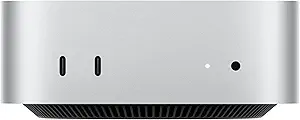
| mac pro for enterprise it deployment | Memory | Storage | Chip | CPU |
|---|---|---|---|---|
| Apple 2026 MacBook Pro 14.2-in | 36GB unified memory | 2TB SSD | Apple M5 Max | 18-core |
| Apple Mac Pro | 64GB 1866MHz DDR3 ECC SDRAM | 512GB SSD | — | — |
| Apple 2024 Mac mini with M4 Pr | 24GB unified memory | 512GB SSD | Apple M4 Pro | 12-core |
| Apple 2026 Mac Studio with M5 | — | — | Apple M5 Max | — |
| Apple 2024 MacBook Pro with M4 | 48GB unified memory | 1TB SSD | — | — |
| Mac mini with M4 Pro Chip | 48GB | 512GB SSD | — | 12-core |
More Details on Our Top Picks
Apple 2026 MacBook Pro 14.2-inch with M5 Max, 36GB Unified Memory, 2TB SSD, Wi-Fi 7, Silver, and 3-Year AppleCare+
For enterprise staff who need workstation-class compute away from a desk, this 14-inch MacBook Pro pairs an M5 Max with 36GB of unified memory and a roomy 2TB SSD. The compact display and all-day battery make it easier to deploy to traveling engineers or creative specialists than the Mac Studio, which is better suited to a fixed workspace and multi-display setups. Wi-Fi 7 and included three-year AppleCare+ add useful connectivity and support coverage for managed fleets. The tradeoff is that a laptop is a less flexible shared workstation than a desktop, and this configuration’s 36GB memory ceiling may not suit the largest local datasets or virtualized workloads. I’d choose it for staff mobility, not as a substitute for a scalable server or expandable tower.
Pros:- M5 Max with 18-core CPU and 32-core GPU for demanding professional workloads
- 2TB SSD provides useful local capacity for project files and offline work
- All-day battery and a 14.2-inch Liquid Retina XDR display support mobile deployment
- Three-year AppleCare+ is included
Cons:- 36GB unified memory may constrain large datasets, extensive virtualization, or memory-heavy creative projects
- Laptop form factor offers fewer deployment and upgrade options than the Mac Studio
- The listed configuration is a high-end mobile system that may be excessive for routine office work
Best for: Enterprise engineers, analysts, and creative staff who need high-performance macOS computing across offices and client sites.
Not ideal for: IT teams building fixed, heavily expanded workstations or users who need more memory headroom than the listed 36GB.
- Chip:Apple M5 Max
- CPU:18-core
- GPU:32-core
- Display:14.2-inch Liquid Retina XDR
- Memory:36GB unified memory
- Storage:2TB SSD
- Connectivity:Wi-Fi 7
- Warranty:AppleCare+ for 3 years
Our verdict“Choose this MacBook Pro for enterprise users who need strong local performance and battery-powered mobility in one managed device.”
Apple Mac Pro (Late 2013) 3.7GHz Quad-Core Xeon, 64GB RAM, 512GB SSD (Renewed)
This renewed 2013 Mac Pro is a niche fit for an enterprise that must keep older Mac-specific workflows running, rather than a sound default for new workstation deployments. Its 64GB of ECC memory and dual FirePro D300 graphics distinguish it from the M4 Pro Mac mini, which is far newer and more compact but lists 24GB of unified memory. The Mac Pro also supplies dual Gigabit Ethernet and six Thunderbolt 2 ports for connecting compatible legacy equipment. Those ports and memory do not erase the age of its quad-core Xeon, older graphics, and macOS Sierra listing. Internal expansion is limited, and a minimum 90-day warranty gives IT less coverage than the newer systems’ three-year AppleCare+ bundles. I’d consider it only when software, peripherals, or existing support procedures specifically call for this generation.
Pros:- 64GB of 1866MHz ECC memory is useful for compatible older workstation tasks
- Dual AMD FirePro D300 graphics provide discrete graphics hardware
- Six Thunderbolt 2 ports and dual Gigabit Ethernet support legacy connections
- Compact 12-inch-square chassis for a workstation of this generation
Cons:- 2013-era processor and graphics are dated for current enterprise software and workloads
- Listed operating system is macOS Sierra, which limits suitability for current security and application requirements
- Limited internal expansion and a minimum 90-day warranty complicate long-term fleet planning
Best for: IT teams maintaining a compatible legacy macOS application or Thunderbolt 2 workflow that needs a refurbished workstation with ECC memory.
Not ideal for: Organizations selecting new standard-issue workstations, requiring current macOS support, or expecting straightforward internal upgrades.
- Model:Mac Pro (Late 2013, ME253LL/A)
- Processor:3.7GHz quad-core Intel Xeon E5-1620 v2
- Memory:64GB 1866MHz DDR3 ECC SDRAM
- Storage:512GB SSD
- Graphics:Dual AMD FirePro D300, 2GB GDDR5 each
- Ports:6 Thunderbolt 2, 4 USB 3.0, HDMI 1.4
- Networking:Dual Gigabit Ethernet, 802.11ac Wi-Fi, Bluetooth 4.0
- Operating system:macOS Sierra
- Condition and coverage:Certified refurbished; minimum 90-day warranty
Our verdict“Buy this renewed Mac Pro only to preserve a specific compatible legacy workflow, not for a new enterprise Mac standard.”
Apple 2024 Mac mini with M4 Pro, 12-Core CPU, 16-Core GPU, 24GB Unified Memory, 512GB SSD, and 3-Year AppleCare+
For a managed office fleet where desk space and consistent desktop deployment matter more than maximum performance, this 5 x 5-inch Mac mini is the most practical fit in the group. Its M4 Pro and 24GB of unified memory provide a newer platform than the renewed 2013 Mac Pro, while its Thunderbolt, HDMI, Gigabit Ethernet, and front USB-C make everyday desk connections straightforward. The small chassis can be placed behind or beside a display, and the included three-year AppleCare+ supports a longer deployment plan than the refurbished Mac Pro’s minimum 90-day warranty. Its limits are clear: 512GB storage and 24GB memory leave less room for local data and heavier workloads than the M5 Max Mac Studio. I’d assign it to standard offices and compact desks, not memory-intensive workstation roles.
Pros:- Compact 5 x 5-inch footprint simplifies desk placement and standard fleet setups
- M4 Pro with 12-core CPU and 16-core GPU suits demanding general office and professional workloads
- Gigabit Ethernet, HDMI, Thunderbolt, and front-facing USB-C cover common desk connections
- Three-year AppleCare+ is included
Cons:- 24GB unified memory is a constraint for large datasets and intensive virtualization
- 512GB SSD may require external or network storage for users with large local files
- Less suited to demanding multi-display or high-end GPU workloads than the Mac Studio
Best for: Enterprise IT teams standardizing compact desktop Macs for office staff who use managed apps, cloud storage, and one or two displays.
Not ideal for: Power users who need substantial local storage, high memory capacity, or the Mac Studio’s multi-display and high-throughput configuration.
- Chip:Apple M4 Pro
- CPU:12-core
- GPU:16-core
- Memory:24GB unified memory
- Storage:512GB SSD
- Dimensions:5 x 5 inches
- Ports:Thunderbolt, HDMI, Gigabit Ethernet, front USB-C, headphone jack
- Warranty:AppleCare+ for 3 years
Our verdict“Choose this Mac mini for space-conscious enterprise desks that need a current desktop Mac without workstation-level demands.”
Apple 2026 Mac Studio with M5 Max and 3-Year AppleCare+
For enterprise teams seeking a powerful fixed workstation without the larger Mac Pro footprint, the M5 Max Mac Studio is the strongest desktop choice in this selection. It supports up to 128GB of unified memory, lists 614GB/s memory bandwidth, and connects through four Thunderbolt 5 ports; that combination gives IT more headroom for demanding local workloads and display setups than the M4 Pro Mac mini. Support for up to five external displays also makes it a better fit for specialized operator desks. Its 7.7-inch-square chassis and advanced thermals favor a compact, quiet installation. The tradeoff is limited internal upgradeability, so teams need to plan the memory and storage configuration before deployment. The supplied details describe maximum memory capacity but do not specify the installed memory or SSD capacity, which IT should verify before standardizing a fleet.
Pros:- M5 Max includes GPU ray tracing and Neural Accelerators for demanding graphics and AI workflows
- Supports up to 128GB unified memory and lists 614GB/s memory bandwidth
- Four Thunderbolt 5 ports and support for up to five external displays suit dense workstation setups
- Compact chassis with advanced thermals is designed for quiet operation
Cons:- Internal upgradeability is limited, making initial configuration planning important
- The supplied product data does not state the installed memory or SSD capacity
- Its capabilities exceed routine office needs and are better reserved for specialized workloads
Best for: Enterprise creative, engineering, and AI teams that need a compact fixed workstation, multiple external displays, and room for high-memory configurations.
Not ideal for: Organizations that need user-upgradable internal components or require confirmed installed memory and storage details before procurement.
- Chip:Apple M5 Max
- Maximum unified memory:Up to 128GB
- Maximum memory bandwidth:614GB/s
- Thunderbolt ports:4 Thunderbolt 5
- Other ports:2 USB-C, 2 USB-A, HDMI, SDXC card slot, headphone jack
- Maximum external displays:5
- Wireless:Wi-Fi 7, Bluetooth 6
- Dimensions:7.7-inch square footprint
- Warranty:AppleCare+ for 3 years
Our verdict“Pick the Mac Studio for fixed enterprise workstations that need more performance and display capacity than the compact Mac mini can offer.”
Apple 2024 MacBook Pro with M4 Max, 16.2-inch Liquid Retina XDR, 48GB Unified Memory, 1TB SSD, Silver (Renewed)
This renewed 16-inch MacBook Pro targets enterprise users who need a large built-in workspace and strong performance while moving between locations. Its 48GB unified memory gives it more listed capacity than the M5 Max 14-inch MacBook Pro’s 36GB, while the 16.2-inch Liquid Retina XDR screen can reduce reliance on an external monitor for detailed work. Three Thunderbolt 5 ports, HDMI, and SDXC provide flexible connections at a desk or on site. Compared with the M5 Max Mac Studio, it trades fixed-workstation ports and higher listed memory capacity for an integrated display and battery-powered use. The renewed condition and unspecified warranty in the supplied data call for closer procurement checks, and its larger size makes it less convenient for frequent travel than the 14-inch model.
Pros:- 48GB unified memory provides more listed capacity than the 14-inch M5 Max MacBook Pro
- 16.2-inch Liquid Retina XDR display offers a broad workspace without a separate monitor
- Three Thunderbolt 5 ports, HDMI, MagSafe 3, and SDXC support varied peripherals
- All-day battery life supports work away from a fixed desk
Cons:- Renewed condition may not fit enterprise procurement requirements for new hardware
- The supplied product data does not specify warranty coverage
- Larger 16-inch chassis is less convenient for frequent travel than the 14-inch MacBook Pro
Best for: Enterprise designers, editors, and technical staff who need a large high-quality screen and substantial memory in a portable Mac.
Not ideal for: Frequent travelers prioritizing a smaller device, or fleet buyers who require clearly stated warranty terms and new-unit condition.
- Processor:Apple M4 Max
- Display:16.2-inch Liquid Retina XDR
- Memory:48GB unified memory
- Storage:1TB SSD
- Ports:3 Thunderbolt 5, MagSafe 3, SDXC, HDMI, headphone jack
- Camera:12MP Center Stage
- Audio:Six speakers with Spatial Audio and Dolby Atmos
- Battery life:All-day
- Condition:Renewed
Our verdict“Choose this renewed MacBook Pro when a large built-in display and 48GB of memory matter more than a smaller travel footprint or new-unit procurement.”
Mac mini with M4 Pro Chip, 12-core CPU, 16-core GPU, 48GB Memory, 512GB SSD, Gigabit Ethernet
For enterprise teams that need capable desktop performance without dedicating a large amount of desk or rack-adjacent space, this 5-by-5-inch Mac mini pairs an M4 Pro chip with 48GB of memory. That memory capacity gives it more room for simultaneous business applications and background workloads than the listed Mac mini with M4 Pro and 24GB memory, while the 512GB SSD remains the same capacity. Thunderbolt, USB-C, HDMI, and Gigabit Ethernet make it easier to connect workplace displays and wired networks. Its compact build suits distributed offices and departmental workstations, but it is not a direct substitute for the expansion-oriented Mac Studio or a portable MacBook Pro. The fixed 512GB internal storage may constrain teams handling large local datasets, and the description provides no details on remote management or enterprise deployment tools, so IT buyers should verify those needs separately.
Pros:- Compact 5-by-5-inch design can fit under a monitor or in a crowded workstation area.
- 48GB of memory exceeds the listed 24GB Mac mini configuration for heavier multitasking.
- M4 Pro chip with a 12-core CPU and 16-core GPU supports demanding desktop workloads.
- Thunderbolt, USB-C, HDMI, and Gigabit Ethernet provide useful wired connectivity.
Cons:- 512GB SSD may be restrictive for large local files or data-intensive workflows.
- Compact desktop format offers less deployment flexibility than a portable MacBook Pro.
- Product details do not specify enterprise remote-management capabilities or expansion options.
Best for: Enterprise IT teams deploying compact shared-services or departmental workstations that need 48GB of memory, wired Ethernet, and a small desktop footprint.
Not ideal for: Teams that need substantial internal storage, extensive expansion options, or a laptop for staff who work across locations.
- Processor:Apple M4 Pro chip
- CPU:12-core
- GPU:16-core
- Memory:48GB
- Storage:512GB SSD
- Ethernet:Gigabit Ethernet
- Dimensions:5 x 5 inches
- Connectivity:Thunderbolt, HDMI, USB-C, Ethernet
Our verdict“Choose this Mac mini for space-constrained enterprise desks that need more memory than the 24GB model, but look to a Mac Studio or MacBook Pro when expansion or mobility matters more.”
How We Picked
I ranked these machines for enterprise deployment fit, not raw specifications alone. I weighed current-generation platform capabilities, memory and storage configuration, desktop versus mobile use, network and expansion needs, and how easily a device can fit a repeatable fleet standard. I also treated AppleCare+ coverage and renewed condition as relevant ownership factors, while recognizing that neither replaces an organization’s own support and lifecycle planning.
The Mac Studio leads for performance-focused fixed workstations; the 48GB M4 Pro Mac mini follows for a compact, wired desktop configuration. The newer M5 Max MacBook Pro ranks well for mobile specialist users, while the 24GB Mac mini trades memory headroom for a simpler baseline. The renewed M4 Max laptop and 2013 Mac Pro rank lower because their generation or condition creates more deployment questions. These are distinct configurations, not interchangeable enterprise servers, and buyers should confirm software, management, and connectivity requirements before standardizing.
| mac pro for enterprise it deployment | Chip |
|---|---|
| Apple 2026 MacBook Pro 14.2-in | Apple M5 Max |
| Apple Mac Pro | — |
| Apple 2024 Mac mini with M4 Pr | Apple M4 Pro |
| Apple 2026 Mac Studio with M5 | Apple M5 Max |
| Apple 2024 MacBook Pro with M4 | — |
| Mac mini with M4 Pro Chip | — |
Factors to Consider When Choosing Mac Pro For Enterprise It Deployments
Choosing a Mac for enterprise IT means matching the device to a role, then checking that it fits the organization’s operating model. I’d make deployment standards and support plans part of the decision, not an afterthought.
Match the Form Factor to the Job
A desktop is usually easier to standardize for fixed workstations, shared desks, and controlled peripheral setups. A laptop makes sense when staff move between offices, customer sites, or home workspaces, but it adds screen, battery, and physical-security variables. A compact Mac mini can simplify desk placement, though it still needs a display, input devices, and a plan for cable security. Avoid buying mobile hardware for employees who never need mobility just because it appears more versatile. Map device types to job roles before ordering, and keep the number of fleet configurations manageable.
Size Memory for the Actual Workload
Memory affects how comfortably a Mac handles simultaneous applications, large projects, and virtualized or creative workflows. Don’t use CPU or GPU labels as a substitute for checking the memory demands of the applications your teams run. A lower-memory baseline can serve general office roles, while developers, media teams, or analysts may need more headroom. Since configuration choices can be difficult to change after purchase, plan around the device’s expected service life rather than today’s lightest workload. Ask application owners for representative project sizes and peak concurrent use before setting fleet specifications.
Check Network and Peripheral Requirements
Enterprise desks may depend on wired networking, external storage, multiple displays, docks, security devices, or specialized interfaces. A listed Gigabit Ethernet connection is useful only if that speed and connection type fit the network design; it does not answer questions about switch capacity or remote-work connectivity. Build a compatibility checklist for displays, adapters, docks, and authentication hardware before choosing a standard Mac. A common mistake is to compare computers first and discover later that a required accessory adds complexity or blocks a deployment. Test the full desk setup with IT, not just the computer by itself.
Treat Lifecycle and Support as Part of the Specification
For fleet purchasing, hardware age shapes more than performance: it affects operating-system eligibility, security-update planning, repair options, and replacement timing. A renewed computer can fit a controlled secondary role, but procurement teams should define condition standards, warranty handling, and spare-device procedures. Older systems need a documented compatibility review before they enter production, especially when business applications or security tools have minimum requirements. AppleCare+ can support repair planning, but it does not replace device management, backups, or an internal incident process. Set a retirement window before deployment so older equipment does not become a permanent exception.
Standardize Configurations Without Overbuying
Too many hardware variations complicate imaging, troubleshooting, accessory stocking, and employee replacement workflows. At the same time, a single specification may be wasteful if most staff do not need workstation-class graphics or expanded memory. Create a small set of role-based standards, such as general productivity, mobile specialist, and high-performance fixed workstation. Validate each standard against a representative workload and keep a documented exception path for teams with unusual needs. This approach can make support more predictable without forcing every employee into the same device.
Frequently Asked Questions
Is a Mac Pro still a sensible choice for a new enterprise fleet?
The Late 2013 Mac Pro in this roundup is a legacy option, so I would not treat its original workstation positioning as proof that it fits a current fleet. Check that the operating system, security tools, business applications, and peripherals your organization requires remain compatible. Confirm parts availability and repair procedures, since support gaps can outweigh the appeal of its 64GB RAM configuration. It may suit a limited, controlled task if compatibility is verified, but new fleet standards generally benefit from current hardware and a clear support horizon.
Should I choose the Mac Studio or a MacBook Pro for specialist staff?
Choose based on where the work happens and whether staff need to carry the computer between locations. The Mac Studio is the more natural fit for a fixed workstation with a dedicated monitor and desk setup. A MacBook Pro offers a built-in display and mobility, which can reduce friction for employees who move often, but it is still a laptop-based work setup. Compare the full workstation plan, including docks, displays, power, and security, rather than comparing chip names alone. For a team split between fixed and mobile work, separate role standards may be cleaner than forcing one model on everyone.
Is 24GB of memory enough for an enterprise Mac mini?
It can be enough for general productivity roles, but the answer depends on the applications, project sizes, and number of tasks employees run at once. Memory pressure can affect responsiveness even when the processor remains capable, so test the intended workload before setting a fleet standard. The 48GB Mac mini configuration in this roundup offers more room for heavier multitasking and specialist applications. Avoid selecting a lower-memory option solely because it meets today’s minimum requirements; account for the expected deployment life and software changes. If only a subset of employees need more, maintain a separate specialist configuration.
What should I verify before buying a renewed MacBook Pro for business?
Confirm the seller’s condition definition, included warranty, return process, and how battery health is handled. Then check the exact model and configuration against your organization’s macOS, application, and device-management requirements. The renewed M4 Max model has 48GB memory, but it belongs to an earlier generation than the M5 Max laptop in this roundup. Decide whether that generation difference matters for the role and planned service life, rather than treating the chip label as the only factor. Keep renewed devices in a clearly defined procurement tier with consistent intake checks.
Can a Mac mini replace a full workstation in an office deployment?
For many desk-based roles, a Mac mini can serve as the computer at the center of a full workstation, provided the organization supplies compatible displays, input devices, network access, and any required docks or adapters. Its compact form can help where desk space is limited, but the complete setup still needs cable management and physical security. Check display support and peripheral compatibility against the exact configuration and intended workspace. Also decide how IT will handle desk moves, shared equipment, and remote support. A Mac mini is a computer choice, not a complete workstation plan.
Conclusion
For a best overall fixed workstation, I’d choose the 2026 Mac Studio for teams that need a high-performance desktop. The best value-oriented fleet fit is the 48GB M4 Pro Mac mini when compact size and wired networking suit the role; the 24GB version is a reasonable beginner-friendly standard for lighter workloads after compatibility checks. For a premium mobile workstation, the M5 Max MacBook Pro is the standout, while the renewed M4 Max model may suit a buyer with a verified renewed-hardware process. The Late 2013 Mac Pro is best reserved for a specific legacy need, not a default new deployment. Match the model to each job, validate the complete desk or mobile setup, and set a support horizon before purchase.