Based on the latest data, I recommend four top Mac Studio configurations for power and performance in 2025. The most advanced models feature the M4 and M4 Pro chips, offering up to 12-core CPUs and 24-core GPUs, ideal for demanding creative tasks. These configurations support multiple high-resolution displays, fast connectivity, and ample memory, perfect for multitasking and intensive work. If you keep exploring, you’ll find detailed options suited for your needs.

Get bike and ride gear delivered free with Prime
- Fast, free delivery on millions of items
- Prime Video, Amazon Music and more included
- Member-only deals all year
Key Takeaways
- The top configurations feature the M4 and M4 Pro chips with up to 12-core CPU and 24GB memory for demanding tasks.
- They support multiple high-resolution external displays, including 6K and 8K setups, ideal for creative professionals.
- Compact design (around 5 inches square) maximizes workspace efficiency and portability in limited spaces.
- Extensive connectivity options include Thunderbolt 4, HDMI, Ethernet, and USB-A, suitable for various peripherals.
- Upgradable options are limited; selecting appropriate RAM and storage at purchase ensures future-proof performance.
Apple 2024 Mac mini Desktop Computer with M4 Chip

If you’re looking for a compact, powerful desktop that fits seamlessly into small spaces, the Apple 2024 Mac mini with M4 chip is an excellent choice. Its sleek aluminum design measures just 5×5 inches and weighs only 1.5 pounds, making it perfect for tight setups. Despite its small size, it packs a punch with a 10-core M4 chip, offering a 20% CPU boost and impressive GPU gains. It features multiple ports, including Thunderbolt 4, HDMI, and USB-C, supporting up to three displays. Quiet and energy-efficient, it’s ideal for creative work, multitasking, and everyday tasks, all while blending seamlessly into any workspace.
Best For: users seeking a compact, high-performance desktop for creative work, multitasking, and everyday computing in limited space.
Pros:
- Small footprint with a sleek aluminum design that fits well in space-constrained environments
- Powerful M4 chip offering significant CPU and GPU performance improvements for demanding tasks
- Multiple ports including Thunderbolt 4, HDMI, and support for up to three external displays
Cons:
- No USB-A ports, requiring adapters or hubs for legacy peripherals
- RAM and storage are not user-upgradable, limiting future expandability
- Power button placement on the bottom may be less intuitive for some users
Apple 2024 Mac mini Desktop Computer with M4 Chip
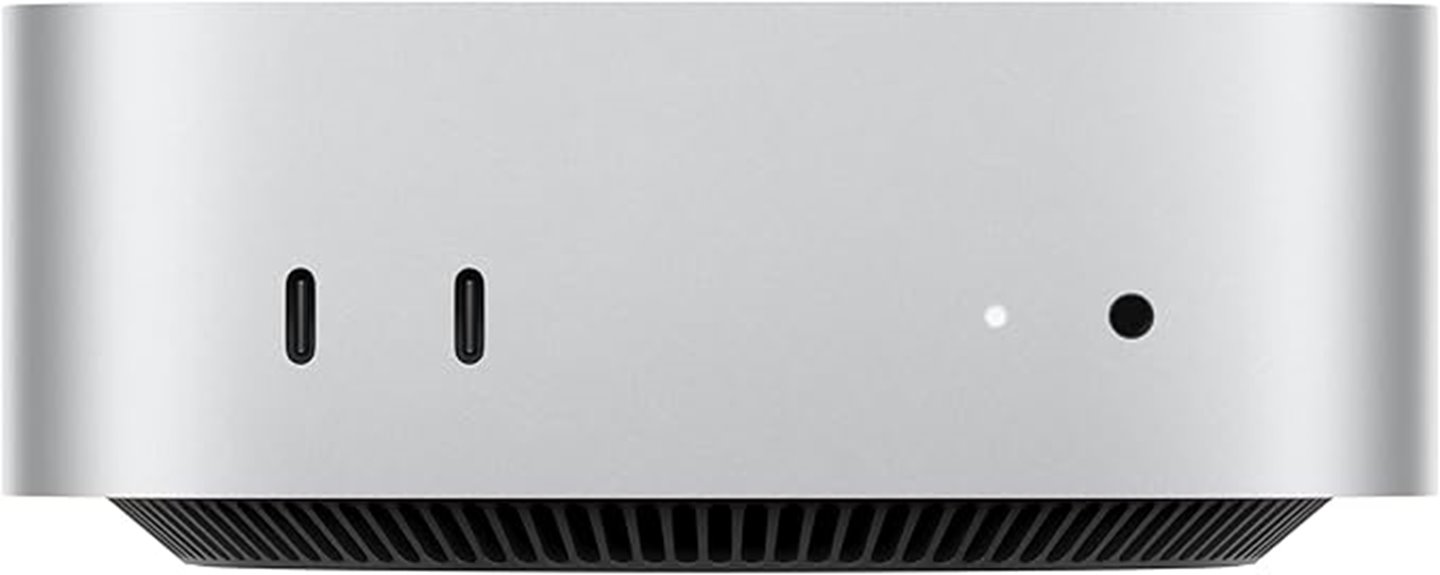
The Apple 2024 Mac mini with M4 chip is an excellent choice for users who need a compact yet powerful desktop that seamlessly integrates into the Apple ecosystem. Its small 5×5-inch design makes it easy to place anywhere, whether next to a monitor or tucked away. Powered by the robust M4 chip with a 10-core CPU and GPU, it delivers snappy, fluid performance. With 16GB of unified memory and a 512GB SSD, it handles demanding tasks effortlessly. Connectivity options include Thunderbolt, HDMI, and Gigabit Ethernet, along with front USB-C ports. It runs macOS smoothly and offers enhanced privacy features, making it ideal for both work and creative projects.
Best For: users seeking a compact, powerful, and seamlessly integrated desktop solution within the Apple ecosystem for work, creative tasks, or everyday use.
Pros:
- Compact and sleek design fits easily in any workspace or setup
- Powerful M4 chip with 10-core CPU and GPU ensures fast, fluid performance
- Excellent connectivity options including Thunderbolt, HDMI, and Gigabit Ethernet
Cons:
- Limited upgradability due to compact size and integrated components
- Storage options may be restrictive for heavy data users without external solutions
- Premium pricing could be a barrier for budget-conscious users
Apple Mac mini Desktop Computer with M4 Chip (2024)
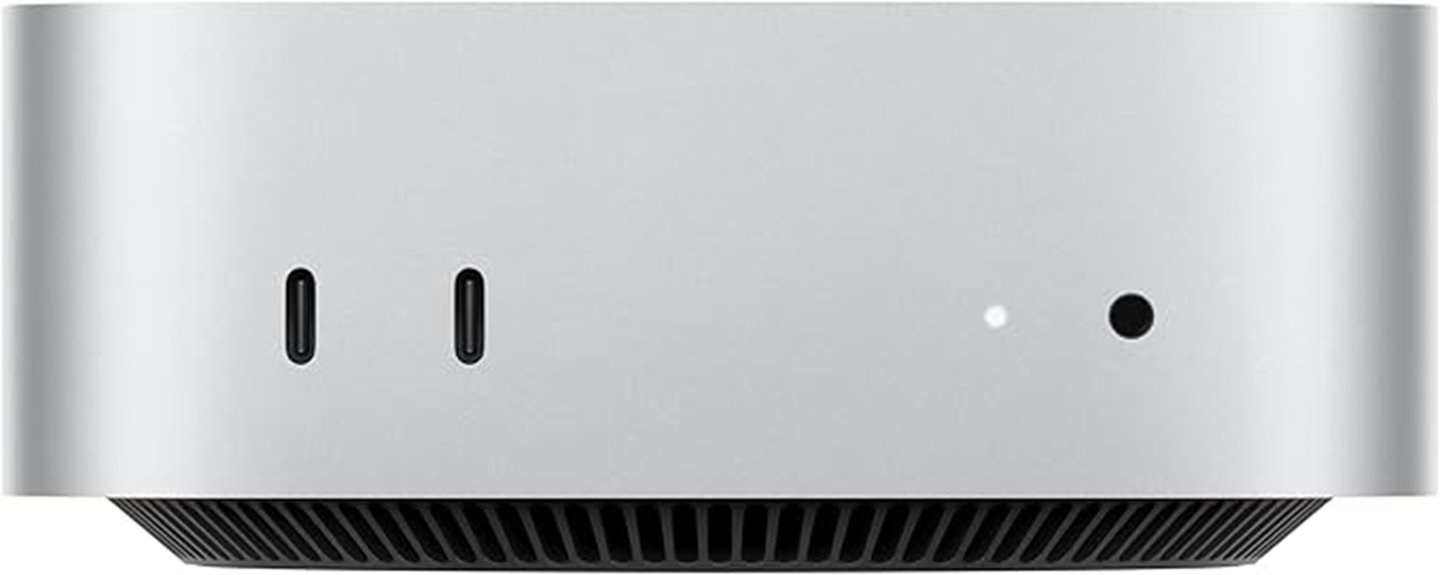
For anyone seeking a compact yet powerful desktop, the 2024 Mac mini with M4 chip stands out as an ideal choice. Its small 5×5-inch size and light 1.5-pound build make it perfect for tight spaces. Despite its size, it delivers impressive performance with a 10-core CPU, 10-core GPU, and a 16-core Neural Engine, boosting AI tasks by 35%. It supports up to three external displays, including 6K and 8K options. Connectivity is extensive, with Thunderbolt 4, USB-C, HDMI, Ethernet, Wi-Fi 6E, and Bluetooth 5.3. This tiny powerhouse handles creative, multitasking, and everyday workflows efficiently, making it a versatile desktop for modern users.
Best For: users seeking a compact, high-performance desktop ideal for creative work, multitasking, and space-conscious setups.
Pros:
- Extremely compact and lightweight design fits easily into any workspace
- Powerful M4 chip with improved CPU, GPU, and AI performance for demanding tasks
- Supports up to three external displays, including 6K and 8K options
Cons:
- Lack of USB-A ports requires adapters for some peripherals
- Power button placement on the bottom may be less intuitive
- Limited base memory may restrict intensive professional workflows
Apple Mac mini Desktop Computer with M4 Pro chip (2024)
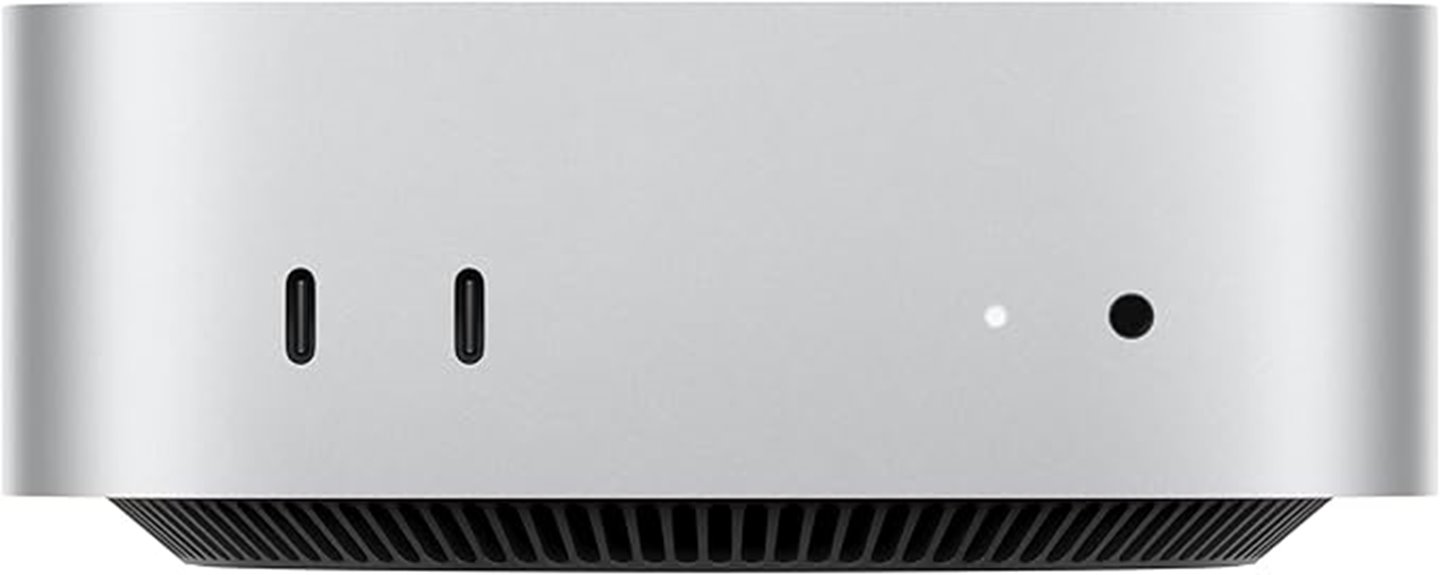
Designed for users who need a compact yet powerful desktop, the Apple Mac mini with M4 Pro chip (2024) packs impressive performance into a tiny footprint. Its sleek aluminum design measures just 5 inches square and weighs about 1.6 pounds, fitting easily next to any monitor. Powered by a 12-core CPU, 16-core GPU, and 24GB of unified memory, it handles demanding tasks like video editing and 3D rendering effortlessly. The device supports three 6K displays or two 8K/4K screens at 240Hz, making multitasking seamless. Despite no USB-A ports, its Thunderbolt 5, HDMI, Ethernet, and USB-C options guarantee versatile connectivity for professional workflows.
Best For: professionals and creative users seeking a compact, powerful desktop capable of handling demanding tasks and multi-display setups.
Pros:
- Compact, lightweight design fits easily into any workspace
- Powerful M4 Pro chip with high-performance CPU and GPU for demanding applications
- Supports up to three high-resolution displays, ideal for multitasking and creative workflows
Cons:
- No USB-A ports; requires adapters or hubs for legacy peripherals
- Non-upgradable RAM and storage in base models limits future expandability
- Power button placement on the bottom may be less intuitive for some users
Factors to Consider When Choosing Mac Studio Configurations
When choosing a Mac Studio configuration, I consider my performance needs, budget, and storage requirements to find the best fit. It’s also important to think about display compatibility and connectivity options to guarantee everything works seamlessly. By weighing these factors, I can select a setup that balances power and practicality for my workflow.
Performance Needs
Choosing the right Mac Studio configuration depends heavily on understanding your performance needs. If your workload involves demanding tasks like 3D rendering or video editing, you’ll want a higher-core CPU to handle intensive processing efficiently. For gaming, 3D modeling, or real-time rendering, GPU capabilities are essential; a more powerful graphics card will make a significant difference. If your work involves large datasets or complex simulations, opting for more RAM—such as 48GB or higher—ensures smooth operation. Additionally, consider whether hardware-accelerated media engines are indispensable for your workflow to enable seamless playback and faster encoding. Matching your performance needs with the available configurations helps you avoid over- or under-provisioning, ensuring peak performance without unnecessary expense.
Budget Constraints
Your performance needs play a big role in selecting the right Mac Studio, but budget constraints often shape those choices just as much. I’ve found that higher-end processors and larger storage options can quickly increase costs, so it’s essential to weigh these features against your budget. Opting for a more affordable configuration might mean sacrificing some performance features or future expandability, which could impact long-term usefulness. Upgrading RAM or storage later can also be costly, so balancing current needs with affordability is key. Keep in mind that lower-tier models may lack advanced connectivity options or media engines, affecting workflows that rely on those features. Establishing a clear budget helps prioritize your essential specifications, ensuring you choose a Mac Studio that fits both your financial limits and your performance goals.
Storage Requirements
How much storage you need depends largely on your typical file sizes and data usage. If you mainly work with documents or smaller projects, 512GB might suffice, but for larger files or extensive media libraries, 1TB or 2TB is more essential. Consider your future needs, especially if you plan to handle 4K video editing or large photo collections, which can quickly consume space. Remember, the internal storage on Mac Studio is non-upgradable, so choose a capacity that will meet your long-term requirements. External storage options like SSDs or network-attached storage are available if needed, but they add complexity and cost. Balancing your storage needs with your budget is vital to avoid running out of space down the line.
Display Compatibility
When evaluating display compatibility for your Mac Studio, it’s essential to guarantee that your setup meets the resolution and refresh rate requirements of your monitors, such as 6K at 60Hz or 8K at 60Hz. Verify that the available video output ports—Thunderbolt 4, HDMI 2.1, or DisplayPort—match your monitors’ input ports. Check whether the Mac Studio supports the number of displays you need, up to three simultaneously. Ensure compatibility with your media workflows by confirming HDR and video decoding support, like Dolby Vision or HDR10+. Additionally, consider whether the GPU hardware acceleration and media engine capabilities can handle your professional creative and video editing tasks efficiently. Proper display compatibility ensures a seamless, high-quality visual experience tailored to your workflow.
Connectivity Options
Choosing the right Mac Studio configuration requires careful consideration of connectivity options to guarantee your workflow runs smoothly. I look for enough Thunderbolt 4 or 5 ports to connect multiple high-speed peripherals and external displays without hassle. An HDMI port is essential if I plan to connect to external monitors or TVs that support HDMI input. Reliable wired network connectivity is vital, so I check for Gigabit or 10Gb Ethernet options. Front-facing USB-C ports are a must for easy access to peripherals, especially when the device is placed in tight spaces. Additionally, I consider whether I need adapters or hubs to support legacy USB-A devices or extra connectivity, ensuring I won’t be limited by built-in ports. These factors help me select a configuration that keeps my workflow seamless and efficient.
Future Upgradability
Since Mac Studio configurations are generally non-upgradable, I know I need to carefully select the right amount of RAM and storage upfront. Once set, these components are soldered onto the motherboard, making upgrades costly or impractical. Because of this, I recommend opting for higher initial capacities to future-proof your setup. If you anticipate increased demands, investing in more RAM and storage now saves headaches later. External drives and peripherals can add storage and expandability, but they don’t replace the need for sufficient internal hardware. Given the limited upgrade options, planning ahead is essential. I focus on estimating my long-term needs accurately, ensuring my Mac Studio configuration remains capable and relevant throughout its lifespan without the need for internal upgrades.
Workspace Size
The size of your workspace plays a critical role in selecting the right Mac Studio configuration. If you have a compact desk, the Mac Studio’s small footprint—about 7.7 by 7.7 inches—fits easily alongside other gear, helping keep your environment tidy. For smaller spaces, its space-efficient design is a major advantage, allowing you to maximize your available area without sacrificing performance. However, if your workspace is larger, you can accommodate multiple devices and accessories, enabling more powerful setups. Just remember to plan for airflow and ventilation, especially in confined areas, since high-performance configurations generate heat. Whether you’re working in a tight corner or a spacious studio, understanding your workspace dimensions helps you choose a Mac Studio setup that’s both comfortable and efficient.
Creative Workload
Your workspace size influences not just how your Mac Studio fits physically, but also how well it handles your creative workload. If you’re working with intensive tasks like 4K video editing or 3D rendering, you’ll need a powerful setup. A higher-core CPU and GPU, such as the M4 Pro with 12-core CPU and 16-core GPU, can drastically cut down rendering and processing times. Ample unified memory—24GB or more—is essential for multitasking and managing large files in apps like Adobe Creative Cloud or Final Cut Pro. Fast storage, like a 1TB or larger SSD, ensures quick access to media and project data, keeping workflows smooth. Additionally, support for multiple high-resolution displays and hardware-accelerated media engines is critical for seamless editing, playback, and visualization of complex projects.
Frequently Asked Questions
How Does the M4 Chip Compare to Previous Mac Mini Processors?
The M4 chip outperforms previous Mac mini processors considerably, offering better speed, efficiency, and power management. I’ve noticed faster app launches, smoother multitasking, and improved graphics performance. It’s a leap forward in processing capabilities, making my workflow more seamless and responsive. If you’re upgrading, the M4 will give you a noticeable boost over older Intel or earlier Apple Silicon chips, ensuring your Mac mini stays future-proof and highly capable.
Can Mac Studio Configurations Be Customized After Purchase?
You can’t customize Mac Studio configurations after purchase, much like trying to change the engine in a sports car once it’s built. I’ve learned this firsthand when upgrading my setup; I had to choose the right specs upfront. Apple’s design emphasizes fixed configurations, so it’s essential to pick the right options initially. If you want flexibility, consider external accessories or future upgrades, but the core specs are locked in.
What Software Optimizations Are Available for High-Performance Mac Studio Setups?
I optimize my high-performance Mac Studio by keeping macOS updated to benefit from the latest improvements. I also prioritize managing startup items to reduce boot times and background processes. Using Activity Monitor helps me identify resource hogs, while adjusting system preferences guarantees maximum efficiency. When needed, I utilize third-party tools for better memory management and system cleanup, ensuring my setup remains fast and responsive for demanding tasks.
How Does RAM Impact Mac Studio Performance for Intensive Tasks?
Think of RAM like a busy highway for your data—more lanes mean smoother traffic. When I run intensive tasks on my Mac Studio, ample RAM prevents bottlenecks, allowing multiple applications and large files to coexist seamlessly. Insufficient RAM forces data to spill over into slower storage, hampering performance. So, investing in plenty of RAM keeps my workflow fluid, especially when tackling demanding projects that require swift data access.
Are There Specific Peripherals Recommended for Optimal Mac Studio Use?
Absolutely, I recommend high-quality peripherals like a 4K or 5K external monitor for crisp visuals, a reliable external SSD for fast data access, and a professional-grade keyboard and mouse for comfort during long sessions. If you’re into creative work, consider a drawing tablet or specialized audio interface. These peripherals enhance productivity and make your Mac Studio experience smoother, especially during intensive tasks.
Conclusion
Ultimately, selecting the perfect Mac Studio configuration comes down to balancing boldness and build. By considering core capabilities, CPU and GPU choices, and creative needs, I’ve found that focusing on functionality fuels future-proof performance. Don’t forget to explore into details and decide what best suits your specific strategies. With the right configuration, you’ll empower your projects, elevate your experience, and enjoy unparalleled power and precision—making every task a true triumph.
Halloween Picks
halloween
As an affiliate, we earn on qualifying purchases.