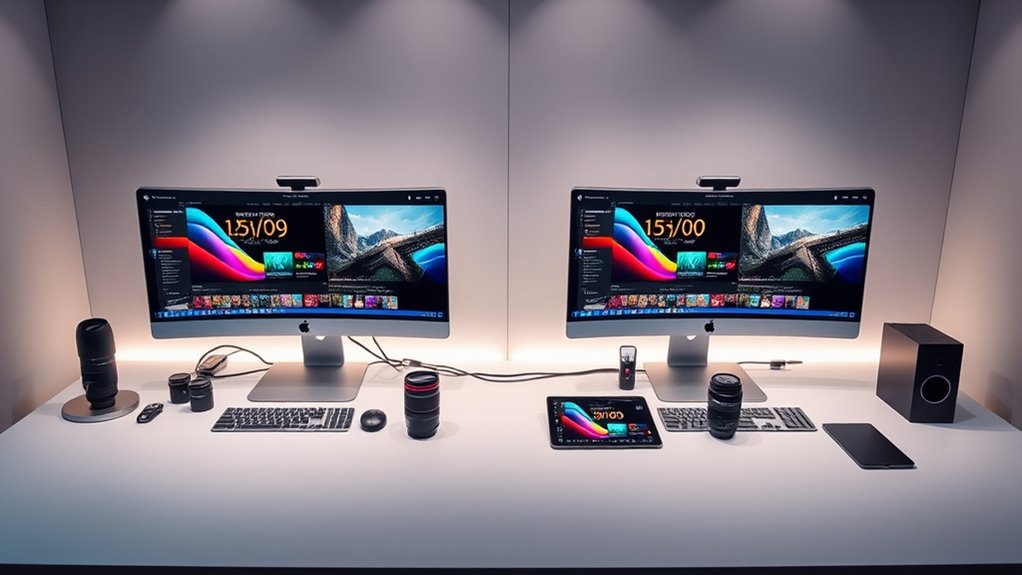

Choosing the right Mac Studio tools for photography workflows can significantly impact your efficiency, creativity, and final results. For 2026, I’ve identified three standout options that cater to different needs. Mac OS X for Photographers offers practical workflow tips tailored for Mac users, making it ideal for those looking to optimize their system. Advanced Macro Photography dives deep into specialized techniques and equipment for macro shooters, perfect for those wanting to expand their technical skills. Lastly, the Adobe Photoshop Lightroom Classic 2026 User Guide provides a comprehensive manual for editing and organizing photos efficiently, suited for digital artists and professionals seeking streamlined workflows. Each choice involves tradeoffs—whether in technical depth, specificity, or scope—so understanding these differences helps in selecting the best fit for your photography needs.
Key Takeaways
- The best options vary based on whether you prioritize workflow optimization, advanced macro techniques, or editing proficiency.
- Practical guides like Mac OS X for Photographers focus on system efficiency but lack detailed technical specs.
- Specialized books such as Advanced Macro Photography cater to niche needs but may be too advanced for beginners.
- The Lightroom user guide is comprehensive but less focused on hardware or technical specifications.
- Understanding your specific workflow needs helps in choosing between productivity, technical, or editing-focused tools.
| Mac OS X for Photographers: Optimized Image Workflow for Mac Users |  | Best Workflow Optimization Guide | Focus: Workflow optimization for Mac OS X | Target Audience: Mac photographers | Format: Book | VIEW ON AMAZON | See Our Full Breakdown |
| Advanced Macro Photography: Techniques, Equipment, and Creativity |  | Best for Niche Technical Mastery | Focus: Advanced macro techniques and equipment | Target Audience: Experienced macro photographers | Format: Book | VIEW ON AMAZON | See Our Full Breakdown |
| Adobe Photoshop Lightroom Classic 2026 User Guide |  | Best for Editing and Workflow Mastery | Coverage: Photo organization, editing, AI tools | Target Audience: Photographers and digital artists | Format: User guide | VIEW ON AMAZON | See Our Full Breakdown |
| mac studio for photography workflow | Target Audience | Format | Focus |
|---|---|---|---|
| Mac OS X for Photographers: Op | Mac photographers | Book | Workflow optimization for Mac OS X |
| Advanced Macro Photography: Te | Experienced macro photographers | Book | Advanced macro techniques and equipment |
| Adobe Photoshop Lightroom Clas | Photographers and digital artists | User guide | — |
More Details on Our Top Picks
Mac OS X for Photographers: Optimized Image Workflow for Mac Users
This book stands out for its practical focus on streamlining photography workflows within Mac OS X. It offers detailed tips on automating tasks, managing files, and integrating Apple’s native apps to boost productivity. Compared with technical software manuals, this resource emphasizes efficiency strategies that any Mac photographer can implement immediately. However, it doesn’t delve into hardware specs or the latest OS updates, which could limit its applicability if newer Mac OS features are not addressed.
Pros:- Provides practical workflow optimization tips
- Focused specifically on Mac OS X relevance
- Enhances productivity through detailed strategies
Cons:- Lacks detailed technical specifications
- May be outdated if not the latest edition
Best for: Photographers seeking to improve their system efficiency and workflow on Mac
Not ideal for: Beginners or those needing technical hardware advice
- Focus:Workflow optimization for Mac OS X
- Target Audience:Mac photographers
- Format:Book
Our verdict“A highly practical resource for Mac photographers wanting to streamline their processes, though limited in technical depth.”
Advanced Macro Photography: Techniques, Equipment, and Creativity
This book is tailored for photographers who want to push their macro skills beyond basics. It explores advanced techniques, specialized equipment, and creative approaches, making it ideal for those already familiar with macro photography who seek to deepen their craft. Compared with general guides, this publication offers more technical depth, but that also makes it less accessible for beginners. Its focus on equipment and advanced techniques means it’s less suitable for casual or beginner photographers.
Pros:- Deep focus on advanced macro techniques
- Covers both equipment and creative methods
- Helps sharpen technical skills for macro work
Cons:- Too advanced for beginners
- Limited scope for general photography workflows
- Limited product details available
Best for: Experienced macro photographers or those aspiring to specialize in close-up work
Not ideal for: Beginners or photographers looking for general workflow advice
- Focus:Advanced macro techniques and equipment
- Target Audience:Experienced macro photographers
- Format:Book
Our verdict“A specialized manual best suited for experienced macro shooters aiming to elevate their craft.”
Adobe Photoshop Lightroom Classic 2026 User Guide
This comprehensive guide covers organizing, editing, and streamlining workflows in Lightroom Classic 2026. It’s ideal for photographers who want a structured approach to managing large photo libraries and applying advanced editing techniques, including AI-based tools. Unlike focused hardware or niche technique books, this manual provides step-by-step instructions that can significantly speed up editing processes. However, it doesn’t specify new features or updates beyond the core software, which might make it less useful for those seeking cutting-edge AI or cloud integration details.
Pros:- Detailed, step-by-step instructions
- Covers photo organization and editing workflows
- Includes guidance on AI tools and automation
Cons:- No specific updates on new features
- Lacks hardware or technical specifications
Best for: Photographers and digital artists focused on editing efficiency and organization
Not ideal for: Those seeking hardware advice or highly technical Lightroom updates
- Coverage:Photo organization, editing, AI tools
- Target Audience:Photographers and digital artists
- Format:User guide
Our verdict“A thorough, workflow-focused manual ideal for photographers looking to master editing and organization in Lightroom.”
How We Picked
To select these products, I evaluated their relevance to photography workflows on a Mac Studio in 2026, focusing on how each aids productivity, technical skill, or editing efficiency. I prioritized resources that offer practical advice, clear guidance, and specialized techniques aligned with current Mac capabilities. I also considered the scope of each resource—whether it’s a broad workflow guide, a niche technical manual, or a comprehensive editing manual—and balanced these against potential limitations like outdated content or complexity for beginners. The goal was to recommend tools and guides that truly enhance a photographer’s experience on a Mac Studio, from system optimization to creative editing.
| mac studio for photography workflow | Focus | Target Audience | Format |
|---|---|---|---|
| Mac OS X for Photographers: Op | Workflow optimization for Mac OS X | Mac photographers | Book |
| Advanced Macro Photography: Te | Advanced macro techniques and equipment | Experienced macro photographers | Book |
| Adobe Photoshop Lightroom Clas | — | Photographers and digital artists | User guide |
Factors to Consider When Choosing Mac Studio For Photography Workflows
Selecting the best Mac Studio setup for your photography workflow depends on what aspect you want to enhance. Are you looking to improve system efficiency, deepen your technical skills, or streamline your editing process? Understanding your primary needs helps narrow down the right tools and resources. This guide breaks down key considerations such as workflow optimization, technical mastery, and editing efficiency, so you can choose the product that best aligns with your photography goals on a Mac Studio in 2026.
Prioritizing Workflow Efficiency
If your main focus is making your Mac environment more productive, a practical guide like Mac OS X for Photographers can be invaluable. It offers actionable tips for automating tasks, managing files, and integrating native Mac tools to save time. However, it’s less suited if you need in-depth technical specs or hardware advice. For those who want to optimize their entire setup without technical distractions, this resource makes a solid choice.
Deepening Technical Skills
For photographers aiming to master advanced techniques, especially in macro photography, Advanced Macro Photography provides the detailed, technical knowledge needed to elevate their craft. This is ideal if you already have a grasp on basic macro work and want to push further. It’s less relevant if you’re a beginner or if your focus is solely on workflow software or editing tools.
Streamlining Editing and Organization
Photographers who want to enhance their editing speed and photo management should consider the Lightroom Classic 2026 User Guide. Its step-by-step instructions help automate repetitive tasks and utilize AI tools for quicker edits. It’s less suitable if you’re looking for hardware advice or the latest software features beyond the core Lightroom updates.
Frequently Asked Questions
What Mac hardware is best suited for photography workflows in 2026?
In 2026, the latest Mac Studio models featuring the M3 Pro or M3 Max chips, ample RAM, and fast SSD storage are ideal for handling large photo libraries and intensive editing tasks. These configurations provide the processing power and memory needed for smooth workflow, especially when working with high-resolution images and multiple applications simultaneously.
Can I rely solely on books and guides for my photography workflow?
While books and guides like those reviewed here are invaluable for learning techniques and strategies, they work best when combined with hands-on experience and practical tools. For a truly optimized workflow, integrating software, hardware, and ongoing education creates the most efficient setup.
Are these resources suitable for beginners?
The Mac OS X for Photographers and Lightroom User Guide can be accessible to beginners willing to invest time in learning. However, Advanced Macro Photography is better suited for experienced photographers, as its technical depth may be overwhelming for newcomers.
How often should I update my workflow resources?
Photography technology and software evolve rapidly, so revisiting your workflow resources annually or with major software updates ensures you stay current with new features, tools, and best practices. This prevents stagnation and helps you leverage the latest advancements in your Mac Studio setup.
What’s the main benefit of using a dedicated guide like Lightroom’s manual?
A dedicated guide provides structured, detailed instructions that can significantly reduce editing time and improve consistency across projects. It helps you master automation, AI tools, and organization techniques, making your workflow more predictable and efficient, especially on a powerful Mac Studio.
Conclusion
If you primarily want to boost your overall system efficiency and workflow on a Mac, Mac OS X for Photographers makes a practical starting point. For those seeking to deepen their technical skills in macro photography, Advanced Macro Photography is the ideal choice. Meanwhile, photographers focused on editing speed and organized workflows should opt for the Lightroom Classic 2026 User Guide. Your specific photography goals and experience level will determine the best resource to elevate your Mac Studio setup in 2026.