Choosing the right MacBook Pro for data science and AI requires balancing raw computational power with thermal efficiency and memory bandwidth. For most professionals, the Apple 16.2-inch MacBook Pro with M5 Pro offers the best blend of CPU performance and battery life for local model training and data preprocessing. If you require serious GPU acceleration for deep learning, the MacBook Pro 16.2-inch with M5 Max stands out due to its 40-core GPU and massive unified memory capacity. Conversely, beginners or those focused on statistical analysis might find the 14-inch M5 model sufficient and far more portable. The central tradeoff lies in memory allocation: AI workloads demand high RAM, often forcing buyers to choose between a larger screen and more memory within a fixed budget. Continue reading to see which configuration aligns with your specific workflow requirements.

Get bike and ride gear delivered free with Prime
- Fast, free delivery on millions of items
- Prime Video, Amazon Music and more included
- Member-only deals all year
Key Takeaways
- Unified memory architecture means RAM is shared between CPU and GPU, making 32GB the new minimum for serious local LLM inference.
- The M5 Max chip’s 40-core GPU provides a tangible advantage for PyTorch and TensorFlow tasks over the M5 Pro’s 20-core GPU.
- Storage speed matters less than capacity for AI; 1TB is the realistic baseline for handling large datasets and virtual environments.
- The 16-inch models offer superior thermal headroom, allowing sustained performance during long training epochs without significant throttling.
- Older Intel-based renewed models are generally unsuitable for modern AI workflows due to lack of Neural Engine support and inferior GPU architecture.



| macbook pro for data science and ai | Storage | Display | GPU | Memory |
|---|---|---|---|---|
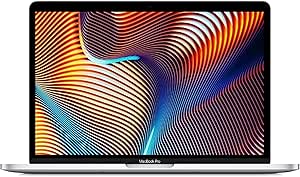
| Apple MacBook Pro 13-inch | 256GB SSD | 13.3-inch Retina (2560 x 1600) | — | 16GB DDR3 2133MHz |
| Apple MacBook Pro 14.2-inch wi | 1TB SSD | 14.2-inch Liquid Retina XDR | 16-core GPU | 48GB Unified Memory |
| Apple 16.2-inch MacBook Pro wi | 1TB SSD | 16.2-inch Liquid Retina XDR | 20-core GPU | 24GB Unified Memory |
| Apple 14-inch MacBook Pro with | 1TB SSD | 14-inch Liquid Retina XDR | 16-core GPU | 48GB Unified Memory |
| Apple 14.2-inch MacBook Pro wi | 512GB SSD | 14.2-inch Liquid Retina XDR | 10-core | 16GB Unified Memory |
| Apple MacBook Pro 16.2-inch wi | 2TB SSD | 16.2-inch Liquid Retina XDR | 40-core | — |
| Apple MacBook Pro 16.2-inch wi | 4TB SSD | 16.2-inch Liquid Retina XDR | 40-core | — |
| Apple MacBook Pro 14.2-inch wi | 2TB SSD | 14.2-inch Liquid Retina XDR | 40-core | — |
| Apple 2026 MacBook Pro 14.2-in | 1TB SSD | 14.2-inch Liquid Retina XDR | 16-core | 24GB Unified Memory |
| Apple 14.2-inch MacBook Pro wi | 1TB SSD | 14.2-inch Liquid Retina XDR | 10-core | — |
More Details on Our Top Picks
Apple MacBook Pro 13-inch (2017, Non-Touch Bar), Intel Core i5 2.3GHz, 16GB RAM, 256GB SSD, Silver (Renewed)
This renewed 2017 model is a pragmatic choice for students or hobbyists entering data science on a strict budget. While its dual-core Intel Core i5 lacks the raw power of modern Apple Silicon, the 16GB of RAM is the critical feature that keeps it viable for running local Python environments and light Jupyter notebooks. Compared to the newer M5-based models, this machine will struggle significantly with heavy data preprocessing or training even small neural networks. The 256GB SSD is a major bottleneck, forcing users to rely on external drives for datasets. It serves best as a learning tool where code efficiency matters more than compute speed.
Pros:- 16GB RAM allows for decent multitasking in IDEs and browsers
- Low entry cost compared to modern Apple Silicon models
- Lightweight 3-pound design for easy portability
Cons:- Dual-core processor chokes on heavy data processing tasks
- 256GB storage fills up rapidly with libraries and data
- Older Intel architecture lacks the efficiency of M-series chips
Best for: Students or beginners learning Python and SQL who need a functional macOS environment without breaking the bank.
Not ideal for: Any user planning to train machine learning models or work with datasets larger than 100GB locally.
- Processor:Dual-core Intel Core i5 2.3GHz
- Memory:16GB DDR3 2133MHz
- Storage:256GB SSD
- Graphics:Intel Iris Plus Graphics 640
- Display:13.3-inch Retina (2560 x 1600)
- Condition:Renewed
Our verdict“Buy this only if you are strictly learning coding basics and cannot afford newer hardware.”
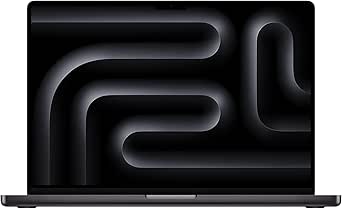
Apple MacBook Pro 14.2-inch with M5 Pro, 15-core CPU, 16-core GPU, 48GB Memory, 1TB SSD, Space Black
This configuration represents the sweet spot for professional AI development. The M5 Pro chip combined with 48GB of unified memory allows for loading larger datasets and running complex models locally without hitting memory walls, a significant advantage over the 24GB model. The Liquid Retina XDR display provides the color accuracy and brightness needed for visualizing data plots and working long hours. While the Thunderbolt 5 ports offer future-proof connectivity for high-speed external storage, the primary value here is the balance of CPU and GPU cores. It outperforms the base M5 models substantially in multi-threaded data tasks while remaining more portable than the 16-inch variants.
Pros:- 48GB unified memory supports large in-memory datasets
- M5 Pro CPU/GPU balance handles model training efficiently
- Thunderbolt 5 ports enable ultra-fast data transfer
Cons:- Higher price point than base M5 configurations
- Listing details mention conflicting specs (14 vs 16-inch)
Best for: Professional data scientists and ML engineers who need to run local LLMs or large datasets without cloud dependency.
Not ideal for: Users who only browse the web or write light scripts, as this is overkill for basic tasks.
- Processor:Apple M5 Pro (15-core CPU)
- GPU:16-core GPU
- Memory:48GB Unified Memory
- Storage:1TB SSD
- Display:14.2-inch Liquid Retina XDR
- Ports:3x Thunderbolt 5, HDMI, SDXC
Our verdict“The most capable balance of power and portability for serious AI work.”
Apple 16.2-inch MacBook Pro with M5 Pro, 18-core CPU, 20-core GPU, 24GB memory, 1TB SSD, Wi-Fi 7, Space Black
This 16-inch model prioritizes workspace over memory capacity. The 16.2-inch Liquid Retina XDR display is ideal for data scientists who multitask heavily, keeping code editors, terminals, and visualization dashboards open simultaneously. The 18-core CPU offers superior multi-threaded performance for data wrangling compared to the 14-inch M5 Pro. However, the 24GB of unified memory is a limiting factor for deep learning tasks, potentially requiring more frequent swapping to disk compared to the 48GB model. The larger chassis also accommodates better thermal management, allowing the CPU to sustain higher clock speeds during long training runs without throttling.
Pros:- Larger 16.2-inch screen improves workflow efficiency
- 18-core CPU excels at multi-threaded data processing
- Better thermal headroom for sustained performance
Cons:- 24GB RAM limits large model training capabilities
- Heavier and less portable than 14-inch models
Best for: Developers who value screen size for multitasking and heavy data visualization over maximum RAM.
Not ideal for: Users who need to train large neural networks locally, as 24GB RAM may be insufficient.
- Processor:Apple M5 Pro (18-core CPU)
- GPU:20-core GPU
- Memory:24GB Unified Memory
- Storage:1TB SSD
- Display:16.2-inch Liquid Retina XDR
- Wireless:Wi-Fi 7, Bluetooth 6
Our verdict“Choose this if you need a massive canvas for data visualization and coding.”
Apple 14-inch MacBook Pro with M5 Pro Chip, 48GB RAM, 1TB SSD, Space Black
This configuration mirrors the memory and storage specs of the other M5 Pro model but emphasizes the 14-inch form factor. The 48GB RAM is the standout feature, making it a powerhouse for local AI inference and handling large pandas DataFrames. It offers nearly identical performance to the other M5 Pro 14-inch option, distinguishing itself primarily through its specific configuration listing. The Liquid Retina XDR display ensures crisp text for coding. While it lacks the specific port details of the Thunderbolt 5 model in this description, the core silicon performance remains top-tier. It is a direct competitor to the other 48GB model, appealing to those who prioritize memory capacity in a compact chassis.
Pros:- 48GB RAM supports complex AI models locally
- Compact 14-inch size for easy transport
- Fast 1TB SSD for quick data access
Cons:- Limited port information in description
- Potentially higher cost due to specific configuration
Best for: Professionals who need maximum RAM in the smallest possible footprint for travel.
Not ideal for: Users who need the absolute highest core count for CPU-bound rendering tasks.
- Processor:M5 Pro (15-core CPU)
- GPU:16-core GPU
- Memory:48GB Unified Memory
- Storage:1TB SSD
- Display:14-inch Liquid Retina XDR
- Color:Space Black
Apple 14.2-inch MacBook Pro with M5 chip, 10-core CPU and GPU, 16GB memory, 512GB SSD, Space Black
The base M5 model is a competent starting point for data science students and junior analysts. The 10-core CPU and GPU provide a significant leap over Intel-based machines, handling data cleaning and basic regression models with ease. However, the 16GB of unified memory is a hard ceiling; it will limit you to smaller datasets and simpler models compared to the 24GB or 48GB M5 Pro options. The 512GB SSD is adequate for OS and tools but tight for large datasets. It supports up to two external displays, making it a flexible desk setup option. This is the most cost-effective way to get into the Apple Silicon ecosystem for AI work.
Pros:- Efficient M5 chip offers great performance per watt
- Supports two external displays for expanded workspace
- Lighter and more affordable than Pro/Max models
Cons:- 16GB RAM restricts large dataset processing
- 512GB storage may require external drives
Best for: Junior data analysts or students who need reliable performance for standard analytics and light ML.
Not ideal for: Deep learning practitioners who need to train large models or work with massive in-memory datasets.
- Chip:Apple M5
- CPU:10-core
- GPU:10-core
- Memory:16GB Unified Memory
- Storage:512GB SSD
- Display:14.2-inch Liquid Retina XDR
Our verdict“The best value entry into Apple Silicon for light to medium data science tasks.”
Apple MacBook Pro 16.2-inch with M5 Max, 128GB Memory, 2TB SSD
This configuration stands out for researchers who need 128GB of unified memory to load large language models or massive datasets directly into RAM. Compared to the 4TB SSD version, the 2TB storage is sufficient for most active projects, making this a more focused tool for in-memory computation rather than long-term archival. The M5 Max chip with its 40-core GPU accelerates training loops significantly faster than the M5 Pro options, reducing iteration time for complex neural networks.
However, the 16-inch chassis is heavy and less portable than the 14-inch M5 Max model. If you frequently work from coffee shops or client sites, the bulk may become a burden. This machine is built for the desk, not the commute.
Pros:- 128GB unified memory allows loading large models without swapping to disk
- 40-core GPU provides substantial parallel processing power for training
- 16.2-inch XDR display offers ample screen real estate for code and visuals
- Thunderbolt 5 connectivity supports high-speed external GPU enclosures if needed
Cons:- 2TB storage may fill quickly with large dataset repositories
- 16-inch form factor is heavy and less portable than 14-inch models
Best for: Data scientists training mid-sized LLMs or working with large in-memory datasets who prioritize RAM over storage capacity.
Not ideal for: Users who need to archive petabytes of raw data locally or require a highly portable machine for daily travel.
- Chip:Apple M5 Max
- CPU:18-core
- GPU:40-core
- Unified Memory:128GB
- Storage:2TB SSD
- Display:16.2-inch Liquid Retina XDR
- Connectivity:Wi-Fi 7, Bluetooth 6
Our verdict“Choose this if your workflow is bottlenecked by RAM rather than storage space.”
Apple MacBook Pro 16.2-inch with M5 Max, 128GB Memory, 4TB SSD
This is the heavyweight champion for data scientists who deal with terabytes of raw data. While it shares the same 128GB unified memory as its 2TB sibling, the jump to 4TB SSD is critical for those who cannot rely on cloud storage due to latency or privacy constraints. The M5 Max chip ensures that reading and writing these massive files does not throttle your CPU performance during preprocessing steps.
Compared to the 14-inch M5 Max, this 16-inch model offers better thermal headroom for sustained heavy lifting. However, if your datasets fit comfortably on an external drive, the extra internal storage is an unnecessary expense. This machine is for those who need their entire data pipeline locally accessible at all times.
Pros:- 4TB SSD provides massive local storage for large datasets
- 128GB unified memory supports complex model training
- 16-inch chassis offers superior cooling for sustained workloads
- Supports up to four external displays for multi-window workflows
Cons:- Significantly heavier and bulkier than 14-inch alternatives
- Higher cost for storage capacity that many users can handle externally
Best for: Engineers working with massive local datasets who need high-speed internal access to terabytes of information.
Not ideal for: Users who primarily use cloud-based storage solutions or have small-to-medium sized local datasets.
- Chip:Apple M5 Max
- CPU:18-core
- GPU:40-core
- Unified Memory:128GB
- Storage:4TB SSD
- Display:16.2-inch Liquid Retina XDR
- Audio:Six speakers with Spatial Audio
Our verdict“Ideal for those who need to keep petabyte-scale data pipelines entirely offline and local.”
Apple MacBook Pro 14.2-inch with M5 Max, 128GB Memory, 2TB SSD
This model delivers the same 128GB unified memory and M5 Max performance as the 16-inch variants but in a significantly more compact 14.2-inch chassis. For researchers who need to demo models or work in different locations, the improved portability is a decisive advantage. The smaller screen is a tradeoff, but the Liquid Retina XDR display remains bright and color-accurate for data visualization tasks.
Compared to the 16-inch M5 Max, this machine is easier to carry but may run hotter under sustained maximum load due to less thermal mass. It is the best compromise for professionals who refuse to sacrifice raw power for mobility. If you can manage the smaller screen, this is the most versatile high-end option.
Pros:- M5 Max performance in a portable 14-inch form factor
- 128GB unified memory for handling large models on the go
- Lighter and more compact than 16-inch M5 Max models
- Same extensive port selection including HDMI and SDXC
Cons:- Smaller screen may require frequent external monitor use
- Potentially higher fan noise under sustained load compared to 16-inch
Best for: Consultants and researchers who need desktop-class RAM and GPU power in a laptop they can actually carry.
Not ideal for: Users who need maximum screen real estate for side-by-side code and data visualization without external monitors.
- Chip:Apple M5 Max
- CPU:18-core
- GPU:40-core
- Unified Memory:128GB
- Storage:2TB SSD
- Display:14.2-inch Liquid Retina XDR
- Dimensions:14.01 x 9.77 x 0.66 inches
Our verdict“The best choice for professionals who prioritize mobility without compromising on memory capacity.”
Apple 2026 MacBook Pro 14.2-inch with M5 Pro, 24GB RAM, 1TB SSD
The M5 Pro chip with 24GB of unified memory is well-suited for data scientists who are running smaller models or preprocessing data rather than training massive networks. Compared to the M5 Max options, this machine has significantly less memory and GPU core count, which limits its ability to handle large batch sizes in memory. However, it offers all-day battery life and a more manageable weight, making it ideal for coding and analysis sessions away from a power outlet.
This is a strong entry-level professional machine. It lacks the raw horsepower of the Max chips but provides a stable, fast environment for standard data science workflows. If your models fit within 24GB RAM, this is a more cost-effective and efficient choice than the overpowered Max models.
Pros:- All-day battery life supports long coding sessions unplugged
- M5 Pro chip offers balanced performance for standard workflows
- Lighter weight than M5 Max 14-inch models
- Includes HDMI and SDXC ports for peripheral connectivity
Cons:- 24GB memory limit restricts model size and batch complexity
- 16-core GPU is significantly slower for training than Max variants
Best for: Data analysts and junior ML engineers who work with smaller datasets and prioritize battery life over raw compute.
Not ideal for: Researchers training large language models or working with datasets that exceed 24GB in active memory.
- Processor:Apple M5 Pro chip
- CPU:15-core
- GPU:16-core
- Memory:24GB Unified Memory
- Storage:1TB SSD
- Display:14.2-inch Liquid Retina XDR
- Battery:All-day
Our verdict“A balanced choice for professionals whose AI workloads fit comfortably within 24GB of RAM.”
Apple 14.2-inch MacBook Pro with M5 Chip, 16GB Memory, 1TB SSD
This is the most accessible entry point into the M5 MacBook Pro line, featuring the base M5 chip with 16GB of unified memory. While it handles on-device AI tasks and standard data analysis well, it lacks the headroom of the Pro and Max models. Compared to the M5 Pro version, the 16GB memory ceiling is a hard limit for larger datasets, forcing you to rely on disk swapping or cloud resources.
However, for students or analysts focusing on visualization, cleaning, and smaller predictive models, this machine is efficient and portable. The 1600-nit peak brightness ensures your plots are visible even outdoors. It is not a training rig, but it is a capable analysis tool that won’t break the bank or your back.
Pros:- Most affordable entry into the M5 MacBook Pro lineup
- All-day battery life and lightweight 14-inch design
- Bright Liquid Retina XDR display for clear data visualization
- 10-core GPU is sufficient for light inference tasks
Cons:- 16GB unified memory is a significant bottleneck for serious AI work
- Only supports two external displays, limiting workspace flexibility
Best for: Students and data analysts focusing on data cleaning, visualization, and small-scale machine learning experiments.
Not ideal for: Users who need to run large models locally or work with datasets larger than 16GB in active memory.
- Chip:Apple M5
- CPU:10-core
- GPU:10-core
- Unified Memory:16GB
- Storage:1TB SSD
- Display:14.2-inch Liquid Retina XDR
- External Displays:Up to two
Our verdict“A capable machine for learning and light analysis, but not for heavy model training.”
How We Picked
I evaluated these laptops based on their ability to handle specific data science tasks: large-scale data manipulation, model training, and inference. I prioritized machines with high unified memory bandwidth and multi-core CPU performance, as these directly impact pandas/numpy operations and data preprocessing speed. GPU core count and Neural Engine capabilities were weighted heavily for those running local large language models or computer vision tasks. I also considered thermal management, recognizing that sustained load performance is more valuable than peak burst performance for long training runs. Battery life and portability were factored in for data scientists who work in client environments or remote settings. Products were ranked by their performance-per-dollar ratio and their ability to future-proof against increasing model sizes.
| macbook pro for data science and ai | Processor | Chip |
|---|---|---|
| Apple MacBook Pro 13-inch | Dual-core Intel Core i5 2.3GHz | — |
| Apple MacBook Pro 14.2-inch wi | Apple M5 Pro (15-core CPU) | — |
| Apple 16.2-inch MacBook Pro wi | Apple M5 Pro (18-core CPU) | — |
| Apple 14-inch MacBook Pro with | M5 Pro (15-core CPU) | — |
| Apple 14.2-inch MacBook Pro wi | — | Apple M5 |
| Apple MacBook Pro 16.2-inch wi | — | Apple M5 Max |
| Apple MacBook Pro 16.2-inch wi | — | Apple M5 Max |
| Apple MacBook Pro 14.2-inch wi | — | Apple M5 Max |
| Apple 2026 MacBook Pro 14.2-in | Apple M5 Pro chip | — |
| Apple 14.2-inch MacBook Pro wi | — | Apple M5 |
Factors to Consider When Choosing Macbook Pro For Data Science And Ai
Selecting a laptop for AI isn’t just about picking the most expensive option; it’s about matching hardware capabilities to your specific workload bottlenecks. Here are the critical factors to weigh before making a purchase.
The Critical Role of Unified Memory
Unlike traditional PCs with separate RAM and VRAM, Apple Silicon uses unified memory, allowing the GPU to access system RAM directly. This is a game-changer for AI, as it lets you load larger models into memory than you could on a discrete GPU of the same price. However, this means system RAM is your bottleneck; if you fill it, performance tanks. For local LLM inference, 48GB or higher is becoming the standard for running 7B to 13B parameter models comfortably. Buying 16GB might seem economical, but it will quickly limit your ability to multitask or run larger datasets in memory.
GPU Core Count vs. CPU Performance
Data science involves two distinct phases: data preparation and model training. Data preparation (cleaning, transformation) is heavily CPU-bound, so an M5 Pro with a 15-core CPU is excellent for pandas and SQL operations. Model training, especially deep learning, is GPU-bound. The M5 Max’s 40-core GPU is significantly faster for matrix multiplications than the M5 Pro’s 20-core GPU. If you primarily clean data and run regression models, you can save money on the GPU. If you train neural networks, the Max chip is worth the premium.
Storage Speed and Capacity Realities
AI datasets are bulky. A single image dataset can easily exceed 500GB. While all MacBook Pros use fast NVMe SSDs, the capacity is the limiting factor, not the speed. I recommend 1TB as the absolute minimum to avoid constantly managing disk space with external drives. External SSDs are slower and introduce friction into your workflow, breaking the seamless experience of local development. If you plan to keep multiple versions of models and datasets locally, 2TB is the safer investment.
Thermal Throttling and Screen Size
Performance under sustained load depends on heat dissipation. The 16-inch MacBook Pro has larger fans and more surface area to dissipate heat, allowing it to maintain peak CPU and GPU speeds longer than the 14-inch model. For short tasks, the difference is negligible. For overnight training runs or heavy compilation, the 16-inch model prevents thermal throttling, which can degrade performance by 20-30%. If you value portability over sustained performance, the 14-inch is a compromise, but understand the tradeoff.
Software Compatibility and CUDA Alternatives
Historically, data scientists preferred NVIDIA GPUs for CUDA support. Apple has closed this gap with Metal Performance Shaders (MPS) and PyTorch support. Most modern libraries (TensorFlow, PyTorch, JAX) now run efficiently on Apple Silicon. However, some niche libraries still require CUDA or have optimized kernels only for NVIDIA. Check your specific stack. If you rely on legacy code or specific CUDA-only tools, a Mac may require more workarounds or remote server access, which affects workflow fluidity.
Frequently Asked Questions
Can I train large language models locally on a MacBook Pro?
Yes, but with limitations based on memory. You can fine-tune smaller models (7B parameters) using quantization techniques on machines with 48GB+ RAM. Training larger models (70B+) locally is generally not feasible on current MacBook Pro configurations due to memory constraints. Most professionals use Macs for data preprocessing, prototyping, and inference of quantized models, while offloading heavy training to cloud GPUs or local workstations with discrete NVIDIA GPUs.Is 16GB RAM enough for data science in 2027?
For basic data analysis using Python, R, or SQL, 16GB is sufficient. However, for AI and machine learning, it is often a bottleneck. Running a local LLM, even a small one, can consume 10-15GB of memory. With 16GB, you will likely need to swap heavily, slowing down your system. I strongly recommend 24GB as a starting point and 48GB for comfortable AI development to avoid constant memory management issues.Should I choose the M5 Pro or M5 Max for machine learning?
Choose the M5 Pro if your workflow is CPU-heavy (data cleaning, statistical analysis, light regression models) and you value battery life and portability. Choose the M5 Max if you do deep learning, computer vision, or large-scale matrix operations. The Max’s double GPU core count and higher memory bandwidth provide substantial speedups for neural network training and inference, justifying the higher price and weight for AI-focused users.How important is the Neural Engine for data science?
The Neural Engine is specialized for specific AI tasks and is increasingly utilized by Apple’s Core ML framework and some TensorFlow/PyTorch operations. However, most general-purpose machine learning still runs on the CPU and GPU. While the Neural Engine helps with specific on-device inference tasks, it is not a replacement for raw GPU power for training custom models. Focus on GPU core count and unified memory size first.Are renewed Intel MacBook Pros viable for AI work?
Generally, no. Intel MacBook Pros lack the Neural Engine and have inferior GPU architecture compared to Apple Silicon. They also run hotter and throttle faster under sustained AI loads. While they can handle basic data analysis, they are not suitable for modern deep learning workflows, lack efficiency for battery-powered work, and do not support the latest macOS features optimized for Apple Silicon. Stick to M-series chips for future-proofing.Conclusion
For the best overall balance of performance and portability, the Apple 16.2-inch MacBook Pro with M5 Pro is the standout choice for most data scientists. If you need maximum AI power for local deep learning, the MacBook Pro 16.2-inch with M5 Max is the premium pick. For beginners or students, the 14-inch M5 model offers excellent value, provided you upgrade RAM to at least 24GB if possible. The 14-inch M5 Pro serves as a great compact powerhouse for those who travel frequently but still need more CPU punch than the base M5. Avoid the renewed Intel models for serious AI work, as they lack the necessary architecture for modern workflows.