For most hikers, I’d start with the Salomon Quest 4 GTX: its supportive build suits demanding trails and heavier loads. The Asolo TPS 520 GV Evo is a more structured choice for serious backpacking, while the Salomon X Ultra 5 Mid GTX favors a lighter, more agile feel. Premium hiking boots differ most in stiffness, weight, durability, and how much support they offer under a loaded pack. A rugged boot can feel excessive on easy day hikes, while a lighter model may not provide enough structure for rough terrain. Read on for the full comparison and guidance on choosing the right tradeoff.

Get bike and ride gear delivered free with Prime
- Fast, free delivery on millions of items
- Prime Video, Amazon Music and more included
- Member-only deals all year
Key Takeaways
- The Salomon Quest 4 GTX leads for demanding backpacking: it is the roundup’s strongest match for hikers who want substantial support and waterproof protection on rough, loaded outings.
- Asolo’s TPS 520 GV Evo models favor structure over agility: they suit hikers seeking a more substantial backpacking boot, but are less appealing if low weight and a quick, flexible feel matter most.
- The Salomon X Ultra 5 Mid GTX fills the lighter-duty gap: it offers a more agile direction than the Quest, making it a better fit for fast day hikes and moderate trails than heavy loads.
- The lineup spans a wide range of intended use: La Sportiva Makalu is the mountaineering-oriented outlier, while Columbia Newton Ridge Plus II, Transverse Hike, and the NORTIV 8 options target less demanding hiking needs.
- Several familiar brands offer distinct value alternatives: Timberland, Columbia, KEEN, Danner, and Ariat choices make more sense when fit, comfort, or general trail use matter more than maximum backpacking structure.
| Timberland Men’s Mt. Maddsen Hiking Waterproof Boots |  | Best Overall for Everyday Hiking | Sole material: Rubber | Shaft height: Ankle | Shaft circumference: 9.5 inches | VIEW ON AMAZON | See Our Full Breakdown |
| Asolo Men’s TPS 520 GV Evo Wide Boots |  | Best for Demanding Backpacking | Fabric type: Full-grain leather | Waterproof protection: GORE-TEX lining | Upper material: Water-resistant full-grain leather | VIEW ON AMAZON | See Our Full Breakdown |
| NORTIV 8 Men’s Ankle High Waterproof Hiking Boots |  | Best Lightweight Pick | Sole material: EVA and rubber | Shaft height: Ankle | Shaft circumference: 29.4 centimeters | VIEW ON AMAZON | See Our Full Breakdown |
| Salomon X Ultra 5 Mid GTX |  | Best for Lateral Stability | Sole material: Rubber | Outer material: Leather | Inner material: Leather | VIEW ON AMAZON | See Our Full Breakdown |
| Timberland Men’s White Ledge Mid Waterproof Hiking Boots | 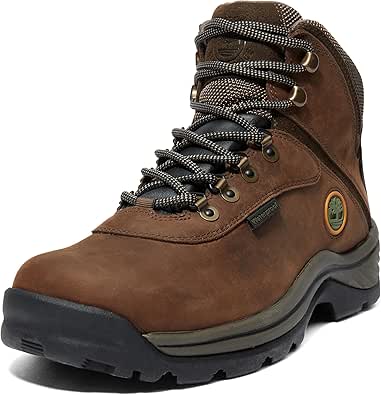 | Best for Simple Wet-Weather Outings | Shaft height: Ankle | Shaft circumference: 9.75 inches | Upper material: Waterproof Timberland leather | VIEW ON AMAZON | See Our Full Breakdown |
| Columbia Men’s Newton Ridge Plus II Waterproof Hiking Shoe |  | Best Lightweight All-Rounder | Sole material: Rubber | Shaft height: Ankle | Shaft circumference: 1 inch | VIEW ON AMAZON | See Our Full Breakdown |
| Salomon Quest 4 GTX® |  | Best for Long-Distance Backpacking Comfort | Sole material: Rubber | Shaft height: Ankle | Shaft circumference: 10.5 inches | VIEW ON AMAZON | See Our Full Breakdown |
| KEEN Men’s Targhee 4 Mid Height Waterproof Hiking Boots |  | Best for Rough, Wet Trails | Shaft height: Mid height | Shaft circumference: 8.66 inches | Waterproof: Yes | VIEW ON AMAZON | See Our Full Breakdown |
| NORTIV 8 Men’s Waterproof PRO Hiking Boots |  | Best Lightweight High-Top Support | Sole material: EVA and rubber | Shaft height: Ankle | Shaft circumference: 12.5 inches | VIEW ON AMAZON | See Our Full Breakdown |
| La Sportiva Makalu Mountaineering and Hiking Boots |  | Best for Mountaineering and Resoleable Durability | Origin: Made in USA or imported | Sole material: Rubber | Closure: Lace-up | VIEW ON AMAZON | See Our Full Breakdown |
| Asolo Men’s TPS 520 GV Evo Waterproof Round Toe Backpacking Boots |  | Best for Demanding Backpacking | Upper material: Full-grain leather | Waterproofing: GORE-TEX Performance Comfort | Sole material: Rubber | VIEW ON AMAZON | See Our Full Breakdown |
| Timberland Men’s Flume Mid Waterproof Hiking Boot |  | Best for Straightforward All-Season Hiking | Upper material: Waterproof Timberland leather | Sole material: Rubber | Shaft height: Mid (ankle) | VIEW ON AMAZON | See Our Full Breakdown |
| Danner Mountain 600 Men’s Hiking Boots |  | Best for Wet-Trail Grip | Outer material: Leather | Waterproofing: Danner Dry barrier | Sole material: Leather | VIEW ON AMAZON | See Our Full Breakdown |
| Columbia Men’s Transverse Hike Waterproof |  | Best Lightweight-Feel Option | Sole material: Rubber | Shaft height: Ankle | Shaft circumference: 1 inch | VIEW ON AMAZON | See Our Full Breakdown |
| Ariat Men’s Terrain H2O Hiking Boot |  | Best for Hiking and Ranch Work | Fabric type: 100% leather | Origin: Imported | Sole material: Rubber | VIEW ON AMAZON | See Our Full Breakdown |
| premium hiking boot | Sole material | Shaft height | Shaft circumference |
|---|---|---|---|
| Timberland Men’s Mt. Maddsen H | Rubber | Ankle | 9.5 inches |
| Asolo Men’s TPS 520 GV Evo Wid | Rubber | — | — |
| NORTIV 8 Men’s Ankle High Wate | EVA and rubber | Ankle | 29.4 centimeters |
| Salomon X Ultra 5 Mid GTX | Rubber | — | — |
| Timberland Men’s White Ledge M | — | Ankle | 9.75 inches |
| Columbia Men’s Newton Ridge Pl | Rubber | Ankle | 1 inch |
| Salomon Quest 4 GTX® | Rubber | Ankle | 10.5 inches |
| KEEN Men’s Targhee 4 Mid Heigh | — | Mid height | 8.66 inches |
| NORTIV 8 Men’s Waterproof PRO | EVA and rubber | Ankle | 12.5 inches |
| La Sportiva Makalu Mountaineer | Rubber | — | — |
| Asolo Men’s TPS 520 GV Evo Wat | Rubber | Ankle | 13 inches |
| Timberland Men’s Flume Mid Wat | Rubber | Mid (ankle) | 9.25 inches |
| Danner Mountain 600 Men’s Hiki | Leather | Ankle | — |
| Columbia Men’s Transverse Hike | Rubber | Ankle | 1 inch |
| Ariat Men’s Terrain H2O Hiking | Rubber | Ankle-high | — |
More Details on Our Top Picks
Timberland Men’s Mt. Maddsen Hiking Waterproof Boots
The Mt. Maddsen is my balanced pick for hikers who want waterproof leather and cushioning without the more technical build of the Asolo TPS 520 GV Evo Wide. Its waterproof Timberland leather and fully gusseted tongue help keep water and trail debris out, while the removable anti-fatigue footbed adds comfort for full days on moderate trails. A secure lace-up fit makes it adaptable across different socks and conditions. The tradeoff is weight: this boot may feel cumbersome to hikers who prioritize a light, nimble stride, and the listed details do not offer the Asolo’s GORE-TEX lining, Vibram outsole, or backpacking-focused support. I’d choose it for routine hikes and wet-weather outings, not demanding technical routes where a more specialized boot is a better match.
Pros:- Waterproof leather upper and gusseted tongue help block moisture and debris.
- Removable anti-fatigue footbed supports comfort on long days.
- Lace-up design allows a secure, adjustable fit.
- ReBOTL fabric lining adds a durable lining material.
Cons:- May feel heavy compared with lighter hiking footwear.
- Less specifically equipped for technical backpacking than the Asolo TPS 520 GV Evo Wide.
- Limited color options may restrict style choice.
Best for: Hikers seeking a waterproof leather boot with cushioned support for day hikes and regular outdoor use.
Not ideal for: Fast-moving hikers and backpackers tackling technical terrain who want a lighter boot or more specialized traction and support.
- Sole material:Rubber
- Shaft height:Ankle
- Shaft circumference:9.5 inches
- Upper material:Waterproof Timberland leather
- Lining:ReBOTL fabric
- Tongue:Fully gusseted
- Footbed:Removable anti-fatigue
- Closure:Lace-up
Our verdict“Choose the Mt. Maddsen for comfortable, waterproof support on everyday hikes; pick the Asolo TPS 520 GV Evo Wide for more demanding backpacking terrain.”
Asolo Men’s TPS 520 GV Evo Wide Boots
For long-distance routes and technical ground, I rank the Asolo TPS 520 GV Evo Wide above the more everyday-oriented Timberland Mt. Maddsen. Its full-grain leather upper, GORE-TEX lining, protective toe cap, and Vibram outsole form a more substantial package for carrying a pack and handling rough trails. The dual-density PU midsole and anatomical Lite 2 footbed are aimed at support and shock absorption over extended miles, rather than a soft, flexible feel on casual walks. That added structure comes with real costs: the boot may feel heavy, its lace-up fit can need adjustment, and it is less suited to hikers who want an easygoing, lightweight option. I’d select it when durability and protection matter more than quick break-in or low weight.
Pros:- Full-grain leather construction is suited to demanding, repeated trail use.
- GORE-TEX lining provides waterproof protection.
- Vibram outsole with Triple Power Structure supports traction and shock absorption.
- Dual-density PU midsole and anatomical footbed add structure for long hikes.
Cons:- Heavier build may tire hikers who prefer lightweight footwear.
- Laces may need frequent adjustment to maintain a comfortable fit.
- More boot than casual hikers need for short, easy trails.
Best for: Experienced backpackers and hikers who carry loads over long distances on rough or technical terrain and want a wide-fit option.
Not ideal for: Casual day hikers or fast-and-light walkers who favor low weight, easy flexibility, and minimal setup.
- Fabric type:Full-grain leather
- Waterproof protection:GORE-TEX lining
- Upper material:Water-resistant full-grain leather
- Insole:Lite 2 footbed with anatomical construction
- Midsole:Dual-density PU
- Outsole:Vibram with Triple Power Structure
- Toe cap:Rubber
- Sole material:Rubber
Our verdict“Choose the Asolo for long, loaded hikes and technical terrain, but opt for the Mt. Maddsen if you want a more everyday-focused boot.”
NORTIV 8 Men’s Ankle High Waterproof Hiking Boots
The NORTIV 8 Ankle High is the lighter, more flexible alternative in this group, making it a distinct choice beside the leather Timberland White Ledge Mid. Its EVA midsole and shock-absorbent insole are aimed at reducing the hard feel of long hours on foot, while a rubber outsole supplies grip for general outdoor use. Nylon and faux leather keep the construction different from the premium leather boots, but the provided specifications do not identify a waterproof membrane or a particular waterproofing system. I would not assume the level of wet-weather protection offered by Timberland’s waterproof leather. The listed cons also include a possible break-in period, so comfort may not be immediate. This pick suits hikers who prize flexibility and cushioning over technical protection or a clearly specified waterproof build.
Pros:- EVA midsole helps keep the feel lighter and more flexible.
- Shock-absorbent insole supports comfort during extended wear.
- Rubber outsole is described as slip-proof for added stability.
- Nylon and faux leather construction differs from heavier leather options.
Cons:- May require a break-in period before it feels comfortable.
- Product details do not specify a waterproof membrane or waterproofing system.
- Less suited to technical backpacking than the Asolo TPS 520 GV Evo Wide.
Best for: Day hikers and campers who want a flexible, cushioned ankle boot for general outdoor activities.
Not ideal for: Hikers who routinely cross wet terrain and want a clearly specified waterproof membrane or full-grain leather construction.
- Sole material:EVA and rubber
- Shaft height:Ankle
- Shaft circumference:29.4 centimeters
- Outer material:Nylon and faux leather
- Midsole:Lightweight EVA
- Insole:Shock-absorbent
- Outsole:Rubber
Our verdict“Pick the NORTIV 8 for flexible, cushioned general-use hiking, but choose the White Ledge Mid if specified waterproof leather is a priority.”
Salomon X Ultra 5 Mid GTX
The Salomon X Ultra 5 Mid GTX stands out for hikers who want controlled footing and lateral support, rather than the traditional leather-and-leather-support profile of the Asolo TPS 520 GV Evo Wide. Its molded Advanced Chassis is designed to steady the foot, and the All Terrain Contagrip outsole is intended to handle varied surfaces. An EVA foam midsole adds cushioning, while the leather exterior gives the boot a more substantial feel than a light trail shoe. The supplied product details do not specify a GTX membrane, despite the model name, so I would verify the exact waterproofing configuration before buying for persistently wet conditions. Leather also calls for care, and the boot may feel heavy. It makes the most sense for hikers who value stability over a minimal, flexible ride.
Pros:- Molded Advanced Chassis is designed to improve lateral stability.
- All Terrain Contagrip outsole is built for traction across varied surfaces.
- EVA foam midsole adds cushioning.
- Leather construction offers a more substantial exterior than lightweight fabric footwear.
Cons:- May feel heavy to hikers who favor nimble footwear.
- Leather may require maintenance.
- The supplied specifications do not detail a waterproof membrane.
Best for: Hikers who want added lateral stability and an all-terrain outsole for varied trail conditions.
Not ideal for: Buyers who need clearly documented waterproof construction or who prefer a lightweight, low-maintenance boot.
- Sole material:Rubber
- Outer material:Leather
- Inner material:Leather
- Midsole:EVA foam
- Chassis:Advanced Chassis molded insert
- Lining:Textile
- Outsole:All Terrain Contagrip
Our verdict“Choose the X Ultra 5 Mid GTX for stability-focused hiking, but favor the Asolo if you want waterproof protection explicitly specified in the product details.”
Timberland Men’s White Ledge Mid Waterproof Hiking Boots
The White Ledge Mid is a straightforward waterproof leather option, with practical details that make it easier to distinguish from the more feature-specific Timberland Mt. Maddsen. Both use waterproof Timberland leather and ReBOTL lining, but the White Ledge lists an EVA footbed and midsole plus rustproof speed-lace hardware. Its gusseted tongue helps limit trail debris entering the boot, and the speed laces provide a quick way to secure the fit. The Mt. Maddsen, by comparison, specifies a removable anti-fatigue footbed, giving it the clearer comfort advantage for hikers focused on cushioning over a full day. The White Ledge may also feel heavy, and the supplied details do not include the same anti-fatigue footbed feature. I’d choose it for dependable wet-weather day hikes and uncomplicated outdoor use.
Pros:- Waterproof Timberland leather upper is suited to wet conditions.
- Gusseted tongue helps keep debris out.
- Rustproof speed-lace hardware and lace hooks support a secure fit.
- EVA footbed and midsole provide cushioning.
Cons:- May feel heavy during long hikes.
- Does not list the Mt. Maddsen’s removable anti-fatigue footbed.
- Limited color options may narrow the available style choices.
Best for: Day hikers who want waterproof leather, debris-blocking construction, and quick-lacing hardware for routine outdoor outings.
Not ideal for: Hikers who prioritize a removable anti-fatigue footbed, lower weight, or specialized support for technical backpacking.
- Shaft height:Ankle
- Shaft circumference:9.75 inches
- Upper material:Waterproof Timberland leather
- Lining:ReBOTL fabric
- Footbed:EVA
- Midsole:EVA
- Hardware:Rustproof speed lace with lace hooks
- Tongue:Gusseted
Our verdict“Choose the White Ledge for simple waterproof day-hiking use and speed-lace hardware; the Mt. Maddsen is the better fit if its anti-fatigue footbed is your priority.”
Columbia Men’s Newton Ridge Plus II Waterproof Hiking Shoe
The Newton Ridge Plus II is the approachable pick here for hikers who want waterproof protection and dependable trail traction without the rigid, expedition-focused build of the La Sportiva Makalu. Its full-grain leather and mesh upper balances weather protection with some breathability, while the cushioned lightweight midsole is better suited to everyday hikes than carrying heavy loads over extended mountain routes. The rubber outsole and adjustable lacing offer practical grip and a closeable fit across changing trail conditions. The tradeoff is that it may feel heavier than a true lightweight shoe, and sizing may take adjustment to get the fit right. I’d choose it for regular day hikes and mixed-weather use, not for technical mountaineering or buyers who need a specialized backpacking boot.
Pros:- Waterproof leather-and-mesh construction balances weather protection with breathability.
- Cushioned lightweight midsole suits day hikes and regular trail use.
- Rubber outsole provides traction across varied terrain.
- Adjustable lace-up closure helps secure the fit.
Cons:- May feel heavy to hikers accustomed to lightweight trail shoes.
- Sizing may require adjustment to achieve a comfortable fit.
- Its day-hiking design lacks the specialized support of a mountaineering boot.
Best for: Day hikers seeking waterproof leather-and-mesh footwear, cushioned underfoot comfort, and traction for varied trails.
Not ideal for: Mountaineers or backpackers carrying heavy loads who need a stiff, crampon-compatible boot like the La Sportiva Makalu.
- Sole material:Rubber
- Shaft height:Ankle
- Shaft circumference:1 inch
- Waterproof:Yes
- Closure:Lace-up
- Upper material:Full-grain leather and mesh
Our verdict“Choose the Newton Ridge Plus II for cushioned, waterproof day hiking; pick the La Sportiva Makalu instead for technical terrain and mountaineering demands.”
Salomon Quest 4 GTX®
For long days under a pack, the Quest 4 GTX prioritizes cushioned walking comfort and stability over the traditional, highly rigid feel of the La Sportiva Makalu. Its design aims to reduce fatigue across extended treks, making it the better fit for hikers who value a smoother stride and support over many miles. Compared with the KEEN Targhee 4 Mid, this Salomon is positioned around long-distance comfort rather than a feature set centered on a removable footbed and toe protection. The available product details list a rubber sole and ankle-height shaft, but do not specify a waterproof membrane or other construction materials, so I wouldn’t assume those features from the GTX name alone. Its tradeoffs include a potentially higher price and less suitability for very rugged terrain.
Pros:- Cushioned design is intended to support comfort on long treks.
- Stability features suit extended backpacking use.
- Designed to help reduce fatigue over prolonged walking.
- Rubber sole provides a trail-ready foundation.
Cons:- May be less suitable for very rugged terrain than more protective boots.
- Potentially higher price point than simpler hiking options.
- Provided specifications do not confirm waterproof construction or upper materials.
Best for: Backpackers planning long trekking days who prioritize cushioning, fatigue reduction, and stability over a rigid mountaineering build.
Not ideal for: Hikers tackling very rugged terrain who want detailed, rugged protection features, or buyers who need waterproof specifications confirmed before purchase.
- Sole material:Rubber
- Shaft height:Ankle
- Shaft circumference:10.5 inches
- Design focus:Cushioned comfort and support for long treks
- Stability:Enhanced stability for backpacking
- Fatigue support:Designed to reduce fatigue during extended use
Our verdict“Pick the Quest 4 GTX for cushioned support on long treks, but favor the more ruggedly specified KEEN Targhee 4 Mid if toe and underfoot protection are your priority.”
KEEN Men’s Targhee 4 Mid Height Waterproof Hiking Boots
The Targhee 4 Mid suits hikers who want waterproof coverage plus specific protection against trail impacts. Its bruise plate and high-abrasion rubber toe guard make it more protection-focused than the Columbia Newton Ridge Plus II, while the removable Luftcell footbed gives buyers the option to remove or replace the insole. The KEEN.ALL-TERRAIN rubber outsole is specified for traction, and recycled PET laces add an environmental detail without changing the boot’s main appeal: a supportive, mid-height build for wet, rocky, or muddy routes. That extra coverage can feel bulky or heavy to some hikers, and the taller shaft won’t suit everyone. I’d pick it for rougher trails, not for those who favor a low-profile, light-feeling boot.
Pros:- Waterproof breathable construction supports use in wet conditions.
- Bruise plate and high-abrasion rubber toe guard add trail protection.
- KEEN.ALL-TERRAIN rubber outsole is built for traction.
- Removable Luftcell footbed allows insole changes.
Cons:- May feel heavy compared with lower-profile hiking footwear.
- Mid-height shaft may feel too tall for hikers who prefer ankle freedom.
- Durability can vary with usage conditions.
Best for: Hikers on wet, rocky, or muddy trails who want waterproof protection, a toe guard, and a removable supportive footbed.
Not ideal for: Day hikers who prefer a lighter, lower-profile shoe or dislike the coverage of a mid-height shaft.
- Shaft height:Mid height
- Shaft circumference:8.66 inches
- Waterproof:Yes
- Outsole:KEEN.ALL-TERRAIN rubber
- Laces:Recycled PET
- Lining:Breathable mesh
- Footbed:Removable Luftcell
- Protection features:Bruise plate and high-abrasion rubber toe guard
Our verdict“Choose the Targhee 4 Mid for wet, rough trails and built-in toe protection; the Columbia Newton Ridge Plus II is a simpler fit for less demanding day hikes.”
NORTIV 8 Men’s Waterproof PRO Hiking Boots
The NORTIV 8 Waterproof PRO combines a high-top support design with a listed weight of 16.58 oz per boot in size 9, making it the lighter-weight support option in this lineup compared with the 34.57 oz La Sportiva Makalu. Its dual-density EVA midsole, supercritical foam and Strobel insoles are aimed at cushioning and rebound, while full-length rubber with deep lugs offers a practical grip profile for trails and muddy ground. The stated PRO waterproof technology is described as SGS-tested, a useful point for buyers who put weather protection high on their list. The tradeoff is that waterproof materials may reduce breathability, and the outsole may wear faster on very rough terrain. I’d choose it for mixed trail and casual use, not sustained abuse on rugged routes.
Pros:- Listed weight is 16.58 oz per boot in size 9.
- PRO waterproof technology is described as SGS-tested.
- High-top design and reinforced toe and heel add support and protection.
- Dual-density EVA midsole and foam insoles are designed for cushioning and rebound.
Cons:- Waterproof construction may feel less breathable.
- Sole may wear down faster on very rough terrain.
- Nylon and TPU construction is less traditional than the all-leather La Sportiva Makalu.
Best for: Hikers wanting a lighter high-top boot with waterproof protection for trails, muddy ground, and occasional city wear.
Not ideal for: Frequent hikers on very rough terrain who need a particularly durable outsole or prioritize breathability in warm conditions.
- Sole material:EVA and rubber
- Shaft height:Ankle
- Shaft circumference:12.5 inches
- Outer material:Nylon and TPU
- Weight:16.58 oz per boot (size 9)
- Waterproof technology:PRO tech tested with SGS
- Midsole:Dual-density EVA
- Outsole:Full-length rubber with deep lugs
Our verdict“Choose the NORTIV 8 Waterproof PRO for lighter high-top support across trails and casual wear; the La Sportiva Makalu is better suited to rugged, demanding mountain use.”
La Sportiva Makalu Mountaineering and Hiking Boots
The La Sportiva Makalu is the specialist choice in this group: a heavy, stiff all-leather boot built for rugged mountain travel rather than casual trail comfort. Its steel shank is specified for crampon use, while the Vibram rubber rand and aggressive lugs add protection and grip where lighter options such as the NORTIV 8 Waterproof PRO are less purpose-built. Resole capability also gives buyers a way to extend the boot’s working life, rather than treating it as a disposable hiking shoe. That durability comes with clear costs: the listed weight is 34.57 oz / 980 g, and the stiff construction may need a lengthy break-in. I’d reserve it for mountaineers who need this level of support and construction, not ordinary day hikers looking for a flexible, cushioned stride.
Pros:- All-leather Idro-Perwanger Roughout construction is built for durability.
- Steel shank is suitable for crampons and snow use.
- Vibram rubber rand and aggressive lugs support rugged terrain.
- Resoleable design can extend the boot’s service life.
Cons:- Listed weight of 34.57 oz / 980 g is heavy compared with the NORTIV 8 Waterproof PRO.
- Stiff construction may require a demanding break-in period.
- Specialist mountaineering build is excessive for casual hiking.
Best for: Mountaineers and serious mountain hikers who need a stiff leather boot, crampon compatibility, and a resoleable construction.
Not ideal for: Casual day hikers or backpackers seeking a lightweight, flexible boot that feels comfortable with little break-in.
- Origin:Made in USA or imported
- Sole material:Rubber
- Closure:Lace-up
- Weight:34.57 oz / 980 g
- Boot type:Mountaineering and hiking
- Material:Idro-Perwanger Roughout Leather
- Additional features:Steel shank, Vibram rubber rand, removable paddle tongue protector, EZ rollerball lace hardware
- Resoleable:Yes
Our verdict“Choose the Makalu for demanding mountain routes, crampon use, and resoleable leather construction; skip it for lightweight everyday hiking.”
Asolo Men’s TPS 520 GV Evo Waterproof Round Toe Backpacking Boots
For buyers who prioritize a sturdy leather build and support on rugged, loaded hikes, the Asolo TPS 520 GV Evo is the most expedition-minded choice in this group. Its full-grain leather upper, GORE-TEX Performance Comfort lining, and dual-density polyurethane midsole are aimed at protection and shock absorption over rough ground, while the self-cleaning Vibram tread helps shed debris. The micro pulley lacing system offers a more adjustable hold than the Timberland Flume Mid’s speed-lace hardware. That structure comes with a cost: these boots may feel heavy and need a break-in period, so they are less appealing for short, casual outings or hikers who favor a light, flexible feel. Compared with the Danner Mountain 600, the Asolo leans toward a more substantial backpacking build rather than a lighter everyday trail option.
Pros:- Full-grain leather upper provides a sturdy barrier against trail wear.
- GORE-TEX Performance Comfort lining adds waterproof, breathable protection.
- Self-cleaning Vibram tread is designed to maintain grip as debris sheds.
- Micro pulley lacing allows a secure, adjustable fit.
Cons:- Heavier feel may be tiring on long days for hikers who prefer lighter footwear.
- Full-grain leather may require a break-in period before it feels comfortable.
- Its premium materials make it a less practical choice for occasional, easy hikes.
Best for: Backpackers carrying substantial loads on rugged trails who want a waterproof full-grain leather boot with a highly adjustable fit.
Not ideal for: Day hikers seeking a lightweight boot for short outings, or buyers unwilling to allow time for a leather break-in.
- Upper material:Full-grain leather
- Waterproofing:GORE-TEX Performance Comfort
- Sole material:Rubber
- Midsole:Dual-density polyurethane
- Outsole:Vibram with self-cleaning tread
- Shaft height:Ankle
- Shaft circumference:13 inches
- Lacing system:Micro pulley system
Our verdict“Choose the Asolo TPS 520 GV Evo for demanding backpacking where structured leather protection matters more than low weight or quick break-in.”
Timberland Men’s Flume Mid Waterproof Hiking Boot
The Timberland Flume Mid suits hikers who want practical weather protection and a familiar, durable build without the specialized backpacking focus of the Asolo TPS 520 GV Evo. Its waterproof leather upper and gusseted tongue help keep water and trail debris out, while the cushioned EVA footbed and midsole add comfort for routine hikes. Multi-directional rubber lugs give it useful traction across varied trails, though the listed details do not suggest the same technical outsole emphasis as the Danner Mountain 600’s Vibram Fuga Megagrip. Speed-lace hardware makes lacing straightforward, but the boot may still feel heavy on longer walks. I would favor it for general outdoor use rather than demanding trips where a more specialized fit or trail-focused construction is the priority.
Pros:- Waterproof leather upper is suited to wet-weather hiking.
- Gusseted tongue helps limit water and debris entering around the laces.
- EVA footbed and midsole provide cushioning for routine trail use.
- Multi-directional rubber lugs offer traction across varied terrain.
Cons:- May feel heavy during long hikes.
- The supplied specifications do not identify a specialized outsole compound for technical terrain.
Best for: Hikers wanting waterproof leather protection and easy lacing for regular day hikes in changeable weather.
Not ideal for: Long-distance hikers who prioritize a lighter boot or buyers seeking the more technical grip specification of the Danner Mountain 600.
- Upper material:Waterproof Timberland leather
- Sole material:Rubber
- Shaft height:Mid (ankle)
- Shaft circumference:9.25 inches
- Lining:Mesh
- Insole:EVA footbed
- Outsole tread:Multi-directional lugs
- Hardware:Rustproof speed-lace hardware with lace hooks
Our verdict“Pick the Flume Mid for practical waterproof protection and everyday trail comfort, not for a lightweight or highly technical hiking setup.”
Danner Mountain 600 Men’s Hiking Boots
The Danner Mountain 600 earns its place for hikers who put reliable footing on wet trails high on their list. Its Vibram Fuga outsole with Megagrip compound is the clearest traction-focused specification in this group, paired with a waterproof Danner Dry barrier and an Ortholite triple-density footbed. That makes it a more trail-grip-centered alternative to the Timberland Flume Mid, whose description specifies multi-directional lugs but not a comparable compound. The leather or suede upper gives the boot a traditional outdoor build, but leather needs care to maintain its condition, and the sturdy construction may feel heavy to some hikers. Compared with the Asolo TPS 520 GV Evo, the Danner’s strongest distinction is its stated wet-and-dry traction; the Asolo instead emphasizes full-grain leather, shock absorption, and a backpacking-oriented lacing system.
Pros:- Vibram Fuga outsole with Megagrip compound is designed for wet- and dry-surface traction.
- Danner Dry barrier provides waterproof protection.
- Ortholite triple-density polyurethane footbed adds structured cushioning.
- Leather or suede upper offers a durable traditional boot construction.
Cons:- Sturdy construction may feel heavy on extended hikes.
- Leather requires maintenance to help preserve its condition and waterproof performance.
- The materials and construction may be more boot than casual or occasional hikers need.
Best for: Hikers who regularly encounter wet or mixed-surface trails and want a waterproof boot with a specified high-grip outsole.
Not ideal for: Buyers seeking minimal maintenance, a particularly lightweight boot, or a leather-free upper.
- Outer material:Leather
- Waterproofing:Danner Dry barrier
- Sole material:Leather
- Shaft height:Ankle
- Insole:Ortholite triple-density polyurethane
- Midsole:Rubberized EVA
- Outsole:Vibram Fuga with Megagrip compound
- Lace options:Two
Our verdict“Choose the Mountain 600 if wet-trail traction is your main priority and you are comfortable maintaining a leather hiking boot.”
Columbia Men’s Transverse Hike Waterproof
The Columbia Transverse Hike Waterproof is the pick for hikers who want a lighter-feeling option with waterproof, breathable construction rather than the substantial leather protection of the Asolo TPS 520 GV Evo. Its leather-and-mesh upper is paired with impact absorption and multi-terrain traction, a combination suited to varied outdoor outings where comfort and mobility matter. The product details, however, provide little about the specific waterproof system, outsole design, or fit, so buyers who need firm technical specifications may prefer the Danner Mountain 600, which names its Vibram Fuga Megagrip outsole and Danner Dry barrier. This Columbia’s stated ankle shaft and sparse sizing information also leave fit questions unresolved. It makes the most sense for hikers comfortable choosing with limited technical detail, not those buying specifically for a heavy pack or demanding conditions.
Pros:- Waterproof, breathable construction is designed for changeable weather.
- Leather-and-mesh upper combines durable material with a less fully leather-focused build.
- Lightweight impact absorption may suit hikers who value a nimble feel.
- Multi-terrain traction is intended for varied outdoor surfaces.
Cons:- The supplied information does not identify a specific waterproof membrane or outsole design.
- Sizing and fit details are limited, making a confident fit choice harder.
- Ankle-height design may be less suited to buyers seeking a more substantial backpacking boot.
Best for: Day hikers who prefer a lighter-feeling waterproof boot for varied terrain and do not need extensive technical specifications before choosing.
Not ideal for: Backpackers seeking a clearly specified support and traction setup, or buyers who need detailed sizing and fit information.
- Sole material:Rubber
- Shaft height:Ankle
- Shaft circumference:1 inch
- Upper construction:Leather and mesh
- Waterproofing:Waterproof, breathable construction
- Impact absorption:Lightweight impact absorption
- Traction:Multi-terrain
Our verdict“Consider the Transverse Hike if a lighter feel matters more than detailed, technical product specifications.”
Ariat Men’s Terrain H2O Hiking Boot
The Ariat Terrain H2O stands apart from the other picks by extending beyond hiking: it is designed for riding and ranch work as well as trail use. Waterproof PRO leather, moisture-wicking lining, and ATS technology make it a comfort-oriented choice for people who need one boot for varied outdoor duties. That cross-use focus gives it a different appeal from the Danner Mountain 600, whose Vibram Fuga Megagrip outsole is more explicitly tied to wet- and dry-trail traction. Ariat’s description highlights shock absorption and a durable rubber outsole, but the supplied specifications do not name a specific tread compound or midsole. The leather may feel stiff at first, and the boot may be heavy for long-distance walking. I would choose it for versatility, not as the most trail-specialized option here.
Pros:- Waterproof PRO leather and moisture-wicking lining are designed to keep feet dry.
- ATS technology is aimed at all-day comfort.
- Shock absorption supports use across varied outdoor activities.
- Versatile design covers hiking, riding, and ranch work.
Cons:- Leather may feel stiff initially.
- Potentially heavy for extended walking or long-distance hikes.
- The supplied specifications do not identify a specific outsole tread or midsole construction.
Best for: Ranch workers and outdoor users who want waterproof leather footwear for both hiking and riding-related tasks.
Not ideal for: Hikers seeking a lightweight long-distance boot or a clearly specified technical outsole for challenging trails.
- Fabric type:100% leather
- Origin:Imported
- Sole material:Rubber
- Shaft height:Ankle-high
- Waterproofing:Waterproof PRO leather
- Comfort technology:ATS technology
- Lining:Moisture-wicking
Our verdict“Choose the Terrain H2O if you need a waterproof leather boot for both trail outings and ranch or riding duties, rather than a dedicated lightweight hiking boot.”

How We Picked
I ranked these premium hiking boots by how well their design matches a clear hiking need, rather than treating the most rugged boot as the best choice for everyone. I weighed intended terrain and load, support and stability, waterproof construction, likely comfort over long days, and the practical tradeoff between protection and weight. I also considered whether a boot’s design appears suited to hiking, backpacking, or more specialized mountain use, since those categories call for different levels of stiffness and structure.
The Quest 4 GTX ranks first as the strongest all-around fit for demanding hiking, while the Asolo TPS 520 GV Evo models sit higher for buyers who prioritize substantial backpacking support. The X Ultra 5 Mid GTX earns a distinct place for hikers who prefer agility over a heavier, more structured feel. The remaining boots are ordered by how clearly they serve their intended use and how many compromises buyers may face; lighter-duty or specialized models can be sensible picks, but they are not interchangeable with a demanding backpacking boot. Fit varies by foot, so I treat product positioning as a starting point—not a substitute for checking sizing and return options.
| premium hiking boot | Sole material | Shaft height |
|---|---|---|
| Timberland Men’s Mt. Maddsen H | Rubber | Ankle |
| Asolo Men’s TPS 520 GV Evo Wid | Rubber | — |
| NORTIV 8 Men’s Ankle High Wate | EVA and rubber | Ankle |
| Salomon X Ultra 5 Mid GTX | Rubber | — |
| Timberland Men’s White Ledge M | — | Ankle |
| Columbia Men’s Newton Ridge Pl | Rubber | Ankle |
| Salomon Quest 4 GTX® | Rubber | Ankle |
| KEEN Men’s Targhee 4 Mid Heigh | — | Mid height |
| NORTIV 8 Men’s Waterproof PRO | EVA and rubber | Ankle |
| La Sportiva Makalu Mountaineer | Rubber | — |
| Asolo Men’s TPS 520 GV Evo Wat | Rubber | Ankle |
| Timberland Men’s Flume Mid Wat | Rubber | Mid (ankle) |
| Danner Mountain 600 Men’s Hiki | Leather | Ankle |
| Columbia Men’s Transverse Hike | Rubber | Ankle |
| Ariat Men’s Terrain H2O Hiking | Rubber | Ankle-high |
Factors to Consider When Choosing Premium Hiking Boots
Choosing among premium hiking boots is less about collecting features and more about matching the boot’s structure to your terrain, pack, and foot. I’d settle those basics before comparing waterproof membranes or brand names; the wrong category can make even a well-built boot feel tiring.
Match Boot Structure to Terrain and Pack Weight
Boot stiffness matters most when the ground is uneven or your pack is heavy. A supportive, rigid build can reduce the sense of strain on rough descents, but it may feel restrictive on groomed paths or casual day hikes. Commonly, hikers buy more boot than their routes require because a heavy-duty look suggests better performance everywhere. Think about your typical longest day and usual carried load, not a once-a-year outing. If most trips are short and well-maintained, prioritize a comfortable stride over maximum structure. For frequent rocky routes with a loaded pack, more support may justify the added weight and break-in time.
Treat Waterproofing as a Use-Case Choice
A waterproof membrane helps in rain, wet brush, and shallow puddles, but it can hold warmth and dry more slowly after water gets inside over the cuff. That tradeoff matters on hot hikes and on trips where stream crossings are common. Some buyers assume waterproofing makes a boot suitable for every wet condition; water can still enter from above, and damp interiors can be uncomfortable for hours. Consider your climate, season, and how often you encounter persistent moisture. If your routes are mostly dry and warm, ventilation may matter more than a sealed construction. In cold or changeable weather, keeping external moisture out can be worth the reduced breathability.
Prioritize Fit Before Brand or Feature Lists
A boot that matches your foot shape will usually serve you better than one with a longer feature list. Check for secure heel hold, room for toes to spread, and enough space for the socks you plan to wear; toes should not slam into the front on downhill steps. Fit can change with swelling during a long day, so assess boots later in the day when possible. Avoid sizing up blindly to gain toe room, since excess length can cause slipping and rubbing. Different models—and even different lasts within a brand—can fit differently. If you use orthotics, confirm that the footbed can be removed and that the boot still holds your heel securely.
Balance Durability Against Weight and Break-In
More substantial materials and construction can stand up to repeated demanding use, but they can also add weight and take longer to feel comfortable. That cost is easiest to justify if you hike often, carry loads, or regularly move over rough terrain. For occasional day hikes, a lighter boot that feels comfortable early may be a better purchase than a very stiff model that spends most of its life unused. Do not assume every premium boot needs a long break-in; sharp pressure points or numbness are signs to reassess fit rather than push through. Try boots with hiking socks and walk on inclines if you can. Let intended mileage, terrain, and maintenance tolerance guide how much durability you need.
Choose the Right Category: Hiking, Backpacking, or Mountaineering
Boot labels can blur together, but hiking, backpacking, and mountaineering designs are built for different demands. A mountaineering-oriented boot may offer a level of stiffness that is useful in technical terrain yet awkward for ordinary trail walking. Backpacking models usually make more sense when you carry substantial weight across multiple days, while lighter hiking boots suit frequent day trips and moderate trails. A common mistake is choosing the most specialized boot for general use, then finding it too heavy or restrictive. Check the boot’s intended activity and whether your routes actually call for that construction. Match the category to your most frequent outings, then rent or borrow specialized footwear for rare trips if practical.
Compare Total Ownership, Not Just the Initial Feature Set
Before choosing, consider how you will clean, dry, and care for the boots, along with whether their construction suits the years and conditions you expect from them. Mud and grit can wear down materials, while drying boots beside direct heat can damage them. Waterproof boots may need appropriate care to maintain their water resistance, and a wet interior can take time to dry between outings. A complex or especially rugged boot is not automatically a better long-term choice if your hiking is occasional. Look at replacement insoles, lacing, and available care guidance as part of ownership. The best value is the boot that fits your use and receives enough use to justify its level of build.
Frequently Asked Questions
Should I choose the Salomon Quest 4 GTX or the X Ultra 5 Mid GTX?
I’d choose the Quest 4 GTX if your trips involve rough terrain, heavier packs, or a preference for a more supportive boot. The X Ultra 5 Mid GTX is the better direction if you want a lighter, more agile feel for day hikes and moderate trails. Neither is universally better: extra structure can feel cumbersome when your route is easy, while a more agile boot may feel less substantial under a heavy load. Consider the terrain and pack weight you encounter most often rather than choosing based on occasional trips. Fit should settle the decision if both designs match your use.
Are Asolo TPS 520 GV Evo boots too much boot for ordinary day hikes?
They may be more boot than many day hikers need, especially on smooth trails and with a light pack. Their appeal is a more substantial, supportive feel for hikers who spend long days carrying weight or covering demanding ground. That construction can bring a weight and flexibility tradeoff that becomes noticeable on easy routes. If your typical hike is short and uncomplicated, a lighter model may feel more natural. Choose the Asolo when its support addresses a regular need, not just because a rugged boot seems safer.
Which boots in this roundup make sense for a new hiker?
A new hiker should start with the boot that fits comfortably and matches the routes they will actually walk, rather than buying the most technical design. The Columbia Newton Ridge Plus II and the Timberland Mt. Maddsen are reasonable places to compare for general hiking needs, while the lighter Salomon X Ultra 5 Mid GTX suits someone who values a more agile feel. I would avoid starting with a mountaineering-focused boot unless the planned terrain calls for that category. Try boots with intended hiking socks and check heel hold and downhill toe room. A comfortable fit is a better first purchase than extra stiffness you may never use.
Is waterproofing worth choosing if I mostly hike in warm, dry weather?
Not always. Waterproof construction can help in rain and wet vegetation, but it can also feel warmer and may dry slowly if water gets in over the cuff. On consistently dry, hot routes, ventilation and comfort may matter more than protection from moisture. If your weather changes quickly or trails stay wet after rain, waterproofing can still be useful even if most hikes are dry. Match the choice to your local conditions and season, rather than treating a waterproof label as an automatic upgrade. Also remember that no boot prevents water from entering from above.
Can I use the La Sportiva Makalu for regular hiking, or should I reserve it for mountain trips?
You can walk in a mountaineering-oriented boot, but its stiffer, more specialized construction may be unnecessary for ordinary trails. That structure makes more sense when your outings involve demanding mountain terrain and require the corresponding support. On casual hikes, added rigidity and weight can make the stride feel less comfortable than a boot designed for general hiking. If mountain trips are rare, a regular hiking boot is likely the more practical everyday choice. Check that the terrain you plan to tackle genuinely calls for the Makalu’s category before accepting those tradeoffs.
Conclusion
For one pair aimed at demanding trails and backpacking, I’d choose the Salomon Quest 4 GTX as best overall. The best premium choice for structure is the Asolo TPS 520 GV Evo, especially for hikers who regularly carry heavier loads; the La Sportiva Makalu is the specialized pick for mountain use, not general trail walking. For best value and a first hiking boot, compare the Columbia Newton Ridge Plus II, Timberland Mt. Maddsen, and NORTIV 8 options against your fit and intended terrain rather than assuming they match a high-support backpacking boot. Beginners who favor a lighter, more agile feel should look at the Salomon X Ultra 5 Mid GTX, while hikers wanting a familiar all-purpose alternative can compare KEEN Targhee 4 Mid Height or Danner Mountain 600. Choose the boot that fits your foot and most frequent hikes; the most rugged model is only the right one when its extra structure serves a real need.