
If you’re looking to transform your smart home, I recommend considering premium hubs like Homey Pro, Hubitat Elevation, and SmartThings, which support multiple protocols including Z-Wave, Zigbee, Wi-Fi, and Thread. These hubs offer reliable local control, extensive device compatibility, and future-proof features like Matter support. They also integrate seamlessly with popular voice assistants. Keep exploring options, and you’ll find the perfect hub to elevate your home automation to the next level.
Key Takeaways
- Supports multiple protocols like Z-Wave Plus, Zigbee, Wi-Fi, BLE, and Thread for comprehensive device compatibility.
- Offers advanced automation features, virtual devices, and customizable scenes for personalized smart home control.
- Ensures local processing with AES encryption for enhanced privacy, security, and reliable performance.
- Compatible with major ecosystems and voice assistants such as Alexa, Google Assistant, Apple HomeKit, and IFTTT.
- Designed for future-proofing with support for emerging standards like Matter and seamless ecosystem integration.

Homey Pro (Early 2023) | Smart Home Hub for Home Automation – Features Z-Wave Plus, Zigbee, Wi-Fi, BLE, Infrared, Matter & Thread. Compatible with Siri, Alexa & Google Home.
YOUR HOME CONNECTED: Unify your smart home devices with Homey Pro. Manage your entire home from anywhere in...
As an affiliate, we earn on qualifying purchases.
Homey Pro Smart Home Hub with Z-Wave, Zigbee, Wi-Fi, BLE, Infrared, Matter & Thread

If you’re looking for a versatile and future-proof home automation hub, the Homey Pro stands out as an excellent choice. It supports Z-Wave Plus, Zigbee, Wi-Fi, BLE, Infrared, Matter, and Thread, making it compatible with over 50,000 devices from more than 1,000 brands, like Philips Hue, Sonos, and Yale. Its open platform allows both official and community-developed apps, broadening device support. Designed for seamless integration, it works effortlessly with Siri, Alexa, and Google Home. With local processing for automation and privacy, Homey Pro offers reliable, fast responses, making it a solid centerpiece for any advanced smart home setup.
Best For: enthusiasts and advanced users seeking a highly versatile, future-proof smart home hub with extensive device compatibility and robust automation capabilities.
Pros:
- Supports a wide range of protocols including Z-Wave Plus, Zigbee, Wi-Fi, BLE, Infrared, Matter, and Thread for comprehensive device integration
- Local processing ensures quick, reliable automation responses and enhanced privacy
- Open platform with support for both official and community-developed apps broadens device compatibility
Cons:
- Higher price point around $350-$600 may be costly for some users
- Occasional issues with device compatibility and delayed reactions, particularly with Z-Wave devices
- Limited native support for certain North American brands and some advanced features like Ethernet ports in specific models

Hubitat Elevation C-8 Pro Smart Home Automation Hub – Latest Platform Updates – Matter 1.5, Z-Wave 800 LR, Zigbee 3.0 & Bluetooth – Local Control (No Cloud) – Alexa, Apple HomeKit & Google Home
POWERFUL SMART HOME PERFORMANCE - EVEN WITHOUT INTERNET Hubitat C-8 Pro runs automations inside your home instead of...
As an affiliate, we earn on qualifying purchases.
Hubitat Elevation Home Automation Hub (Model C-8 Pro)
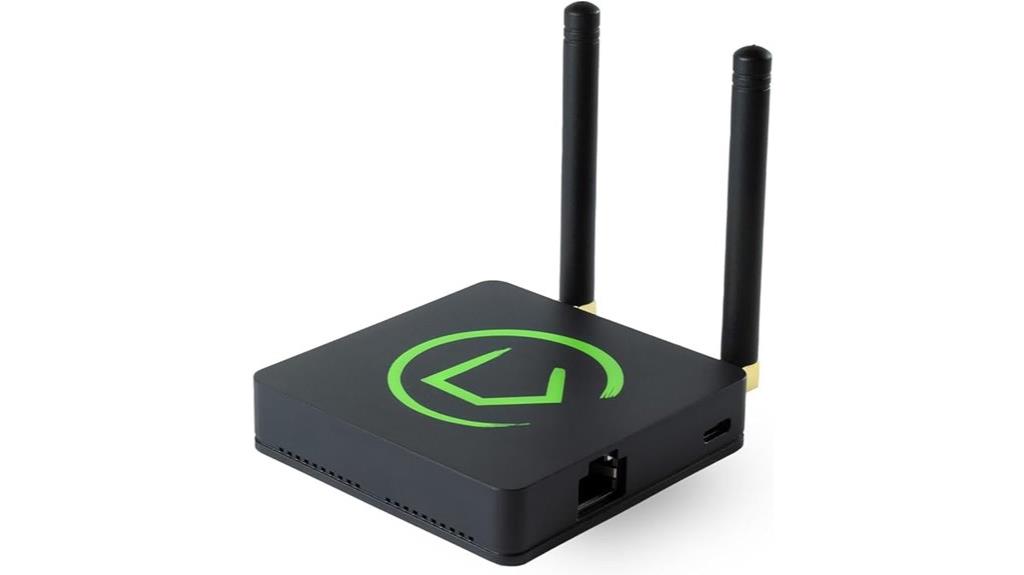
The Hubitat Elevation C-8 Pro stands out as an ideal choice for advanced users who want extensive device compatibility and local control. It supports over 1,000 smart devices across 100+ brands, including Aqara, Philips Hue, Lutron, and Nest, plus protocols like Zigbee, Z-Wave, and Matter. With powerful antennas and a built-in Z-Wave 800 chip, it offers strong signals and broad range. The hub processes data locally, ensuring fast responses, privacy, and reliability—even during internet outages. Its automation capabilities are highly customizable, allowing complex scenes and routines. Despite a learning curve, its community support and robust performance make it a top-tier, flexible smart home hub.
Best For: advanced smart home enthusiasts seeking extensive device compatibility, local control, and customization options for a reliable, privacy-focused automation system.
Pros:
- Supports over 1,000 devices from 100+ brands, including Zigbee, Z-Wave, and Matter protocols
- Processes data locally for faster responses, enhanced privacy, and independence from internet outages
- Highly customizable automation, scenes, and dashboards suitable for complex smart home setups
Cons:
- Setup can be complex and may require a learning curve for new users
- Occasional connectivity issues with certain device types, such as Wi-Fi bulbs
- Interface and software can be unintuitive, needing community support and resources for effective use
![SmartThings Hub 3rd Generation [GP-U999SJVLGDA] Smart Home Automation Hub Home Monitoring Smart Devices - Alexa Google Home Compatible - Zigbee, Z-Wave, Cloud to Cloud Protocols – White](https://m.media-amazon.com/images/I/21hChu0ounL._SL500_.jpg)
SmartThings Hub 3rd Generation [GP-U999SJVLGDA] Smart Home Automation Hub Home Monitoring Smart Devices - Alexa Google Home Compatible - Zigbee, Z-Wave, Cloud to Cloud Protocols – White
Monitor and control compatible devices in your home using a single smartphone app for your phone
As an affiliate, we earn on qualifying purchases.
SmartThings Hub 3rd Gen Smart Home Automation Hub
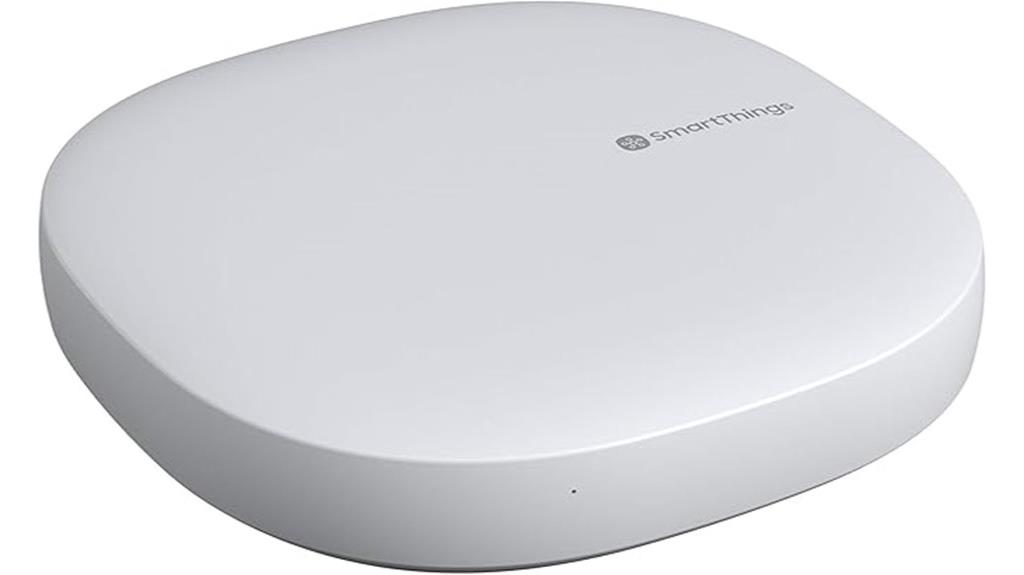
The SmartThings Hub 3rd Gen stands out as an ideal choice for homeowners seeking seamless, centralized control over a wide range of smart devices. It supports protocols like Zigbee, Z-Wave, Alexa, and Google Home, ensuring broad compatibility. With this hub, I can manage and monitor all my smart devices through a single app, simplifying my home automation. It enables automation triggers such as door openings or presence detection, boosting security and convenience. Its user-friendly design makes setup easy, and its versatility allows for integrating multiple brands. Overall, it’s a reliable, all-encompassing hub that transforms how I manage my smart home.
Best For: homeowners seeking a versatile, easy-to-use hub to centrally manage and automate a wide range of smart home devices across various protocols.
Pros:
- Supports multiple protocols like Zigbee, Z-Wave, Alexa, and Google Home for broad compatibility.
- Enables centralized control and monitoring of all compatible smart devices through a single app.
- Facilitates automation triggers such as door openings and presence detection to enhance security and convenience.
Cons:
- May require technical setup or troubleshooting for complex automation configurations.
- Limited to compatible devices; not all smart products may work seamlessly.
- Dependence on cloud services could affect functionality during internet outages.

Homey Bridge | Smart Home Hub for Home Automation. Features Z-Wave Plus, Zigbee, Wi-Fi, BLE & Infrared. Compatible with Amazon Alexa & Google Home.
YOUR HOME, YOUR RULES: Make all your devices work together seamlessly with Homey Automatically play music when you...
As an affiliate, we earn on qualifying purchases.
Homey Bridge Smart Home Hub for Automation

Homey Bridge stands out for users seeking a versatile and privacy-focused smart home hub that supports multiple communication protocols like Z-Wave Plus, Zigbee, Wi-Fi, BLE, and Infrared. It unifies devices from brands such as Philips Hue, Nest, and Aqara, and integrates with Alexa, Google, and Siri Shortcuts (sold separately). Setup is quick via the app, but some users report connectivity issues, especially with Z-Wave devices, and limited range demands additional hardware. The hub offers automation through “Flows” and emphasizes privacy by not profiling user data. However, inconsistent device support and mixed reviews on reliability make it a less ideal choice for those seeking a seamless experience.
Best For: users seeking a privacy-focused, versatile smart home hub capable of integrating multiple protocols and popular device brands, despite potential connectivity challenges.
Pros:
- Supports multiple communication protocols including Z-Wave Plus, Zigbee, Wi-Fi, BLE, and Infrared for broad device compatibility.
- Emphasizes privacy by not profiling user data or sharing information without consent.
- Offers automation through customizable “Flows” and integrates with popular voice assistants like Alexa, Google, and Siri Shortcuts.
Cons:
- Reports of limited device support and connectivity issues, especially with Z-Wave devices like locks and thermostats.
- Poor range requiring additional hardware such as the Homey Pro for extended Zigbee networks.
- Clunky, unintuitive app interface and inconsistent device recognition, leading to a less seamless user experience.
Philips Hue Bridge, Smart Lighting Hub
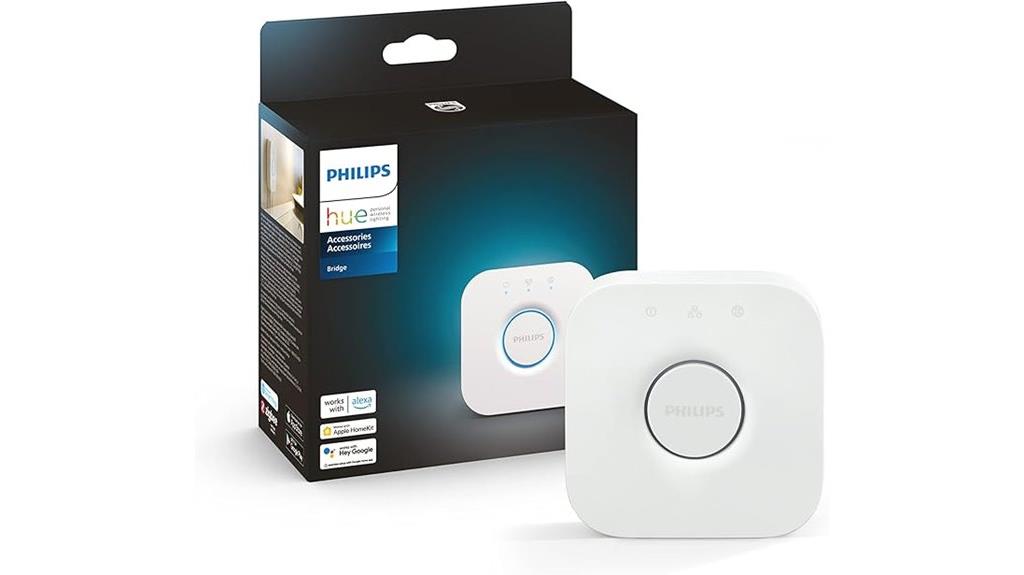
If you’re looking to elevate your smart lighting setup, the Philips Hue Bridge is an excellent choice because it uncovers the full potential of the Philips Hue ecosystem. It supports up to 50 lights and accessories, both indoors and outdoors, and works seamlessly with voice assistants and Matter-compatible devices. Using Zigbee technology, it provides a secure, stable connection that remains reliable even during Wi-Fi outages. You can control your lights remotely, set automations, zones, and multi-room setups, all personalized to your preferences. Plus, it enhances entertainment with synchronized lighting for movies and music. Automatic updates guarantee your system stays current and future-proof.
Best For: smart home enthusiasts seeking a reliable, expandable hub that unlocks the full potential of Philips Hue lighting, including outdoor setups and entertainment synchronization.
Pros:
- Supports up to 50 lights and accessories for versatile indoor and outdoor use
- Utilizes Zigbee technology for a secure, stable connection that remains operational during Wi-Fi outages
- Compatible with voice assistants and Matter devices, ensuring future-proof integration
Cons:
- Requires the separate purchase of the Hue Bridge, adding to initial setup costs
- Does not include lights or accessories, which must be bought separately
- Setup and configuration may be complex for beginners unfamiliar with smart home systems
SONOFF Zigbee 3.0 USB Dongle Plus Gateway

For anyone seeking a reliable and versatile Zigbee hub, the SONOFF Zigbee 3.0 USB Dongle Plus Gateway stands out with its support for popular platforms like Home Assistant and IoBroker. It features pre-flashed Z-Stack 3.x.0 firmware based on the TI CC2652P chipset, ensuring solid performance. Its aluminum housing minimizes interference, while the SMA interface allows for external antennas to boost signal range. Compatible with Zigbee2MQTT and ZHA, it offers flexible deployment options. Installation is straightforward, with detailed tutorials available. This dongle provides an easy, effective way to manage your Zigbee devices, making your smart home setup more seamless and reliable.
Best For: smart home enthusiasts seeking a reliable, versatile Zigbee gateway compatible with platforms like Home Assistant and IoBroker for seamless device management.
Pros:
- Supports popular platforms such as Zigbee2MQTT and ZHA for flexible integration
- Pre-flashed Z-Stack 3.x.0 firmware based on TI CC2652P chipset ensures stable performance
- Aluminum housing and SMA interface enhance signal strength and reduce interference
Cons:
- May require technical knowledge for optimal installation and configuration
- Limited to Zigbee protocol, not suitable for other smart home standards
- External antenna setup might be necessary for extended range in large or complex setups
MOES ZigBee 3.0 Hub/Wired Gateway for Smart Home
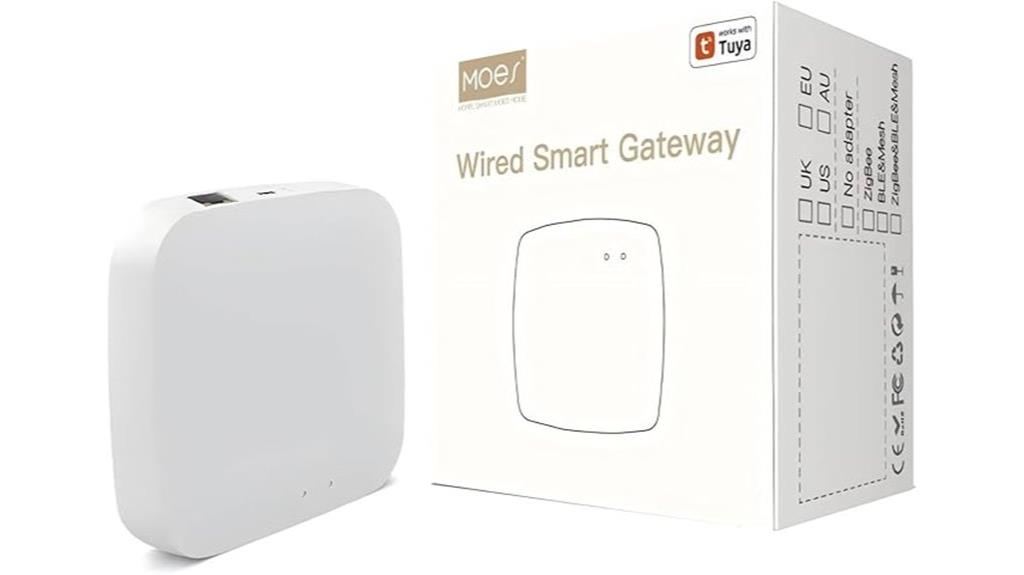
The MOES ZigBee 3.0 Hub/Wired Gateway stands out as an excellent choice for those seeking a reliable, compact smart home hub that seamlessly integrates a wide range of ZigBee devices. Weighing just 5 ounces and measuring under 4 inches, it offers over 200 meters of coverage and connects via Ethernet or WiFi without batteries. Compatible with smart switches, sensors, and lights, it supports platforms like Home Assistant and Alexa. Easy to install and configure, users appreciate its stable connectivity and ability to extend coverage across multi-level homes. While some minor issues exist, its affordability and broad device support make it a practical addition to any smart home setup.
Best For: smart home enthusiasts seeking a reliable, easy-to-install ZigBee hub that supports extensive device compatibility and broad coverage.
Pros:
- Supports over 200 meters of coverage, ideal for multi-level homes
- Compatible with a wide range of ZigBee devices, including switches, sensors, and lights
- Easy to install via USB power with reliable ZigBee connectivity and platform support like Alexa and Home Assistant
Cons:
- Slightly expensive compared to other ZigBee hubs in the market
- Some devices, such as Bluetooth gadgets or specific brands, may face compatibility issues
- Minor issues like overly bright LEDs and language barriers on prompts
Sengled Z02-hub Smart Home Hub (Pack of 1)

Looking to streamline your smart home setup with reliable compatibility? The Sengled Z02-hub is a solid choice, connecting seamlessly with Alexa and Google Assistant for hands-free control. It supports up to 64 Sengled smart lights and accessories, making it easy to automate your entire home. Setup is straightforward—just connect the hub to your router with the included Ethernet cable and follow the simple in-app instructions. You can manage everything via the Sengled Home app, creating schedules and grouping devices. Plus, pairing with voice assistants makes controlling your smart lights effortless, giving your home smarter convenience and control.
Best For: smart homeowners seeking reliable, easy-to-integrate voice-controlled hub to automate and manage numerous Sengled smart lights and accessories.
Pros:
- Seamless compatibility with Alexa and Google Assistant for voice control
- Supports up to 64 smart lights and accessories for extensive automation
- Easy setup via Ethernet connection and user-friendly app management
Cons:
- Requires a stable internet connection for optimal performance
- Limited to Sengled devices, which may restrict broader device integration
- No Wi-Fi capability; dependent on Ethernet connection for initial setup
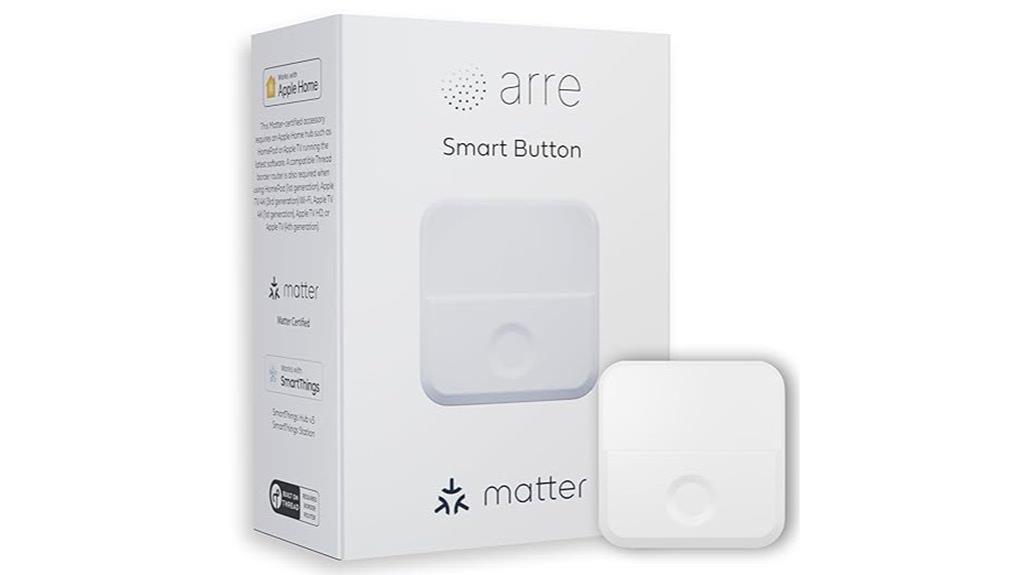
Arre Smart Button stands out for its support of Matter and Thread standards, making it an excellent choice for smart home enthusiasts seeking seamless interoperability across ecosystems like Apple HomeKit and Samsung SmartThings. Its Thread support guarantees faster, low-latency connections, with a compatible Border Route like the Apple HomePod Mini. The button offers single, double, and long press functions that can trigger various actions or shortcuts. It’s easy to set up via the Apple Home app, and magnetically mounts on metal surfaces or with included stickers. Built with solid quality, tactile feedback, and a replaceable battery, it’s a reliable, customizable addition to any smart home system.
Best For: smart home enthusiasts seeking a reliable, easy-to-use, and interoperable button compatible with Apple HomeKit and Thread-enabled ecosystems.
Pros:
- Supports Matter and Thread standards for broad compatibility and low-latency connections
- Easy setup via Apple Home app with customizable press actions
- Solid build quality with tactile response and magnetic mounting options
Cons:
- Battery life may be short and battery status isn’t communicated via the app
- Some users experience connectivity dropouts or device failures over time
- Occasional reports of products arriving used or with non-sealed packaging
Kasa Smart Plug HS103P4, 4-Pack Wi-Fi Outlet with Alexa & Google Compatibility
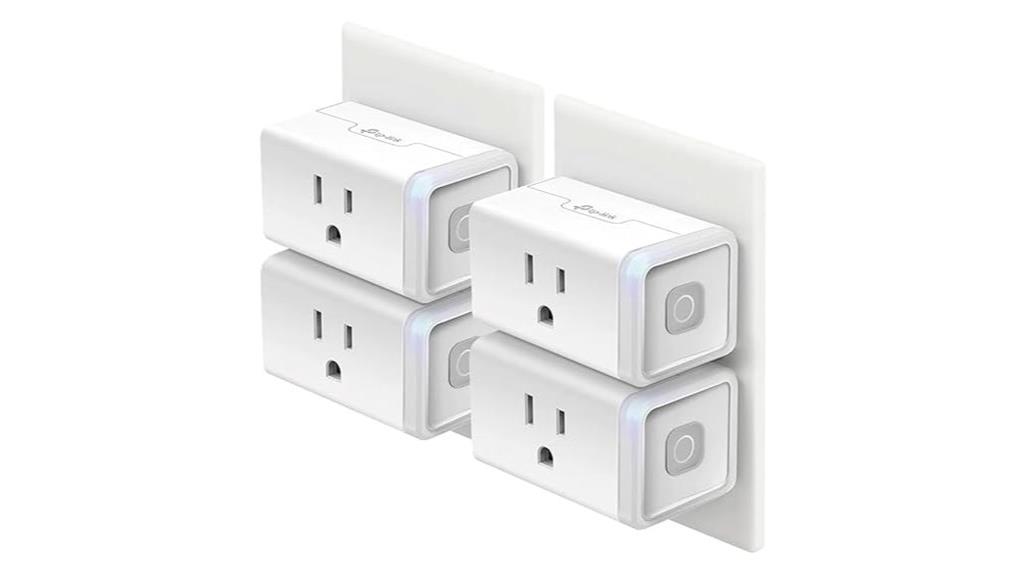
If you want a reliable, easy-to-use smart plug that seamlessly integrates with popular voice assistants, the Kasa Smart Plug HS103P4 is an excellent choice. This UL-certified, 15 Amp Wi-Fi outlet works with Alexa, Google Assistant, SmartThings, and IFTTT, allowing voice control and smooth smart home integration. It supports Android 5.0+ and iOS 10.0+ devices, so you can control appliances remotely via the app from anywhere. Its compact design fits two into a single outlet, and it offers features like scheduling, timers, and automatic reconnection after power loss. Overall, it’s a practical, dependable solution for automating lamps, fans, holiday lights, and more.
Best For: those seeking a reliable, easy-to-use smart plug compatible with voice assistants and capable of automating various household devices.
Pros:
- Seamless integration with Alexa, Google Assistant, SmartThings, and IFTTT for voice control and automation
- Compact design allowing two units to fit in a single outlet, ideal for space-saving setups
- Reliable connectivity with automatic reconnection after power outages and straightforward app setup
Cons:
- Does not support real-time power consumption monitoring, unlike some models like HS110
- Limited to 15 Amp capacity, which may not suit high-power appliances
- Requires Wi-Fi internet connection for remote control; manual operation via the side button is possible during outages
Emporia Vue 3 Home Energy Monitor
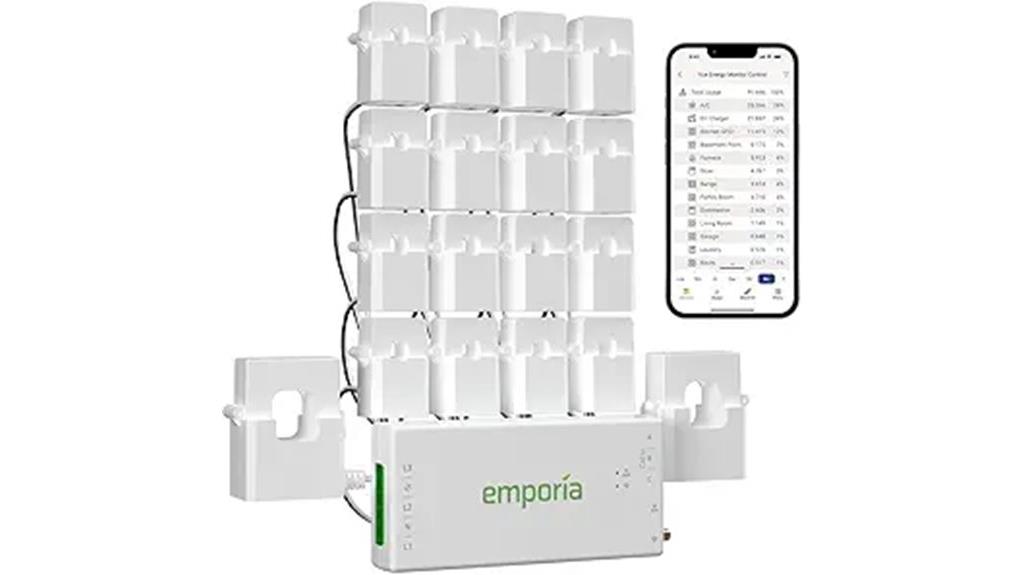
The Emporia Vue 3 Home Energy Monitor stands out as an excellent choice for homeowners seeking detailed, real-time energy insights and cost-saving automation. It’s UL Listed, ensuring safety and compliance across the U.S. and Canada, which gives me peace of mind. Installation is straightforward with clamp-on sensors compatible with most home panels, supporting various systems including 3-wire and 3-phase setups with an optional sensor. I can monitor energy usage via easy-to-use apps on my phone or web, with data accuracy within ±2%. Its automation features help me optimize energy consumption, reduce costs, and track solar or net metering, making it a smart addition to my home.
Best For: homeowners seeking detailed real-time energy monitoring and automation to reduce costs and improve energy efficiency.
Pros:
- UL Listed for safety and compliance in the U.S. and Canada
- Supports a wide range of systems with easy clamp-on installation
- Accurate data collection within ±2%, with extensive data storage and export options
Cons:
- Requires 2.4 GHz Wi-Fi and internet connection for full functionality
- Additional sensor needed for 3-phase or 4-wire systems (sold separately)
- Comes with only a 1-year warranty, which may be limited for long-term support
Lockin Wi-Fi Gateway and Electronic Lock Component for Smart Lock and Lock Box
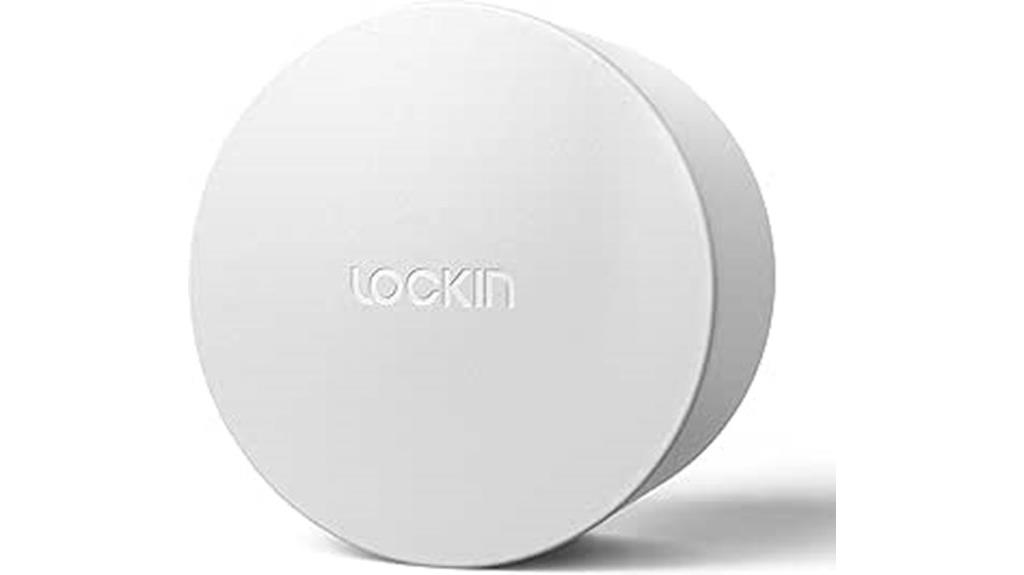
Lockin Wi-Fi Gateway stands out as an ideal choice for homeowners who want reliable remote control and monitoring of their smart locks and lock boxes. It pairs seamlessly with compatible devices like the Q3 and Q1 Smart Door Knob and L1 Smart Box, enabling secure Wi-Fi connectivity. Setup is quick—just plug it in and connect through the app within two minutes. The gateway allows remote management of lock status, codes, and activity logs, enhancing home security. Its sturdy alloy steel and aluminum design ensure durability, while support for Alexa voice control adds convenience. However, it’s not compatible with Lockin Veno locks, and some users report connectivity issues.
Best For: homeowners seeking a reliable, easy-to-install Wi-Fi gateway to remotely control and monitor compatible smart locks and lock boxes.
Pros:
- Quick and straightforward setup within two minutes.
- Compatible with popular smart devices like Q3/Q1 Smart Door Knob and L1 Smart Box.
- Supports remote lock management, activity monitoring, and voice control via Alexa.
Cons:
- Not compatible with Lockin Veno series smart locks.
- Some users experience connectivity issues or support dissatisfaction.
- Does not plug directly into an outlet, requiring alternative mounting solutions.
SofaBaton X1S Universal Remote with Hub and App
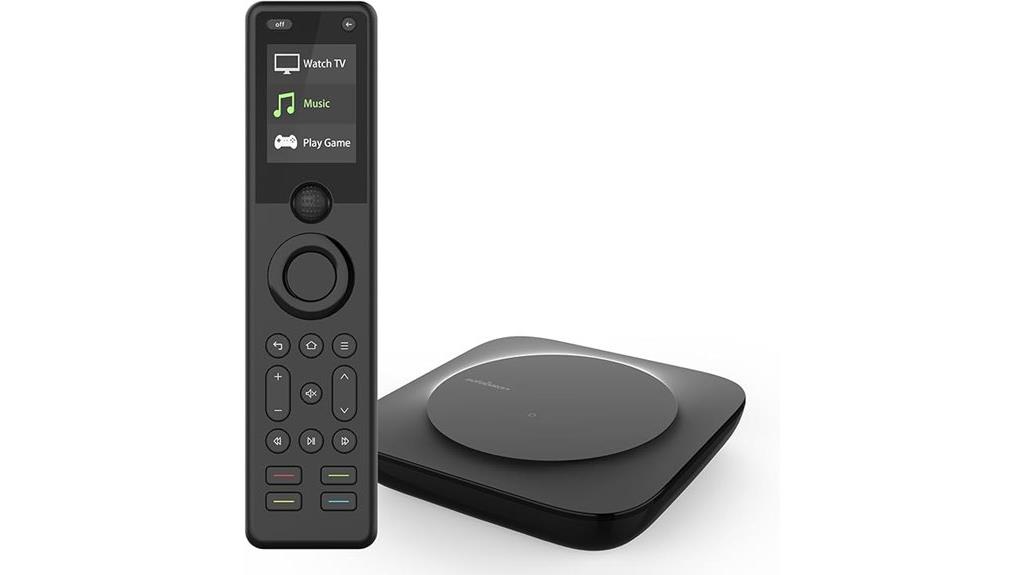
For anyone seeking a versatile remote that seamlessly controls a wide range of devices, the SofaBaton X1S Universal Remote with Hub and App stands out. It boasts a vast database supporting over 6,000 brands and 500,000 device models, ensuring compatibility with current and future electronics. The powerful hub provides 360-degree control with stable signals and includes two IR blasters to eliminate blind spots. Customization is effortless through one-touch activities, macros, and virtual buttons, while voice control via Alexa and Google Assistant adds hands-free convenience. Its backlit buttons, raise-to-wake LCD, and “Find my remote” feature make device management simple and efficient.
Best For: tech enthusiasts and home entertainment users seeking a highly versatile, customizable remote that effortlessly controls multiple devices with voice integration and smart automation.
Pros:
- Extensive compatibility with over 6,000 brands and 500,000 device models, ensuring future-proof usability
- Includes a powerful hub with 360-degree control, dual IR blasters, and a “Find my remote” feature for convenience
- Supports customizable one-touch activities, macros, virtual buttons, and voice commands via Alexa and Google Assistant
Cons:
- Setup and customization may be complex for users unfamiliar with smart remotes or automation features
- Requires a smartphone or app for full functionality, which may be inconvenient for some users
- Higher price point compared to basic remote controls, reflecting its advanced features
Smart Home Control Panel Android Touchscreen for Home Automation
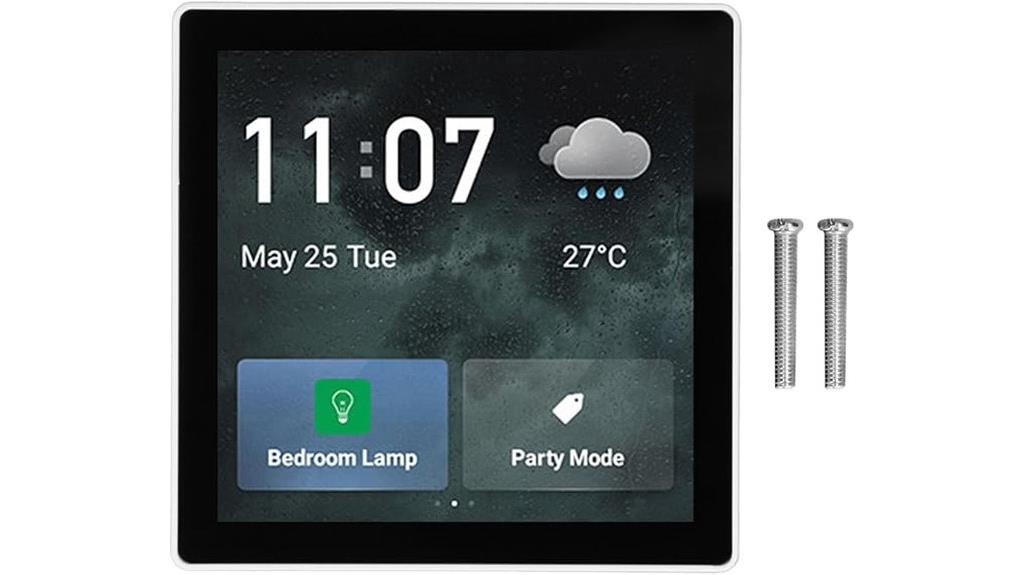
A smart home enthusiast seeking a seamless, intuitive control experience will appreciate the Android touchscreen control panel’s vibrant high-resolution display and user-friendly interface. Its crystal-clear visuals and vivid colors make managing your devices effortless. Crafted from durable, lightweight ABS plastic, it’s built to last and withstand daily use. Compatible with global voltage ranges and popular platforms like HomeAssistant and HomeSeer, it adapts to various setups. Plus, its advanced voice control allows hands-free management of your smart devices. Acting as a centralized hub, it simplifies controlling lighting, security, and automation, providing a reliable and streamlined experience for any smart home enthusiast.
Best For: smart home enthusiasts and homeowners seeking an intuitive, reliable, and stylish control panel for managing their home automation devices seamlessly.
Pros:
- High-resolution touchscreen with vibrant colors for clear, effortless device management
- Durable ABS plastic construction ensures long-term reliability and resistance to daily wear
- Compatible with multiple smart home platforms and global voltage ranges for versatile integration
Cons:
- May require technical setup for integration with certain smart home systems
- Larger size might not be ideal for very compact spaces
- Dependence on Wi-Fi or network connection for voice control and remote access
Aqara Smart Lock U100 with Fingerprint and Keyless Entry

The Aqara Smart Lock U100 stands out for anyone seeking a highly secure, keyless entry solution that integrates seamlessly into a smart home ecosystem. It supports Apple Home Key for effortless opening via iPhone or Apple Watch, even during power outages, and allows management and sharing of access through Apple HomeKit. Compatible with Aqara Zigbee 3.0 hubs, it connects to Google Home, Alexa, and IFTTT for broader automation. With multiple opening methods—including fingerprint, passwords, NFC cards, and a mechanical key—it offers flexible, secure access. Its weatherproof, durable design, combined with AES encryption for data, makes it a reliable upgrade for modern smart homes.
Best For: homeowners and property managers seeking a secure, seamless, and smart way to control access with multiple unlocking options and full smart home integration.
Pros:
- Supports Apple Home Key and HomeKit for effortless, keyless entry and access sharing
- Multiple access methods including fingerprint, PIN, NFC card, mechanical key, and remote password management
- Weatherproof, durable zinc alloy build with high security standards and AES encryption for data safety
Cons:
- NFC cards require an additional purchase, which may be inconvenient for some users
- Requires compatible Zigbee hub for integration with third-party ecosystems like Google Home and Alexa
- Battery life of up to 8 months may require periodic replacements, especially in high-use scenarios
Factors to Consider When Choosing Premium Home Automation Hubs
When choosing a premium home automation hub, I look at several key factors to guarantee it fits my needs. Compatibility with different protocols, ease of customization, and local processing power are vital for smooth operation. Additionally, I consider how well it integrates into my ecosystem and supports a wide range of devices.
Protocol Compatibility Range
Choosing a premium home automation hub with broad protocol compatibility is essential for guaranteeing your smart devices work seamlessly together. A hub supporting multiple protocols like Z-Wave, Zigbee, Wi-Fi, BLE, Infrared, Matter, and Thread allows you to integrate a wide range of devices without needing extra hubs or bridges. This flexibility enhances automation routines, enabling centralized control across different brands and ecosystems. Additionally, extensive protocol support future-proofs your setup, accommodating emerging standards like Matter and Thread. The ability to connect with various protocols directly impacts network reliability, response speed, and overall system stability. By prioritizing protocol compatibility, you ensure your smart home remains flexible, scalable, and responsive to your evolving needs.
Automation and Customization
Advanced automation capabilities are essential for a premium home automation hub, as they enable me to create complex routines that respond to multiple conditions like time, sensors, weather, and preferences. With these features, I can design tailored scenes that seamlessly adapt to my daily life. Customization options such as virtual devices, scripting, and user-defined scenes give me full control, making automation truly personal. Support for varied triggers—like single, double, long presses, or sensor activation—adds flexibility, ensuring I can automate diverse device functions effortlessly. Open platforms with community-developed apps and integrations expand possibilities, allowing my system to evolve continuously. Intuitive automation flow design tools further simplify building, modifying, and troubleshooting routines, so I don’t need programming skills to optimize my smart home.
Local Processing Power
A home automation hub with strong local processing power can execute complex routines quickly and reliably, even without internet access. This means your automations run smoothly without delays caused by cloud latency or connectivity issues. Plus, enhanced local processing boosts privacy by keeping sensitive data within your home network, reducing exposure to external servers. When internet is down, a powerful hub continues to operate seamlessly, maintaining your smart home’s functionality. It also supports a larger number of devices simultaneously, making it ideal for expansive setups. Additionally, robust onboard computation enables more advanced automation logic, virtual devices, and custom scripting, giving you greater control and customization. In short, strong local processing power is essential for a fast, private, and resilient smart home experience.
Ecosystem Integration Ease
Seamless ecosystem integration is crucial because it guarantees your devices work together effortlessly, saving you time and frustration. An easy-to-integrate system supports common protocols like Zigbee, Z-Wave, and Thread, making it simple to connect diverse devices without complex setup. Compatibility with major voice assistants such as Alexa, Google Assistant, and Apple HomeKit allows for effortless control and automation across platforms. Open platforms with extensive device databases enable you to add new gadgets quickly and easily, without fuss. Additionally, built-in support for standards like Matter ensures your ecosystem remains future-proof, minimizing compatibility issues as technology evolves. When choosing a premium hub, prioritize these integration features to create a cohesive, flexible, and reliable smart home environment.
Device Support Scope
To guarantee your smart home operates seamlessly, it’s essential to take into account the device support scope of a home automation hub. A versatile hub should support multiple communication protocols like Z-Wave, Zigbee, Wi-Fi, BLE, Infrared, Matter, and Thread, ensuring compatibility with a wide array of devices. Supporting various device types—lighting, locks, thermostats, sensors, and entertainment systems—allows for a truly integrated ecosystem. Compatibility with major platforms such as Apple HomeKit, Amazon Alexa, and Google Home simplifies control across devices. Additionally, open platforms and community-developed apps expand options and enable custom integrations. Firmware updates and protocol bridging, like Zigbee to Matter, are indispensable for future-proofing, maintaining extensive device support, and adapting to evolving smart home standards over time.
Price and Support
When evaluating premium home automation hubs, considering their price and support options is essential. These hubs typically cost between $350 and $600, reflecting their advanced features and compatibility with many devices. Reliable support is key, as many high-end hubs offer dedicated customer service, online communities, and detailed documentation to help users troubleshoot and optimize their systems. Compatibility with various protocols can enhance support quality, especially if the hub receives regular firmware updates and has an active developer community. Keep in mind that some hubs require subscriptions or extra fees for full functionality, adding to ongoing costs. Strong manufacturer support can make a significant difference, particularly when resolving complex issues or integrating new devices, ensuring your smart home runs smoothly over time.
Frequently Asked Questions
How Do I Ensure Compatibility With Existing Smart Home Devices?
To guarantee compatibility with your existing smart home devices, I recommend checking each device’s supported protocols like Zigbee, Z-Wave, or Wi-Fi. I always verify that the hub I choose supports these protocols and is compatible with my device brands. Reading product specifications and user reviews helps me confirm compatibility before making a purchase. This way, I avoid frustrating setup issues and ensure seamless integration across my smart home ecosystem.
What Security Features Are Included in Premium Hubs?
Premium hubs often include robust security features like end-to-end encryption, secure device pairing, and regular firmware updates to protect your smart home. I make sure my hub has multi-factor authentication and network segmentation options to keep my devices safe from cyber threats. These features give me peace of mind, knowing my home automation system is secure against unauthorized access and vulnerabilities.
Can These Hubs Be Customized for Specific Automation Scenarios?
Absolutely, these hubs can be customized for specific automation scenarios. I love how flexible they are—allowing me to set up routines tailored to my daily life. Whether it’s adjusting lighting at certain times or activating security systems when I leave, I can easily program these hubs to fit my needs. Their user-friendly interfaces make customization straightforward, so I can create a truly personalized smart home experience.
How Easy Is It to Set up and Update Firmware on These Hubs?
They say, “A stitch in time saves nine,” and that’s true for setup and updates too. I find that installing these hubs is pretty straightforward—most come with clear instructions and user-friendly apps. Firmware updates are usually quick and automatic, happening in the background once you connect to Wi-Fi. I recommend checking for updates regularly to keep everything running smoothly and secure. It’s hassle-free and keeps your smart home at its best.
Do These Hubs Support Voice Control Integrations Beyond Alexa and Google?
Yes, these hubs often support voice control integrations beyond Alexa and Google. I’ve seen many that also work with Apple’s Siri via Apple HomeKit, and some even support Samsung’s SmartThings platform. It’s pretty impressive how versatile they are, allowing me to control my devices using multiple voice assistants. Just make sure to verify compatibility for each hub to ensure it supports your preferred voice control system.
Conclusion
Choosing the right premium home automation hub can truly transform your smart home experience. With over 60% of homeowners planning to upgrade their systems this year, investing in a versatile, reliable hub is more important than ever. Whether you prioritize seamless integration or advanced security, the right hub makes all the difference. Don’t settle for less—upgrade today and enjoy smarter, safer living every day.