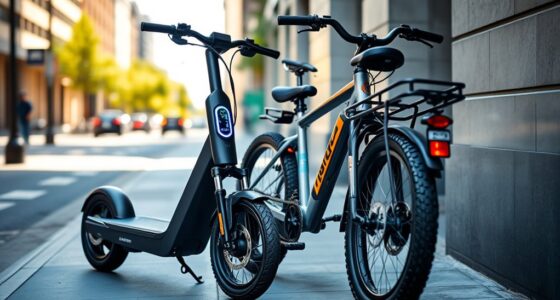
E-bike batteries must meet strict safety standards like UL 2849, UL 2271, and UL 2272 to make certain they perform reliably and keep you safe. UL 2849 covers battery safety, testing for hazards like overheating and short circuits. UL 2271 focuses on battery performance and safety for specific applications, while UL 2272 ensures the entire electrical system is secure. To learn more about how these standards protect you, keep exploring these important safety benchmarks.
Key Takeaways
- UL 2849 sets safety standards specifically for lithium-ion batteries used in e-bikes, focusing on safety and performance.
- UL 2271 certifies the battery cells and modules, ensuring they meet safety and durability criteria for various applications.
- UL 2272 covers the entire electrical system of e-bikes, including battery, charger, and wiring, for comprehensive safety assurance.
- Certification to these standards involves rigorous testing for hazards like thermal runaway, short circuits, and overcurrent.
- Compliance enhances safety, reliability, and user confidence by demonstrating adherence to strict safety and quality protocols.
Have you ever wondered how e-bike batteries guarantee safety and reliability? It all comes down to strict standards designed to protect you and your device. These standards, like UL 2849, UL 2271, and UL 2272, set the groundwork for battery safety, especially regarding battery safety and charging protocols. When manufacturers adhere to these certifications, they’re ensuring that their batteries meet rigorous safety benchmarks, reducing risks like fires, explosions, or sudden failures.
Battery safety is a top priority in these standards. They require extensive testing of the battery’s internal components, thermal management, and overall structural integrity. This means that when you buy an e-bike with a UL-listed battery, you can be more confident that it has been tested for potential hazards, including short circuits, overcurrent, and thermal runaway. These safety measures aren’t just box-checking; they’re designed to prevent dangerous situations that could harm you or damage your property. For example, UL 2849 specifically covers the safety of lithium-ion batteries used in e-bikes, ensuring they meet strict criteria for durability and safety under various conditions.
Charging protocols are another critical aspect these standards address. Proper charging is essential to maintain battery health and prevent accidents. UL standards specify how batteries should handle charging cycles, including voltage limits, current rates, and temperature controls. They also mandate the use of protective features like overcharge protection and thermal cutoffs. When a battery complies with these protocols, it’s built to handle regular charging routines safely, minimizing risks like overheating or battery degradation. This means that your e-bike’s charging process will be safer and more dependable, even if you’re charging in less-than-ideal conditions.
Manufacturers that meet UL 2271 and UL 2272 standards demonstrate a commitment to these safety principles. UL 2271 focuses on batteries for specific applications, ensuring they meet safety and performance requirements, while UL 2272 emphasizes the entire electrical system of the e-bike, including the battery, charger, and wiring. Together, these standards create a holistic safety framework that protects you from potential hazards associated with battery faults or improper charging. Additionally, the adoption of advanced testing procedures for thermal management ensures batteries perform reliably during extended use.
In essence, by choosing e-bikes with batteries tested and certified under these standards, you’re investing in a safer riding experience. You don’t have to worry about unexpected failures or dangerous malfunctions. Instead, you can enjoy your ride with confidence, knowing that safety and reliability are built into every component. The standards act as a safeguard, ensuring that the power source fueling your e-bike is as safe and dependable as it is efficient.
Frequently Asked Questions
How Often Are E‑Bike Battery Standards Updated?
You should expect e-bike battery standards to be updated roughly every few years, as technology advances and safety concerns evolve. Regular certification renewal is essential to maintain compliance, ensuring your battery’s battery lifecycle remains safe and efficient. Manufacturers typically review and update standards periodically, often every 3 to 5 years, to reflect new safety data and innovations, so staying informed helps you keep your e-bike safe and compliant.
Do These Standards Apply Globally or Only in Specific Regions?
You should know that these standards have limited global applicability, mainly influencing regions like North America and parts of Asia. While they set safety benchmarks, regional regulations often dictate their adoption and enforcement. If you’re importing or selling e-bike batteries internationally, it’s essential to check local rules, as standards like UL 2849, UL 2271, and UL 2272 may or may not be recognized or required in your target markets.
What Safety Tests Are Included in UL Certification?
Think of UL certification as a shield around your e-bike battery. It includes rigorous safety tests like thermal testing, which checks for overheating, and impact resistance, ensuring the battery withstands rough rides. You’re protected from potential hazards like fires or explosions. These tests act like a safety net, giving you confidence that your battery’s built to endure life’s bumps and heat waves without falling apart.
Can Non-Certified Batteries Be Safely Used in E‑Bikes?
You shouldn’t use non-certified batteries in your e-bike, as they often lack safety testing for durability and thermal stability. Without certification, you risk battery failure, reduced longevity, and potential safety hazards. These issues can lead to frequent replacements, increasing your replacement costs over time. Certified batteries guarantee safety, longer battery life, and lower long-term expenses, making them a smarter, safer choice for your e-bike riding experience.
How Do Standards Influence E‑Bike Warranty Policies?
You’re playing with fire if you ignore standards, as they shape e-bike warranty coverage. Manufacturers often tighten warranty terms if you use non-certified batteries, impacting battery lifespan. By sticking to UL-approved batteries, you guarantee your bike stays covered and performs well longer. Standards set clear safety and quality benchmarks, giving you peace of mind and protecting your investment from premature wear or damage caused by subpar components.
Conclusion
Understanding UL 2849, UL 2271, and UL 2272 is your key to riding safely and confidently. These standards are like a shield protecting you from potential hazards, ensuring your e-bike’s battery is reliable and safe. Don’t underestimate their importance—ignoring them is like riding into a storm blindfolded. Stay informed, choose compliant batteries, and keep your rides smooth and worry-free. Your safety depends on it—be a savvy e-bike rider!