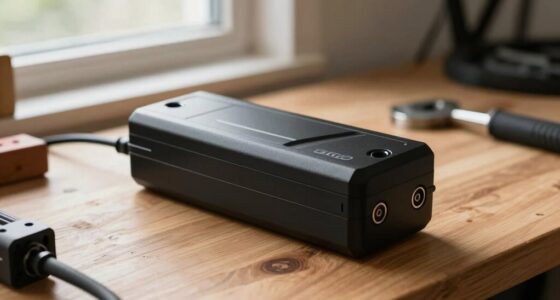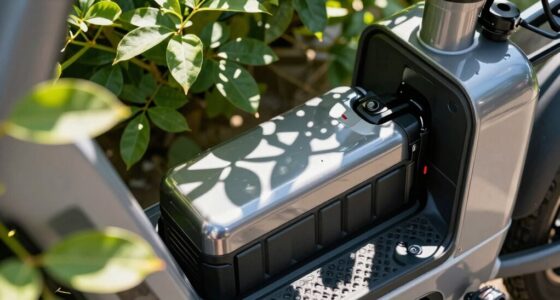
Every new e-bike owner faces the same moment: the bike arrives, and then you discover you need a lock, lights, a way to carry cargo, fenders, and probably a better helmet than the one from the back of the closet. The accessory aisle splits cleanly into two camps. On one side sit premium products — brand-name locks with Sold Secure ratings, integrated lighting systems, panniers built to survive a decade of commuting. On the other side sit budget options that promise the same functions for a third or a quarter of the price, sold under names you may never have heard of.

Get bike and ride gear delivered free with Prime
- Fast, free delivery on millions of items
- Prime Video, Amazon Music and more included
- Member-only deals all year

Lamicall Bike Phone Holder Motorcycle Mount
- ✔ Phone compatibility: 4.7–6.8 inches, up to 15mm thick (with case)
- ✔ Handlebar fit: 0.59–1.57 inches (15–40mm)
- ✔ Materials: Aluminum, stainless steel, silicone, plastic

LISEN Bike Phone Holder
- ✔ Phone compatibility: 4.7–6.8 inches, up to 20mm thick
- ✔ Handlebar fit: 0.6–1.57 inches round bars
- ✔ Materials: Silicone wrap with anti-slip cushions

Electric Bike Horn 130db
- ✔ Volume: 130 decibels
- ✔ Handlebar fit: 22.2–32mm
- ✔ Mounting: Two elastic rubber bands, tool-free
The tension is real because e-bikes change the math. An e-bike is heavier, faster, and far more expensive to replace than a regular bicycle, and it has an electrical system that budget accessories sometimes interact with badly — or not at all. At the same time, outfitting a bike entirely with premium gear can cost more than some entry-level e-bikes themselves. The honest question is not which tier is better overall, but which items deserve the premium spend and which ones are safe to buy cheap.
This guide compares the two approaches side by side across the criteria that actually matter: security, durability, safety, compatibility with e-bike electricals, weather resistance, weight, and total cost. The short version: security and lighting are where premium spending pays off, while items like water bottle cages, basic fenders, and phone mounts are often just as good cheap. If you ride daily in a city, the premium route protects an expensive investment; if you ride weekends on quiet paths, budget accessories will cover almost everything you need.
At a Glance
| Criteria | Premium e-bike accessories | Budget e-bike accessories | Winner |
|---|---|---|---|
| Security (locks & tracking) | Sold Secure Diamond / highest-tier rated locks, GPS trackers, frame-anchored designs | Basic U-locks or cable locks, often unrated or lowest security tier, no tracking | A |
| Lighting & visibility | High-lumen integrated or e-system-powered lights with proper beam patterns | Rechargeable clip-on lights, moderate lumens, generic beam spread | A |
| Durability & lifespan | 5–10+ year lifespans, replaceable parts, service networks | 1–3 season lifespan, sealed disposable units, frequent replacement | A |
| E-bike system compatibility | Designed to run off the bike’s battery and connect to drive-unit apps | Generic mounting only; no electrical or app integration | A |
| Weather resistance | Sealed connectors, IP65+ ratings, tested gaskets | Variable; rain and pressure-washing often cause failures | A |
| Cargo capacity & weight handling | Racks rated 25–60 kg, e-bike-specific frame mounting | Racks and bags rated 10–25 kg, universal clamp mounting | A |
| Upfront cost | High — often $400–1,200+ to fully outfit | Low — often $100–300 to fully outfit | B |
| Availability & warranty support | Widely stocked in bike shops, multi-year warranties, spare parts | Online-only support, short warranties, replacement often the only fix | A |
Lamicall Bike Phone Holder Motorcycle Mount
Of the two phone mounts in this lineup, the Lamicall is the one we would trust with an expensive phone at 25 mph. Its defining feature is the lockable red switch on the back: once the corner arms grip your phone, you flip the lock and the clamp physically cannot release until you unlock it. That matters more on an e-bike than a pedal bike, because higher speeds and heavier frames generate exactly the kind of sustained vibration that slowly shakes spring-only mounts loose. The mount also uses aluminum and stainless steel in its core structure rather than relying purely on plastic, which shows in its 7-ounce weight and overall rigidity.Compared with the LISEN, the Lamicall takes a slightly more deliberate approach to daily use. You must remember to lock and unlock the mechanism, and the manufacturer notes that pulling the wrong arm can jam the internal gears, so there is a small learning curve. In exchange, you get corner-grip security and silicone padding that isolates your phone from both scratches and road buzz. The 360-degree rotation lets you flip between portrait navigation and landscape views without removing the phone.The honest drawback: with a 15mm maximum phone thickness, the Lamicall is noticeably stricter than the LISEN’s 20mm limit. If you run a thick rugged case or a wallet case, the Lamicall may simply not close. It is also not water resistant, so rain riders need a case or a pocket strategy.
Pros:
- Lockable clamp physically prevents accidental phone ejection at speed
- Aluminum and stainless steel construction feels more rigid than plastic-only rivals
- Silicone shock pads protect against vibration and scratches
- 360-degree rotation for portrait or landscape navigation
Cons:
- 15mm phone thickness limit excludes bulkier protective cases
- Locking mechanism requires correct operation; pulling the wrong arm can jam the gears
- No water resistance for rainy commutes
Best for: Commuters and faster e-bike riders who want maximum phone security over rough roads
Not ideal for: Riders with thick rugged cases, or anyone who wants a mount they never have to think about locking
Bottom line: The most secure phone mount in this lineup, and the one best matched to the speeds and vibration of electric riding.
“The most secure phone mount in this lineup, and the one best matched to the speeds and vibration of electric riding.”
LISEN Bike Phone Holder
Where the Lamicall emphasizes mechanical security, the LISEN focuses on frictionless daily use. Its built-in silicone design means there are no separate pads to lose and no tools at all: the whole mount tightens onto a handlebar in roughly five seconds. For riders who move a phone mount between a commuter e-bike, a scooter, and a kid’s bike, that speed is a genuine advantage over the Lamicall’s more involved clamp-and-lock routine.The bigger differentiator is case clearance. The LISEN accepts phones up to 20mm thick, a full 5mm more headroom than the Lamicall, which is often the difference between fitting a rugged case and having to strip it off every ride. Its full silicone wrap cushions the phone on all sides and also protects the handlebar finish, and the upgraded locking mechanism grips each corner firmly enough for off-road trails, according to the design intent, even if it lacks the Lamicall’s positive metal lock.That softer approach is also the tradeoff. An all-silicone cradle is inherently less rigid than a metal-core clamp, so riders who regularly hit potholes at top assist speed may prefer the Lamicall’s overbuilt confidence. LISEN also includes 12-month support, a nice assurance, but the mount is not water resistant either, matching the Lamicall’s weakness in rain.
Pros:
- Five-second tool-free installation with no loose parts
- 20mm thickness limit accommodates bulky rugged cases
- Full silicone wrap protects both phone and handlebar finish
- 12-month manufacturer support included
Cons:
- All-silicone cradle is less rigid than metal-core mounts like the Lamicall
- No positive mechanical lock comparable to the Lamicall’s red switch
- Not water resistant
Best for: Riders with thick phone cases and anyone swapping a mount between multiple bikes or scooters
Not ideal for: High-speed or rough-terrain riders who want the most rigid, positively locked hold possible
Bottom line: The fastest mount to live with day to day, and the only one here that fits thick cases without a fight.
“The fastest mount to live with day to day, and the only one here that fits thick cases without a fight.”
Electric Bike Horn 130db
Not every e-bike accessory needs to hold a phone. The 130db Electric Bike Horn plays a completely different role in this lineup: it addresses the fact that e-bikes are quiet, fast, and often approach pedestrians faster than they expect. At 130 decibels, this horn produces roughly car-horn levels of sound, cutting through headphones and traffic noise in a way a traditional ding-ding bell simply cannot. For mixed-use path riders and urban commuters, that is a genuine safety feature, not a novelty.Unlike the two mounts, which use mechanical clamps, this horn attaches with two elastic rubber bands, installable by hand in under a minute. That approach protects the handlebar paint, but it also defines the horn’s main limitation: it fits only 22.2–32mm handlebars, a narrower range than either phone mount’s 15–40mm coverage. Riders with oversized or non-round e-bike bars will need a different solution. The one-button trigger is impressively simple, though, reacting instantly when a pedestrian steps into your lane.Practicality is where this pick shines relative to its cost. It carries an IPX4 water-resistance rating, making it the only product in this roundup that shrugs off rain, and its two replaceable CR2032 batteries last up to roughly 200 days or 5,000 rings. The ABS housing handles heat and drops, but the sound is a single loud tone with no volume adjustment, which may feel harsh on quiet trails where a gentle bell would be politer.
Pros:
- 130db output is audible over traffic and headphone noise
- IPX4 water resistance, the only weatherproof pick in this lineup
- Replaceable CR2032 batteries last up to 200 days or 5,000 rings
- Tool-free elastic mounting protects handlebar paint
Cons:
- Limited to 22.2–32mm handlebars, narrower than the phone mounts
- Single loud tone with no volume control
- Elastic band mounting is less rigid than a hard clamp
Best for: Urban commuters and mixed-path riders who need to be heard over traffic and headphones
Not ideal for: Riders on oversized or non-standard handlebars, or those wanting adjustable volume
Bottom line: A small spend for a big safety gain, and the only rain-proof accessory in this guide.
“A small spend for a big safety gain, and the only rain-proof accessory in this guide.”
As an Amazon Associate we earn from qualifying purchases.
Key Differences
The single largest gap between the two tiers is security, and it is not close. A premium lock with a Sold Secure Diamond or equivalent rating resists angle grinders, and some pair with GPS trackers and subscription alert systems. Budget locks — especially cables and unrated U-locks — can be cut with basic bolt cutters in seconds. Because e-bikes are prime theft targets precisely because of their value and resale price, this is the one category where the price difference is not about comfort or finish but about whether you still own the bike next month. Insurance companies increasingly require certified locks for e-bike coverage, which makes budget locks doubly expensive in practice: they may void your policy.
The second meaningful difference is electrical integration. Premium lights, displays, and some racks are designed to draw power from the e-bike’s battery and communicate with the drive system, meaning you never charge a separate light and brightness stays constant. Budget accessories are all self-contained: they mount anywhere but connect to nothing. For daily commuters, integrated lighting is genuinely transformative; for occasional riders, a $25 rechargeable light does the same basic job. Durability follows the same pattern — premium gear typically lasts many seasons with replaceable parts, while budget gear tends toward sealed, disposable construction that fails after a wet winter and gets replaced.
Where budget accessories hold their own is with simple, non-electrical, low-stress items. Fenders, water bottle cages, basic phone mounts, seat bags, and mirrors do the same job at any price point, and the weight difference is negligible. A $15 bottle cage holds a bottle exactly as well as a $60 one. The practical strategy for most riders is a hybrid: spend premium on the lock, lights if you commute in the dark, and the rack if you carry serious cargo; buy budget for everything else.
Detailed Comparison
Premium locks arrive with independent security certifications (Sold Secure Diamond, ART 4–5 star), hardened construction that resists grinders and jacks, and increasingly GPS tracking with app alerts. Budget locks are frequently unrated or sit at the lowest tier, and cable locks in this range are effectively a deterrent against nothing more than opportunity theft. Given that a stolen e-bike represents a $1,000–4,000 loss and theft rates in cities are high, this gap dominates the whole comparison. A $150–250 premium lock is cheap insurance for a $2,000 bike; a $30 lock is expensive theater. If your insurer requires a certified lock, the budget option may not even qualify.
Premium lighting splits into two types: high-output standalone units with engineered beam patterns (steady output, good road coverage, no blinding of oncoming traffic) and e-bike-integrated lights powered directly from the main battery. The integrated option means you literally never think about charging a light again. Budget lights deliver plenty of claimed lumens for the price, but the lumens-to-useful-light ratio is poor, beams are unfocused, output drops as the battery drains, and mounting hardware breaks. For occasional daylight riding, budget lights are adequate. For dark commutes at 25–30 km/h e-bike speeds, the premium option is a genuine safety upgrade, not a luxury, because you need to see road hazards at speed that a weak light reveals too late.
Premium accessories are built and priced for the long run: metal hardware, replaceable straps and mounts, serviceable mechanisms, and warranties measured in years. Budget accessories are typically sealed, plastic-heavy, and effectively disposable — when the clasp or zip breaks, you throw the item away. Over a five-year period, buying the budget pannier twice or three times narrows the cost gap considerably. The durability difference matters most for items that carry weight or live outdoors: racks, panniers, and locks. For items that sit still and carry nothing — bottle cages, frame bags — the durability gap barely registers.
Premium ecosystems (those matched to major drive-unit brands) offer lights and displays that run off the bike’s battery, racks designed for e-bike frame geometry and higher weights, and apps that tie accessories into the same interface. Budget accessories are universal-fit by definition: clamps, straps, and standard mounts that work on almost anything but integrate with nothing. If you value the clean look and the never-charge-a-light convenience, premium integration is worth paying for. If you own a simpler e-bike or move accessories between bikes, the universal budget approach is actually more flexible, not less.
Premium gear is designed around wet commuting: sealed seams, IP-rated electronics, tested zips, and lights that survive a pressure wash. Budget gear varies wildly — some items survive rain fine, others fail after one wet week, and the ratings are often absent or exaggerated. The failure mode is annoying rather than catastrophic (a soaked pannier, a dead tail light), but for year-round commuters it decides whether gear lasts one season or five. For fair-weather riders, this criterion can be ignored almost entirely.
E-bikes are heavy and often used for hauling groceries, kids, or work gear. Premium racks are rated for 25–60 kg, engineered for e-bike frame mounting, and paired with panniers that hold shape under load. Budget racks typically max out around 10–25 kg with universal clamps that can slip on thick e-bike frames, and budget bags sag or tear when loaded. If your e-bike is a car replacement, premium cargo gear is functionally necessary. If you carry a jacket and a laptop, budget cargo options handle that fine.
Upfront cost (Budget e-bike accessories wins — major)
This is the budget tier’s one clear win. A complete budget outfitting — lock, lights, basic rack, bag, fenders — can come in around $100–250. The premium equivalent runs $400–1,200 or more, especially with a certified lock and integrated lighting. For a rider on a tight budget or one uncertain how much they will actually use the bike, the low entry cost is a legitimate advantage. The caveat is that the true cost of budget gear includes replacements and, in the worst case, an uninsured stolen bike.
Premium brands are stocked in physical shops, offer multi-year warranties, and sell spare mounts, straps, and keys — which matters more than people expect when you lose your lock keys or crack a light mount. Budget accessories are online-only for support, with short warranty windows and a common resolution of ‘buy another one.’ For most buyers this is a background concern, but it becomes decisive the moment something breaks mid-winter and you need a replacement part, not a replacement product.
Pros:
- Certified locks that actually deter e-bike theft and satisfy insurer requirements
- Battery-integrated lighting that never needs separate charging
- Multi-year durability with replaceable parts reduces long-term replacement cost
- Higher cargo ratings suited to heavy e-bike use
- Shop availability, spare parts, and real warranties
Cons:
- High upfront cost — full outfitting can approach the price of a budget e-bike
- Integrated accessories can lock you into one brand’s ecosystem
- Overkill for occasional or fair-weather riders
- Premium pricing includes brand markup on simple items where it buys little
Budget e-bike accessories: Pros and Cons
Pros:
- Complete outfitting for $100–250
- Universal mounts work on any bike and transfer between bikes
- Ideal quality for simple items like cages, mirrors, and basic bags
- Low risk if you are still deciding how much you will ride
Cons:
- Locks often provide no meaningful theft protection for a high-value e-bike
- Shorter lifespans mean repeated replacement purchases
- No electrical integration; separate charging for everything
- Inconsistent weather sealing and little warranty support
Who Should Choose What
Choose Premium e-bike accessories if:
- You commute daily, ride after dark, or ride year-round in rain — integrated lighting and weather sealing pay off every week
- You park your e-bike in public places in a city with any theft problem — a certified lock is non-negotiable
- Your e-bike is worth $2,000 or more and you want insurance coverage that stays valid
- You carry serious cargo (groceries, kids’ gear, tools) and need racks rated above 25 kg
- You hate recharging small devices and want accessories that run off the bike’s battery
Choose Budget e-bike accessories if:
- You ride occasionally on weekends in daylight on low-traffic paths
- You store the bike in a locked garage or building and rarely lock it in public
- Your e-bike is a sub-$1,500 model and replacing accessories matters more than replacing the bike
- You only need simple items — bottle cages, frame bags, mirrors, basic lights
- You are new to e-biking and want to learn your real needs before committing serious money
Skip both if: You are buying for a cargo e-bike used for child transport — in that case go straight to brand-certified racks, seats, and safety gear regardless of tier, since universal-fit accessories are not rated for that use.
Value for Money
Value in e-bike accessories is not evenly distributed across the price ladder — it is concentrated in specific categories. The best value in the entire comparison is a single premium lock. Spending $150–250 to protect a $2,000+ machine, while satisfying insurance requirements, is the highest-return purchase in the whole accessory market. The second-best value is premium lighting, but only if you ride in the dark; a quality front light at e-bike speeds is a safety feature, and the premium price buys usable light, not vanity lumens.
Premium cargo gear pays for itself only if you actually carry heavy loads; a $200 rack-and-pannier set used weekly for grocery runs beats buying the $60 version twice, but the $60 version is the better buy if you carry a backpack’s worth of stuff. For everything else — fenders, bottle cages, mirrors, basic bags, phone mounts — budget gear delivers 90–100% of the function at 20–40% of the price, and paying premium there mostly buys aesthetics and branding.
The practical value answer for most riders is a hybrid build: roughly $250–450 spent strategically, with the premium lock as the anchor purchase, quality lights if you commute in darkness, and budget items filling the rest. That build outperforms both the all-budget outfit (which under-protects an expensive bike) and the all-premium outfit (which over-spends on trivial items) on value for money.
Final Verdict
For most e-bike owners, the right answer is neither pure strategy but a deliberate split, and the split line is clear: buy premium where failure costs you the bike or your safety, and buy budget everywhere else. Spend real money on the lock — this is the single non-negotiable premium purchase for anyone whose e-bike is worth more than about $1,500 or who parks in public. Add premium lighting if you ride after dark, and premium cargo gear if the bike replaces car trips. Everything else can be budget-tier without meaningful loss.
If forced to pick one tier for a full outfitting, premium wins for daily riders and commuters because it protects the expensive machine underneath the accessories; a full premium kit on a $2,500 commuter is proportionate spending. Budget wins for casual, fair-weather riders with garage storage and a modest bike, where the premium markup buys protection and durability that their usage will never test. The deciding factor in almost every case is exposure: how often the bike is locked in public and how often you ride in the dark. High exposure demands premium; low exposure makes budget the smarter, cheaper choice.
Frequently Asked Questions
Can I secure an expensive e-bike with a budget lock?
Not realistically. E-bikes are targeted precisely because of their resale value, and most budget locks — especially cables and unrated U-locks — can be defeated with handheld bolt cutters or a cheap portable grinder in under a minute. Beyond the theft risk, many e-bike insurance policies require a lock with a recognized certification such as Sold Secure Diamond, so a budget lock can quietly void your coverage. If you own an e-bike worth $1,500 or more, a certified lock is the one accessory where you should not economize.
Are e-bike integrated lights worth the extra cost over rechargeable ones?
For regular riders, yes. Lights powered by the bike’s main battery never need separate charging, maintain constant brightness, and typically have better beam patterns than clip-on units. For anyone riding home in the dark a few times a week, forgetting to charge a light stops being a risk. If you only occasionally ride at dusk, a $25–40 rechargeable light is perfectly adequate and the integration premium is not justified.
Which accessories are safe to buy cheap?
Items with no moving parts, no electronics, and no security function: water bottle cages, frame and seat bags, basic mirrors, phone mounts (with a decent case), and simple plastic fenders. These do the same job at any price point, and the durability gap rarely matters because there is little to break. The categories to avoid buying cheap are locks, lights used for serious night riding, and racks carrying more than about 15 kg.
How much should I budget to outfit a new e-bike?
A sensible total for most riders is $250–450: a certified lock ($120–250), quality front and rear lights if needed ($60–120), and budget-tier everything else ($50–100). All-premium outfitting can exceed $1,000, which is hard to justify unless the bike is a daily commuter tool, and all-budget outfitting under $250 usually means inadequate security for a valuable machine.
It depends on the accessory. Premium locks, most premium lights, panniers, and racks are brand-agnostic and fit any bike. However, battery-integrated lights and displays are usually tied to specific drive-unit ecosystems, and some e-bike-specific racks require compatible frame mounts. Check compatibility against your bike’s brand and motor system before buying integrated premium accessories; budget accessories, being universally mounted, fit everything but connect to nothing.
Halloween Picks
halloween
As an affiliate, we earn on qualifying purchases.