
TL;DR

Get bike and ride gear delivered free — and shop member deals
- Fast, free delivery on millions of items
- Access to Prime Big Deal Days deals on October 6–7
- Prime Video, Amazon Music and more included
Ionna CEO Seth Cutler said the charging company must reach financial independence and profitability, arguing that charging infrastructure cannot survive long term without a for-profit model. Ionna is expanding its network through retail partnerships and says it aims to triple its size from the 80 sites it had at the start of the year; the interview report does not specify a date for that target or define how network size is counted.
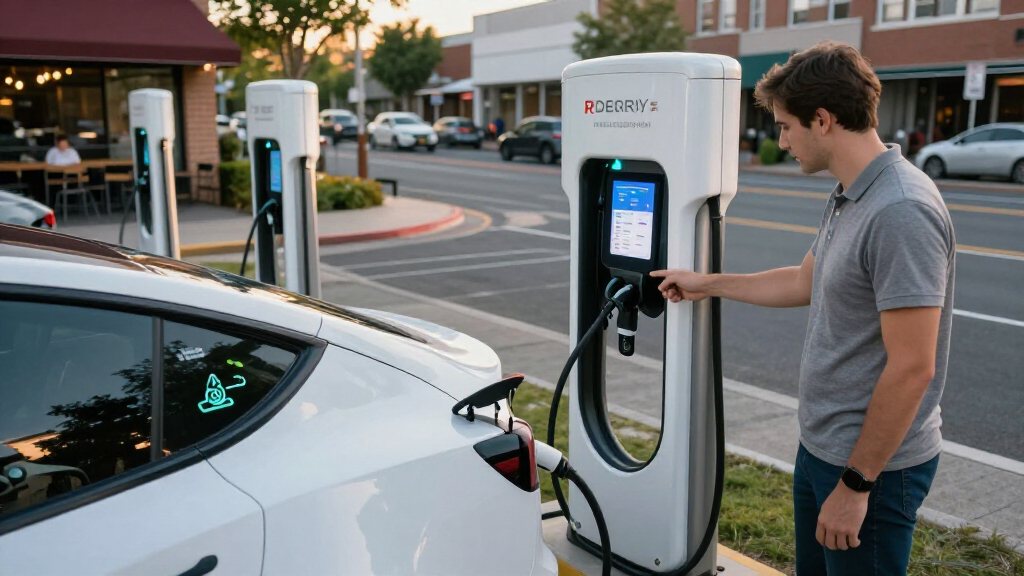
Ionna CEO Seth Cutler says the company’s EV charging network must become a profitable business to remain viable, arguing that the survival of charging infrastructure is tied to the long-term prospects of electric vehicles. In an interview with The Drivecast, Cutler said Ionna is working toward financial independence while expanding its network, a challenge for a company backed by major automakers and seeking to build public fast-charging capacity across the United States.
“This is a for-profit business,” Cutler said in the interview, referring to EV charging. He said Ionna knows it must reach financial independence and profitability over time. The report does not disclose how much capital the joint venture’s automaker backers have invested or when their funding might end.
Ionna was formed by BMW, Mercedes-Benz, General Motors, Honda, Hyundai, Kia and Stellantis; Toyota joined about a year later, according to The Drive. Cutler described a growth strategy that combines charging sites with partnerships involving Circle K, Wawa, Sheetz and Casey’s. He said the company is also concentrating on driver experience and charging quality as it scales.
Cutler said Ionna began the year with 80 locations and set a goal of tripling the network’s size during the year. He said that pace of expansion is not reflected in some outside views of the company. The report does not provide a current site count, a definition of what qualifies as a network location, or data showing whether the target has been met.
Profitability Shapes Ionna’s Expansion
Ionna’s comments put the economics of public charging at the center of the company’s expansion plans. Building and operating fast-charging sites requires sustained investment; Cutler’s remarks indicate that Ionna does not view automaker funding alone as a permanent basis for the network. A business model that can support its operating costs and future investment may affect how quickly sites are built and maintained.
The stakes reach beyond Ionna. Drivers depend on accessible, reliable public charging, particularly for trips that cannot be covered by home charging. Cutler’s statement that EVs will not survive if charging infrastructure fails is his assessment, not a measured forecast. The report offers no financial results or evidence establishing how charging profitability would affect EV sales, but it underscores that network expansion and dependable service have to be supported by a durable source of revenue.
As an affiliate, we earn on qualifying purchases.
Automakers’ Charging Joint Venture
Ionna was set up by automakers seeking to build a public charging network in the United States. Its creation reflects industry concerns about the availability and quality of charging, as well as the scale of investment needed to compete in a market where Tesla’s Supercharger network is a major reference point. The Drive report says Toyota joined the venture after its original group of seven automakers.
Cutler said Ionna has acquired land at several dozen sites and has developed some locations with amenities such as bathrooms, vending machines and technology for unattended retail. Other properties are arranged to allow later additions, including buildings or co-tenants. He said those options are being held for possible future use rather than treated as a current priority: Ionna is focused now on charging quality and driver experience at scale.
Cutler said the company could begin putting resources into other ways to monetize sites or provide value to drivers in 2027, 2028 or later. That timing is a possible future direction, not a firm launch date or an announced revenue plan.
As an affiliate, we earn on qualifying purchases.
Costs, Revenue and Site Counts
The interview report does not disclose Ionna’s investment total, operating costs, revenue, or profitability timeline. It is also unclear how much of the network’s expansion is funded by its automaker owners, what portion of charging revenue comes from customers or partners, and what financial thresholds the company must meet to become independent.
The goal to triple the network is not accompanied by a precise reporting date, a current location count or a clear definition of a site. The report also does not establish whether Ionna is on track to meet that goal. Cutler’s comments about adding retail amenities in 2027, 2028 or later describe possibilities rather than confirmed projects with specific schedules.
As an affiliate, we earn on qualifying purchases.
Network Growth and Revenue Plans
The next measurable development will be whether Ionna expands beyond the 80 locations Cutler cited as its starting point and how the company reports progress against its tripling goal. Updates on locations, charging availability and partnerships could clarify the pace and reach of the network’s buildout.
Cutler said Ionna is prioritizing charging quality and the driver experience before investing further in other site-based revenue opportunities. The company may develop amenities and additional commercial uses at some properties in 2027, 2028 or beyond, but no specific projects or dates were confirmed in the report. Financial disclosures or further company statements would be needed to show whether the network is approaching profitability and how its business model is developing.
As an affiliate, we earn on qualifying purchases.
Key Questions
What did Ionna’s CEO say about EV charging?
Seth Cutler said charging infrastructure needs to operate as a for-profit business to survive over time. He argued that the long-term outlook for EVs depends in part on the survival of charging infrastructure; this is his view, not a proven forecast.
Who owns or backs Ionna?
The Drive report says Ionna was formed by BMW, Mercedes-Benz, General Motors, Honda, Hyundai, Kia and Stellantis, with Toyota joining about a year later. The report does not disclose how much the automakers have invested.
How large is Ionna’s charging network?
Cutler said the company started the year with 80 locations and aimed to triple the network’s size during the year. The report gives no updated site count or clear definition of a location, so it does not confirm whether the target has been reached.
How does Ionna plan to make money?
Cutler described charging as a for-profit business and cited partnerships with Circle K, Wawa, Sheetz and Casey’s. He also said Ionna holds land and has developed some amenities that could support other revenue or driver services in the future, but those uses are not a current focus and no specific revenue plan or launch date was announced.
Source: rss
Fall Picks
fall essentials
As an affiliate, we earn on qualifying purchases.