
When choosing between belt-drive and chain-drive e-bikes, consider durability, maintenance, and performance. Belt drives last longer, stay cleaner, and require less upkeep, making them ideal if you want a smooth, eco-friendly ride with minimal maintenance. Chain drives offer more torque, wider gear ranges, and are better for demanding terrain but need more TLC. If you keep these factors in mind, you’ll find the perfect match—there’s more to explore below.
Key Takeaways
- Consider durability and environmental impact: belt drives last longer, are more eco-friendly, and resistant to dirt and moisture.
- Evaluate maintenance needs: belt drives require less upkeep, no lubrication, and have lower long-term maintenance costs compared to chain drives.
- Match performance preferences: belt drives offer quieter, smoother rides, while chain drives provide higher torque and wider gear compatibility.
- Think about usage and accessories: chain drives support more accessories like racks and fenders, suitable for demanding or load-carrying applications.
- Assess market and personal priorities: choose belt drives for low-maintenance, eco-conscious riding, or chain drives for high-performance and adaptability.
Comparing Durability and Lifespan
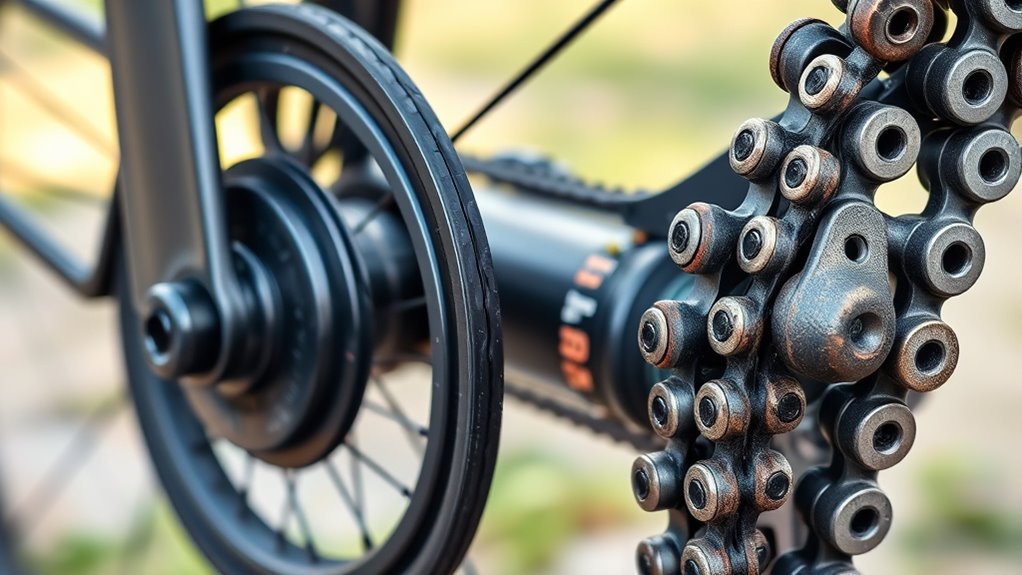
When it comes to durability and lifespan, belt drives generally last longer than chain drives due to their enclosed design and fewer moving parts. This means you’ll spend less time on repairs and replacements, making them a reliable choice for daily commuting. Belt drives also tend to maintain their smoothness over time, supporting consistent gear shifting without slipping or skipping. Additionally, their sleek, clean appearance enhances the bike’s aesthetic appeal, giving it a modern, polished look. Unlike chain drives, belts don’t require lubrication, which keeps the bike looking tidy and reduces maintenance worries. Moreover, belt drives benefit from less wear and tear, further extending their lifespan and reliability. Overall, if you prioritize durability, a longer lifespan, and a visually appealing ride, belt drives are a smart choice. They combine practicality with style, ensuring your bike stays in top condition longer.
Maintenance and Upkeep Requirements
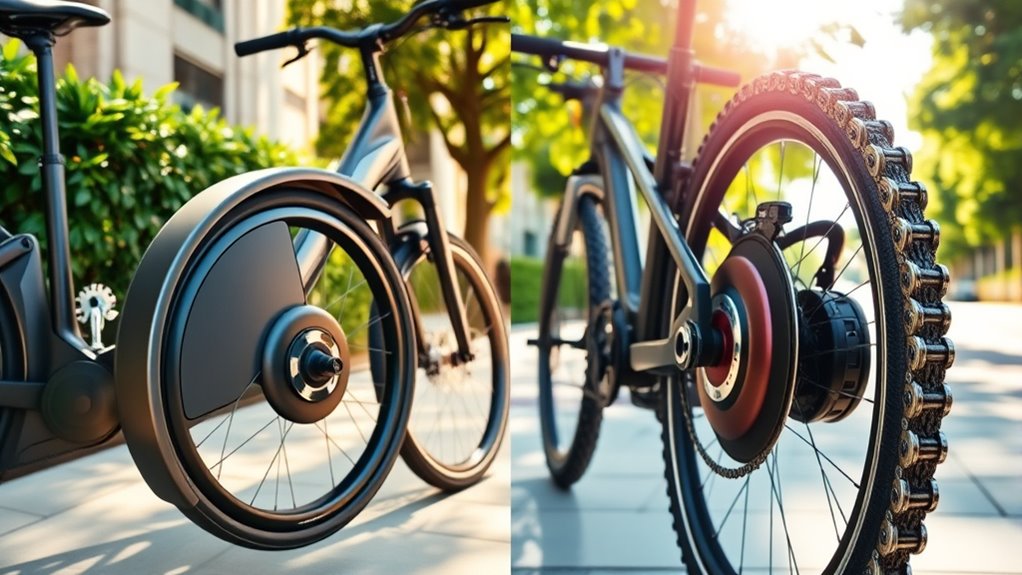
Belt drives require considerably less maintenance than chain drives because they don’t need lubrication and are less exposed to dirt and debris. This means you spend less time cleaning and maintaining your bike, so it’s more convenient for regular use. Additionally, belt drives tend to keep their aesthetic appeal longer because they remain cleaner and don’t rust like chains. They also offer an easier installation process, which makes repairs or replacements simpler for you. Chain drives, on the other hand, require regular lubrication, adjustments, and cleaning to stay in good shape. If you prefer a low-maintenance setup that keeps your bike looking sleek with minimal effort, a belt drive is the better choice. Overall, belt drives simplify upkeep while maintaining a clean and attractive appearance. Furthermore, training and certification in bike maintenance can help you better understand and manage your drive system.
Impact on Riding Performance
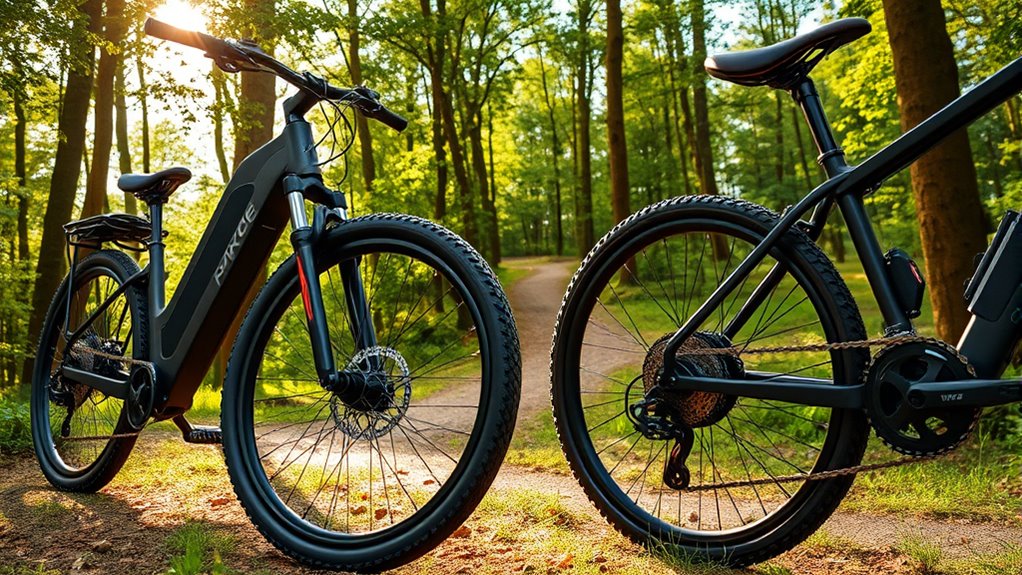
The choice between belt-drive and chain-drive E‑bikes can considerably influence your riding experience, particularly in aspects of efficiency and smoothness. Belt drives typically offer consistent power transfer, which results in a smoother ride, especially when pedaling at various gear ratios. They also maintain tension well, providing stable performance across different terrains. Chain drives, on the other hand, can deliver more precise power transfer, especially when shifting gears, allowing you to optimize your effort across different riding conditions. Chain drives often support a wider range of gear ratios, giving you more flexibility for climbing or cruising. Overall, your decision impacts how seamlessly power moves from your pedals to the wheels, affecting ride comfort, responsiveness, and efficiency. Additionally, considering personal riding preferences can help determine which drive system aligns best with your cycling style.
Noise Levels and Riding Experience
You’ll notice that belt-drive systems operate much more quietly than chain drives, creating a smoother, less distracting ride. This quiet operation also reduces vibrations, making your ride more comfortable over long distances. Considering how noise and vibration affect your experience can help you choose the setup that feels best for you. Additionally, the exfoliating properties of glycolic acid can contribute to healthier, more resilient skin, which may enhance your overall comfort while riding.
Silent Operation Benefits
Because noise levels can substantially impact your riding experience, many riders prefer belt-drive e-bikes for their quiet operation. The smoother, quieter ride enhances your enjoyment and allows for a more relaxed journey. Belt drives operate silently compared to chain drives, reducing distractions and making conversations easier. Additionally, belt drives tend to require less maintenance, maintaining their quietness over time. When considering gear compatibility, belt drives work best with specific gear setups, but they still deliver seamless performance. Their sleek, clean appearance also boosts aesthetic appeal, giving your e-bike a modern, polished look. If you value a peaceful ride and a visually appealing bike, a belt-drive system offers significant silent operation benefits that elevate your overall riding experience. Incorporating protective styling benefits from various textile enhancements can also help keep your e-bike components in pristine condition over time.
Vibration and Comfort
Vibration and noise levels markedly influence your riding comfort, making smooth, quiet performance a top priority. Belt drives tend to produce less vibration and noise compared to chain drives, resulting in a more comfortable ride. This difference can also impact frame compatibility, as belt drives require specific frame designs to accommodate their system, which can influence your bike’s aesthetic appeal. Chain drives may generate more noise and vibrations, especially on rough terrain, leading to a less smooth experience. If you value a sleek look and a quieter ride, belt drives often suit your preferences better. Additionally, technology advancements in belt drive systems have improved durability and performance, making them an increasingly popular choice among riders. Ultimately, considering how vibration and noise affect your riding comfort helps you choose the drivetrain that aligns with your comfort needs and aesthetic expectations.
Cost Differences and Budget Considerations
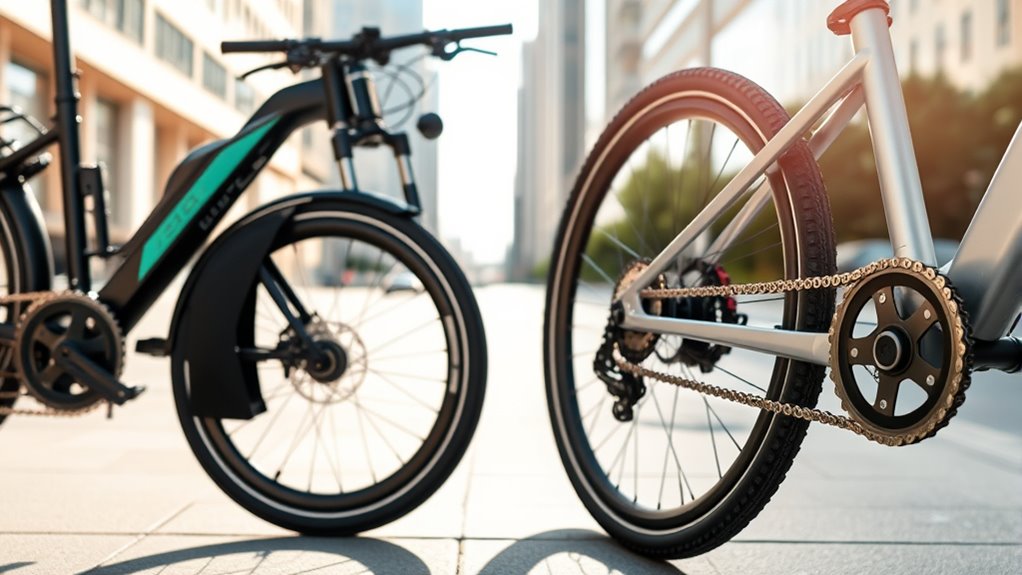
When comparing belt-drive and chain-drive e-bikes, cost is a key factor to contemplate. A thorough price comparison helps with budget planning by highlighting initial costs and maintenance expenses. Belt drives typically cost more upfront but require less maintenance, saving you money long-term. Chain drives are usually cheaper initially but may incur higher upkeep costs over time. Consider this table:
| Feature | Belt-Drive E-Bikes | Chain-Drive E-Bikes | Cost Implication |
|---|---|---|---|
| Initial Purchase Price | Higher | Lower | Belt drives are more expensive upfront |
| Maintenance Costs | Lower | Higher | Belt drives save on upkeep |
| Longevity | Longer | Shorter | Belt drives last longer |
| Resale Value | Similar | Similar | Both hold value fairly |
Additionally, durability is a significant factor, as belt drives generally offer a longer lifespan with less frequent replacements. Balancing these factors helps you make an informed choice aligned with your budget.
Compatibility With Various Bike Types
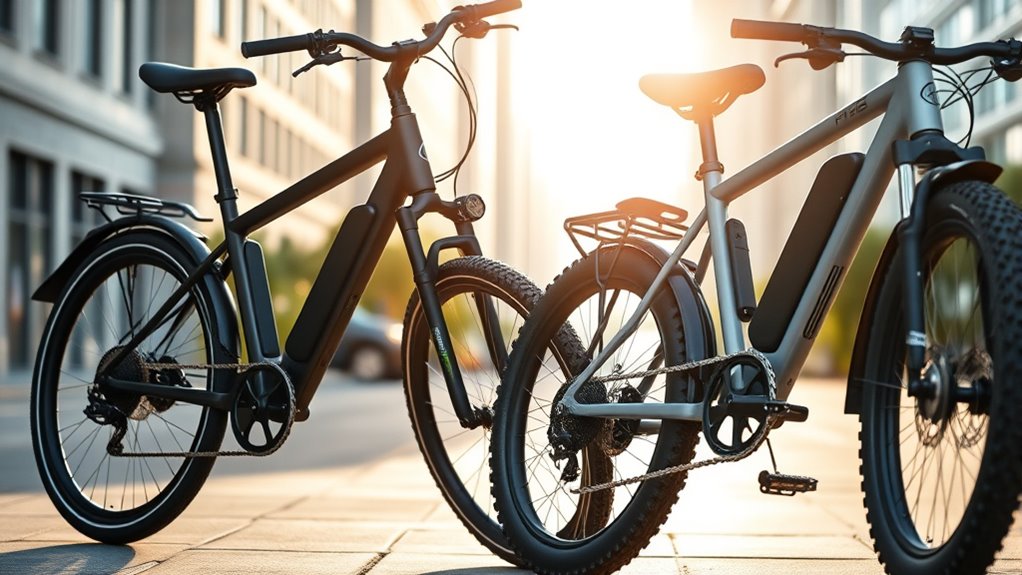
Choosing the right drive system also depends on how well it fits with different bike designs and styles. Belt drives are generally compatible with specific frame types that accommodate belt lines, often requiring frame modifications or special features like belt-compatible dropouts. They work best with newer, custom, or dedicated belt-drive frames but may have limited compatibility with traditional steel or aluminum frames. Chain drives, on the other hand, are versatile across a wide range of bike styles, thanks to their universal frame compatibility. When it comes to accessory integration, belt drives often require special components, such as belt-specific tensioners or guards, which can limit options. Chain drives typically allow easier integration of standard accessories like racks, fenders, and chain guards, making them a more adaptable choice for various bike types. Additionally, understanding cultural compatibility can help bike manufacturers tailor drive system options to different markets and user preferences.
Environmental Impact and Sustainability
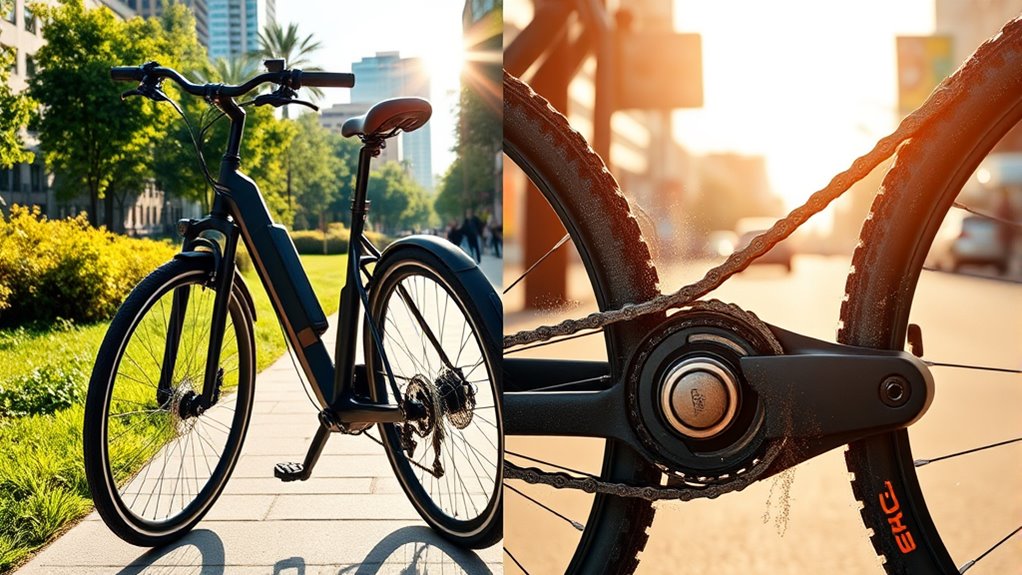
Considering the environmental impact of E‑bike drive systems is essential for sustainable transportation choices. Belt drives generally produce lower manufacturing emissions because they require fewer materials and simpler manufacturing processes. They also have a higher recycling potential since belts are often made from recyclable materials, making them more eco-friendly at the end of their life cycle. Chain drives, on the other hand, involve more complex manufacturing and often contain metals that are harder to recycle fully. Both systems contribute to the bike’s overall footprint, but choosing a belt drive can reduce your environmental impact by minimizing manufacturing emissions and supporting recycling efforts. Additionally, understanding cookie policies helps consumers make informed choices about their digital footprint while researching eco-friendly transportation options. Ultimately, selecting a drive system with better sustainability features helps promote greener transportation options and reduces your carbon footprint.
Frequently Asked Questions
Which Drive System Is Easier for Beginners to Maintain?
When considering which drive system is easier for beginners to maintain, think about maintenance simplicity and user-friendly upkeep. Belt drives generally require less maintenance, needing only occasional cleaning and no lubrication, making them more convenient for new riders. Chain drives, on the other hand, need regular lubrication and adjustments. So, if you want a hassle-free option, belt drives are the better choice for easier, low-maintenance riding.
How Do Belt and Chain Drives Perform in Different Weather Conditions?
Imagine your e-bike as a trusty steed facing the weather’s whims. Belt drives excel with weather durability, shrugging off rain and mud with minimal fuss, making maintenance less complex. Chain drives, however, can become a rusted mess if you neglect them in wet conditions, demanding more maintenance. So, if you ride often in rain or snow, a belt drive keeps your ride smooth and worry-free, come rain or shine.
Can I Upgrade From One Drive Type to Another Later?
You can attempt a drive conversion later, but it’s not always straightforward. Compatibility issues might come up, such as frame or hub design not supporting the new drive type. Before switching, check if your bike’s components are compatible with the belt or chain drive you want to install. Keep in mind, some upgrades may require professional help to guarantee proper fit and function.
Are There Specific Safety Concerns Associated With Each Drive System?
You should consider that each drive system has different safety hazard potentials. Belt drives tend to be cleaner and quieter, reducing risks related to grease or chain slippage, but they can be less durable under high stress, which might pose safety concerns. Chain drives are more durable but can be messier and have a higher potential for slippage or breakage. Always prioritize regular maintenance to minimize safety risks regardless of the system you choose.
How Do Drive Choices Affect the Overall Weight of the E-Bike?
Oh, the thrill of weighing your e-bike! Your choice of drive system considerably impacts the overall e-bike weight. Belt drives tend to be lighter, making your ride feel sprightlier, while chain drives add a bit more heft, turning your bike into a mini gym. So, if you’re chasing speed and agility, a lighter drive system boosts your e-bike weight impact, giving you that extra zip without the extra bulk.
Conclusion
Choosing between belt-drive and chain-drive e-bikes is like picking the perfect pair of shoes—each offers unique comfort and style. Think of a belt drive as your sleek, low-maintenance companion that glides smoothly, while the chain drive is more like a rugged trail partner, ready for adventure. Consider your riding needs and budget to find your ideal match. Whichever you choose, it’ll become your trusty steed on your journey forward.