
To handle cargo on a commuter train, use designated bike racks that suit your bike size, securing your bike properly. Attach panniers securely to avoid shifting during transit and pack valuables carefully. For larger loads, trailers are a practical option, but verify they’re properly attached and follow local regulations. Always plan ahead and secure everything tightly to keep your journey smooth and safe. If you keep exploring, you’ll discover more tips to make your cargo management even easier.
Key Takeaways
- Verify train-specific policies for bike racks, panniers, and trailers before boarding.
- Secure panniers tightly to prevent shifting and use appropriate sizes for load balance.
- Properly attach and secure cargo with straps or bouches to avoid movement during transit.
- Use trailers for larger or heavier cargo, ensuring proper attachment and weight distribution.
- Plan ahead, double-check cargo security, and follow train regulations to ensure safe, hassle-free travel.
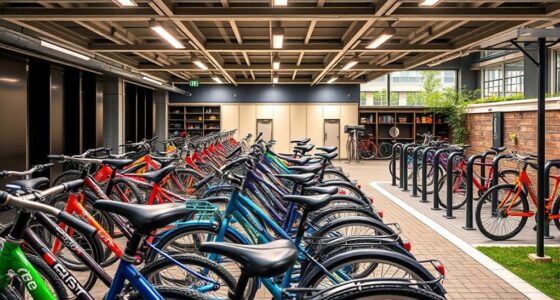
Handling cargo on a commuter train can be straightforward if you follow the proper procedures. When it comes to transporting your bike, understanding the different bike rack types is vital. Most commuter trains are equipped with designated bike racks, which vary from vertical racks to horizontal ones. Vertical bike racks are common and usually involve a simple slot where you can stand your bike upright, making it easy to secure and keep the bike stable during the ride. Horizontal racks, on the other hand, allow you to lay your bike flat, which can be beneficial for larger bikes or when space is limited. Before you board, always check your train’s specific bike policy, as some may restrict certain rack types or require you to pre-reserve space.
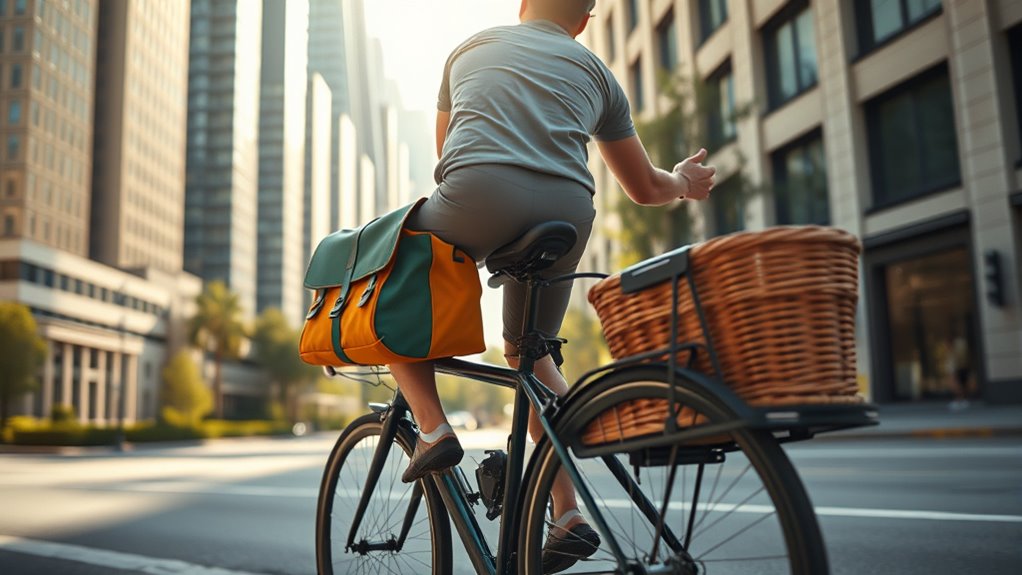
If you’re using panniers, proper pannier installation becomes essential to guarantee your cargo stays secure. Panniers are designed to attach to bike racks or racks on the train, and correctly installing them prevents shifting or falling during transit. First, choose the appropriate pannier size for your load; overloading can make balancing difficult and may cause the panniers to detach. When mounting, secure the panniers to your bike’s rack or the train’s designated cargo areas, making sure straps are tight and clips are fastened correctly. Many panniers come with quick-release mechanisms, which simplify the process, but double-check that they are firmly in place before the journey begins. Position your valuables and fragile items carefully inside the panniers to avoid damage, and consider using additional straps or bouches for added security. Additionally, proper cargo management ensures safety and convenience during your commute.
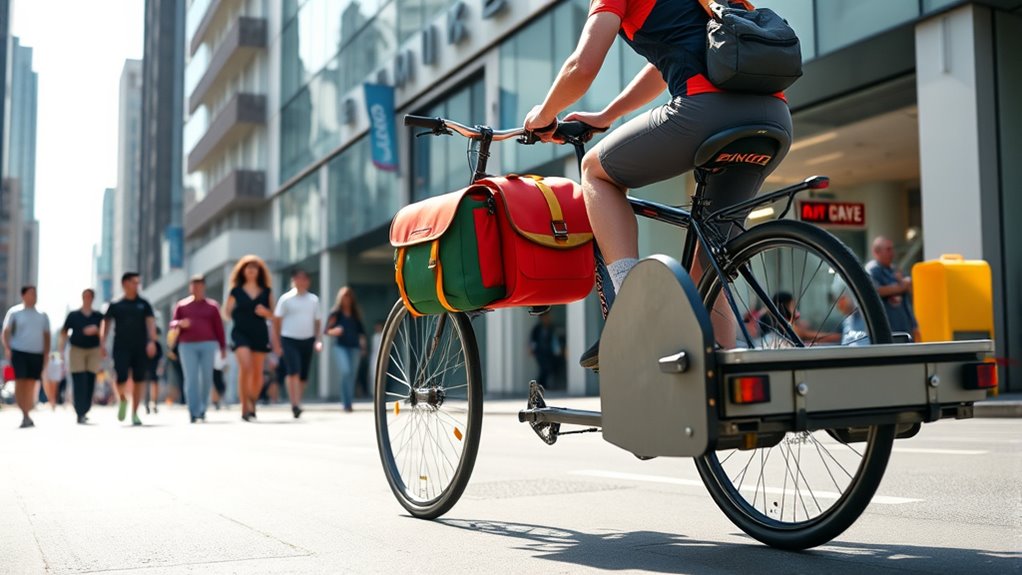
If you’re planning to bring larger items or multiple pieces of cargo, you might consider a bike trailer. These attach easily to your bike and can carry heavier or bulkier loads without compromising your balance. When attaching a trailer, ensure it is properly hitched and the weight is evenly distributed. For shorter commutes, trailers can be a practical solution, especially if you’re transporting groceries, sports gear, or bulky equipment. Remember to check local regulations regarding trailer use on trains, as some transit systems might have restrictions.
Handling cargo on a commuter train isn’t complicated once you familiarize yourself with the available options—whether it’s choosing the right bike rack type, installing panniers correctly, or using trailers for larger loads. Always plan ahead, secure everything properly, and respect the train’s guidelines to make your journey smooth and hassle-free. Proper preparation guarantees your cargo arrives safely and your commute remains comfortable.
Frequently Asked Questions
What Are the Best Security Measures for Carrying Cargo?
To secure your cargo, you should always use locking mechanisms on racks, panniers, and trailers, making it harder for thieves to access your belongings. Incorporate theft deterrents like sturdy locks, alarms, or even GPS trackers for added security. Additionally, avoid leaving valuables in plain sight, and park in well-lit, busy areas. These measures help protect your cargo from theft and give you peace of mind while commuting.
How Do Weather Conditions Affect Cargo Handling?
Rain, snow, or high winds can turn your commute into a chaos! Weather conditions drastically impact cargo handling by risking damage or shifting loads. To stay prepared, always use weather preparedness strategies like rainproof gear and waterproof panniers. Secure your cargo tightly, and consider additional weatherproof covers. When you’re ready for any storm, your cargo stays dry, safe, and steady, no matter how wild the weather gets outside.
Can Cargo Racks Be Installed on All Bike Types?
Most cargo racks can be installed on many bike types, but you need to check mounting options and rack compatibility first. Mountain bikes, hybrids, and touring bikes often support racks, while racers and some road bikes may not. Always verify if the rack fits your frame and mounting points. Properly installed racks guarantee safe, secure cargo handling, so choose one suited to your bike’s design and your riding needs.
What Maintenance Is Needed for Racks and Trailers?
Ever wonder if your gear can stand the test of time? You should regularly check your racks and trailers for rack durability by inspecting for rust, cracks, or loose bolts. Lubricate moving parts and tighten fittings to keep trailers compatible and functioning smoothly. Keep your cargo secure by maintaining these components, ensuring they last longer and perform better, so your rides stay safe and reliable mile after mile.
How Does Cargo Weight Impact Bike Handling and Safety?
You should be aware that carrying heavy cargo impacts your bike stability and braking performance. As weight increases, your bike becomes harder to control, especially during turns or sudden stops. To stay safe, distribute the load evenly, avoid overloading, and ride at lower speeds. Properly secured cargo helps maintain balance, reducing the risk of accidents and ensuring your bike handles predictably and safely under varying conditions.
Conclusion
Just like a seasoned sailor navigates the waves, you can master your cargo with racks, panniers, and trailers. Embrace the rhythm of your ride, balancing weight and ease, turning each commute into a confident journey. Remember, with the right gear, you’re steering through your day’s adventures smoothly—no storm too fierce. Keep your focus steady, your load secure, and ride on with purpose, for every trip is a voyage waiting to unfold.