
For a safer night commute, make sure your headlights, taillights, and reflectors are working properly and clean. Choose well-lit, familiar routes with steady traffic, avoiding shortcuts through poorly lit or risky areas. Reduce your speed and stay alert for unexpected obstacles, keeping a safe distance from other vehicles. Regularly check your vehicle’s lights, tires, and brakes to stay prepared. To learn more about optimizing your night travels, consider exploring additional tips and safety strategies.
Key Takeaways
- Ensure all vehicle headlights, taillights, and reflective accessories are functioning properly for maximum visibility.
- Choose well-lit, familiar routes with steady traffic and avoid poorly lit or hazardous areas.
- Use GPS and real-time traffic apps to optimize your route and avoid dangerous or unlit streets.
- Reduce speed and increase following distances to adapt to lower visibility during night driving.
- Maintain your vehicle’s external lights and perform regular checks to ensure safe and effective illumination.

Have you ever wondered what it’s like to navigate the city after dark? When the streets are quieter and the usual hustle has faded, your nighttime drive becomes a different experience. One of the most vital things you can do to stay safe is to focus on vehicle safety. Proper lighting is a key part of this. Make sure your headlights and taillights are working correctly, and consider adding extra reflective accessories to increase visibility. Well-lit roads help you see potential hazards sooner and make it easier for other drivers to spot you. This reduces the risk of accidents and guarantees you arrive safely at your destination.
Ensure your headlights and taillights work properly and add reflective accessories for safer nighttime driving.
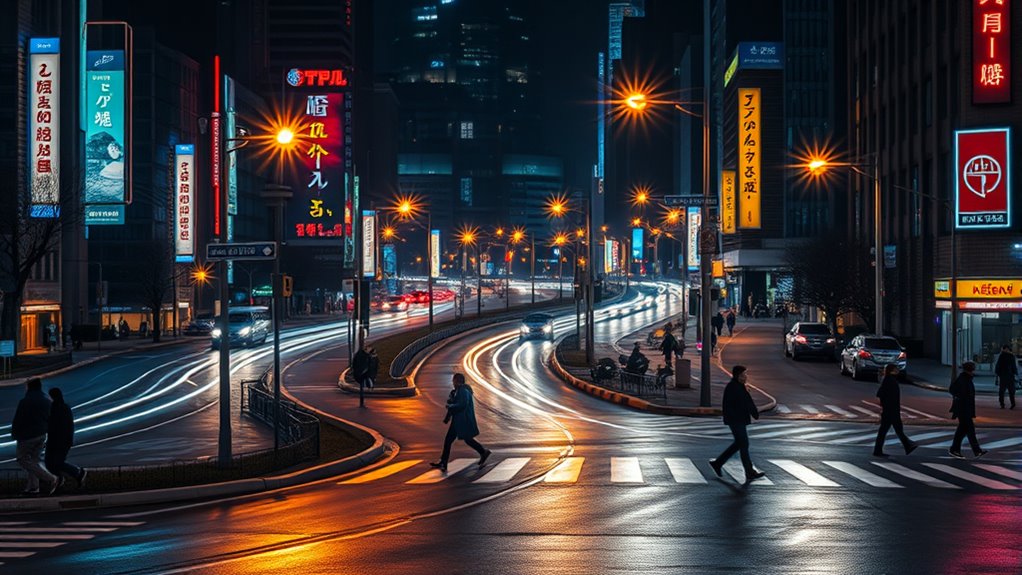
Beyond lighting, route optimization plays a fundamental role in a safe and efficient night commute. When planning your drive, avoid poorly lit or unfamiliar streets that might pose hidden dangers or cause confusion. Instead, choose routes with good street lighting, minimal construction, and steady traffic. Apps and GPS systems can help you identify the safest and most efficient paths based on real-time data. By selecting routes with fewer sharp turns, heavy intersections, or areas known for crime, you minimize your chances of running into trouble. Route optimization isn’t just about saving time; it’s about making your journey safer and more predictable.
As you navigate after dark, keep your speed in check. Reduced visibility means you should slow down and give yourself extra stopping distance. Staying alert and attentive helps you react quickly to unexpected obstacles, whether it’s a drifting pedestrian, an animal, or debris in the road. Adjust your windows and climate controls to stay comfortable and alert. Avoid distractions like loud music or phone use, so you can focus entirely on your surroundings. Remember, your vehicle’s safety features, like lane assist and collision warnings, are there to support you—use them wisely and guarantee they’re functional before your drive. Additionally, understanding the importance of lighting technology can significantly improve your night driving experience.
Night driving also calls for a proactive attitude. Regularly check your vehicle’s lights, tires, and brakes before heading out. Ensure your windshield and mirrors are clean for maximum visibility. If you’re using external lights, like fog lights or auxiliary beams, turn them on when appropriate to improve your view without blinding other drivers. Staying on well-maintained roads and following traffic laws helps prevent accidents. Ultimately, your safety depends on your preparedness and awareness. By paying attention to vehicle safety and choosing routes wisely, you make your night commute not just easier but much safer.
Frequently Asked Questions
What Are the Best Safety Practices for Night Commutes?
To stay safe during night commutes, always wear reflective gear to increase visibility, especially when crossing streets or walking along dark routes. Keep your emergency contacts accessible and share your route with a trusted person. Carry a fully charged phone, use well-lit paths, and stay alert to your surroundings. These practices help you avoid accidents and ensure help is available if needed.
How Do Weather Conditions Affect Night Route Choices?
Imagine you’re steering through a foggy night—weather impact becomes vital in route planning. Rain, snow, or fog can reduce visibility and make roads slick, so you should choose well-lit, less hazardous paths and avoid shortcuts through poorly maintained areas. Adjust your speed, stay alert, and plan ahead by checking weather forecasts. Always have an alternate route in mind, ensuring safety isn’t compromised by unpredictable weather conditions.
What Types of Lighting Are Most Effective for Night Rides?
For night rides, you want bike lighting innovations that deliver bright, reliable illumination, like high-lumen front and rear lights. LED lights are most effective because they’re energy-efficient and durable. Pair these with reflective gear, which boosts visibility even when your lights aren’t directly hitting it. Combining bright bike lights with reflective clothing or accessories guarantees you’re seen from all angles, keeping you safer during your night commute.
How Can I Stay Alert During Late-Night Commutes?
Think of your mind as a lighthouse—shining bright keeps you alert. To stay focused during late-night commutes, avoid distracted driving and prioritize fatigue management. Take short breaks, hydrate, and do quick stretches to keep blood flowing. Listening to lively music or engaging podcasts can also boost your alertness. Staying mindful of your surroundings helps you stay sharp, ensuring a safer and more energized ride through the night.
Are There Specific Routes Safer for Cyclists at Night?
Yes, you should choose routes with better bike lane safety and well-lit crossings. Look for streets that have dedicated bike lanes that are clearly marked and maintained, reducing the risk of accidents. Prioritize paths with illuminated crossings to increase visibility and safety. Avoid poorly lit or busy roads at night, and consider using additional lighting on your bike to stay visible. Staying on safer routes helps guarantee a safer, more confident night ride.
Conclusion
As you plan your night commute, remember that choosing the right light setup and route can unexpectedly turn a stressful journey into a smooth ride. Sometimes, a small adjustment—like switching your route or tweaking your lights—coincides perfectly with your needs, making all the difference. So, stay alert and adaptable; the right choices might just come together at the perfect moment, proving that even in darkness, a little insight can lead you home safely.